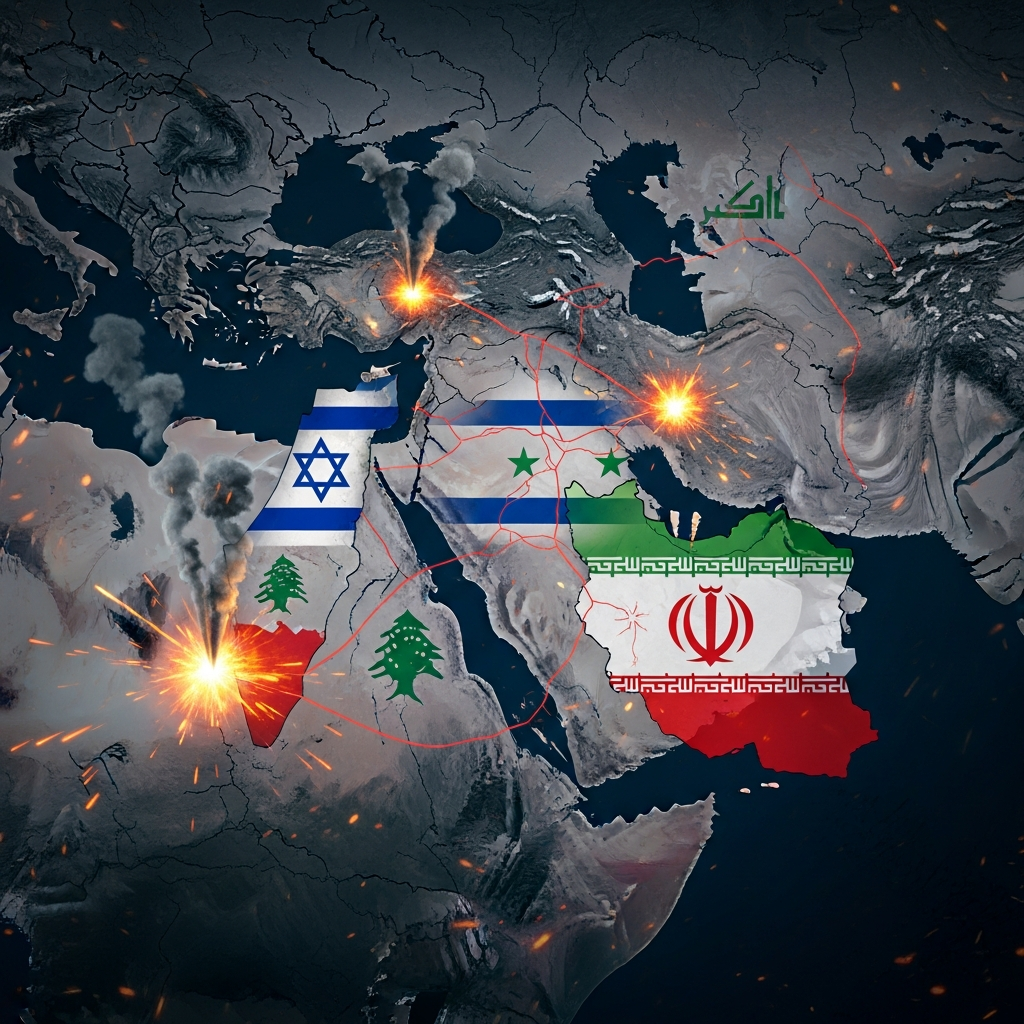
The volatile Middle East is gripped by an escalating conflict, with Israel declaring its intent to further intensify its strikes against Iran. This comes as regional tensions surge following repeated missile exchanges and attacks on critical infrastructure. The ripple effects are already being felt globally, from energy markets to humanitarian crises, underscoring the profound and far-reaching implications of this intensifying geopolitical struggle. As both sides brace for potential deeper engagement, the international community watches with growing alarm, urging restraint while confronting the immediate consequences of widespread instability.
Unprecedented Escalation: Israel’s Vow and Iranian Retaliation
The recent days have witnessed a dramatic intensification of hostilities between Israel and Iran, marking a critical phase in the ongoing conflict. Israel has explicitly warned it will “escalate and expand” its military operations in direct response to sustained Iranian missile fire. These fresh strikes have impacted multiple Iranian cities overnight, with Iran’s Red Crescent reporting a grim death toll nearing 2,000 casualties within the country.
Amidst these developments, Iran’s Foreign Minister Abbas Araghchi has vehemently condemned Israeli attacks on nuclear facilities, threatening a “heavy price for Israeli crimes.” Israeli forces reportedly targeted key Iranian nuclear sites, including a uranium plant and a heavy water reactor in central Iran, along with steel factories in Esfahan, resulting in at least one fatality and 15 injuries. These actions have ignited further outrage and pledges of severe retaliation from Tehran.
US Stance and Strategic Deployments
The United States continues to navigate its complex role in the conflict. Secretary of State Marco Rubio affirmed that the US aims to achieve its objectives in the Iran war “without any ground troops,” even as hundreds of additional service members are deployed to the region. President Donald Trump, however, has indicated a temporary delay in targeting Iranian energy sites, citing ongoing talks with Tehran. This pause, set for another 10 days, comes with the condition that Iran reopens the strategically vital Strait of Hormuz.
The US Defense Secretary, Pete Hegseth, previously suggested the conflict could last 6-8 weeks, emphasizing US capacity for a war of attrition. Contradictory stated goals from the Trump administration have ranged from regime change to dismantling Iran’s missile capabilities and preventing nuclear weapon acquisition. Notably, US officials are also reportedly exploring leveraging Kurdish separatist groups to establish a safe zone in northwest Iran, despite claims that the war is progressing “better than expected.”
Global Fallout: Energy Crisis and Humanitarian Catastrophe
The conflict’s repercussions extend far beyond the immediate battlegrounds, triggering a profound global energy crisis. The effective closure of the Strait of Hormuz, a crucial global shipping lane between Iran and Oman, has sent shockwaves through international markets. The Philippines, for instance, became the first nation to declare a state of emergency due to this escalating energy crisis, highlighting the worldwide impact.
Roughly 20,000 seafarers are currently stranded at sea, underscoring the severe disruption to global supply chains. The UN is now establishing a task force to ensure the passage of essential goods like fertilizer and raw materials through the strait, fearing a “ripple effect on hunger down the line” if planting seasons are missed. Rising fuel costs are already compounding the strain on households struggling with basic necessities globally.
Civilian Toll and Regional Instability
The human cost of this conflict is devastating. More than 1,900 people have been killed and 20,000 injured in Iran since the war began, according to the Iranian Red Crescent. In Lebanon, the UN refugee agency (UNHCR) warns of a “humanitarian catastrophe,” with over 1 million people displaced and critical medical supplies dwindling. Hospitals are reportedly running on just two weeks of stock, while 49 primary healthcare centers have ceased operations. The conflict between Israel and Hezbollah further exacerbates this crisis, with over 1,100 fatalities in Lebanon and significant damage to infrastructure.
A human rights report compiled by HRA, Airwars, and CIVIC highlights that civilians are bearing the brunt of the conflict. The report cites targeting errors, inadequate warnings, and the use of explosive weapons in populated areas as reasons for high civilian casualties. Furthermore, Iranian authorities are reportedly using the conflict to intensify domestic repression, with over 1,830 arrests reported as of March 19.
Geopolitical Maneuvers and Nuclear Concerns
Secretary of State Marco Rubio’s brief visit to France for a G7 Foreign Ministers’ meeting underscored the international community’s concern. G7 ministers stressed the “absolute necessity” of “toll-free” navigation in the Strait of Hormuz, highlighting its global economic importance. Rubio also urged European and Asian allies to support post-war efforts to secure the strait, emphasizing their significant stakes.
The ongoing strikes on Iranian nuclear facilities have reignited international anxieties regarding nuclear proliferation. The head of the UN nuclear watchdog, Rafael Grossi, reiterated calls for “military restraint” to “avoid any risk of a nuclear accident.” While Israel claims its strikes on sites like the Arak heavy water reactor and Yazd uranium plant aim to undermine Iran’s nuclear weapons program, experts warn that such actions could inadvertently push Iran closer to developing a nuclear weapon.
Internal Dynamics and International Reactions
The escalating conflict has also impacted Iran’s internal political landscape. The indefinite delay of late Supreme Leader Ayatollah Ali Khamenei’s funeral proceedings and the ongoing selection of his successor signal deep internal shifts. Mojtaba Khamenei, the IRGC’s favored candidate, is seen by analysts as potentially ushering in an even harder-line, authoritarian stance, further entrenching the IRGC’s power.
Internationally, Pakistan’s army chief has reportedly attempted to mediate peace talks between Iran and President Trump, reflecting broader diplomatic efforts to de-escalate. However, Israel’s Prime Minister Benjamin Netanyahu has vowed to continue striking Iran despite US discussions of a potential peace deal, stating, “There’s more to come.” Iran’s IRGC has, in turn, threatened “heavy missile and drone attacks” on Israeli troops if operations in Lebanon and Palestine do not cease. The identification of US-origin anti-tank landmines near Shiraz, if confirmed, marks another alarming dimension, with US Central Command declining comment.
Over 300 US troops have been injured since the start of combat operations, with more than 75% of these being traumatic brain injuries. This grim statistic underscores the immediate dangers faced by deployed forces, even as US officials assert that objectives can be met without ground troops. The fluid nature of these developments makes the future of the Middle East incredibly uncertain.
Frequently Asked Questions
What are the immediate humanitarian consequences of the escalating Israel-Iran conflict?
The conflict has caused a severe humanitarian crisis, particularly in Iran and Lebanon. Iran’s Red Crescent reports nearly 2,000 deaths and 20,000 injuries in Iran. In Lebanon, over 1 million people are displaced, critical medical supplies in hospitals could run out within two weeks, and essential healthcare centers have shut down. Human rights groups highlight increased civilian casualties due to strikes and intensified domestic repression in Iran.
Which critical global waterways are most affected by the ongoing Middle East conflict?
The Strait of Hormuz is the most critically affected waterway. Iran’s effective closure of this crucial shipping lane, located between Iran and Oman, has severely disrupted global supply chains and triggered a widespread energy crisis. This closure has stranded approximately 20,000 seafarers and prompted international efforts, including a UN task force, to ensure the passage of vital goods like fertilizer to prevent global food security issues.
What are the primary factors influencing the US strategy in the Iran conflict, particularly regarding ground troops?
The US strategy, as articulated by Secretary of State Marco Rubio, aims to achieve objectives like destroying Iran’s navy, air force, and missile launchers without deploying ground troops. However, significant troop deployments continue, with officials citing the need to prepare for “multiple contingencies.” President Trump has also temporarily delayed strikes on Iranian energy sites, contingent on Iran reopening the Strait of Hormuz, indicating a strategic balance between military pressure and potential diplomatic engagement.
Conclusion
The current escalation between Israel and Iran presents a deeply concerning and rapidly evolving crisis with profound regional and global implications. From the immediate humanitarian toll in both Iran and Lebanon to the seismic shifts in global energy markets triggered by the Strait of Hormuz closure, the conflict’s reach is undeniable. As diplomatic efforts continue alongside military maneuvers, the urgent need for de-escalation remains paramount to prevent further destabilization of an already fragile region. Understanding these complex dynamics is crucial for grasping the trajectory of this critical geopolitical challenge.