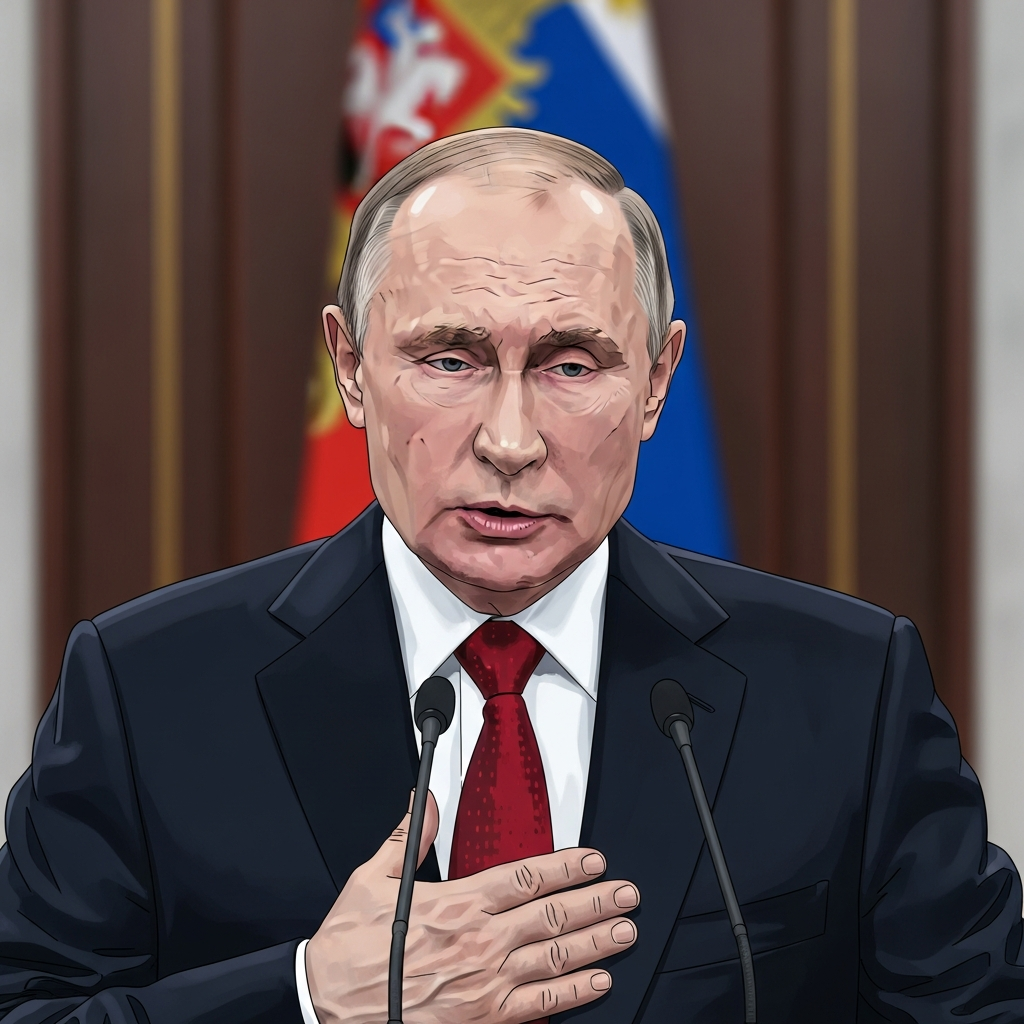
A brief, unedited video clip showing Russian President Vladimir Putin coughing and struggling with his words has sent shockwaves through global political circles. What seemed like a mundane holiday greeting quickly transformed into an unexpected turning point, igniting intense speculation about his health and the stability of his decades-long rule. This revealing footage, swiftly replaced by a sanitized version, has forced a rare glimpse behind the Kremlin’s meticulously crafted facade, prompting experts to question if these aren’t merely “mistakes,” but rather signals of intensifying power struggles within Moscow.
For years, Vladimir Putin’s health has been shrouded in profound secrecy, considered a state secret with any leak risking treason charges. This deep-seated culture of concealment made the unedited video’s brief appearance on the Kremlin’s own Telegram channel last week particularly jarring. The clip, showing Putin pointing at his throat and grimacing, “It’s sore,” during an International Women’s Day tribute, presented a stark contrast to his carefully cultivated image. It marked a pivotal moment, shattering the illusion of the unwavering, macho leader known for shirtless horseback riding and Judo displays.
A Public Glimpse Behind the Kremlin’s Curtain
The viral footage depicted Putin in a vulnerable moment, struggling through his address. He was seen covering his face and experiencing shaky coughs, even verbally acknowledging a “tickle in my throat.” Despite being offered water, he initially brushed off concerns to continue his remarks. This uncharacteristic display quickly spread, sparking widespread debate. While the Kremlin’s spokesman downplayed the incident as a “mistake” that wouldn’t happen again, many former Russian officials and investigators held a very different view. Given the severe penalties for revealing state secrets, such an “error” seemed almost unthinkable.
Multiple government agencies, including the presidential administration and various security services, are tasked with maintaining Putin’s public image and preventing such blunders. Ilya Shumanov, a board member of Transparency International Russia, highlighted the existence of “at least two Kremlin’s towers” responsible for Putin’s appearances. One focuses on propaganda, the other on his personal image. Shumanov posited that the leaked video could signify an “internal war” between these factions, with one potentially “demonstrating the other tower’s inability to control Putin.” This theory aligns with observed “interagency tensions, arrests of senior bureaucrats, generals, military commanders” within the Russian establishment.
Putin’s Health Under Persistent Scrutiny
This latest incident isn’t an isolated event; it adds to a long history of speculation surrounding Putin’s health. Whispers of serious ailments, including Parkinson’s disease, have circulated since as far back as 2022. Observers have previously noted instances of him struggling to remain still during public engagements or appearing to limp while descending airplane stairs. More recent footage has even described him looking “more sickly,” with a “death mask” appearance – exhausted, haggard, and with sagging facial features. These recurring observations sharply contradict the powerful, vigorous persona he has meticulously built and maintained for decades.
The consistent effort to project an image of robust health is a cornerstone of Putin’s leadership. Photos of him engaging in various sports, from ice hockey to Judo, have been carefully staged to reinforce his “strongman” brand. However, the recent leaked video, coupled with the ongoing health rumors, threatens to unravel this carefully constructed narrative. It presents an aging leader, vulnerable and human, starkly contrasting with the invincible figure the Kremlin strives to portray.
The Cracks in the Strongman Image and Dwindling Popularity
This perceived vulnerability comes at a time when Putin’s popularity appears to be wavering. His traditional strongman image seems to be dimming as the Kremlin watches long-time allies, such as Maduro and Khamenei, face increasing pressure from U.S. actions. Critics suggest that Putin’s perceived inaction or helplessness on the international stage portrays him as failing in his responsibilities to his closest partners. Kremlin spokesman Dmitry Peskov himself candidly admitted to “rapidly losing the instruments of our propaganda abroad,” particularly in neighboring countries. This new geopolitical landscape, where other figures often dominate headlines, creates a challenging environment for Russian leadership.
Domestically, recent social studies paint a clear picture of declining approval. According to the Levada Center, only 18% of Russians under 24 approve of Putin’s presidency, and a significant 46% of women disapprove. Even a Russian hip-hop artist reportedly garnered more popularity on Russian Wikipedia than Putin. Furthermore, “spontaneous polls” conducted by the Kremlin’s own VTsIOM polling group revealed that only 32.1% of respondents trusted Putin, indicating that his image-makers are acutely aware of his diminishing standing. These figures underscore a growing disconnect between the Kremlin’s narrative and public sentiment, particularly among younger generations.
Kremlin’s Deceptive Veil: The Three Offices Strategy
Adding another layer to the Kremlin’s elaborate system of control and deception, investigations reveal that Putin frequently misleads the public about his actual location. RFE/RL’s Systema unit uncovered that Putin routinely uses three nearly identical offices: one at his main Moscow residence in Novo-Ogaryovo, another in Sochi on the Black Sea coast, and a third in Valdai, halfway between Moscow and St. Petersburg. Through meticulous analysis of subtle architectural details, leaked travel records, and internal media documents, investigators found hundreds of instances where meetings attributed to Novo-Ogaryovo were actually filmed in Sochi or Valdai.
This sophisticated trickery is primarily driven by security concerns. The secluded, heavily fortified Valdai residence, for example, offers greater protection, especially following the full-scale invasion of Ukraine and increased drone attacks on Russian targets. Satellite imagery has even shown the deployment of advanced air-defense systems around Valdai. This deliberate obfuscation about his whereabouts, alongside the constant management of his public image, highlights the Kremlin’s deep commitment to controlling narratives and ensuring the President’s safety in an increasingly volatile environment. This elaborate charade further underscores the intense secrecy surrounding every aspect of Putin’s life and governance.
The Grave Stakes: Treason Charges and Power Dynamics
The gravity of the leaked video incident is underscored by the severe repercussions anticipated for those deemed responsible. Ivan Pavlov, a prominent Russian attorney specializing in state treason cases, stated he wouldn’t be surprised if someone soon faces treason charges. His group, Pervy Otdel, recorded a staggering 486 individuals charged with treason, espionage, and extremist cases last year—the highest number yet. Pavlov emphasized that “everything about him is either secret or sacred,” meaning such a “mistake” would undoubtedly ruin a career or be perceived as state treason. This intense pressure and the risk of severe punishment highlight the high stakes within the Kremlin’s inner circle.
Amidst these tensions, some experts offer alternative interpretations. Marat Gelman, a political consultant who helped craft Putin’s original “strong man” image, suggested the leak might not be a mistake at all. Instead, he theorized it could be a deliberate “Kremlin’s trick” – a form of “coughing politics” designed to reignite interest in a leader whose coverage was being sabotaged by being ignored, particularly in the shadow of other prominent global figures. Whether a genuine mistake or a calculated maneuver, the incident undoubtedly underscores the complex and often ruthless power dynamics at play within the Russian political establishment. The intensifying “spiders devour each other” dynamic, as described by former parliament member Gennady Gudkov, suggests an environment ripe for internal shifts.
Frequently Asked Questions
What exactly did the leaked video of Vladimir Putin show, and why was it so significant?
The leaked video showed Russian President Vladimir Putin coughing uncontrollably and struggling to speak during an International Women’s Day greeting. He visibly pointed at his throat and stated, “It’s sore.” This clip was significant because Putin’s health is a closely guarded state secret, and any unedited footage revealing vulnerability contradicts his carefully cultivated strongman image. Its brief appearance and quick replacement on official channels sparked intense speculation about his health and possible internal Kremlin power struggles.
How has the Kremlin historically managed Putin’s image and maintained secrecy around his activities?
The Kremlin has meticulously crafted Putin’s image as a robust, capable leader through staged photo opportunities depicting him engaged in sports like Judo and ice hockey. To maintain secrecy and ensure security, it employs sophisticated deception tactics, such as using three nearly identical offices in different locations (Novo-Ogaryovo, Sochi, Valdai) to mislead the public about his actual whereabouts. This elaborate strategy, involving coordinated media and travel arrangements, aims to control narratives, project an image of stability, and protect the President from perceived threats.
What are the broader political implications of Putin’s perceived health decline and internal Kremlin struggles?
Putin’s perceived health decline, highlighted by the leaked video, coupled with evidence of declining popularity and internal “towers at war” within the Kremlin, suggests growing political instability. This vulnerability could empower rival factions, lead to more frequent “mistakes” or deliberate leaks, and challenge the tight control he has exerted for decades. On the international stage, a perceived weakening leader could further diminish Russia’s influence, particularly as its propaganda instruments struggle abroad. The increased risk of treason charges also underscores the high-stakes environment for anyone within Putin’s inner circle.
In conclusion, the brief, unedited video of Vladimir Putin’s health struggle has proven to be far more than a simple gaffe. It has served as a powerful catalyst, peeling back layers of secrecy to reveal potential cracks in his carefully constructed image, simmering internal Kremlin conflicts, and a shifting landscape of public opinion. Whether a genuine error, an act of sabotage, or a calculated political maneuver, this incident underscores Putin’s increasing vulnerability and signals a potential turning point in Russian politics. The coming months will likely reveal the true impact of this revealing clip on the future of his leadership and the power dynamics within the Kremlin.