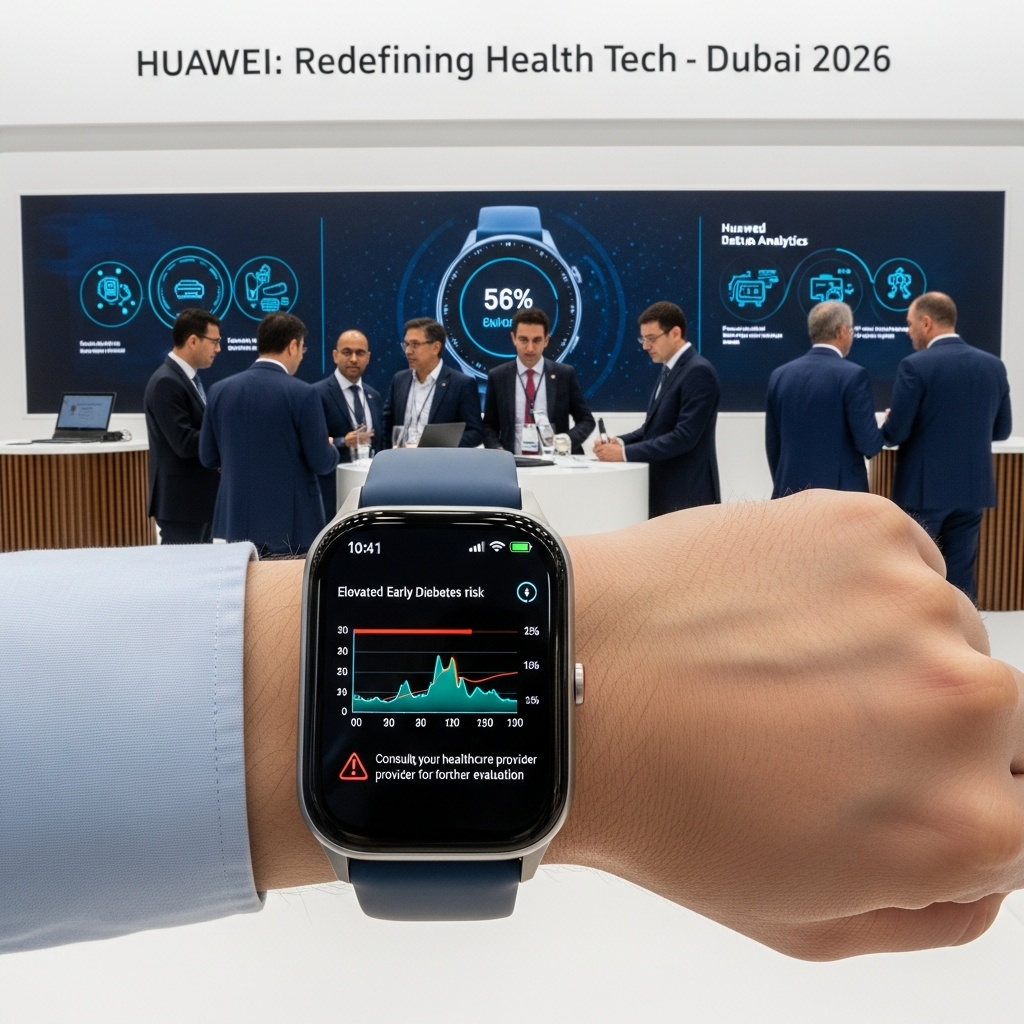
The global health landscape is witnessing a profound shift, moving from reactive treatment to proactive prevention. Leading this charge in personal wellness technology, Huawei has unveiled groundbreaking advancements in its smartwatches. These devices now offer a non-invasive way to potentially identify early diabetes risk trends. Unveiled at the World Health Expo Dubai 2026, this innovative feature harnesses advanced sensor technology. It aims to empower individuals with crucial insights into their health, encouraging timely medical consultation rather than providing a diagnosis. This strategic move positions Huawei smartwatches as vital tools for early awareness in the escalating battle against diabetes.
The Science Behind Smartwatch Diabetes Risk Detection
At the heart of Huawei’s new wellness feature is Photoplethysmography (PPG) technology. This sophisticated system utilizes advanced sensors embedded in Huawei smartwatches. These sensors meticulously analyze minute changes in PPG signals from the user’s wrist. The technology works by detecting variations in blood volume in the microvascular bed of the tissue. These variations are influenced by the heart’s pumping action. Emerging research, highlighted by Huawei, points to a fascinating link between resting heart rate and diabetes through shared genetic pathways. Furthermore, conditions like diabetes-related microvascular arteriosclerosis and neuropathy can subtly alter PPG signals. It is these physiological mechanisms that form the scientific foundation for the smartwatch’s analytical capabilities. By continuously processing this PPG data, the smartwatch identifies potential fluctuations indicative of blood sugar-related trends. This offers a personalized, proactive approach to monitoring one’s health.
Understanding the Global Diabetes Challenge
The urgent need for such early awareness tools cannot be overstated. Diabetes remains a significant global health crisis. According to a concerning 2024 report from the International Diabetes Federation (IDF), an staggering 589 million adults worldwide, aged between 20 and 79, are living with diabetes. Alarmingly, an estimated 43% of these cases remain undiagnosed. This means millions of people are unaware of their condition, delaying crucial interventions. The report also highlights a stark disparity: 81% of individuals with diabetes reside in low- and middle-income countries.
Regionally, the figures are equally stark. In the Middle East and North Africa, 85 million adults currently grapple with diabetes. This figure is projected to skyrocket by 92% to 163 million by 2050. The UAE itself faces a substantial challenge, with diabetes prevalence among adults standing at 20.7%. These statistics underscore the critical importance of accessible, non-invasive technologies that can support early detection and preventative care, empowering communities to take charge of their health.
How Huawei Smartwatches Deliver Health Insights
Activating this powerful wellness feature on a Huawei smartwatch is straightforward. Users simply need to wear their device consistently for a specific period, typically ranging from three to 14 days. During this time, the smartwatch diligently collects and analyzes PPG data. Once sufficient data is accumulated, the “Diabetes Risk app” within the smartwatch ecosystem processes these patterns. It then categorizes the user’s wellness profile into one of three levels: “Low,” “Medium,” or “High.”
Huawei strongly advises users flagged with “Medium” or “High” patterns to seek professional medical evaluation. This feature is carefully positioned as a preventative awareness tool. It is designed to prompt users to consult healthcare professionals for further assessment, rather than delivering a definitive medical diagnosis. This clear distinction is crucial. It highlights the smartwatch’s role as a supplementary aid in personal health management, working in conjunction with traditional medical practices.
Huawei’s Broader Commitment to Wearable Health Management
Huawei’s foray into advanced diabetes risk awareness is part of its extensive commitment to wearable health technology. The company has consistently invested in developing sophisticated health monitoring capabilities. For instance, Huawei’s WATCH D and WATCH D2 models are renowned for their blood pressure monitoring features. Professor Jiguang Wang, director of the Shanghai Institute of Hypertension, has been a key collaborator with Huawei. He spoke at the World Health Expo, emphasizing the growing significance of wearable-based PPG technology in fostering proactive health trend awareness. His expertise underscores the scientific rigor behind Huawei’s developments.
Beyond specific health metrics, Huawei smartwatches, such as the premium HUAWEI WATCH 5 Series, exemplify advanced health analysis. Features like “Health Glance” provide a comprehensive assessment of multiple body indicators. “Health Insights” then takes raw data and translates it into actionable, personalized health advice. This commitment extends to the build quality and user experience, with devices often featuring premium materials like sapphire glass, 904L stainless steel, or aerospace-grade titanium. Such innovations ensure both durability and accuracy for continuous health monitoring. Huawei’s strategy focuses on delivering substantial, meaningful upgrades in each new smartwatch iteration, rather than superficial annual updates.
Availability and Important Disclaimers
This crucial diabetes risk trend feature is already accessible to users. It’s available via an over-the-air (OTA) update on the HUAWEI WATCH GT 6 Pro. Huawei also has plans to broaden its compatibility across additional smartwatch models in the future. The company assures users that the feature is entirely safe for general use. It comes with no known side effects or contraindications, making it a reliable addition to daily health routines.
However, Huawei maintains a steadfast emphasis on its role as an awareness tool. The company explicitly states that this feature does not, and is not intended to, replace professional diabetes diagnostics or comprehensive clinical testing. It serves as a valuable preliminary indicator, prompting individuals to engage with their healthcare providers sooner. This empowers users with non-invasive insights to potentially identify and act on early health trends, thereby complementing established medical pathways.
Frequently Asked Questions
How does Huawei smartwatch technology identify potential diabetes risk?
Huawei smartwatches utilize advanced Photoplethysmography (PPG) technology. Sensors embedded in the watch analyze subtle changes in PPG signals. These signals are influenced by blood volume variations, which can be affected by diabetes-related conditions like microvascular arteriosclerosis and neuropathy. Additionally, research points to a shared genetic link between resting heart rate and diabetes. By continuously monitoring and analyzing this PPG data over a period (3-14 days), the smartwatch identifies patterns that may indicate potential blood sugar fluctuations, categorizing them as Low, Medium, or High risk for awareness purposes.
Which Huawei smartwatches currently offer the diabetes risk awareness feature?
The diabetes risk awareness feature is currently available via an over-the-air update on the HUAWEI WATCH GT 6 Pro. Huawei has also announced intentions to expand compatibility to additional smartwatch models in the future. To access the feature, users need to ensure their device is updated and then activate the “Diabetes Risk app” on their smartwatch. This provides personalized wellness patterns after a period of consistent wear, guiding users toward early consultation if patterns suggest a Medium or High risk.
Can Huawei smartwatches diagnose diabetes, or should I rely solely on their readings?
No, Huawei smartwatches cannot diagnose diabetes, and you should not rely solely on their readings for a medical diagnosis. Huawei explicitly states that this feature is a “preventative awareness tool” designed to raise awareness of potential blood sugar-related trends. Its purpose is to encourage users to seek early medical consultation from a professional healthcare provider. The technology does not replace professional diabetes diagnostics, clinical testing, or the advice of a medical doctor. Users flagged with Medium or High patterns are strongly recommended to get a professional medical evaluation.
Conclusion
Huawei’s latest advancement in smartwatch technology marks a significant stride in personal health management. By leveraging cutting-edge PPG sensors and scientific research, these smartwatches offer a powerful, non-invasive method for early diabetes risk awareness. In a world grappling with rising diabetes rates, empowering individuals with proactive health insights is invaluable. While these devices are not diagnostic tools, they serve as crucial early warning systems, encouraging timely medical engagement. As wearable technology continues to evolve, Huawei is clearly at the forefront, transforming smartwatches into essential companions for a healthier, more informed future.