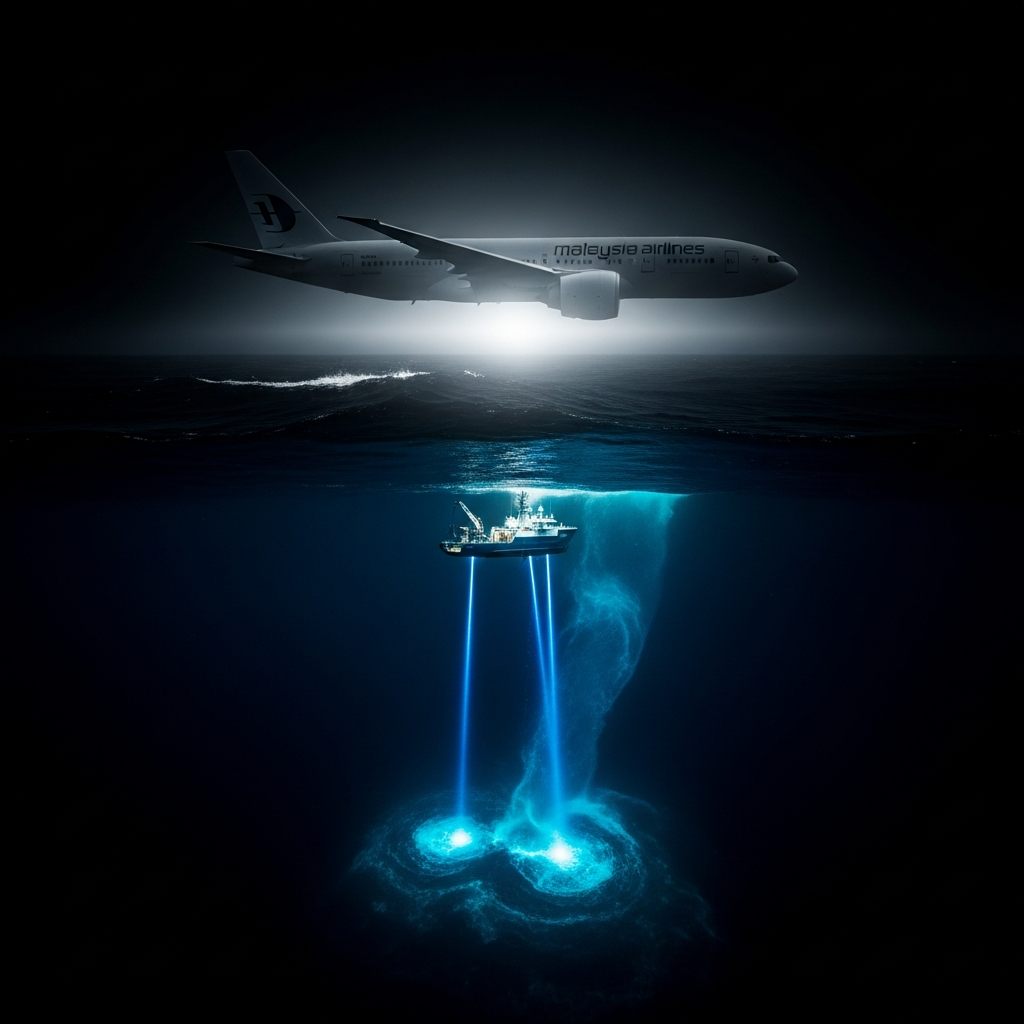
On March 8, 2014, Malaysia Airlines Flight 370, a Boeing 777, vanished during a routine flight from Kuala Lumpur to Beijing. Carrying 227 passengers and 12 crew members, its disappearance sparked an unprecedented international search. This event quickly evolved into one of aviation history’s most profound and enduring mysteries. Despite extensive efforts, the main wreckage has never been located. However, a significant new search effort is underway, rekindling hope for answers.
A Vanishing Act: The Day MH370 Disappeared
The journey of MH370 began routinely. The aircraft took off at 12:41 am local time, reaching its cruising altitude of 10,700 meters (35,000 feet) by 1:01 am. Soon after, critical communications ceased. The Aircraft Communication Addressing and Reporting System (ACARS), which transmits operational data, sent its final message at 1:07 am before being switched off. The last voice contact from the cockpit occurred at 1:19 am. Then, at 1:21 am, as the plane neared Vietnamese airspace, its transponder was intentionally turned off. This device is vital for air-traffic control tracking.
The Evasive Flight Path
Malaysian military and civilian radar systems continued to track the aircraft for a short period. They observed MH370 making a sharp turn. The plane flew southwest over the Malay Peninsula. It then veered northwest over the Strait of Malacca. Radar contact was finally lost over the Andaman Sea at 2:22 am. This unexpected deviation immediately complicated search efforts.
Despite the loss of radar contact, an Inmarsat satellite provided a crucial clue. It continued to receive hourly “handshake” signals from the aircraft. The last of these pings was detected at 8:11 am. This indicated the plane remained airborne for several hours after its transponder was deactivated.
The Unprecedented Search Begins
Initial search operations focused on the South China Sea. This was the intended flight path. However, the revelation of the plane’s westward turn redirected efforts. The search area shifted dramatically to the Strait of Malacca and the Andaman Sea. The Inmarsat data, disclosed on March 15, further expanded the potential crash zone. It suggested the plane could have been anywhere along two vast arcs. One arc stretched north across Asia, while the other extended southward into the remote Indian Ocean.
Pinpointing the Indian Ocean
By March 24, detailed analysis of the final satellite signals yielded a grim conclusion. Malaysian Prime Minister Najib Razak announced that Flight 370 had crashed. The location was determined to be a remote part of the Indian Ocean. This area lies approximately 2,500 km (1,500 miles) southwest of Australia. This declaration extinguished hopes of survival for all 239 individuals onboard. The extreme remoteness of the estimated crash site made any recovery operation incredibly challenging.
Acoustic Pings and False Hopes
In April 2014, an Australian ship detected several acoustic pings. These sounds were possibly from the aircraft’s flight recorder, also known as the “black box.” They were heard about 2,000 km (1,200 miles) northwest of Perth. Further analysis by the U.K. Air Accidents Investigation Branch (AAIB) found a partial signal from the plane at 8:19 am, consistent with these pings.
However, subsequent robotic submarine searches found no debris. Later tests suggested a faulty cable in the acoustic equipment might have generated the pings. This cast significant doubt on their origin and led to a dead end. The difficulty in confirming these signals highlighted the immense challenges of deep-sea exploration.
Fragments of a Puzzle: Debris Discovery
The first definitive piece of wreckage was found much later. On July 29, 2015, a right wing flaperon washed ashore. It was discovered on the French island of Réunion. This island is approximately 3,700 km (2,300 miles) west of the primary search area. This discovery provided the first tangible proof of the aircraft’s fate.
Over the next 18 months, 26 additional pieces of debris surfaced. These fragments were found along the shores of Tanzania, Mozambique, South Africa, Madagascar, and Mauritius. Of these, three were positively identified as belonging to MH370. Seventeen others were deemed highly likely to be from the missing plane.
Decoding the Debris
The presence of two pieces from the cabin interior was particularly telling. It suggested the plane broke apart. However, it remained unclear if this occurred in the air or upon impact with the ocean. Crucially, experts analyzed the Réunion flaperon and a right wing flap found in Tanzania. Their findings indicated the plane did not undergo a controlled descent. This means it was not guided to a gentle water landing. Some researchers theorize a vertical impact with the ocean. Such an event could explain the scarcity of physical evidence. The locations where debris washed ashore helped refine the search area. They allowed investigators to rule out unlikely crash sites given ocean currents. This ongoing analysis continues to inform potential new search efforts.
Unanswered Questions & Enduring Theories
Despite years of investigation and extensive searches, the ultimate fate and cause of MH370’s disappearance remain a profound mystery. The official joint search by Malaysia, Australia, and China concluded in January 2017. A private search by Ocean Infinity followed, ending in May 2017 without success. In July 2018, the Malaysian government’s final report stated that a mechanical malfunction was “extremely unlikely.” It concluded that the “change in flight path likely resulted from manual inputs.” However, investigators could not determine why Flight 370 disappeared.
Numerous theories have emerged over the years. These include hijacking, an onboard fire, or severe mechanical failure. One theory, pilot suicide, has gained significant traction among some experts. This theory centers on Captain Zaharie Ahmad Shah. In 2016, reports surfaced that Shah had flown a simulated route. This route, over the southern Indian Ocean, closely matched the missing aircraft’s final path. He reportedly conducted this simulation on his home flight simulator less than a month before the disappearance. Claims of personal domestic issues also contributed to speculation about a premeditated pilot-induced mass murder-suicide. However, none of these theories have ever been conclusively proven. The absence of the main fuselage means definitive answers remain elusive.
A Renewed Quest: The Latest Search Efforts
Eleven years after the tragic event, hope for closure has been reignited. Malaysia announced the resumption of a deep-sea search for Malaysia Airlines Flight MH370. The Malaysian transport ministry confirmed that the operation is recommencing. This marks a new chapter in the ongoing quest to locate the Boeing 777.
Ocean Infinity’s ‘No-Find, No-Fee’ Deal
The renewed search is being led by US-based marine robotics company Ocean Infinity. They are operating under a unique “no-find, no-fee” agreement. This deal was approved by Malaysia in March. It means Ocean Infinity will only receive a payment of $70 million if the wreckage is successfully located. This innovative financial model incentivizes success while minimizing governmental risk. The operation is scheduled for an intermittent total of 55 days. It will concentrate on high-priority zones. These zones span a 15,000 square kilometer area. This area has been identified as having the highest probability of containing the aircraft’s remains.
This effort represents a further attempt by Ocean Infinity. A previous private search by the company in 2018 also concluded without success. The decision to resume underscores Malaysia’s commitment. They aim to provide long-awaited closure to the families of the victims. These families have endured over a decade of uncertainty and profound grief. The search for MH370 remains one of the most expensive multinational searches in aviation history. Yet, it has not yielded a confirmed wreck site to date. The formidable operational challenges of deep-sea exploration continue.
The Human Cost: Impact on Families
The prolonged uncertainty surrounding MH370 has had a deep and lasting impact on the families. Grace Nathan, whose mother was onboard, expressed considerable relief at the search resuming. Similarly, Jaquita Gonzales, wife of MH370 flight supervisor Patrick Gomes, voiced her hope for much-needed closure. For these families, the memories of their loved ones remain fresh. They have consistently and mournfully awaited answers regarding the flight’s fate. The new search by Ocean Infinity offers a renewed glimmer of hope. It aims to bring a definitive resolution to this protracted and painful enigma. Understanding the implications for aviation safety protocols remains a key area of discussion, highlighting the need for advanced tracking technologies.
Frequently Asked Questions
What are the leading theories behind the disappearance of Malaysia Airlines Flight MH370?
While no theory has been conclusively proven, the leading hypothesis suggests a deliberate change in the flight path due to “manual inputs.” This conclusion came from the Malaysian government’s 2018 report. The pilot suicide theory has gained significant credence. This is partly due to reports that Captain Zaharie Ahmad Shah had practiced a flight simulation route closely matching MH370’s final path shortly before the disappearance. Other theories, including hijacking or mechanical failure, have largely been dismissed as “extremely unlikely” by official investigations.
Where are current search efforts for MH370 focused, and who is leading them?
The current deep-sea search for MH370 is focused on high-priority zones in the remote southern Indian Ocean. These zones cover a 15,000 square kilometer area. The operation is being led by the US-based marine robotics company, Ocean Infinity. This is a renewed effort following previous unsuccessful searches. The Malaysian transport ministry confirmed the resumption, emphasizing their commitment to finding the wreckage and providing closure to the victims’ families.
Why is Ocean Infinity conducting a new search for MH370 under a “no-find, no-fee” agreement?
Ocean Infinity is conducting the new search under a “no-find, no-fee” deal approved by the Malaysian government. This unique agreement means the company will only receive a payment of $70 million if the wreckage of MH370 is successfully located. This model incentivizes the company to find the aircraft. It also minimizes financial risk for the Malaysian government, given the extensive costs and past failures of previous search efforts. The deal reflects a strategic approach to resolve one of aviation’s greatest mysteries.
Conclusion
The disappearance of Malaysia Airlines Flight MH370 remains one of the most perplexing puzzles in modern aviation. Despite years of intensive international searches, the main wreckage has eluded discovery. The sporadic findings of debris, though providing concrete evidence of the plane’s demise, have only fueled further questions about the precise circumstances. The enduring mystery continues to weigh heavily on the families of those onboard. The renewed search by Ocean Infinity, operating under a novel “no-find, no-fee” model, offers a fresh glimmer of hope. As the world watches, there is a collective prayer that this latest effort will finally bring the long-awaited answers and closure to a decade-old enigma.