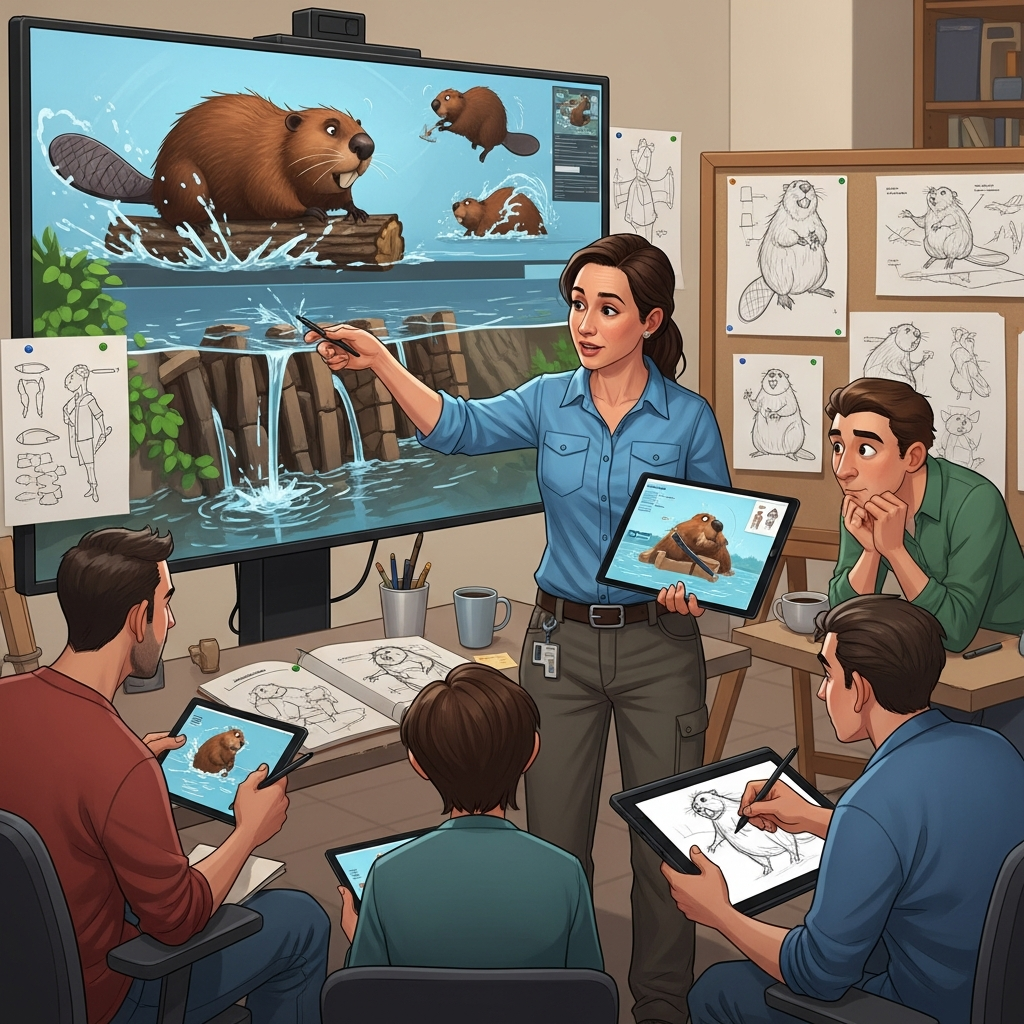
The intricate world of animation often sparks wonder, but for Disney-Pixar’s newest film, “Hoppers,” that magic is grounded in real science. Emily Fairfax, an assistant professor of geography at the University of Minnesota, played a pivotal role in ensuring the movie’s animated beavers were astonishingly true to life. As an eco-hydrologist and a leading authority on beavers and their habitats, Fairfax brought her decade of research directly to the animators, transforming animated characters into scientifically authentic portrayals. This collaboration highlights the University of Minnesota’s commitment to applied science and its influence on broader cultural narratives.
From Wetlands to Hollywood: A Decade of Beaver Science
Emily Fairfax spends her days immersed in the natural world. Whether splashing through wetlands in muck boots or analyzing data at her computer, her work focuses on beavers. Specifically, she studies how these incredible creatures modify landscapes by altering the flow of rivers and streams. This specialized knowledge positioned her perfectly to consult on “Hoppers,” a film featuring beavers as central characters.
Last week, Fairfax experienced a surreal transition from the field to the red carpet in Los Angeles. She attended the premiere of Disney-Pixar’s “Hoppers,” an experience she described as a once-in-a-lifetime opportunity. “I think it’s probably the only time I’ll get a movie credit in my life,” she shared. “It’s not a usual part of my line of work.” Yet, seeing her research echoed on the big screen, bringing genuine laughter and tears from the audience, proved incredibly rewarding.
The Animator-Scientist Collaboration
Fairfax’s journey with Pixar began in 2021. After a compelling presentation on beaver ecology in California, the animation giant—known for groundbreaking films like “Inside Out” and “Toy Story”—extended an invitation. They wanted her to share her expertise with their creative teams.
“Over the next five years, it escalated into more and more talks,” Fairfax explained. The collaboration deepened significantly. She even took the entire art team into the field for a week, immersing them in the natural environment. Donning waders, the animators experienced firsthand the very ponds and wetlands Fairfax studies, gaining invaluable insight into beaver behavior and habitat.
Throughout the movie’s production, Fairfax reviewed early versions. She provided crucial feedback on how the beavers looked, moved, and interacted with other animals. Her persistent guidance led to a remarkable transformation. The movie’s depiction of beavers evolved, becoming increasingly scientifically accurate.
Bringing Beavers to Life with Scientific Accuracy
Fairfax often vocalized her frustration with the common inaccuracies of beavers in popular media. Remarkably, the Pixar team genuinely listened and embraced her critiques. She emphasized the importance of portraying beavers as unique characters, rooted in real biology, rather than just another “cuddly animal.”
One striking example involves beaver tail posture. Films often show beavers sitting with their flat tails stretched out behind them. However, this is anatomically impossible. A beaver’s spine extends all the way to its tail tip, requiring them to tuck it underneath them when sitting. Fairfax’s insistence paid off. In “Hoppers,” the beavers all sit correctly, tail tucked—except for Mabel, the robotic beaver. Her outstretched tail cleverly serves as a subtle, visual clue that she isn’t a real animal. This detail exemplifies the thoughtful integration of science.
Not every scientific suggestion made the final cut. Fairfax pointed out that a beaver’s powerful, self-sharpening teeth are naturally orange, rich with iron-based enamel. While scientifically accurate, the Pixar team found that orange teeth didn’t visually harmonize with the animated beavers’ orangish fur. They opted for an off-white instead. Fairfax viewed this as a “good compromise,” showcasing the delicate balance between scientific fidelity and artistic interpretation.
Beyond the visual details, Fairfax’s influence extended to the narrative. There’s even a biology professor character named Dr. Sam, whose full name is Dr. Samantha Emily Fairfax. A classroom scene prominently features her actual handwriting, complete with notes and equations, on a whiteboard. These personal touches further solidify the genuine nature of the collaboration.
Beyond the Screen: Ecological Impact of Beavers
Fairfax strongly believes “Hoppers” excels at portraying beavers as “ecosystem engineers.” These diligent creatures create dams that dramatically change their surroundings for the better. Their activities slow water flow, reduce flooding risks, and significantly improve water quality. These beaver-created wetlands, often rich in biodiversity, provide essential habitat for countless fish, birds, and other wildlife.
“When you lose that beaver, you also lose the homes for the other animals,” Fairfax passionately stated. “If you trap a beaver out, if you remove its dam, you will take away a lot more than just the beaver from that ecosystem.” This critical message underscores the interconnectedness of ecosystems.
Many perceive beavers as nuisances, frustrating in their stubbornness to build dams or plug culverts, often leading to flooded roads. Fairfax acknowledges this perspective. “They’re second only to us in their ability to modify the physical Earth, so we get frustrated by them,” she noted.
Yet, her groundbreaking research demonstrates their profound benefits. Beaver dams and the small canals they dig help spread water across the landscape. This allows water to seep slowly into the soil, filtering nutrients and maintaining lush, green vegetation, which enhances an ecosystem’s resilience against flooding, drought, and wildfires. “Hoppers” breaks from past cinematic tropes by portraying wetlands not as scary or gross, but as beautiful, biodiverse spaces. “Yes, they are muddy, and yes, they are messy,” Fairfax concedes, “But they’re really special places worth protecting.”
University of Minnesota’s Broader Ecological Reach
Emily Fairfax’s work with Pixar is just one example of the University of Minnesota’s deep commitment to understanding and protecting natural ecosystems. The UMN is a hub for groundbreaking ecological research and public outreach. For instance, the University of Minnesota Bee Lab actively champions bee conservation, health, and diversity through extensive research, education, and mentorship. Like Fairfax, Bee Squad program director Jessica Helgen and her team emphasize public engagement, highlighting the critical role of diverse bee species—Minnesota alone hosts over 500—in our food system and environment. Their efforts, much like Fairfax’s, focus on educating the public on how to support these vital “ecosystem engineers,” whether through planting varied blooms or avoiding harmful pesticides. This collective expertise across different species reinforces UMN’s leadership in applied ecological science.
Fairfax hopes “Hoppers” will have a lasting impact similar to Pixar’s 2003 film, “Finding Nemo,” which significantly boosted public interest in ocean conservation. A movie, she recognizes, can reach an audience of millions—far exceeding the reach of academic research alone. The film also delicately explores the tension between human needs and nature conservation. Fairfax hopes viewers will internalize the lesson that humans and animals are integral parts of the same ecosystem. “Our best path forward is definitely to work together,” she concludes, “instead of to constantly be butting heads with the animal world.” This collaborative spirit, she believes, is essential for a sustainable future.
Frequently Asked Questions
What was Emily Fairfax’s specific role in “Hoppers” and why was it important?
Emily Fairfax, an eco-hydrologist and geography professor at the University of Minnesota, served as a science expert for Disney-Pixar’s “Hoppers.” Her role involved advising the animation team on beaver biology and behavior to ensure scientific accuracy. She gave numerous talks, led animators on field trips to wetlands, and reviewed early film versions, offering feedback on beaver appearance and interactions. This was crucial for portraying beavers authentically, moving beyond common inaccuracies to create characters that resonated with real-world biology and enhanced the film’s educational impact.
How do beavers benefit ecosystems, and why are they called “ecosystem engineers”?
Beavers are known as “ecosystem engineers” because of their extraordinary ability to modify their environment, second only to humans. By building dams and digging canals, they dramatically alter landscapes. These actions slow water flow, creating wetlands that reduce flood risks, filter water, and make surrounding land more resilient to droughts and wildfires. These modified habitats provide crucial homes for a diverse range of wildlife, including fish, birds, and other animals. Their impact transforms the physical and biological characteristics of entire ecosystems for the better.
How does scientific consultation like Fairfax’s impact animated films and public perception of wildlife?
Scientific consultation, as demonstrated by Emily Fairfax’s work on “Hoppers,” significantly elevates the authenticity and educational value of animated films. By ensuring accurate depictions of wildlife, these movies can subtly educate vast audiences, especially children, about complex ecological concepts. This can foster a deeper appreciation and understanding of nature, challenging misconceptions and inspiring interest in conservation. Accurate portrayals help shape a more informed public perception, potentially leading to greater support for environmental protection, much like “Finding Nemo” boosted ocean conservation awareness.