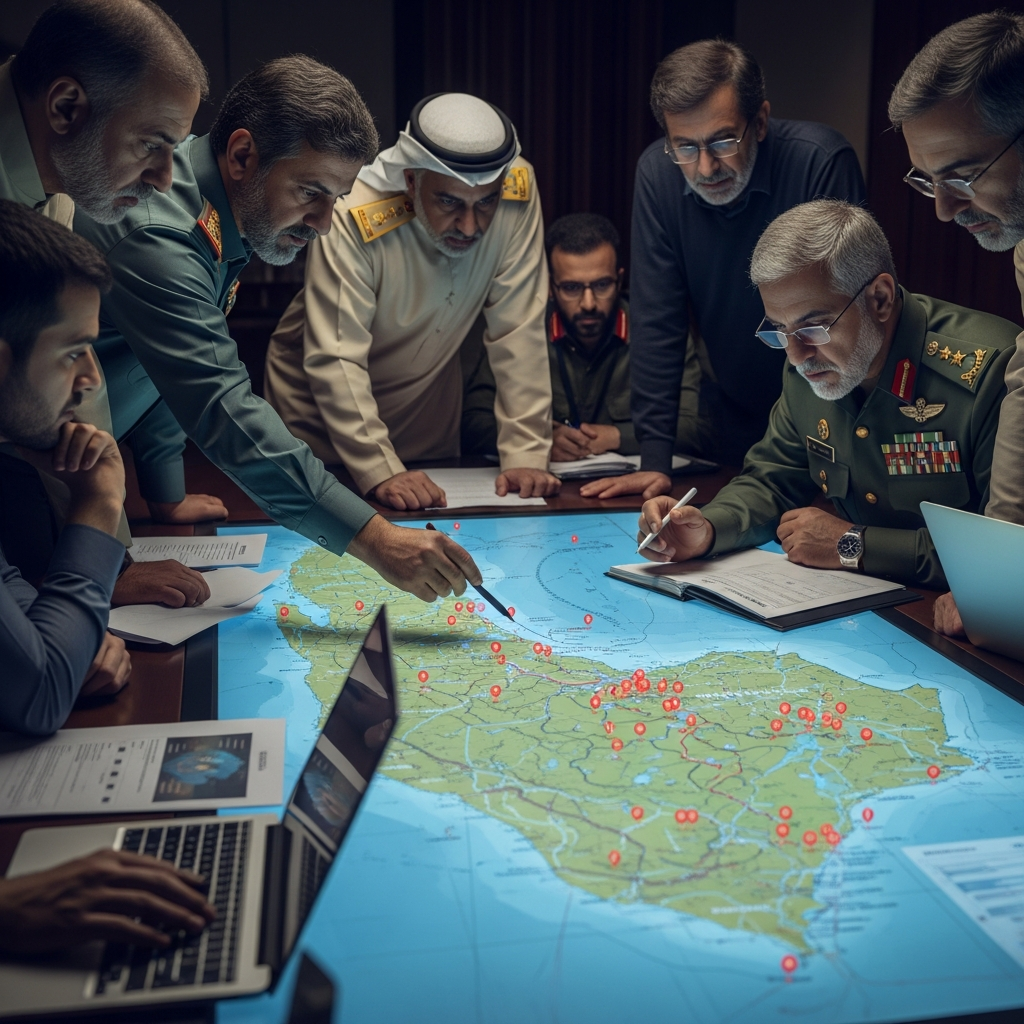
The Middle East teeters on the brink of an unprecedented escalation as the United Arab Emirates (UAE) considers direct military action against Iranian missile and drone sites. This critical deliberation comes after a relentless barrage of attacks on the UAE and other Gulf nations, signaling a dangerous deepening of regional hostilities. The decision, if taken, would mark a significant shift in the strategic landscape, reflecting profound anger and a determination to halt further aggressions.
Unprecedented Escalation: Iran’s Widening Assault on the Gulf
Recent developments reveal a dramatic expansion of Iranian retaliatory strikes across the Gulf region. Initially, these attacks reportedly targeted US military assets in countries like Bahrain, Saudi Arabia, Qatar, Iraq, and the UAE. However, a significant shift has occurred. Gulf states now report that Tehran has broadened its targets, increasingly including vital civilian infrastructure and energy facilities. This move has alarmed international observers and severely strained regional stability.
The scope of these assaults is extensive:
Energy Infrastructure: QatarEnergy, a global LNG giant, halted production after attacks on its Ras Laffan and Mesaieed facilities. Saudi Arabia’s Ras Tanura plant, a major oil refinery, also shut down following a fire caused by drone debris. While Iran publicly denied targeting energy sites, these incidents highlight severe economic vulnerabilities.
Airports: Abu Dhabi and Dubai (UAE), and Erbil (Iraq) airports were hit, causing flight disruptions and widespread concern. One incident at Zayed International Airport resulted in a fatality and multiple injuries.
- Civilian Structures: Several residential buildings in Bahrain’s Manama were struck. Fires and smoke reached prominent landmarks in the UAE, including the Palm Jumeirah and a five-star hotel. Reports also indicate the US embassy in Riyadh suffered a “limited fire” from drone strikes, and the US consulate in Dubai sustained partial damage.
- www.aljazeera.com
- www.theguardian.com
- unn.ua
- sundayguardianlive.com
- www.atlanticcouncil.org
The UAE alone has faced a staggering number of incursions. According to reports, the nation endured approximately 800 projectiles, surpassing even the attacks Israel experienced from Iran during the same period. The Emirati Defense Ministry confirmed intercepting 172 out of 186 launched ballistic missiles, with 13 falling into the sea and one landing on Emirati territory. Other Gulf nations reported similar defensive efforts, with Qatar intercepting 98 out of 101 ballistic missiles and Bahrain destroying 73 missiles and 91 drones.
The UAE’s Dire Stance: A Right to Self-Defense
The consideration of military action by the UAE is described as unprecedented. This reflects the intense frustration and anger among Gulf countries over continuous Iranian attacks aimed at civilian infrastructure, as well as crucial oil and gas facilities. Despite not being directly involved in the war, the UAE has borne a heavy toll from these persistent assaults.
“The UAE is considering taking active defensive measures against Iran,” a source familiar with Emirati policy discussions indicated. The Emirati foreign ministry issued a statement affirming the nation’s “right to self-defense” under international law. While emphasizing that the UAE “has not taken any decision to alter its defensive posture” yet, the intent to protect its sovereignty and citizens is clear. This sentiment is echoed by diplomatic moves, including the UAE’s previous decision to close its embassy in Iran and withdraw its diplomatic mission, directly linking it to Iranian attacks on civilian structures. Anwar Gargash, foreign policy adviser to the UAE president, articulated that Iran’s attacks against Gulf states were a “miscalculation” that has further isolated Tehran.
The High Stakes: A Regional Conflict in Flux
Iran’s strategic shift to target civilian infrastructure and energy sites serves multiple purposes, according to analysts. It demonstrates Tehran’s military capabilities to retaliate simultaneously across various locations. Furthermore, it sends a global political message: any attack on Iran will have widespread economic repercussions throughout the region, impacting global energy consumers. Iran, long accustomed to sanctions, appears to believe it is more resilient to economic shocks, even benefiting from rising oil prices.
The broader conflict is rapidly evolving into a “salvo competition,” a dangerous dynamic where the outcome depends on which side depletes its arsenal of missiles, drones, or crucial air defense interceptors first. With Iran lacking a modern air force, it relies heavily on its robust missile and drone capabilities. Over 1,000 strikes have been launched across nearly a dozen countries, marking the widest conflict in the Middle East since World War II.
This conflict presents a grim economic calculus. Intercepting a drone can cost up to five times more than producing one, creating a significant imbalance that favors Iran’s strategy of attrition. While Gulf states like the UAE and Qatar assure robust strategic stockpiles, experts caution they are “burning through a lot of them,” potentially leading to difficult choices about what critical assets to protect. The depletion of these advanced, expensive, and slow-to-replenish interceptors could dictate the war’s trajectory, potentially forcing a negotiated settlement if air defenses run low.
Civilian Toll and Economic Ripples
The human cost of this escalating conflict is becoming increasingly evident. An Indian expatriate sustained injuries in the UAE, highlighting the dangers faced by the substantial foreign worker population in the region. The targeting of airports led to the closure of airspace, stranding tens of thousands of travelers and forcing major airlines to suspend operations. Such disruptions severely impact the region’s vibrant tourism and business sectors.
Beyond direct casualties, the attacks pose significant risks to critical economic arteries. Maritime shipping, particularly through the Strait of Hormuz, remains highly vulnerable. This crucial waterway is vital for global energy flows, with oil tankers continuously navigating the volatile security situation. Any further disruption could trigger severe consequences for global energy markets, amplifying inflationary pressures worldwide.
Expert Outlook: Navigating a Perilous Path
Experts warn that a major military conflict involving Iran carries profound and unpredictable risks. Beyond immediate military objectives, such a confrontation raises serious questions about international law and the potential for unintended consequences. Concerns range from the legal justification for strikes to the humanitarian impact on civilian populations. Any escalation risks broadening the conflict beyond military targets, leading to wider regional instability.
A prolonged “death by a thousand cuts” campaign by Iran, aiming to wear down its enemies through sustained attacks, could severely undermine civilian morale and escalate financial costs for all involved. Conversely, should Iran exhaust its missile capabilities, it might be compelled to seek peace. However, the immense expense and limited availability of advanced defensive weapons underscore the precarious balance in this critical geopolitical standoff. The trajectory of this conflict hinges on these complex strategic and economic factors.
Frequently Asked Questions
What specific types of targets has Iran hit across the Gulf region?
Initially, Iran primarily targeted US military assets. However, attacks have significantly expanded to include crucial civilian infrastructure and energy facilities across the Gulf. Specific targets hit include the headquarters of the US Navy’s 5th Fleet in Bahrain, airbases in Kuwait and Qatar, major oil refineries like Saudi Aramco’s Ras Tanura plant, and QatarEnergy facilities. Civilian targets have included airports in Dubai, Abu Dhabi, and Erbil, residential buildings in Manama, and prominent hotels. US embassies in Riyadh and Kuwait City, along with the US consulate in Dubai, have also sustained damage.
What is prompting the UAE to consider military action against Iran, and what are the diplomatic implications?
The UAE is considering military action primarily due to the relentless and unprecedented missile and drone strikes from Iran. The nation has endured hundreds of projectiles, with many targeting civilian areas and vital economic infrastructure. This has generated “enormous anger” across Gulf countries. While the UAE asserts its right to self-defense, its foreign ministry has stated no immediate decision to alter its defensive posture. Diplomatic implications include the UAE’s previous closure of its embassy in Iran and the withdrawal of its diplomatic mission, signaling severe disapproval and a breakdown in relations. Other regional states have also condemned Iran’s actions, emphasizing the need for de-escalation.
How might the ongoing “salvo competition” between regional powers affect stability and global energy markets?
The “salvo competition” refers to the conflict’s outcome being determined by which side depletes its arsenal of missiles, drones, or air defense interceptors first. This dynamic creates significant instability. Iran’s strategy of attrition, involving lower-cost drone attacks met by expensive interceptors, could exhaust the defensive capabilities of Gulf states. If air defenses run low, it might force a halt to offensive operations or lead to greater vulnerability for critical targets. For global energy markets, sustained attacks on oil and gas facilities, coupled with disruptions to maritime shipping in key routes like the Strait of Hormuz, could severely impact supply chains, cause production halts, and lead to volatile price spikes, ultimately affecting the global economy.
Conclusion: A Precarious Future for the Gulf
The UAE’s contemplation of military action against Iran marks a pivotal moment in the escalating Middle East conflict. Driven by a relentless wave of missile and drone attacks targeting its civilian and economic infrastructure, the decision underscores a deepening crisis that draws in nations previously seeking neutrality. The regional landscape is now characterized by unprecedented tensions, a dangerous “salvo competition,” and significant risks to human life, vital energy supplies, and global economic stability. As Gulf nations weigh their responses, the world watches, recognizing that the choices made today will profoundly shape the future of a crucial and volatile region.