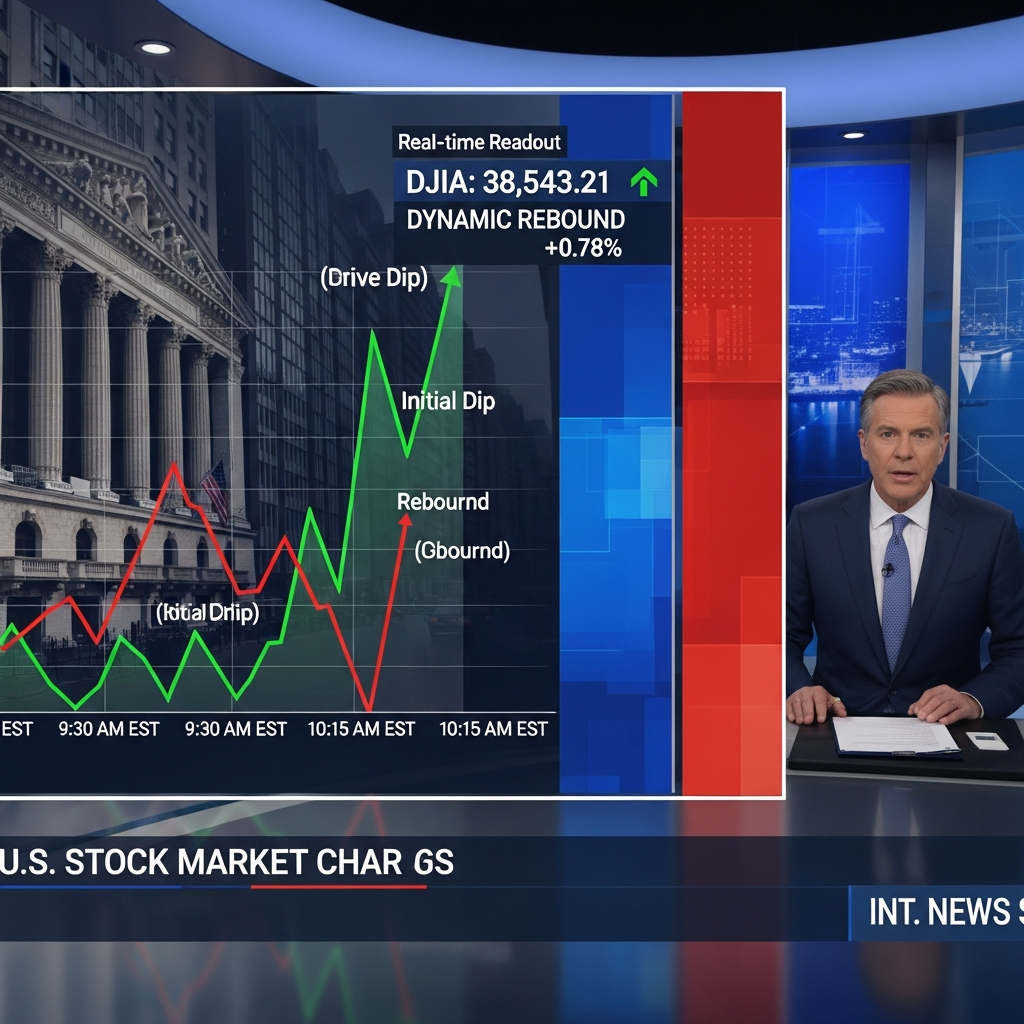
Geopolitical anxieties gripped global markets on Monday, March 2, 2026, as escalating worries about a potential war with Iran sent oil prices soaring. Despite an initial plunge, U.S. stock markets demonstrated remarkable resilience, rapidly erasing losses to finish near flat, driven by a complex interplay of historical trends, sector-specific gains, and robust underlying economic fundamentals. This tumultuous trading day underscored the market’s evolving “new normal”—a pattern of sharp intraday dips followed by swift V-shaped recoveries, challenging traditional responses to global shocks.
Oil Surges Amid Iran Conflict Fears, Fueling Inflation Worries
Concerns over a potential conflict with Iran dramatically impacted energy markets. Crude oil prices jumped over 6% on Monday, with the benchmark U.S. crude settling at $71.23 per barrel (a 6.3% rise) and Brent crude, the international standard, climbing 6.7% to $77.74 per barrel. This significant leap was largely driven by fears that military action could disrupt the global flow of crude, exacerbating already challenging inflationary pressures.
The immediate consequence of higher crude prices is a likely increase in gasoline costs at the pumps. This poses a direct threat to U.S. households, whose spending forms the bedrock of the American economy. Businesses, particularly those with substantial fuel expenditures, also face increased operational costs. Beyond oil, natural gas prices remained elevated after a major liquefied natural gas supplier to Europe halted production due to the conflict, signaling potential rises in winter heating bills. While U.S. officials, including Defense Secretary Pete Hegseth, sought to downplay the longevity of any conflict, stating, “This is not Iraq…This is not endless,” fear remained a palpable force across trading floors.
US Stocks Defy Initial Plunge with Rapid Rebound
The U.S. stock market experienced a rollercoaster day. The S&P 500 initially fell as much as 1.2% at the open, with travel-related sectors leading the decline. However, a rapid turnaround saw the index recover almost all its losses, closing with a marginal gain of less than 0.1% (up 2.74 points to 6,881.62). Similarly, the Dow Jones Industrial Average dipped 0.1% (73.14 points) to 48,904.78, and the Nasdaq composite rose 0.4% (80.65 points) to 22,748.86, both clawing back from steep early drops. This swift recovery highlights a significant market characteristic: a tendency to quickly bounce back from volatility.
Several factors contributed to this impressive market resilience. Strategists at Morgan Stanley, led by Michael Wilson, highlighted historical precedents, noting that past military conflicts in the Middle East have rarely caused sustained market downturns. They suggested that oil prices would likely need to surpass $100 per barrel to trigger a significant, long-term impact on U.S. stocks. Furthermore, historical data going back to the Korean War (1950) and the 1956 Suez Crisis indicates that the S&P 500 has averaged gains of 2%, 6%, and 8% in the one, six, and twelve months following “geopolitical risk events.”
Sectoral Winners and Losers
The market’s rebound was not uniform across all sectors. Oil companies benefited directly from surging crude prices. Exxon Mobil climbed 1.1%, and Marathon Petroleum rose 5.9%. Military equipment manufacturers also saw gains, with Northrop Grumman strengthening 5.9% and RTX rallying 4.7%. Palantir Technologies, known for its software supporting global defense agencies, jumped 5.8%, emerging as one of the S&P 500’s strongest performers. Additionally, major technology stocks, including Nvidia (up 2.9%), provided crucial support, acting as a primary driver for the S&P 500’s ascent.
However, certain sectors faced significant headwinds. Airlines bore the brunt of increased fuel costs and reported travel disruptions in the Middle East. American Airlines lost 4.2%, United Airlines fell 2.9%, and Delta Air Lines sank 2.2%. Cruise operators, such as Norwegian Cruise Line Holdings, plunged 10.6% amid concerns about reduced consumer discretionary spending and weaker-than-expected revenue forecasts. The housing industry also struggled, as rising Treasury yields threatened to push mortgage rates higher. Homebuilder D.R. Horton lost 3.7%, and Builder FirstSource sank 4.7%.
Inflationary Pressures and the Federal Reserve’s Dilemma
The surge in oil prices intensified worries about inflation, which was already described as “worse than nearly everyone would like.” This upward pressure significantly complicates the Federal Reserve’s monetary policy decisions. Typically, investors seeking safety during nervous periods would drive Treasury yields down. However, on Monday, yields climbed, reflecting fears that persistent inflation could “tie the Federal Reserve’s hands,” preventing much-anticipated interest rate cuts.
The yield on the 10-year Treasury rose to 4.04% from 3.97% late Friday. A better-than-expected report on U.S. manufacturing growth also contributed to this rise, signaling continued economic strength that could also stoke inflation. The Fed faces a delicate balancing act: lower rates can stimulate economic growth and job creation but risk worsening inflation, while higher rates have the opposite effect. The current inflationary environment, fueled by energy costs, makes the prospect of immediate rate cuts less likely.
The Market’s “New Normal”: Data Over Narratives
The rapid V-shaped recovery witnessed on Monday aligns with what Deutsche Bank has termed a “new normal” for the U.S. stock market in early 2026. This phenomenon describes frequent sharp intraday declines that quickly rebound, averting sustained crises. This pattern, observed across various risk events including geopolitical tensions, tariff threats, and tech-sector concerns, suggests that the market currently places significantly more weight on “real data” than on “news narratives.”
Despite initial volatility stemming from geopolitical events and other factors like trade uncertainty or AI concerns mentioned in other analyses, strong macroeconomic fundamentals provide a powerful cushion. The U.S. economy continues to exhibit robust growth, manufacturing indicators are strong, and even the Eurozone shows resilience. This backdrop ensures that individual risk events are often perceived as “buyable volatility” rather than signals of a genuine trend reversal. Investors are effectively “buying the dip,” confident in the underlying strength of the economy.
International Markets and Ongoing Uncertainty
While U.S. stocks ultimately rebounded, international markets largely saw declines. Germany’s DAX lost 2.6%, France’s CAC 40 fell 2.2%, and Hong Kong’s Hang Seng dropped 2.1%. Shanghai stocks were an outlier, rising 0.5%. Even with the U.S. market’s recovery, a sense of fear persisted, leading to continued volatility in subsequent days, with some tech stocks pulling Wall Street lower on Tuesday. Gold, a traditional safe-haven asset, also saw its price climb 1.2% on Monday as investors sought security amidst the global uncertainty. This flight to safety is a common feature of volatile periods.
Frequently Asked Questions
How did the Iran conflict impact oil prices and global inflation on March 2, 2026?
On March 2, 2026, concerns about a potential war with Iran caused benchmark U.S. crude oil prices to jump 6.3% to $71.23 per barrel, with international Brent crude climbing 6.7% to $77.74. This surge was driven by fears of disruptions to global crude flow, which would intensify existing inflationary pressures. Higher oil prices are expected to lead to increased gasoline costs for U.S. households and businesses, and natural gas prices also remained elevated, contributing to broader inflation worries.
What sectors showed resilience, and which were vulnerable during the market volatility?
During the market’s initial decline and subsequent rebound on March 2, 2026, several sectors demonstrated resilience. Oil companies (like Exxon Mobil and Marathon Petroleum) and military equipment manufacturers (Northrop Grumman, RTX) benefited directly from rising crude prices and increased defense spending prospects. Tech giants, notably Nvidia, also provided strong support. Conversely, sectors vulnerable to higher fuel costs and travel disruptions suffered significant losses, including airlines (American, United, Delta) and cruise lines (Norwegian Cruise Line Holdings). The housing industry also struggled due to fears of rising mortgage rates.
Why did U.S. stock markets quickly rebound despite significant geopolitical fears?
U.S. stock markets rebounded quickly due to a combination of factors, including historical precedents and robust macroeconomic fundamentals. Strategists noted that past military conflicts haven’t typically caused sustained market downturns, and oil prices needed to exceed $100 per barrel for a long-term impact. Deutsche Bank’s analysis highlighted a “new normal” of “V-shaped rebounds” driven by strong U.S. economic growth and manufacturing data, which cause the market to prioritize “real data” over “news narratives.” This underlying strength allows investors to “buy the dip” even amid geopolitical and other uncertainties.
Conclusion
The market activity on March 2, 2026, serves as a powerful reminder of how quickly global events can ripple through financial systems. While the immediate threat of an Iran conflict sent oil prices soaring and initially rattled equities, the U.S. stock market showcased a remarkable capacity for recovery. This resilience, characterized by rapid V-shaped rebounds, appears to be the “new normal”—a market less swayed by immediate headlines and more anchored by strong economic fundamentals and historical patterns.
Looking ahead, investors and consumers alike will continue to closely monitor geopolitical developments, the trajectory of inflation, and the Federal Reserve’s stance on interest rates. Navigating these complex dynamics requires a strategic perspective, understanding that while volatility is inevitable, the market’s underlying strength can often lead to swift recoveries from short-term shocks.