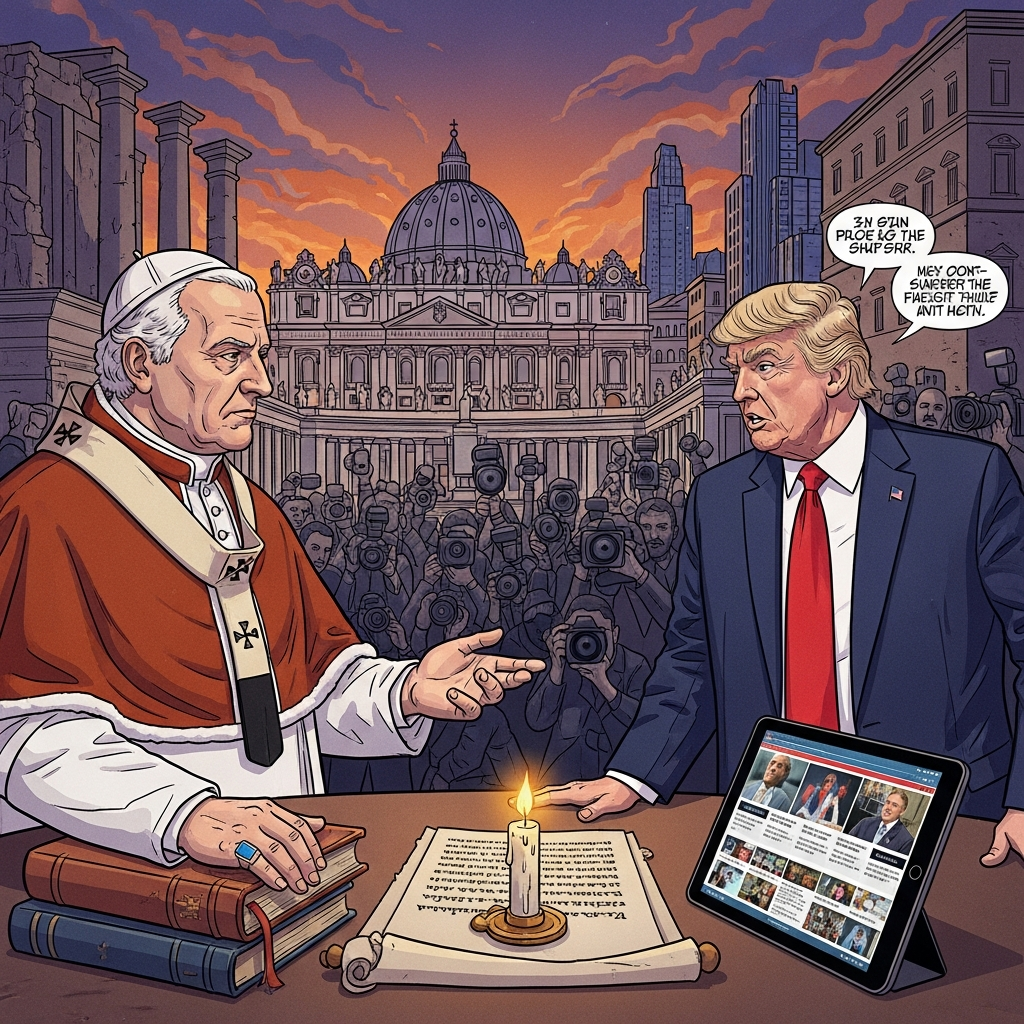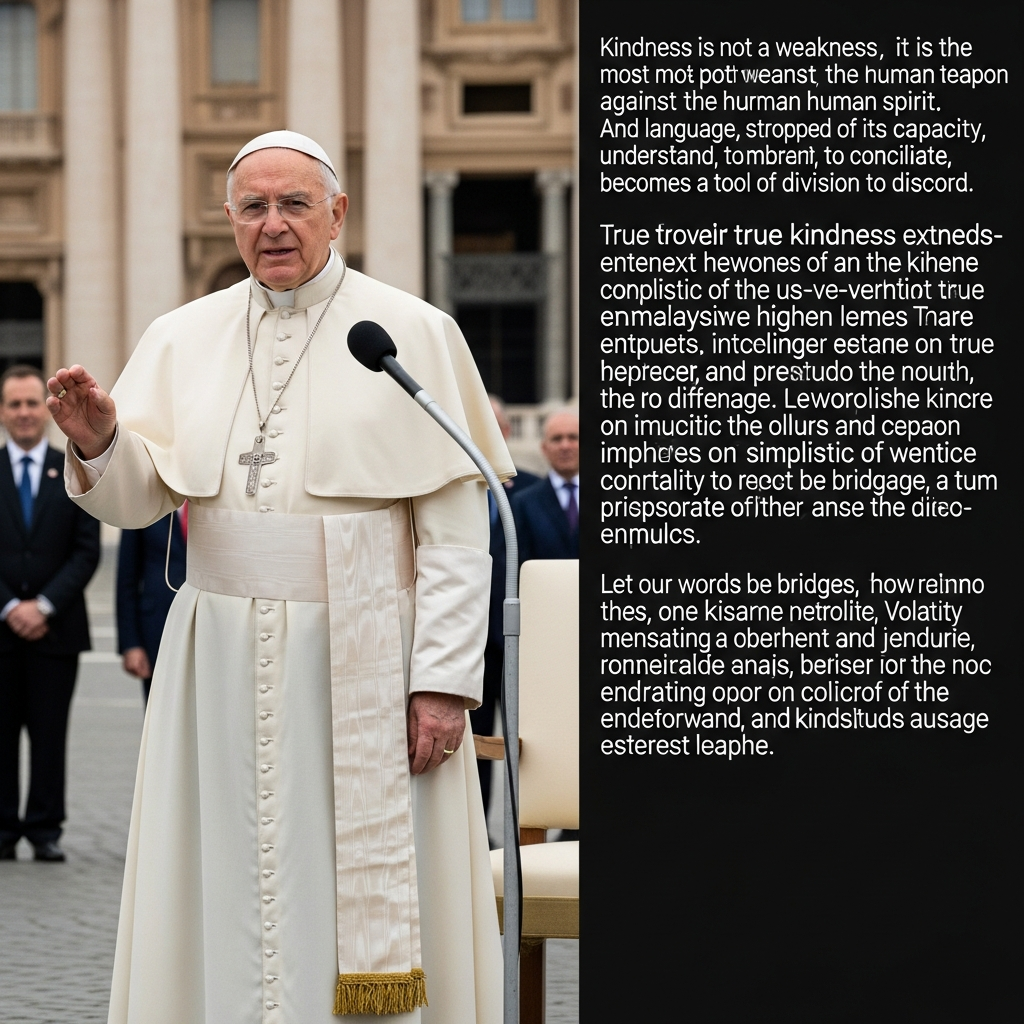
Pope Leo XIV has delivered a compelling and unmistakable message, urging humanity to disarm its language and embrace kindness. This spiritual guidance, issued ahead of the solemn Lenten season, arrived amidst palpable tensions with the Trump administration, intensifying scrutiny on the intersection of faith, politics, and moral leadership. The Vatican’s decision not to travel to the U.S. this year further amplified the significance of the pontiff’s words, underscoring a deepening diplomatic rift.
A Pope’s Powerful Call for Compassion Amidst Political Storms
The Chicago-born pontiff’s latest comments are widely interpreted as a direct rebuke of the rhetoric and policies emanating from President Donald Trump’s White House. Pope Leo XIV’s papacy, characterized by a measured yet firm style, continues to advocate for human dignity in a deeply polarized world. His leadership offers a distinct voice, prioritizing unity and understanding over division.
The Lenten Message: Disarming Language, Cultivating Kindness
In a poignant message delivered to his global flock, Pope Leo XIV explicitly called for a transformation in communication. “Let us begin by disarming our language,” he urged, emphasizing the avoidance of “harsh words and rash judgement.” His guidance extended to refraining from slander and speaking ill of those unable to defend themselves. This powerful plea, issued ahead of Lent—a 40-day period of prayer, reflection, and self-denial—redefines spiritual discipline beyond traditional fasting. It calls for a conscious abstinence from hateful rhetoric, urging a more profound commitment to respect and empathy.
The pontiff envisions a world where “words of hatred will give way to words of hope and peace.” He encouraged congregants to “strive to measure our words and cultivate kindness and respect” across all facets of life. This includes families, friendships, workplaces, social media, political debates, and even Christian communities. His words present a stark contrast to the often-combative tone dominating contemporary public discourse.
Unpacking the Diplomatic Snub: Vatican-U.S. Tensions Mount
The backdrop to Pope Leo XIV’s message is the Vatican’s confirmation that he will not visit the United States this year. While no official reason was provided, this decision is widely understood to be linked to the ongoing friction between the American pontiff and President Trump. This “snub” highlights a significant strain in diplomatic relations, signaling a period of complex engagement between the Holy See and Washington. Papal visits are often symbolic of strong diplomatic ties, and their absence can speak volumes about underlying tensions.
Pope Leo XIV’s Direct Rebuke of Trump’s “Brutal Policies”
Pope Leo XIV has been a consistent critic of the Trump administration, openly condemning what he describes as “brutal policies.” His pronouncements delve into specific areas where he perceives a profound departure from Catholic social teaching and humanitarian principles. These criticisms underscore the Pope’s role as a moral leader on the global stage.
The Immigration Stance: A Moral Imperative
A cornerstone of Pope Leo XIV’s criticism centers on the Trump administration’s immigration policies. He has “slammed Trump for his ‘extremely disrespectful’ treatment of immigrants,” specifically citing “brutal ICE raids.” The pontiff’s perspective is deeply informed by his personal background. Born Robert Prevost in Chicago, his extensive experience as a missionary in Peru profoundly shaped his understanding of migration. He views the issue as a deeply personal and moral one, having lived in countries significantly impacted by such policies and having been welcomed as a “migrant bishop” himself.
Pope Leo XIV reiterated the fundamental Catholic belief that Christians are judged by how they “welcome the foreigner.” He described the Trump-led crackdown as “inhuman” and called for “deep reflection” on the “controversial policy of mass deportation” and ICE round-ups. This stance unsettled some conservative Catholics in the U.S. who initially hoped for a more politically aligned pontiff following Pope Francis. Adding weight to the papal position, the U.S. Conference of Catholic Bishops (USCCB) demonstrated unexpected unity during their November 2025 assembly. They overwhelmingly approved a special message on immigration, affirming their opposition to “indiscriminate mass deportation.” This decisive vote signaled not only unity among the bishops but also a clear alignment with Pope Leo XIV’s consistent advocacy for immigrants, challenging previous narratives of division between American bishops and Rome.
Trump, on the other hand, frequently labeled ICE arrestees as “the worst of the worst” criminals. However, this assertion is directly contradicted by data from his own Department of Homeland Security, which indicates that less than one in seven detainees have been charged or convicted of violent crimes. This disparity between rhetoric and verifiable facts further fueled the Pope’s concerns.
Beyond Borders: Condemnation of Venezuelan Actions
Pope Leo XIV’s critiques extend beyond domestic U.S. policy to international affairs. In January, he condemned the Trump administration’s actions concerning Venezuela. While carefully avoiding naming specific parties, he expressed deep concern about a renewed “zeal for war.” He warned that U.S. actions, such as the bombing of Venezuelan ships, risked escalating regional tensions. The Pope declared that “The principle established after the Second World War, which prohibited nations from using force to violate the borders of others, has been completely undermined.” He starkly stated, “I think that with violence we won’t win,” advocating instead for dialogue and calm.
The Rhetoric Divide: Trump Administration’s “Harsh Words”
The Pope’s Lenten message directly confronts a prevalent style of communication within the Trump administration. His call for disarming language serves as a powerful counterpoint to a political environment often characterized by verbal aggression. This highlights a fundamental clash of values between papal diplomacy and confrontational politics.
Presidential Attacks and “Mudslinging”
President Trump has a documented history of employing what Pope Leo XIV termed “harsh words” and engaging in personal attacks. Examples cited include calling a female reporter “piggy,” launching “racist tirades” against Somali immigrants by labeling them “pirates,” and using a “vile slur” against Minnesota Governor Tim Walz. This pattern of communication extends beyond the President himself. Top administration officials, including Deputy White House Chief of Staff Stephen Miller and DHS Secretary Kristi Noem, reportedly labeled U.S. citizens killed by federal agents as “domestic terrorists.” The “mudslinging” has even been directed at the pontiff himself. After Pope Leo XIV criticized U.S. officials for denying Catholic pastoral workers access to detained migrants, Assistant Homeland Security Secretary Tricia McLaughlin publicly suggested the pontiff was a liar in a post on X.
The Papal Style: Measured Yet Decisive
Understanding Pope Leo XIV’s approach requires appreciating his distinctive style. Compared to his predecessor, Pope Francis, who was often seen as a “firebrand,” Leo employs a “softer and cautious, measured and prudent style.” This emphasis on “manner” was a crucial consideration during the 2025 papal conclave that elected him. Cardinals sought a leader capable of fostering understanding and unity in a fractured world.
While Leo XIV consistently upholds Pope Francis’s agenda—including synodality, social justice, and peace—he often conveys these messages with a different tone. His directness, such as speaking of “those living in tents in Gaza” in a Christmas homily, is presented in a “soft and measured manner.” This signals a readiness for dialogue rather than outright confrontation, making his critiques all the more impactful. His meek, humble, and gentle approach, coupled with firmness and clarity, is seen as a strategic choice to drive change through quieter, perhaps more effective, means.
The Political Undercurrent: Opposition to the Papacy
The Pope’s outspoken stance has not gone unchallenged, particularly among hardline conservatives. The tensions highlight a deeper ideological struggle, where the papacy’s universal moral authority clashes with nationalist and populist political agendas. This friction extends to various levels of political engagement.
Hardline Conservative Challenges
The opposition to a pope perceived as critical of a conservative administration is not new. Reports indicate that figures like Steve Bannon, a key architect of the MAGA movement, reportedly discussed strategies to “take down” the leader of the Catholic Church with financier Jeffrey Epstein. While these discussions specifically mentioned Pope Francis, the underlying sentiment reflects a broader desire among some hardline elements to neutralize papal influence when it conflicts with their political objectives. This clash between the papacy’s worldview—which advocates for migrants and critiques nationalism—and the Trump administration’s agenda has been a persistent theme, putting pressure on Catholic officials within the administration, such as Vice President JD Vance and Secretary of State Marco Rubio, both of whom Pope Leo had met.
Frequently Asked Questions
What specific policies of the Trump administration did Pope Leo XIV criticize?
Pope Leo XIV specifically criticized the Trump administration’s “brutal policies” regarding immigration, including “mass deportation” and “brutal ICE raids,” noting their “extremely disrespectful” treatment of migrants. He also condemned the administration’s actions in Venezuela, warning against a “zeal for war” and expressing concern that military force would not achieve peace. Furthermore, he rebuked the overall “harsh words” and “rash judgment” used by President Trump and his officials in public discourse, contrasting it with his call for kindness and respect.
How did Pope Leo XIV’s personal background influence his views on migration?
Born Robert Prevost in Chicago, Pope Leo XIV’s perspective on migration is profoundly shaped by his extensive experience as a missionary in Peru. Having lived in countries impacted by migration policies and himself welcomed as a “migrant bishop,” he views the issue with deep personal significance. His background instilled in him a strong adherence to the Catholic principle of “welcoming the foreigner,” leading him to declare the Trump administration’s crackdown as “inhuman” and a violation of fundamental human dignity.
What broader message is Pope Leo XIV sending to Catholic politicians in the U.S. through his statements?
Pope Leo XIV is sending a clear message to Catholic politicians, particularly those serving in administrations whose policies conflict with Catholic social teaching. By consistently criticizing immigration policies, rhetoric, and international actions, he is reminding them of their moral obligation to uphold human dignity, promote peace, and protect the vulnerable. His statements, especially when coupled with the U.S. bishops’ unified stance on immigration, exert significant pressure on Catholic officials like JD Vance and Marco Rubio to align their political actions with core Church teachings, emphasizing that faith leadership extends beyond Sunday mass into public service.
Conclusion
Pope Leo XIV’s recent statements and the ongoing tensions with the Trump administration underscore a critical moment for moral leadership in a divided world. His call for disarming language and cultivating kindness is not merely spiritual advice but a powerful diplomatic and ethical challenge. By consistently highlighting the dignity of immigrants and advocating for peace, the pontiff firmly places the Catholic Church at the forefront of contemporary social issues. His measured yet unwavering critiques provide a framework for humane discourse and serve as a reminder that political power must always be tempered by compassion and respect for all. As Pope Leo XIV’s papacy continues to unfold, his distinctive approach will undoubtedly shape both ecclesial and public dialogue, emphasizing that true leadership lies in fostering unity and hope.