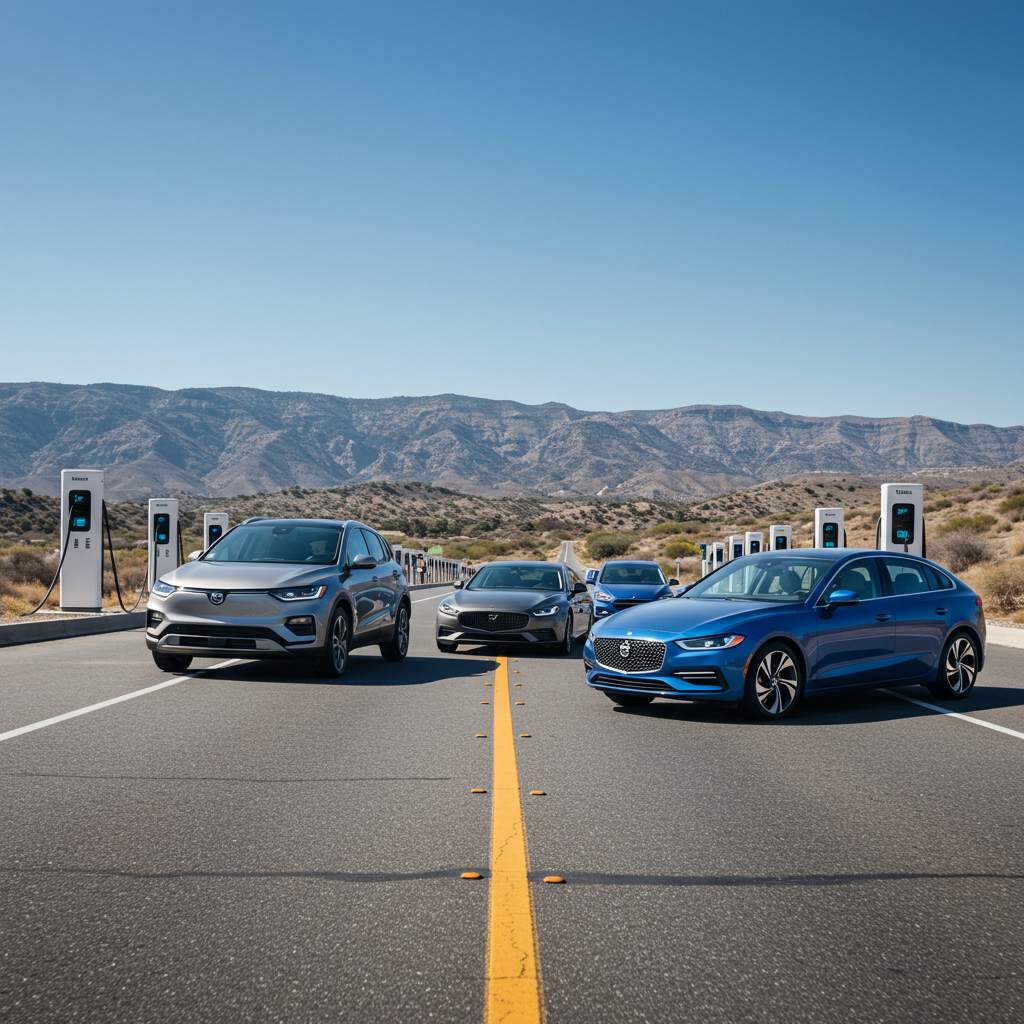
The US electric vehicle industry is at a pivotal juncture, navigating significant shifts following the recent cessation of federal purchase incentives. While the market has certainly encountered a “speed bump,” the narrative is far from a complete slowdown. Instead, automakers, state governments, and advocacy groups are actively working to mitigate the impact, signaling a resilient path forward characterized by innovation, strategic pricing, and an expanded range of models. This crucial period calls for a deeper understanding of market dynamics, consumer sentiment, and the long-term vision for electrification.
The Immediate Aftermath: Federal Tax Credits Disappear
As of October 1, 2025, a substantial change reshaped the US electric vehicle industry landscape: the federal government’s attractive tax credits for EV purchases and leases vanished. These incentives, which offered up to $7,500 for new EVs, $3,000 for used EVs, and $7,500 for new EV leases, were eliminated with the passage of the One Big Beautiful Bill Act. This legislative action, aimed at undoing specific clean energy policies, abruptly altered the financial equation for prospective EV buyers.
Experts anticipated this move would dampen consumer enthusiasm. Indeed, a surge in EV sales was observed in the months leading up to the deadline, as shoppers raced to capitalize on the expiring credits. Consequently, an immediate drop in sales was projected for the subsequent months, marking a challenging transition for the EV market.
Automakers’ Proactive Response: Softening the Blow
In the face of vanishing federal incentives, major automakers quickly stepped in to prevent a dramatic collapse in sales. Their proactive strategies aim to create a “soft landing” for electric vehicles. Companies like Ford and General Motors swiftly announced they would continue offering a $7,500 credit on EV leases. This move is possible because their in-house finance companies acquired these vehicles while federal credits were still active, allowing them to pass on the savings to consumers.
Hyundai, demonstrating an aggressive approach, launched a promotion for its 2026 Ioniq 5. This initiative includes price cuts of up to $9,800 for both sales and leases, effectively matching and even surpassing the previous federal tax credit value. These strategic adjustments underscore automakers’ commitment to maintaining market momentum and making electric vehicles more accessible.
State and Local Incentives: A Patchwork of Support
Beyond national policies, a growing number of state and local governments are bolstering their own EV incentives. These localized efforts are becoming increasingly vital in supporting widespread EV adoption. Colorado, for example, recently increased its state tax credit from $6,000 to $9,000 for buying or leasing a new EV. Such regional initiatives help offset the loss of federal support, creating a diverse landscape of financial incentives across the nation. This patchwork approach requires consumers to research specific opportunities available in their areas.
Expert Outlook: Navigating the “Speed Bump”
Industry experts largely agree that while the federal credit loss is a significant “speed bump,” it won’t derail the long-term electrification trend. Stephanie Valdez Streaty, director of industry insights for Cox Automotive, noted that “the dust needs to settle” for the market to find its new equilibrium. Ed Kim, president and chief analyst at AutoPacific, firmly believes “electrification is the future,” pointing to global leaders like China and the European Union.
However, AutoPacific’s latest forecast reflects the immediate challenges. They now project the US EV market share to remain at 8 percent for both 2025 and 2026, a downward revision from their previous estimates of 11 percent and 15 percent, respectively. Despite this, Kim suggests the market will hold its own. Keith Barry of Consumer Reports echoes this sentiment, expecting that “October 1 won’t be the ‘end of the world’ for EV deals,” citing automakers’ efforts to extend benefits and adjust prices due to inventory.
Corey Cantor, research director for the Zero Emission Transportation Association (ZETA), sees this as an opportune moment for “consumer education.” He emphasizes a return to highlighting intrinsic electric vehicle benefits like lower fuel and maintenance costs. This approach leverages continuous improvements in battery range and expanding charging infrastructure, which address past consumer anxieties.
Beyond Incentives: What Consumers Should Consider Now
For prospective EV buyers, adapting to the new market dynamics is key. Consumer Reports’ Keith Barry advises considering leasing an EV rather than purchasing. “The technology is changing so fast that you don’t want to get stuck with a model that’s out of date and that has depreciated accordingly,” he explains. Leasing offers flexibility, allowing consumers to upgrade more frequently as battery technology and features rapidly evolve.
Barry also recommends choosing electric vehicles that have been on the market for a few years. Newly designed cars often have “growing pains” and tend to achieve greater reliability after their first model year. This practical advice helps buyers navigate a rapidly advancing landscape, ensuring a more satisfactory ownership experience. Focusing on total cost of ownership, including significant savings on fuel and maintenance, remains a compelling argument for EV adoption.
A Flood of Innovation: Dozens of New EV Models on the Horizon
Despite the policy shifts, the US electric vehicle industry is poised for a significant influx of new models. Approximately three dozen new or redesigned EVs are slated to hit the market later this year and next. This substantial expansion, representing about a 50 percent increase in available EV options, reflects automakers’ long-term investment strategies formulated before the tax credit cancellations. This wave of innovation is expected to reignite consumer interest and fuel growth.
Several upcoming models are generating considerable excitement:
Rivian R2: This mid-size SUV, set for production next year, is expected to start around $45,000. It offers a much more accessible price point than Rivian’s current lineup, potentially broadening its appeal.
Chevrolet Bolt (Redesigned): Set to resume production late this year after a three-year hiatus, the updated Bolt will utilize GM’s Ultium battery platform. With an estimated starting price in the $35,000 range, it could be a significant entry point for the mass market.
Nissan Leaf (Next-Generation): Launching this year at a starting price of $29,990, the new Leaf boasts a notable 303-mile range. This addresses previous limitations and positions it as a competitive entry-level option.
Subaru Trailseeker: Due next year, likely priced around $50,000, this model is envisioned as an “electric Outback.” It aims to leverage Subaru’s loyal customer base, known for its openness to new vehicle technologies.
Tesla’s Strategy: Price Adjustments Amidst Competition
Tesla, while still a leader in the US electric vehicle market, has faced its own challenges, including declining sales and image concerns. In response to the evolving market and increased competition, Tesla recently introduced more affordable “Standard” versions of its popular Model 3 and Model Y. The Model 3 Standard starts at $36,990, a $5,500 reduction from the Premium version, while the Model Y Standard is priced at $39,990, $5,000 less than its premium counterpart.
These price cuts were achieved through cost-saving measures, such as a modified roof design on the Model Y Standard. However, expert Ed Kim views these primarily as “post-credit price corrections” rather than a significant growth catalyst. He suggests these adjustments may not fully offset the impact of lost tax credits, noting that the Model Y, even with its lower price, still compares unfavorably in value to competitors like the Ioniq 5.
Legacy Automakers’ Transformation: GM and Stellantis Insights
The shift to electrification presents unique challenges and opportunities for legacy automakers. General Motors, for instance, achieved a crucial milestone in 2024, reporting its EV division was “variable profit positive.” This means revenue from EV sales covered direct manufacturing costs, a significant step towards full profitability, especially when many competitors still incur substantial losses in their EV segments. GM’s strategy involves expanding its range of affordable EV offerings, targeting average consumers, despite broader market plateaus. The company aims for an ambitious 300,000 EV production target for the current year, though it maintains flexibility to adapt to changing demand and policy landscapes, particularly concerning potential impacts from political shifts.
Stellantis, the multinational automotive giant encompassing brands like Dodge, Jeep, and Ram, is also grappling with a challenging transformation. The company reported a significant profit drop and cash depletion in 2024, partly due to unsold inventory in the US market and aggressive EV mandates in Europe. Stellantis plans to intensify its focus on electric vehicles and battery production, but this strategy faces hurdles from consumer loyalty to traditional gasoline-powered models, particularly among performance and truck enthusiasts. The company’s diverse portfolio of 14 brands creates an “identity crisis,” requiring a delicate balancing act to accelerate EV adoption while preserving brand heritage.
Global Dynamics and Broader Headwinds
The challenges facing the US electric vehicle industry are part of a larger, global narrative. Intense competition and price wars are reshaping markets worldwide. In China, a major EV powerhouse, even industry leader BYD recently experienced its first sales decline since 2020. This indicates a shift from “breakneck expansion” to a period of “cutthroat competition and tighter margins,” forcing companies to revise sales goals and recalibrate strategies. This global trend highlights that market maturity and fierce competition, not just policy changes, are significant factors in the evolving EV landscape.
Furthermore, supply chain vulnerabilities, such as shortages of rare-earth metals, pose ongoing global headwinds. While not a primary driver of the current US market situation, these broader issues can impact production costs and availability, underscoring the complex web of factors influencing the automotive sector’s transition to electric.
The Unstoppable Current: Long-Term Outlook for Electrification
Despite the current “speed bump” and the evolving landscape, the long-term outlook for electrification remains strong. The fundamental advantages of electric vehicles – lower operating costs, reduced emissions, and continuous technological advancements – continue to drive global adoption. Automakers’ sustained investments in new models and manufacturing capacity, coupled with expanding charging infrastructure and targeted regional incentives, paint a picture of resilience and eventual growth for the US electric vehicle industry. The immediate future will require strategic agility, consumer education, and a relentless focus on delivering compelling, affordable EV options.
Frequently Asked Questions
What caused the recent “speed bump” in the US EV market?
The primary cause was the sudden cessation of federal tax credits for purchasing and leasing electric vehicles, effective October 1, 2025. These incentives, which offered up to $7,500 for new EVs, were eliminated with the passage of the One Big Beautiful Bill Act. This policy change is expected to dampen consumer enthusiasm and lead to an immediate drop in sales as the market adjusts to the absence of these significant financial benefits.
What steps are automakers taking to make EVs more affordable after federal tax credit changes?
Automakers are implementing various strategies to maintain affordability. Ford and General Motors are continuing to offer a $7,500 credit on EV leases by leveraging vehicles purchased while federal credits were active. Hyundai is aggressively promoting its 2026 Ioniq 5 with price cuts of up to $9,800. Additionally, some state and local governments, like Colorado, are increasing their own EV incentives to partially offset the federal changes.
What new EV models are expected to boost US market growth in the near future?
Around three dozen new or redesigned EV models are slated to hit the US market later this year and next, significantly expanding consumer options. Key upcoming models include the Rivian R2 (a more affordable mid-size SUV), the redesigned Chevrolet Bolt (using GM’s Ultium platform, targeting the mass market), the next-generation Nissan Leaf (with improved range and an attractive price point), and the Subaru Trailseeker (an “electric Outback” appealing to existing Subaru enthusiasts). These innovations are crucial for driving future market growth.