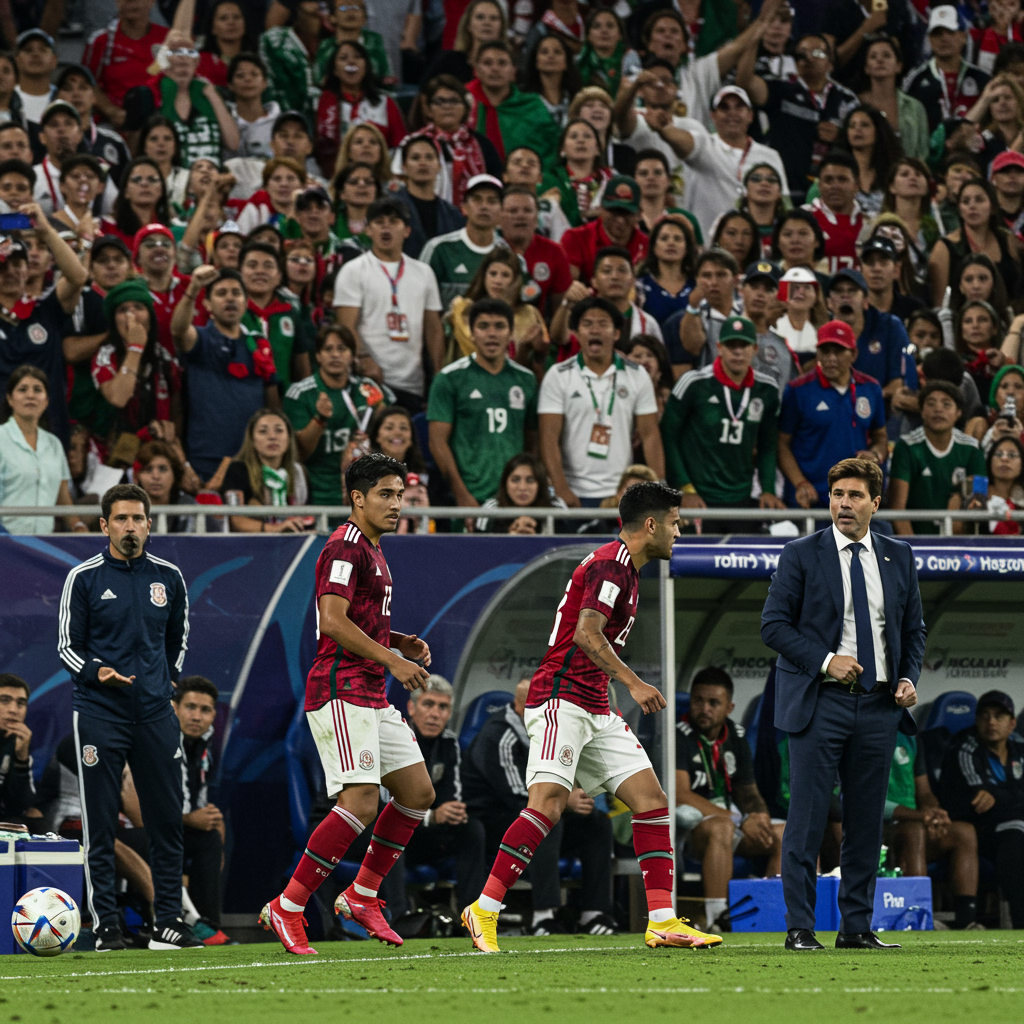
The USMNT’s recent 2-1 defeat to mexico in the Concacaf Gold Cup final served as a stark reflection of their entire summer campaign. Played out in a largely pro-Mexico atmosphere in Houston, the match encapsulated both the progress made by a determined squad and the persistent challenges facing the program under coach Mauricio Pochettino as the 2026 FIFA World Cup looms. This summer was designed to uncover deep truths about the U.S. Men’s National Team, and the final delivered them in sharp focus.
This tournament presented a unique opportunity. With many established stars like Christian Pulisic, Antonee Robinson, Sergiño Dest, Folarin Balogun, Ricardo Pepi, Weston McKennie, and Tim Weah unavailable due to injury or club commitments, Pochettino fielded a roster largely composed of players on the fringe of the national team pool. The objective was clear: evaluate depth, reset expectations after disappointing March Nations League losses, and, crucially, instill a fighting identity. As controversy simmered off the field regarding the absence of key players like Pulisic, who reportedly chose rest after dealing with accumulated injuries, the focus on the pitch became solely about the group present and their collective will. This Gold Cup group understood Pochettino’s non-negotiables: show how much you care; show how much you want to represent the crest.
The Final Match: A Test of Quality
The journey to the final saw the U.S. navigate a path against opponents they were expected to defeat – including Trinidad and Tobago, Haiti, Saudi Arabia, Costa Rica, and Guatemala. While these wins weren’t always dominant, they were significant validation of heart, belief, and effort. They demonstrated that this group, despite lacking top-tier individual talent, could fight and win together, fostering a “family” feel within the squad. However, the final against Mexico represented the first true quality test since earlier friendly losses to European sides like Turkey and Switzerland.
Mexico arrived in Houston as the technically superior side, and it showed. Despite the U.S. battling hard and even taking an early lead, El Tri gradually asserted control. They dominated significant stretches of the match, showcasing better technical execution and decision-making under pressure. Statistical analysis confirmed Mexico’s advantage, including 60% possession, winning the expected goals battle, and a significant edge in shots (16-6) and shots on target (8-3). Ultimately, Mexico’s quality prevailed, handing the USMNT a challenging defeat in the regional championship.
Finding Identity in Adversity
Mauricio Pochettino consciously used the Gold Cup to send a message across the entire national team pool. The March losses had signaled a need for introspection and a search for identity. By focusing on players willing and eager to contribute, regardless of their traditional status, Pochettino aimed to raise the baseline expectation for commitment. Wins against weaker sides, often dismissed by external observers, held immense internal value. They proved that collective spirit and hard work mattered, strengthening the team’s identity and creating a vital foundation.
This focus on mindset wasn’t unique to the U.S. Mexico coach Javier Aguirre echoed a similar sentiment, highlighting the importance of his players genuinely wanting to represent their country and the pride that brings. He noted how this commitment resonates with fans, leading to unwavering support. This shared emphasis on desire underscores a fundamental truth in international soccer: attitude and effort are prerequisites, not optional extras, even when facing logistical challenges or playing for minimal immediate gain.
The Bridge Ahead: Integrating Talent and Mentality
The critical task now for Pochettino is integrating the returning, higher-quality players into the squad without sacrificing the positive mentality forged during the Gold Cup. The belief, unity, and “non-negotiables” established by this summer group must somehow transfer to the full player pool. As center back Chris Richards noted, this camp was a “game-changer,” setting standards the entire team must uphold.
Integrating established stars alongside those who fought for their place presents a delicate balancing act. The success of the Gold Cup campaign hinges on whether Pochettino can effectively blend the hunger and mindset of the summer squad with the technical and tactical quality of players like Pulisic, Dest, Balogun, and McKennie. Players across the pool, much like Josh Sargent learning to overcome setbacks and use disappointment as motivation, must embrace resilience and the lessons of failure if the team is to improve. With only about 10 international matches left before the 2026 World Cup kicks off on home soil, time is running short.
Beyond Tactics: Officiating Concerns and Fan Energy
Adding complexity to the post-match analysis were Pochettino’s pointed comments regarding the officiating and the lack of dominant U.S. fan support. The coach felt specific refereeing decisions significantly impacted the outcome, citing a potential handball penalty not called, an erroneous foul leading to Mexico’s winner, and an offside Mexican player interfering with defensive positioning. Pochettino expressed frustration, suggesting such calls would often favor Mexico in similar circumstances and calling the situation “embarrassing,” feeling his players deserved better despite the loss. He stressed the need to “tell the truth” about the officiating while still acknowledging the team’s need for self-criticism.
Pochettino also made a passionate plea for increased American fan attendance and energy, particularly leading up to and during the World Cup. Drawing on his own playing experience, he emphasized how fan support “regenerates the football player’s energy” on the field, while a hostile atmosphere like the one in Houston (or previous matches, such as against Guatemala in St. Louis where the crowd was overwhelmingly pro-Guatemala) can significantly drain energy. The rivalry with Mexico, often played in incredibly hostile environments like Estadio Azteca where fireworks outside hotels and objects thrown at the team bus are part of the experience, underscores the psychological and physical toll of playing without strong home support. Pochettino suggested that a stronger American presence in the stadium could have altered the dynamic of the final, acknowledging that team performance and U.S. Soccer’s ticketing policies (balancing revenue vs. accessibility) also play a role in generating that support.
Lessons for the Road Ahead
The Gold Cup summer, culminating in the loss to Mexico, provided invaluable lessons. Pochettino successfully maximized the potential of the group available, identified players who can add competitiveness to the pool, and rebounded from a challenging losing streak earlier in the year. He established clear standards for attitude and effort.
However, the final defeat highlighted the undeniable gap in quality that still exists when facing top regional opponents. The Gold Cup group demonstrated the necessary mentality, but the team needs the quality of its returning key players combined with that mindset to truly compete at the highest level. The challenge of integrating the full player pool, instilling the lessons of the summer across the board, and navigating external factors like fan support and potentially challenging officiating environments are the immediate hurdles. The success of this Gold Cup campaign will ultimately be judged not just by reaching the final, but by how effectively Pochettino leverages the foundation of identity and desire built this summer to prepare the USMNT for the immense task of hosting and competing in the 2026 World Cup.
Frequently Asked Questions
Why did the USMNT field a different player group in the Gold Cup?
The USMNT roster for the Gold Cup primarily featured players on the fringe of the national team pool. This was a strategic decision by coach Mauricio Pochettino because many established key players were unavailable due to injuries or club commitments. The goal was to evaluate depth, reset expectations after previous disappointing results, and specifically focus on building team identity and evaluating players based on their effort and desire to represent the country.
How did the USMNT summer campaign help address past issues?
The Gold Cup tournament allowed coach Pochettino to focus on instilling a specific mindset within the team after earlier Nations League losses highlighted a need for identity. By prioritizing effort and commitment, the team aimed to set new “non-negotiables” for all players in the pool. The wins achieved, even against less challenging opponents, helped validate this focus on heart and belief, fostering a sense of unity and a positive team identity that the coaching staff hopes to carry forward.
What are the main challenges facing the USMNT after the Mexico final loss?
Following the Gold Cup final loss to Mexico, the primary challenge for the USMNT is integrating the key players who were absent over the summer back into the squad without losing the positive mentality and identity built by the Gold Cup group. The team must also address the quality gap highlighted by the Mexico defeat and potentially navigate external factors like generating stronger home fan support and dealing with perceived inconsistencies in officiating, all with limited time before the 2026 World Cup.