Key takeaways
- Taiwan’s governing Democratic Progressive Party (DPP) won 10 of 22 mayoral and county races on November 28, 2026, Al Jazeera reported.
- China’s Taiwan Affairs Office said on November 29 that political changes on the island “cannot change the direction and trend” of cross-Strait exchanges.
- Taiwan’s Mainland Affairs Council urged Beijing to take a pragmatic approach and engage in dialogue with the island’s elected government.
- After a summit with Xi Jinping in Beijing, Donald Trump said he had “made no commitment either way” on Taiwan, the BBC reported.
China said on Sunday, November 29, 2026, that political changes in Taiwan cannot prevent “reunification,” responding to the Taiwan governing party’s strongest local election showing in a decade. In a statement, China’s Taiwan Affairs Office said it had noted the results and believed mainstream opinion on the island favoured peace, development and cooperation across the Taiwan Strait.
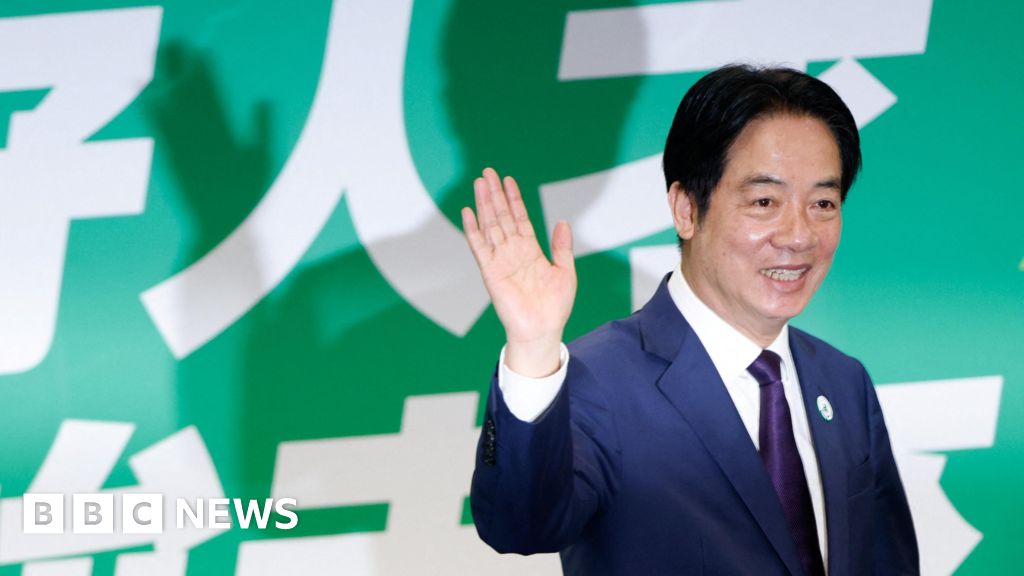
The DPP, which also holds the presidency under Lai Ching-te, won 10 of the island’s 22 mayoral and county leadership races on Saturday, November 28, according to Al Jazeera, citing AP and Reuters reporting. Al Jazeera said the tally doubled the party’s result from the 2022 local elections.

Beijing says the vote will not change its course
China’s Taiwan Affairs Office said the island’s internal politics “cannot change the direction and trend of the forward development of exchanges across the Taiwan Strait.” It added that Beijing would continue to “firmly crack down on Taiwan independence separatist forces” and “oppose external interference.” It also said it would “advance the great cause of national reunification.”
Al Jazeera notes that China claims the self-governed island as part of its territory and has not ruled out using force to bring it under control. Taiwan’s government rejects those sovereignty claims. Beijing also refuses to hold talks with President Lai, whom it calls a “separatist.” Lai, who chairs the DPP, says only Taiwan’s people can decide their future.
Taiwan’s Mainland Affairs Council answered by urging Beijing to take a pragmatic approach to the results. It asked China to engage in dialogue with the island’s “democratically elected government.” The two sides’ statements point in different directions. Beijing presents the vote as irrelevant to its long-term goal. Taipei presents it as a democratic mandate that calls for talks. Beijing’s refusal to speak with Lai is a barrier the statements do not address.
Taichung returns to the DPP, while Taipei stays with the KMT
The DPP’s most significant win was in Taichung, Taiwan’s second-most populous city. There, DPP legislator Ho Hsin-chun defeated Johnny Chiang of the opposition Kuomintang (KMT). Al Jazeera reports that the result returns the city to DPP control after eight years.
The KMT held Taipei. Incumbent Mayor Chiang Wan-an beat Puma Shen of the DPP. Shen is a legislator whom China has placed on a police wanted list over alleged separatist activities, Al Jazeera reported.
Al Jazeera said the races were largely decided on domestic issues rather than relations with China. It added that the results may signal support for the main parties ahead of Taiwan’s 2028 presidential election, although it noted that history has repeatedly shown such signals can reverse.
Trump’s summit remarks add a second layer
The BBC reported that Trump held a two-day summit with Xi in Beijing. Afterwards, Trump said he had “made no commitment either way” about Taiwan. He also said he would soon decide whether to approve an arms package for the island. The BBC gives the package as $11bn in one place and as $8bn in parentheses, and it does not explain the difference. Trump said the package would be discussed with Taiwan’s leadership.
In a Fox News interview, Trump said, “I’m not looking to have somebody go independent.” He added, “I want them to cool down. I want China to cool down.” On the flight back to Washington, he said he and Xi had spoken “a lot” about the island. He would not say whether the United States would defend it. He also described Xi as feeling “very strongly” about the island. That account of a private conversation has not been independently confirmed.
Trump also said he would need to speak with the person “that’s running Taiwan.” The BBC notes that direct contact between a US president and Taiwan’s leader would break with traditional practice and could cause significant tension with Beijing. Beijing has called Lai a “troublemaker” and a “destroyer of cross-strait peace,” the BBC reported, describing this as longstanding rhetoric.
Taiwan’s presidential spokesperson, Karen Kuo, said on Saturday that it is “self-evident” that Taiwan is “a sovereign, independent democratic country.” She also said Taiwan remains committed to the status quo, meaning it neither declares independence nor unites with the mainland. The BBC report does not give a publication date, so its timing relative to the local elections is not confirmed in that text.
The presidential office thanked Trump for his support. “Our nation is grateful to President Trump for his continued support for security in the Taiwan Strait since his first term in office,” it said. The BBC describes Washington’s position as not supporting Taiwanese independence, while US law requires it to provide Taiwan with the means of self-defence. The US has no formal diplomatic relations with Taiwan.
Military pressure continued during the election
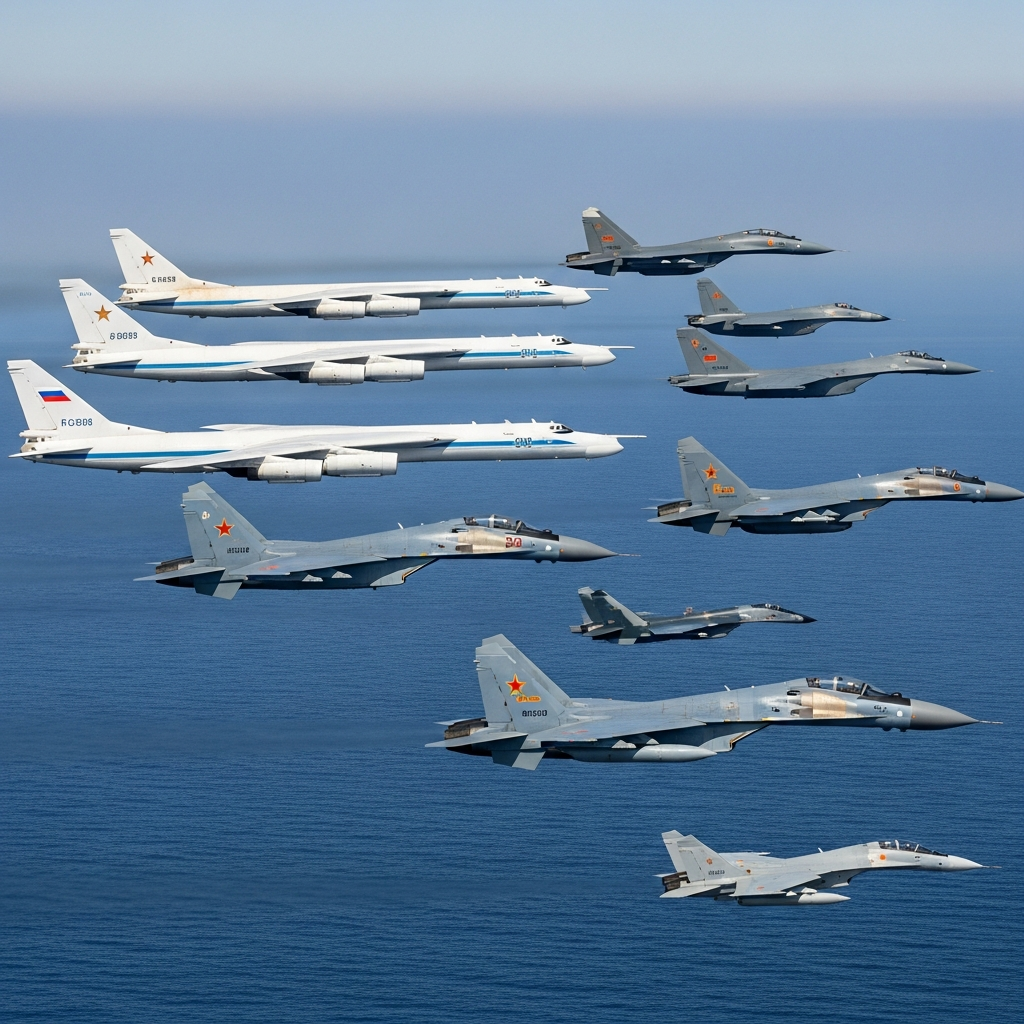
Taiwan’s Defence Ministry said on Saturday that it tracked 33 Chinese military aircraft, eight naval vessels and four official ships around the island between 6am on Friday and 6am on Saturday, Taiwan time. Earlier on Friday, the ministry reported a surge in Chinese aircraft near the island and described it as a “joint combat readiness patrol.” Al Jazeera notes that China has repeatedly held military exercises around Taiwan in recent years.
The military activity ran alongside the political messaging. Beijing’s statements focused on unification, while its aircraft and ships kept the island under pressure.

What Beijing’s long-term plan says
A Lowy Institute research paper, “After annexation: How China plans to run Taiwan,” offers context for Beijing’s language. The paper does not report the election results, and its publication date does not appear in the text available. It argues that Beijing’s thinking has shifted from “peaceful accommodation” toward “absorptive control.” This is the author’s reading of Chinese academic, legal and policy-adjacent writing from 2019 to 2025, not a stated government policy.
The paper traces the terms back to the late 1970s, when Deng Xiaoping proposed “One Country, Two Systems.” That offer promised Taiwan a special administrative region with its own social system and “a high degree of autonomy.” Taiwan rejected it in 1979, the paper says. Lowy says the vocabulary has since moved from “peaceful unification” toward “complete national unity.” The author says this does not formally replace “One Country, Two Systems,” but it reorders priorities and narrows the autonomy Taipei could expect.
The paper quotes a August 2024 paper by scholars at a Xiamen-based think tank, which urged that “it is imperative to prepare a plan for the comprehensive takeover of Taiwan after unification.” Lowy says the paper circulated briefly before it disappeared from the Chinese internet. It also quotes a 2001 speech by former foreign minister Qian Qichen, who said Taiwan could keep its currency, its military and its government structure.
Lowy also gives estimates that are forecasts, not observed outcomes. Under Beijing’s rule, it says, supporting independence would risk jail, and many hundreds of thousands of people could lose voting rights. It projects that millions could be excluded from public life. It argues that “political cleansing likely would be of a much greater magnitude” than the crackdown in Xinjiang. The paper cites a Mainland Affairs Council poll that reportedly finds about 7% of adults support an immediate declaration of independence. It also cites a National Chengchi University poll in which 2.5% of respondents identify as Chinese.
The author cautions that the paper is “a starting point rather than a definitive account.” He says the published literature “likely represents a floor, not a ceiling” of Beijing’s planning, because classified documents are not public. Its conclusions about Beijing’s intentions rest on academic writing produced under political constraints.
Open questions after the vote and summit
Several points remain unresolved. The BBC report does not say whether Trump’s comments changed US policy. It reports only that he said policy had “not changed.” It is also unclear whether the arms package will be approved, or when. Trump’s account of Xi’s position has not been independently confirmed.
The election results are also open to interpretation. Al Jazeera says they may hint at 2028 support, but it adds that history has shown the opposite can happen. Lowy’s analysis predates the current news, so it does not show how Beijing will respond to the DPP’s gains.
Frequently asked questions
Did the local elections change Taiwan’s status?
Al Jazeera reports that the elections were largely dominated by domestic issues. Taiwan’s government rejects Beijing’s sovereignty claims, and China says the results cannot change its course on reunification. No report in the coverage says the status of the island has changed.
Has Trump approved the arms package for Taiwan?
The BBC reports that Trump said he would soon decide whether to approve the package, worth about $11bn, and that it would be discussed with Taiwan’s leadership. The BBC says it is unclear whether the package will be approved and when.
Who won the Taichung mayoral race?
Al Jazeera reports that DPP legislator Ho Hsin-chun defeated the KMT’s Johnny Chiang, returning the city to DPP control after eight years.
References
- After annexation: How China plans to run Taiwan — lowyinstitute.org
- Taiwan reaffirms independence despite Trump warning — bbc.com
- China insists on ‘reunification’ after Taiwan governing party’s poll gains — aljazeera.com
Featured image: Image via bbc.com