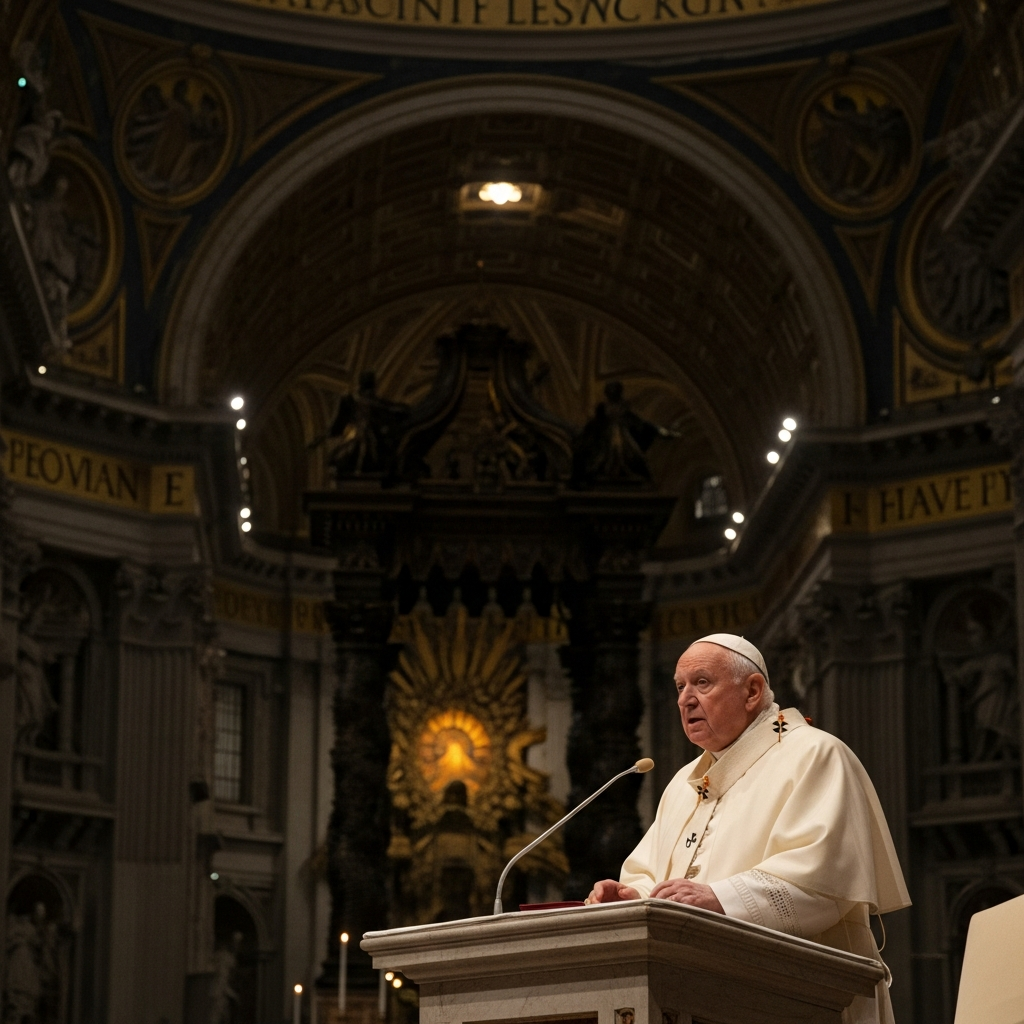
VATICAN CITY – In a profound and emotionally charged address, Pope Leo XIV, on Saturday, April 4, 2026, delivered his inaugural Easter Vigil homily as pontiff. From a hushed and candlelit St. Peter’s Basilica, he issued an urgent plea for harmony and lasting peace in a world deeply scarred by ongoing conflicts. The new leader of the Catholic Church called on believers to commit to nurturing “the Easter gifts of harmony and peace” across the globe. This powerful message resonated amidst global turmoil, including the second month of the U.S.-Israeli war on Iran and Russia’s continued campaign in Ukraine.
A Beacon in Darkness: Pope Leo XIV’s First Easter Vigil
The ancient vigil, revered as the “mother of all vigils,” commenced in striking silence and near-darkness. Pope Leo XIV processed through the basilica, holding a tall, lit Paschal candle. He intoned the sacred words, “The light of Christ who rises in glory,” signaling the beginning of Christianity’s most joyous celebration: Christ’s triumph over death through his resurrection. This symbolic act set a tone of hope and spiritual rebirth for the faithful gathered and watching worldwide.
The Ancient Ritual: Light, Symbolism, and Renewal
As the Pope moved down the central aisle, candle bearers extended the flame, gradually illuminating the vast basilica. This spreading light symbolized the dissemination of Christ’s message and the unity of the Church, transforming individual congregants into “lamps for the world.” Upon reaching the baroque main altar, the main lights flared, revealing cardinals in pristine white vestments. Pope Leo XIV, presiding over this solemn ceremony, emphasized the vigil as a “path of reconciliation and grace.” He urged the faithful to “relive the memorial of the victory of the Lord of life over death” after having spiritually journeyed through the mysteries of the Passion.
Overcoming the “Stones”: A Homily for Our Times
In his powerful homily, Pope Leo XIV drew a compelling parallel between sin and the immense stone that once sealed Jesus’ tomb. He described sin as “a heavy barrier that closes us off and separates us from God, seeking to kill his words of hope within us.” Just as the tomb’s stone was overturned, revealing Christ’s resurrection, the Pope asserted that modern “stones” representing sin and division must also be moved. He identified these contemporary obstacles as “so heavy and so closely guarded that they seem to be immovable.”
Internal Barriers to Harmony
These metaphorical stones, the Pontiff explained, often weigh heavily on the human heart. He specified “mistrust, fear, selfishness, and resentment” as internal burdens that stifle spiritual growth and personal peace. He underscored that these inner struggles are formidable barriers, often preventing individuals from embracing the transformative power of Christ’s resurrection. By acknowledging these internal “tombs,” Pope Leo encouraged a deep personal reflection on self-improvement and spiritual renewal.
External Manifestations of Disunity
Extending his metaphor, Pope Leo XIV linked these internal struggles to devastating external consequences. He declared that these inner conflicts “sever the bonds between us through war, injustice and the isolation of peoples and nations.” His words painted a vivid picture of how individual failings can collectively fuel global discord. The Pope’s call for commitment was clear: “Let us not allow ourselves to be paralyzed by them!” He urged believers to be inspired by the “heroic work of the Christians of the past” and adopt their unwavering dedication to peace, fostering “a new world of peace and unity.” The “sanctifying power of this night,” he quoted from the liturgy’s Exultet, “dispels wickedness, washes faults away, restores innocence to the fallen… drives out hatred, fosters concord and brings down the mighty.”
A Papacy Defined by Peace: Context and Consistent Calls
Pope Leo XIV’s Easter message was not an isolated statement but a consistent theme throughout his nascent papacy. He has repeatedly called for a cessation of hostilities in global conflicts. On Palm Sunday, he made a stark declaration that God does not heed the prayers of those who make war or cite divine authority to justify violence. During the Holy Thursday Chrism Mass, he condemned abuses of power, emphasizing the Christian mission’s inherent opposition to “the imperialist occupation of the world.” The Good Friday Via Crucis meditations, under his guidance, cautioned against using power for destruction, holding those in authority accountable.
Echoes of Holy Week: Tradition and Bold Statements
This inaugural Holy Week marked Pope Leo XIV’s commitment to upholding and, in some cases, restoring cherished Catholic traditions. Most notably, on Good Friday, he personally carried the cross for all 14 Stations of the Way of the Cross, an act of profound devotion unseen from a pontiff in decades. On Holy Thursday, he also restored an older tradition by washing the feet of 12 priests, diverging from his predecessor Pope Francis’s practice of including laypeople and non-Christians. These actions underscored his dedication to traditional liturgy while boldly proclaiming a message of peace and accountability.
New Beginnings: Baptisms and the Road Ahead
During the Vigil Mass, Pope Leo XIV traditionally baptized 10 adults, catechumens from various parts of the world, welcoming them into the Catholic Church. He noted their rebirth in Christ as “new creatures,” urging them to be witnesses of the Gospel. This act symbolized spiritual renewal and the continuous growth of the global Christian community. It also highlighted the universal nature of Christ’s message of transformation and grace.
Looking to Easter Sunday: Urbi et Orbi
Following the solemn vigil, Pope Leo XIV’s schedule included an open-air Mass in St. Peter’s Square on Easter Sunday morning. This would be followed by his traditional Easter message and the significant “Urbi et Orbi” blessing (“to the city and the world”). This address typically summarizes global woes and offers universal messages of hope and peace, solidifying the Pontiff’s continuous advocacy for a world free from conflict and division.
Frequently Asked Questions
What was Pope Leo XIV’s central message during his first Easter Vigil?
During his inaugural Easter Vigil on April 4, 2026, Pope Leo XIV delivered an urgent and powerful message calling for “harmony and peace” to “grow and flourish” globally. He used the metaphor of sin as “heavy stones” that must be overturned, linking internal human struggles like mistrust and fear to external conflicts such as war and injustice. His core plea was for the faithful to commit to fostering reconciliation and unity in a world afflicted by strife.
What significant traditions did Pope Leo XIV restore or uphold during his inaugural Holy Week?
Pope Leo XIV demonstrated a strong commitment to traditional practices during his first Holy Week. On Good Friday, he notably carried the cross for all 14 Stations of the Way of the Cross, an act of profound devotion that had not been performed by a pontiff in decades. Additionally, on Holy Thursday, he restored the tradition of washing the feet of 12 priests, returning to an older practice that his predecessor Pope Francis had broadened to include laypeople and non-Christians.
How can individuals apply Pope Leo XIV’s call for peace in their daily lives or communities?
Pope Leo XIV’s homily encouraged individuals not to be paralyzed by the “stones” of internal struggles (mistrust, fear, selfishness, resentment) or external divisions (war, injustice). He urged believers to emulate historical Christians in overcoming these obstacles. Practically, this means actively working towards reconciliation, fostering understanding, combating prejudice, and promoting justice in one’s immediate circles and broader community, thereby “singing Alleluia not just with our lips, but with our lives,” as he referenced.
Conclusion: Embracing the Easter Message
Pope Leo XIV’s first Easter Vigil as pontiff was a poignant blend of ancient ritual and contemporary urgency. His powerful homily, steeped in the symbolism of light, resurrection, and the removal of “stones” representing sin and division, served as a potent call to action. In a world deeply fragmented by war and mistrust, his unwavering emphasis on harmony, peace, and reconciliation offers a beacon of hope. The Pontiff’s commitment to both tradition and prophetic leadership during his inaugural Holy Week sets a clear trajectory for his papacy: one dedicated to spiritual renewal and tireless advocacy for global unity. His message is a profound reminder that the transformative power of Easter extends beyond faith to inspire tangible efforts toward a more peaceful world.