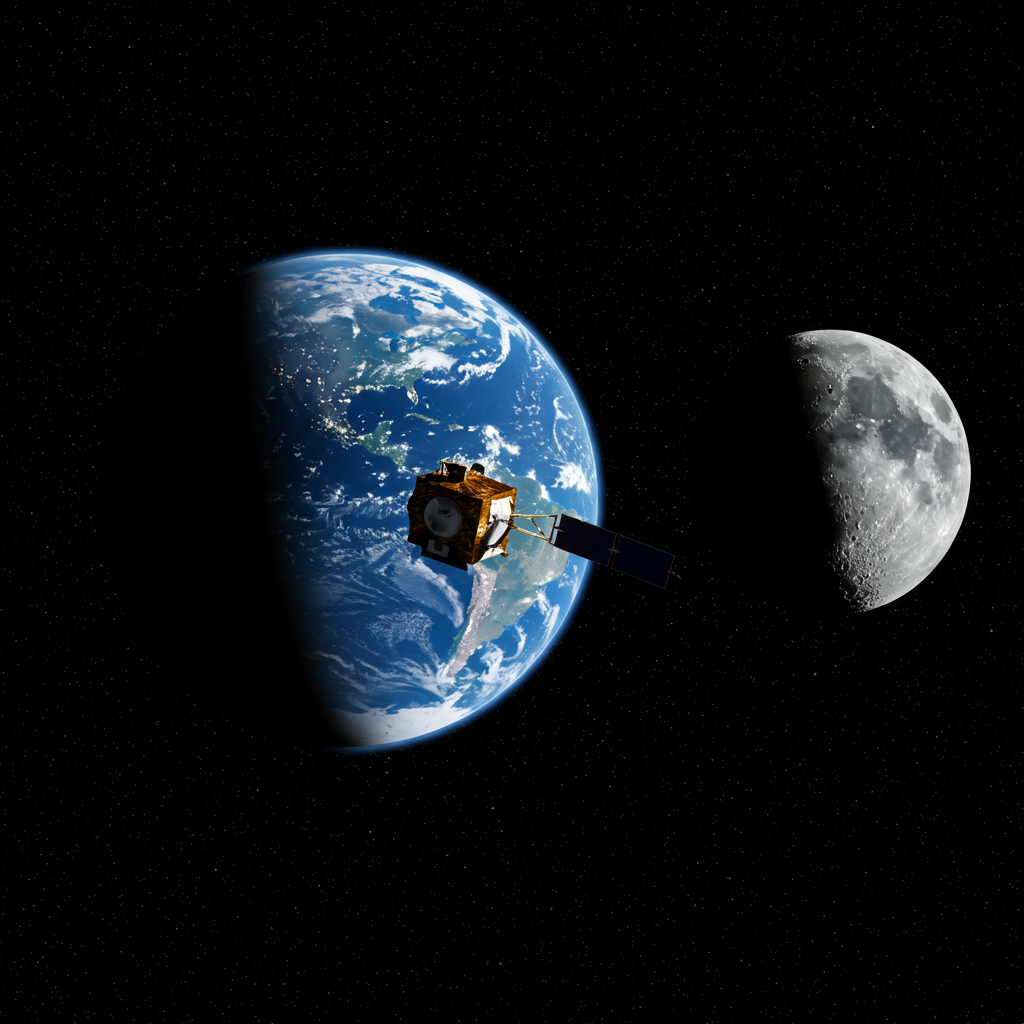
Humanity’s ambitious dream of becoming a multi-planetary species hinges on more than just rockets and robots; it depends on our ability to sustain life, including reproduction, beyond Earth. A groundbreaking new study from Australia has unveiled a critical challenge: human sperm struggle significantly to navigate in the unique environment of microgravity. This pioneering research suggests that successful human reproduction in microgravity might be far more complex than previously imagined, raising urgent questions for future space missions to the Moon and Mars.
The Unsettling Discovery: Sperm Lost in Space
Researchers at Adelaide University’s Robinson Research Institute, in collaboration with the Andy Thomas Centre for Space Resources, conducted a pivotal study published in Communications Biology. They simulated microgravity conditions on Earth using a sophisticated 3D clinostat machine. This device continuously rotates biological samples, effectively eliminating any sense of “up” or “down” and mimicking the weightlessness experienced by astronauts. When human sperm were placed in a uterus-like simulation chamber under these conditions, the results were startling: sperm exhibited “impaired directional navigation,” meaning they frequently lost their way.
This disorientation was not minor. Experiments involving mouse eggs exposed to microgravity showed a substantial 30 percent decline in fertilized eggs over a four-hour period compared to those under normal Earth gravity. Further detailed analysis, using a maze designed to mimic the female reproductive tract, revealed an approximately 40% reduction in human sperm successfully traversing the maze when exposed to simulated microgravity. Dr. Nicole McPherson, senior author of the study and a senior lecturer at Adelaide University, highlights the gravity of these findings. She asserts that understanding reproductive capabilities in space is not merely a scientific curiosity but a “necessity” as lunar and Martian missions transition from aspiration to reality.
Why Do Sperm Get Disoriented in Zero-G?
The study provides critical insights into how microgravity impacts sperm. Interestingly, the researchers observed that the sperm’s fundamental swimming power or motility remained consistent. This suggests that the problem isn’t a lack of propulsion, but rather a profound loss of direction. Without the constant, subtle cues of gravity, sperm cells appear to lose their ability to orient themselves, effectively becoming “blindfolded and spun around.”
One theory posits that sperm may lose crucial tactile contact with the channel walls of the reproductive tract. On Earth, gravity helps maintain this contact, guiding their path forward. In microgravity, this guidance system breaks down, causing sperm to tumble aimlessly like an “untethered astronaut.” This research marks the first time gravity has been definitively shown to play such a vital role in sperm navigation, underscoring its underappreciated significance in the intricate ballet of conception.
Beyond Navigation: Microgravity’s Broad Impact on Reproduction
The challenges of microgravity fertility extend beyond just sperm getting lost. The Adelaide University team also investigated broader reproductive impacts. They found that prolonged exposure to simulated microgravity had more severe downstream effects on fertilization and early embryonic development. In mouse studies, this led to developmental delays and, in some instances, a reduction in the number of cells destined to form the fetus during the earliest stages of embryo formation. Similar effects were noted on the development of pig embryos, specifically modifying the number of fetal cells within them.
These findings suggest that even if fertilization somehow occurs, the subsequent developmental stages could be compromised. While the direct effects on human embryos still require extensive research due to ethical considerations, the consistent behavior of human and mouse sperm in the clinostat machine suggests these concerns are highly relevant for future human space reproduction.
The Multifaceted Threats to Reproduction Off-World
Microgravity is just one piece of a complex puzzle. Sustaining human life and reproduction in space involves navigating a host of severe challenges:
Radiation: Outside Earth’s protective atmosphere, astronauts are exposed to harmful cosmic and solar radiation, which can damage DNA, increase cancer risk, and potentially affect germ cells and fetal development.
Toxic Lunar Dust: The fine, abrasive lunar dust could pose respiratory and other health hazards in habitats.
Limited Resources: Scarcity of fresh water, food, and medical supplies creates a stressful environment.
Contamination Risks: Sealed spacecraft environments can foster unique microbial ecologies.
Circadian Rhythm Disruption: Altered light cycles and lack of natural day-night cues can disturb biological rhythms.
Stress: The psychological and physiological demands of long-duration spaceflight are immense.
All these factors cumulatively pose significant risks to both maternal and fetal health, with potential long-term and even heritable effects, reinforcing the formidable obstacles to successful reproduction in an extraterrestrial environment.
A Glimmer of Hope: The Progesterone Pathway
Despite the daunting challenges, the study offered a “ray of hope” for cosmic conception. Researchers explored potential solutions and found an intriguing pathway: adding progesterone. This hormone, naturally released by cells surrounding an egg during ovulation, significantly improved the sperm’s ability to orient themselves under microgravity. Dr. McPherson explains that progesterone acts as a “chemical signal,” a “biological homing beacon” that sperm detect via receptors, guiding them towards the egg. She calls it “one of nature’s more elegant navigation systems.”
However, a critical caveat emerged: the progesterone concentrations required to aid sperm navigation in microgravity were “considerably higher” than those naturally occurring in the human body. Therefore, while this discovery is highly intriguing and suggests a potential mechanism, it is not yet a simple fix for space colonization fertility. It does, however, “open up an intriguing line of investigation for the future,” suggesting avenues for further research into artificial or enhanced guidance systems for reproduction beyond Earth. This highlights the vital role of chemotactic responses (chemical sensing) in sperm navigation, implying inherent adaptive processes could be leveraged.
The Imperative for Future Space Exploration
As nations and private entities set their sights on deep space exploration, Mars settlement, and lunar mining, the ability to reproduce and sustain human life off-world becomes paramount. Without it, maintaining settlements would rely on continuous, costly, and resource-intensive repopulation from Earth. This research provides fundamental knowledge not only for space missions but also for understanding how sperm navigate the female reproductive tract even on Earth.
This study builds upon a long history of research into human reproduction in microgravity. Previous investigations, like the 1987 Cosmos 1887 mission with rats or 1998 experiments on mouse embryos on the Columbia space shuttle, have consistently pointed to reproductive challenges. NASA’s 2018 Micro-11 mission also sent human sperm to the ISS to study weightlessness. The ongoing call for increased international collaboration and ethical guidelines, made by scientists in early 2024, underscores the urgency of closing knowledge gaps concerning microgravity and radiation effects on reproductive health.
Frequently Asked Questions
What did the pioneering Adelaide University study reveal about sperm in space?
The study, published in Communications Biology by researchers from Adelaide University, revealed that human sperm experience “impaired directional navigation” in simulated microgravity conditions. This means sperm get lost and struggle to orient themselves without the subtle cues of gravity, even though their swimming motility remains normal. This disorientation leads to a significant reduction in their ability to reach an egg, with mouse egg fertilization rates dropping by 30% and human sperm navigating a maze 40% less effectively.
How does microgravity affect sperm navigation and overall reproductive success?
Microgravity fundamentally disrupts sperm’s ability to navigate by removing gravitational cues that typically guide their movement, possibly by affecting tactile contact with reproductive tract walls. Beyond navigation, the study found that prolonged exposure to simulated microgravity negatively impacts early embryonic development, causing delays and reducing the number of cells forming the fetus. These findings highlight that successful off-world procreation faces significant hurdles not only in getting sperm to the egg but also in ensuring healthy embryo development.
Is there any potential solution to improve sperm navigation in microgravity?
Yes, the study identified a potential avenue for improvement: adding progesterone. This hormone, naturally released by eggs, acts as a “biological homing beacon” for sperm. When progesterone was introduced into the microgravity simulation, it significantly helped sperm to better orient themselves. However, the effective concentrations were “considerably higher” than what naturally occurs in the body, meaning it’s not a simple fix. This discovery does, however, open up promising new lines of investigation for developing artificial or enhanced guidance systems to support space reproduction.
The Path Forward: Ensuring Humanity’s Future Among the Stars
The prospect of human reproduction in microgravity is a complex frontier, essential for humanity’s long-term aspirations beyond Earth. While the challenges are significant, including radiation, limited resources, and the newly highlighted issue of sperm disorientation, the research from Adelaide University provides critical foundational knowledge. By understanding these fundamental biological hurdles, scientists can work towards innovative solutions, from advanced reproductive technologies to modified habitat designs. The journey to becoming a truly multi-planetary species will undoubtedly require us to adapt, overcome, and ultimately, find a way to thrive in the cosmos.