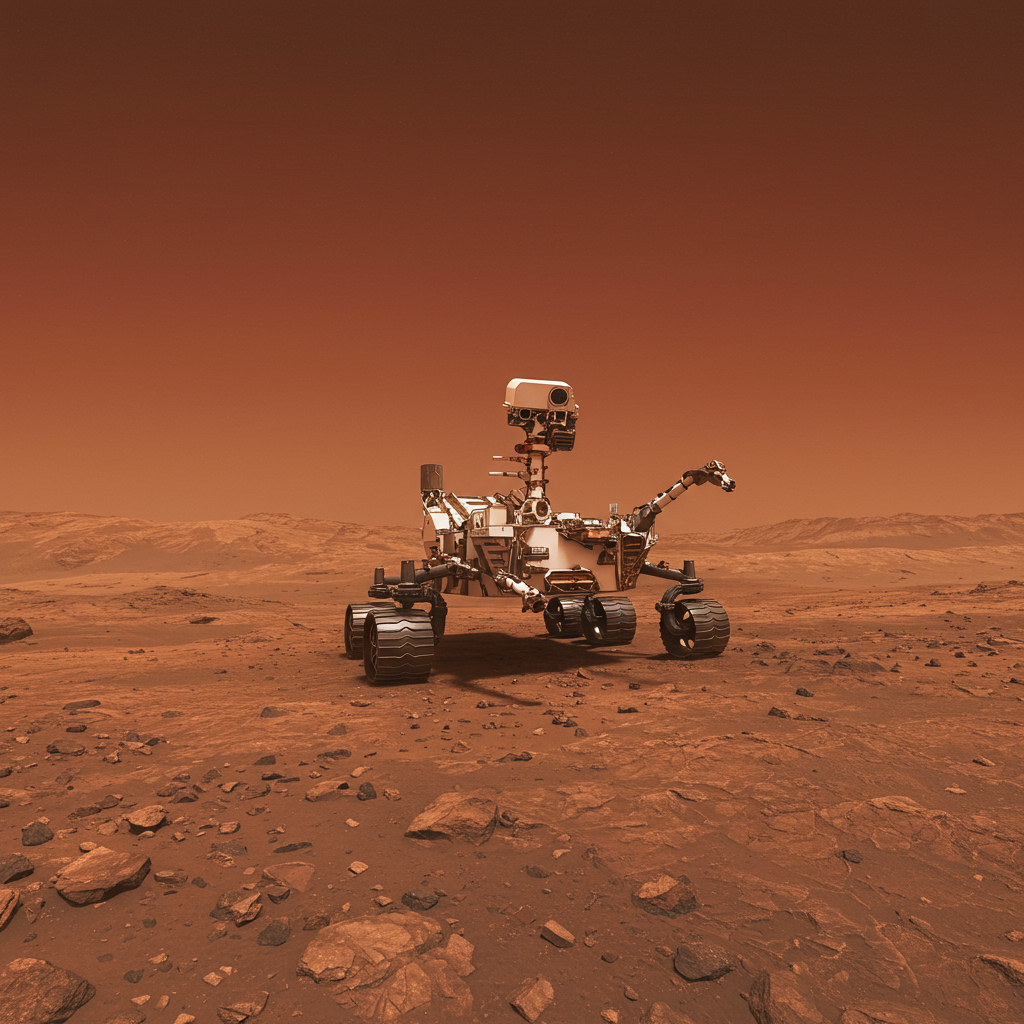
Future plans for human expansion into space depend on more than just survival; they require the ability to thrive and reproduce off-Earth. A groundbreaking new study, published recently in Communications Biology, casts a stark light on significant challenges ahead. Researchers found that microgravity — the near-weightless conditions of space — severely impacts crucial biological processes like sperm movement, egg fertilization, and early embryo development. These findings have profound implications for establishing self-sustaining human settlements on the Moon or Mars, highlighting a critical hurdle for future space colonization efforts.
Microgravity’s Grip on Human Fertility
The prospect of human reproduction beyond Earth has long fascinated scientists. Now, new research provides concrete evidence of how microgravity profoundly affects the fundamental steps of conception and early life. The study, led by Dr. Nicole McPherson of Adelaide University’s Robinson Research Institute, aimed to unravel the cellular mysteries of fertility in a weightless environment. Scientists investigated how sperm and egg cells from humans, mice, and pigs reacted to simulated microgravity, building upon earlier findings that space conditions can reduce estrogen production and sperm count in mice.
To replicate the unique conditions of space, the research team employed a specialized device called a clinostat machine. This innovative apparatus continuously rotates cells and samples in multiple directions. Dr. McPherson explained that this rapid, multi-directional rotation effectively randomizes gravitational pull. From the cells’ perspective, there’s no consistent “up” or “down,” creating a perpetual state of “continuous free fall” that closely mimics the weightlessness experienced in outer space.
Disorientation: Sperm’s Struggle to Navigate in Space
One of the most striking discoveries concerned sperm navigation. Under normal Earth gravity, sperm rely on both physical forces and chemical signals to find their way to an egg. The study revealed that in simulated microgravity, sperm lose their essential sense of direction. Researchers placed human and mouse sperm into intricate mazes designed to mimic the female reproductive tract. The results were clear: significantly fewer sperm successfully navigated these mazes under microgravity compared to those in a gravitational environment. For human sperm specifically, there was approximately a 40% reduction in successful navigation.
Dr. McPherson attributes this disorientation to the disruption of mechanosensors – tiny molecular devices on sperm that detect physical forces. When the force of gravity is removed, these sensors are thrown off balance, severely impairing the sperm’s ability to orient itself and move effectively. On Earth, the hormone progesterone, released by the female reproductive tract after ovulation, acts as a crucial chemical beacon. While adding progesterone did help human sperm navigate in microgravity, the required concentrations were far higher than naturally occurring levels. This suggests that while hormonal intervention might offer a partial solution, more research is needed to determine its safety and effectiveness for future space travelers.
Reduced Fertilization and Developmental Delays
The challenges of space reproduction extend beyond sperm navigation. The study also examined the critical stages of fertilization and early embryo development. Researchers observed a marked reduction in successful fertilization rates: mouse eggs saw a 30% decrease, and pig eggs a 15% decrease when exposed to simulated microgravity. This highlights a direct impact on the very initiation of new life.
Furthermore, the research uncovered significant developmental delays in pig embryos six days after insemination. Dr. McPherson emphasized that vital processes, such as the embryo’s implantation into the uterine wall, rely on subtle gravitational cues. The subsequent organization of cells to form organs and the proper function of the placenta throughout pregnancy could all be disrupted by a lack of gravity. These findings indicate that microgravity is not just a hurdle for conception but potentially for the entire gestational process, posing serious questions for long-term human settlements off-world.
Life Beyond Earth: Broader Contexts and Challenges
While human reproduction faces unique hurdles in space, the study of life in microgravity spans across all biological kingdoms. Understanding how plants and even bacteria adapt offers valuable comparative insights.
Growing Life in the Cosmos: Lessons from Plants and Microbes
NASA and international partners are actively researching how to cultivate plants in space. Systems like Veggie and the Advanced Plant Habitat (APH) on the International Space Station (ISS) have successfully grown various crops, including lettuce, cabbage, and flowers. These efforts are crucial not only for astronaut psychology but also for providing fresh, nutrient-rich food that prepackaged meals cannot fully supply. Projects like “Moon-Rice” aim to genetically engineer “super-dwarf” rice varieties specifically for space, capable of thriving in compact, controlled environments.
However, even plants face unique stressors in space. While some thrive, research using the Biological Research in Canisters (BRIC-LED) facility has shown that plants in microgravity can experience increased oxidative stress and compromised immune systems. This mirrors some of the concerns for human health in space, where various stressors can alter gene expression and immune responses.
Similarly, bacteria present another fascinating area of study. Missions to the ISS have investigated how pathogenic bacteria like E. coli and Salmonella grow and reproduce in zero-gravity. Researchers aim to understand how microgravity affects bacterial growth, gene expression, and antibiotic resistance. Early findings from simulated space environments even suggested that bacterial resistance to antibiotics might weaken under certain conditions, offering potential insights into combating “superbugs” on Earth. This comparative research underscores that gravity is a fundamental influence on nearly all biological processes.
The Future of Human Space Colonization: A Vital Crossroad
The findings from Adelaide University’s study, combined with broader space biology research, underscore a critical truth: gravity is not merely a backdrop for life, but a deeply ingrained element of biological development. For humanity to establish a truly lasting presence off Earth, beyond temporary outposts, the ability to reproduce and raise future generations in space is paramount. Without it, sustained colonization remains an elusive dream.
The implications for planned long-term settlements on the Moon and Mars are immense. These pioneering habitats depend entirely on people eventually being able to procreate and thrive in extraterrestrial environments. This isn’t just about keeping astronauts alive; it’s about building multi-planetary communities.
Charting a Course: Addressing the Reproductive Challenge
The challenges revealed by this study are significant, yet they also spur innovation and deeper understanding. Scientists are urgently calling for more dedicated research into reproductive health in space. This includes investigating the combined effects of microgravity and other space hazards, such as radiation, which is also known to impair fertility. International collaboration is crucial to fill these knowledge gaps and to establish comprehensive ethical guidelines for human reproduction beyond Earth.
While microgravity undoubtedly presents obstacles, the very act of uncovering these issues provides a roadmap for finding solutions. Continued research into cellular mechanisms, hormonal interventions, and perhaps even engineered environments could pave the way for humanity to overcome these biological constraints. The pursuit of multi-planetary existence requires not just technological prowess but also a profound understanding of life itself and its incredible capacity for adaptation.
Frequently Asked Questions
What specific biological processes are affected by microgravity for reproduction?
Microgravity significantly impacts several key biological processes essential for reproduction. A recent study highlights three main areas: sperm navigation, successful fertilization, and early embryo development. Sperm cells struggle to orient and move effectively towards an egg due to the disruption of tiny mechanosensors that detect physical forces. Fertilization rates are notably reduced (e.g., 30% for mouse eggs). Furthermore, embryos show developmental delays, as processes like implantation and cell organization for organ formation rely on gravitational cues.
What research is being done to overcome these challenges for space colonization?
Scientists are actively pursuing various research avenues to address these challenges. Dr. Nicole McPherson’s team found that the hormone progesterone could partially aid sperm navigation, though higher-than-natural concentrations were needed, requiring further safety research. Beyond human reproduction, extensive studies are ongoing for plant and bacterial growth in microgravity to understand adaptation. Researchers are calling for more comprehensive studies into reproductive health in space, focusing on both microgravity and radiation effects, with an emphasis on international collaboration and establishing ethical guidelines for future space reproduction.
What does this mean for the long-term goal of establishing human colonies on the Moon or Mars?
The findings present a critical hurdle for the long-term goal of establishing self-sustaining human colonies on the Moon or Mars. For humanity to truly colonize other celestial bodies, the ability for people to reproduce and raise families there is essential, moving beyond mere survival to thriving populations. This research indicates that gravity is deeply embedded in the fundamental biological processes of life’s creation. Overcoming these reproductive challenges is not just a scientific puzzle but a foundational requirement for any genuine multi-planetary future, driving urgent research into potential solutions and adaptations.
The journey to becoming a multi-planetary species is one of humanity’s greatest ambitions. While the latest research from Adelaide University underscores significant biological hurdles for reproduction in space, it also deepens our understanding of life’s fundamental relationship with gravity. By meticulously studying these challenges, from sperm navigation to embryo development, scientists are laying the groundwork for innovative solutions. This knowledge will be crucial as we continue to push the boundaries of human exploration, transforming science fiction into the tangible reality of a future among the stars.