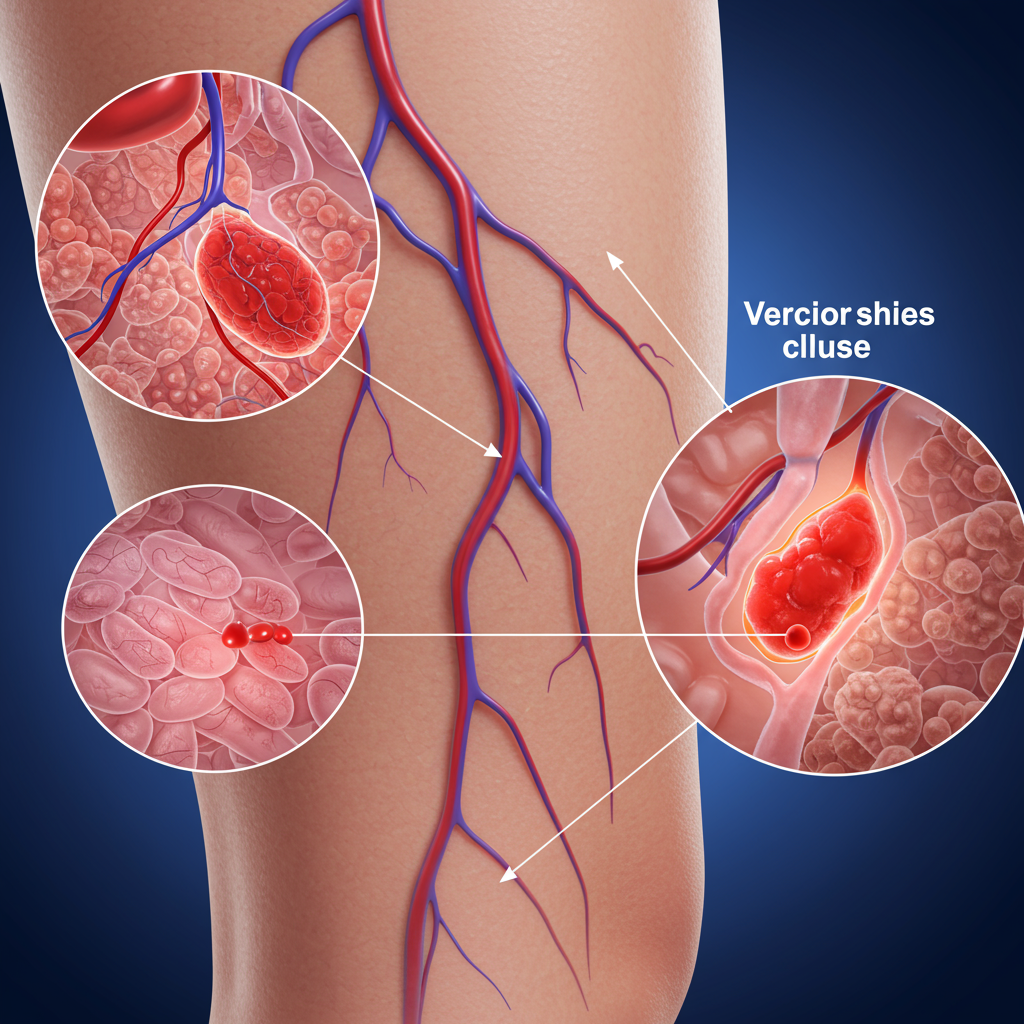
Sluggish blood flow isn’t just uncomfortable; it can be dangerous. For the millions of adults experiencing symptoms like bulging varicose veins or aching legs, blood sometimes pools instead of efficiently traveling back to the heart. This slowed circulation creates a prime environment for blood clots, tiny yet potentially life-threatening blockages that can form deep within the veins. While these clots most often occur in the legs (Deep Vein Thrombosis or DVT), they can, in rare but serious cases, break free and travel to the lungs (Pulmonary Embolism or PE), a complication tragically linked to significant mortality.
Understanding why blood clots form is the first step to prevention. Oxygen-rich blood reaches your legs via arteries, but veins are responsible for the challenging uphill return journey. Valves within the veins act like one-way gates, ensuring blood flows upwards. If these valves weaken or become damaged – a common issue in conditions like chronic venous insufficiency and varicose veins – blood can reflux and pool. This pooling puts pressure on vein walls, promotes inflammation, and slows blood flow, setting the stage for platelets to aggregate and initiate clotting. Sedentary lifestyles, prolonged sitting or bed rest, specific medications, certain chronic health conditions like cancer or heart failure, obesity, and even genetic predisposition can all increase your underlying risk for DVT. Superficial clots (SVT) can cause localized pain and redness over a varicose vein, while a DVT often presents as sudden leg swelling and pain. PE symptoms, which require immediate emergency care, include sudden shortness of breath and chest pain that worsens with deep breaths.
For centuries, traditional medicine, particularly in China, has explored the health benefits of the ancient Ginkgo biloba tree. While its early uses often focused on cognitive health and memory enhancement, modern scientific inquiry is increasingly turning towards Ginkgo’s potential role in supporting vascular health, specifically addressing issues like weary leg veins and mitigating the risk of problematic blood clots. This shift is fueled by the need for gentle, complementary approaches to support conventional therapies like compression stockings or exercise.
How Ginkgo Biloba Might Support Vascular Health
The leaves of the Ginkgo biloba tree contain potent natural compounds that appear to influence several biological pathways critical for healthy blood flow and preventing unwanted clot formation. Researchers are exploring its effects across two main fronts: impacting blood components, particularly platelets, and potentially improving the health and function of vein walls themselves.
Affecting Blood Platelets
Platelets are tiny blood cells that play a vital role in stopping bleeding by clumping together. However, excessive or inappropriate platelet aggregation is a primary step in the formation of blood clots within vessels. Studies suggest that standardized Ginkgo biloba extracts may interfere with this process.
Research from institutions like Capital Medical University in Beijing, initially focusing on stroke patients, has shed light on Ginkgo’s anti-platelet potential. In vitro studies demonstrated that Ginkgo extract made blood platelets less prone to sticking together when triggered by specific chemical signals, particularly those involving the arachidonic-acid pathway – the same pathway targeted by aspirin. Further laboratory tests noted that blood treated with the extract took slightly longer to clot. A 2025 animal study reinforced these findings, showing that Ginkgo reduced damage inside blood vessels and slightly prolonged clotting time in rats with clotting issues.
In a real-world study involving 99 stroke survivors, adding Ginkgo to low-dose aspirin therapy resulted in a greater reduction in arachidonic-acid-induced platelet aggregation compared to aspirin alone. While some minor bleeding (like nose or gum bleeds) was noted in a small fraction of patients receiving the combination, no severe hemorrhages occurred in this short-term study, suggesting potential safety at low doses but underscoring the need for careful monitoring. The study also included patients with internal jugular venous stenosis, a condition where clot formation in the neck veins mirrors processes seen in leg veins. In this group, Ginkgo alone significantly reduced platelet stickiness within 24 hours, an effect that persisted over five days.
Impacting Vein Wall Health
Beyond directly influencing platelets, there is also evidence suggesting Ginkgo biloba can support the structural integrity and function of the vein walls themselves. Chronic venous insufficiency and varicose veins involve injury to the endothelium, the delicate inner lining of blood vessels. Endothelial cells can detach under strain, serving as early indicators of vein damage.
A classic double-blind trial examined the effect of a capsule combining Ginkgo with other vascular support compounds (troxerutin and heptaminol) in patients with chronic varicose veins. Participants taking the combination saw a 14.5% reduction in circulating endothelial cell counts, significantly better than the 8.4% reduction seen with placebo. This decline in detached cells hints at potential real structural healing or protection of the vein lining. Patients in this study also reported tangible benefits, including reduced ankle swelling and fewer night cramps, improvements echoed in later studies from other regions that tracked leg circumference. This suggests Ginkgo may offer more than just blood-thinning effects; it might help maintain healthier vein structure.
Broader Mechanisms & Supporting Evidence
Scientists are exploring additional ways Ginkgo biloba might benefit the vascular system. Animal data suggests Ginkgo extract can lead to higher levels of nitric oxide (NO). Nitric oxide is a molecule known to relax vessel walls and counteract platelet stickiness, mechanisms consistent with the human study findings on reduced platelet aggregation.
Network pharmacology analysis, a method to understand how compounds interact with biological systems, points to specific genes like AKT1, ALB, and TNF as potential targets of Ginkgo’s action. These genes are involved in regulating inflammation, suggesting that Ginkgo’s vascular benefits could extend to calming inflammation within the vein lining, which is often implicated in vein damage and clot formation.
Furthermore, oxidative stress, caused by an imbalance of free radicals, can weaken venous valves over time, potentially contributing to the progressive dilation seen in varicose veins. The antioxidant compounds within Ginkgo extracts, particularly flavonols, are powerful free-radical scavengers. By neutralizing these damaging molecules, Ginkgo’s antioxidant side may offer a protective effect, potentially slowing the progression of venous disease.
Even dietary choices can impact clotting risk. For instance, while beneficial in many ways, high consumption of certain artificial sweeteners like erythritol has been linked in recent research to increased blood clot formation tendency, offering a stark contrast to substances being studied for their clot-preventing potential. Conversely, nutrient-dense foods like spinach offer vascular benefits, including iron for healthy blood and nutrients that support healthy blood pressure, though its high Vitamin K content is relevant when considering blood thinners.
Important Safety Considerations & Standardization
Given Ginkgo biloba’s potential effects on blood clotting, it is absolutely crucial to discuss its use with a healthcare professional, especially if you have any underlying health conditions or are taking medications.
Combining Ginkgo with blood-thinning medications carries risks. A study involving older adults taking Ginkgo alongside aspirin for four weeks found no dangerous bleeding events, but laboratory tests showed an additive inhibitory effect on platelet function. This suggests that while low-dose combinations might offer benefits for high-risk individuals who can’t tolerate stronger medications, they must be carefully monitored. This additive effect makes pharmacologic sense as both target similar pathways. Caution is also needed when combining Ginkgo with other substances that affect clotting, including:
Prescription anticoagulants (e.g., warfarin, direct oral anticoagulants like rivaroxaban, apixaban, dabigatran)
Anti-platelet drugs (e.g., aspirin, clopidogrel)
Nonsteroidal anti-inflammatory drugs (NSAIDs like ibuprofen, naproxen), which also affect platelet function
Other herbal supplements known to affect clotting (e.g., garlic, ginger, high-dose Vitamin E)
Individuals scheduled for surgery or dental work should inform their clinicians about Ginkgo use, as it may need to be paused temporarily to minimize bleeding risk. Healthcare providers may recommend staggering doses or monitoring clotting parameters through blood tests.
When considering a Ginkgo supplement, quality matters. The clinical trials showing vascular benefits typically use highly standardized extracts. Look for products specifically labeled as EGb 761 or those that specify standardized levels of the key active compounds: at least 24% flavonol glycosides and 6% terpene lactones. Supplements without this standardization may not provide the same levels of active ingredients studied for these effects.
Frequently Asked Questions
How does Ginkgo biloba affect blood clots and circulation?
Ginkgo biloba is being studied for its potential dual action on vascular health. It may help reduce blood clot risk by decreasing the stickiness of platelets, key components in clot formation, especially through the arachidonic-acid pathway. Additionally, research suggests it could support the health of vein walls by protecting the inner lining (endothelium), potentially promoting better blood flow, and offering antioxidant effects that guard against damage.
What type of Ginkgo biloba extract is recommended for vascular health?
Based on the extracts used in clinical research, look for highly standardized Ginkgo biloba products. Specifically, standardized extracts labeled as EGb 761 are commonly used in studies. If EGb 761 isn’t specified, choose products that guarantee a minimum of 24% flavonol glycosides and 6% terpene lactones, as these are considered the key active compounds.
Who should NOT take Ginkgo biloba for circulation or blood clots?
Anyone taking prescription blood thinners (anticoagulants like warfarin or DOACs) or anti-platelet medications (like aspirin or clopidogrel) should not take Ginkgo biloba without strict medical supervision. It can increase bleeding risk. Exercise caution if taking NSAIDs or other supplements that affect clotting. Individuals with bleeding disorders, those facing upcoming surgery or dental work, or those who have had a recent stroke should also consult a doctor before use. Always inform your healthcare provider about all supplements you are taking.
Looking Ahead: An Ancient Remedy, A Modern Role?
For individuals struggling with aching calves, swelling, or a family history of venous issues, discussing Ginkgo biloba as a potential adjunct therapy alongside lifestyle changes, exercise, or compression stockings could be a sensible step. While the evidence remains preliminary, particularly regarding long-term outcomes and safety profiles, the plant’s demonstrated effects on both platelet activity and vein wall health are promising.
Future large-scale, multicenter clinical trials are needed to confirm these benefits, assess long-term safety, and measure impacts on patient quality of life, such as reducing sensations of heaviness, itching, or nightly restlessness associated with venous insufficiency. If future findings continue to be positive, this ancient tree might indeed earn a significant modern role in managing vascular conditions, offering a less invasive option for those seeking gentle support for their circulation.