The mysterious events that unfolded around a rural Australian dining table captured global attention for two long years. On a seemingly ordinary Saturday, July 29, 2023, five people gathered for lunch at the Koala, Victoria, home of Erin <a href="https://news.quantosei.com/2025/07/07/sean-diddy-combs-is-denied-bail-after-mixed-verdict-clears-him-of-top-charges-in-sex-crimes-case/” title=”Breaking: Diddy Acquitted Major Counts, Denied Bail”>patterson. Within a week, three guests were dead, a fourth clung to life, and suspicion centered on the host, accused of intentionally poisoning her visitors with toxic wild mushrooms.
Following a highly anticipated trial held in the small town of Morwell, Patterson has now been found guilty. The jury convicted her of murdering three relatives who attended the lunch and attempting to murder a fourth. The victims were her former in-laws, Don Patterson, 70, and Gail Patterson, 70, alongside Gail’s sister, Heather Wilkinson, 66. Remarkably, Heather’s husband, Pastor Ian Wilkinson, 66, survived after enduring weeks of intensive hospital treatment, including time in a coma. Erin Patterson reportedly remained silent and composed in court as the verdicts were delivered, facing potential life imprisonment.
The Fatal Midday Meal Unveiled
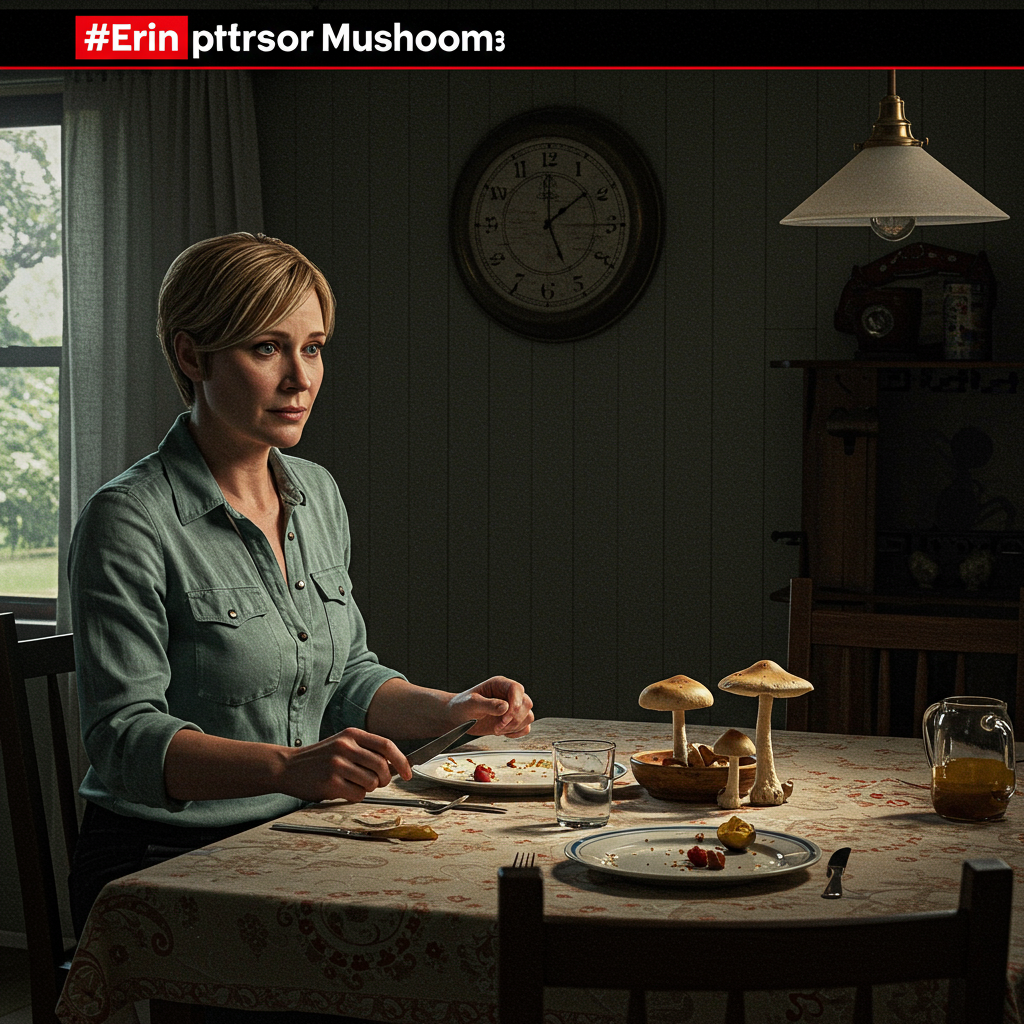
The ill-fated lunch took place when Gail and Don Patterson arrived at Erin’s home just after midday, bringing an orange cake. They were joined by the Wilkinsons, Heather and Ian. Noticeably absent was Erin’s estranged husband, Simon Patterson. He had reportedly cancelled his attendance the previous day, citing discomfort due to existing tensions between the former couple.
According to trial testimony, Erin spent the morning preparing Beef Wellington. This classic dish featured expensive cuts of steak, topped with a mushroom paste, and encased in pastry. Ian Wilkinson recounted watching Erin place the pastry parcels onto four grey plates meant for her guests. Her own serving was on a distinct orange plate. A sixth serving, allegedly prepared in case Simon decided to attend, was stored in the fridge. While Erin was initially charged with attempting to murder Simon on multiple occasions, these specific charges were dropped just before the trial commenced.
Conversation and a Startling Revelation
The group shared a prayer before beginning their meal. Banter flowed around the table, including lighthearted talk about husbands assisting their wives. Stuffed after the main course, they enjoyed dessert. It was then that Erin Patterson reportedly shocked her guests by announcing she had cancer. The defence later conceded in court that this claim was untrue at that time. Despite the surprising declaration, the two elderly couples offered Erin advice on how to inform her children, concluding the meal with another prayer. Ian Wilkinson testified that while he did not know Erin well, the atmosphere seemed friendly. He described her as appearing like a “normal person.”
A Sudden, Severe Illness
By that evening, all four guests were suffering from severe illness. The following day, they were admitted to hospital with alarming symptoms. Don Patterson, who had consumed his full portion and about half of his wife’s, reported vomiting 30 times within just a few hours to a doctor.
Suspicion began to mount quickly. Several guests had been surprised by the invitation itself. Simon Patterson stated his estranged wife rarely hosted such events. Ian Wilkinson testified that he and his late wife had never visited Erin’s home before. One guest, Heather Wilkinson, reportedly wondered aloud in hindsight why Erin had used a different type of plate for herself. “I’ve puzzled about it since lunch,” she was quoted as saying. “Is Erin short of crockery?”
Later, while hospitalised in Leongatha, the ailing guests inquired if their host was also sick, assuming they had all eaten the same food. Days later, detectives echoed this line of questioning during a police interview with Erin. A tape played for the court captured detectives probing, “We’re trying to understand what has made them so ill… Conversely, we’re trying to understand why you’re not that ill.”
Erin Patterson’s Account: Bulimia and the Cake
Testifying publicly for the first time, Erin Patterson offered her explanation from the witness stand. She claimed that after her relatives departed, she cleaned the kitchen before rewarding herself with a slice of the orange cake Gail had brought. “[I ate] another piece of cake, and then another piece,” she told the court. Feeling overfull after consuming the rest of the cake, she stated, “So I went to the toilet and brought it back up again.” She claimed she felt better afterward. Erin outlined a secret battle with bulimia since her teenage years, saying she regularly engaged in binge-eating and purging. Her defence team suggested this explained her lack of severe symptoms compared to her guests.
Erin did go to hospital two days after the lunch, reporting feeling unwell. However, she initially resisted urgent pleas from staff who wanted her and her children – who she claimed had eaten leftovers – to be immediately admitted for treatment. One doctor, reportedly “surprised” by this refusal given the condition of the other guests, was so concerned he called police for assistance. When medics eventually examined Erin, neither she nor her children showed similar symptoms to the others who had eaten at her house. Tests reportedly found no traces of death cap mushroom poisoning in their systems. After a precautionary 24-hour stay, Erin was discharged.
The Prosecution Builds Its Case: evidence of Deception
While Erin Patterson was discharged, her guests continued to deteriorate in hospital. As their severe diarrhoea and vomiting escalated towards organ failure, prosecutors alleged Erin was actively working to conceal her actions.
The day after leaving the hospital, CCTV footage captured Erin travelling to a local dump. She was seen disposing of a food dehydrator. This appliance was later recovered and found to contain traces of poisonous mushrooms, according to evidence presented.
Further evidence focused on her digital activity. Around the time of the lunch, Erin was using three different phones. Two of these devices disappeared shortly after the meal. The phone she did provide to police had been repeatedly wiped, including reportedly while detectives were searching her house.
Questions regarding the source of the mushrooms also raised significant red flags for investigators. Patterson claimed some dried mushrooms had been purchased from an Asian grocery in Melbourne, but she could not recall the specific suburb, brand (claiming plain packaging), or provide transaction records, stating she likely paid cash.
Meanwhile, detectives discovered that death cap mushrooms had been sighted in two nearby towns during the weeks leading up to the lunch. Concerned locals had posted pictures and locations to the online plant database iNaturalist. Erin’s internet history revealed she had used this website to view death cap mushroom sightings at least once previously. Furthermore, her mobile phone location data appeared to place her travelling to both areas where sightings were reported. Evidence also suggested she purchased the infamous food dehydrator on her return journey from one of these trips.
In court, Erin told police she had never owned a dehydrator, despite an instruction manual being found in her kitchen drawer. Contradictory evidence emerged from posts she had made in a true crime Facebook group. In these posts, she allegedly boasted about using a dehydrator. “I’ve been hiding powdered mushrooms in everything,” read one post. “Mixed into chocolate brownies yesterday, the kids had no idea.”
Digital forensics experts managed to recover some data from her devices. Among the recovered items were photos seemingly showing mushrooms resembling death caps being weighed on a set of kitchen scales.
During the trial, Erin Patterson claimed she realised in the days following the lunch that the Beef Wellington might have accidentally contained dried mushrooms she had foraged and mistakenly placed in a container with store-bought ones. She stated she was too “scared” to tell anyone, describing it as a “stupid knee-jerk reaction to dig deeper and keep lying.”
The Contentious Question of Motive
What truly baffled police and remained a point of intense debate throughout the trial was the question of motive.
Simon Patterson testified that after their 2015 separation, he and Erin initially remained friendly. This changed in 2022, he stated, when disagreements arose over finances, child support, schooling, and properties. However, he maintained there was no indication of ill will towards his family. “She especially got on with dad,” Simon said, his voice faltering. “They shared a love of knowledge and learning… I think she loved his gentle nature.”
Conversely, Erin Patterson told the court she felt increasingly isolated from the Patterson family. Evidence was presented suggesting she had grown frustrated with them. Prosecutor Nanette Rogers highlighted this by having Erin read aloud expletive-laden Facebook messages. In these messages, Erin had referred to Simon as a “deadbeat” and his parents as “a lost cause.”
Despite this, the prosecution ultimately chose not to present a single, specific motive for the killings. Prosecutor Rogers acknowledged that the jury might still wonder what drove Erin to commit the crime long after the trial concluded.
Defence Arguments: Accident and Lies from Fear
The lack of a clear motive formed a cornerstone of Erin Patterson’s defence. Her barrister argued it defied logic that she would intentionally harm people she claimed to love like her own parents. In her police interrogation, Erin had stated, “My parents are both gone. My grandparents are all gone. They’re the only family that I’ve got… I love them a lot.”
The defence team sought to explain away the prosecution’s evidence. They argued that the critical messages about her in-laws were merely harmless “venting.” The cancer claim, they suggested, was a cover story for planned weight-loss surgery she was too embarrassed to disclose. However, this was contradicted by evidence that the Melbourne clinic she claimed to have booked with did not offer that specific procedure.
Regarding the location data, the defence argued cell phone tracking was imprecise, suggesting there was no concrete evidence she actually visited the towns where death cap mushrooms were sighted. Her lack of severe symptoms, they contended, was because she had vomited after the meal, as a result of her bulimia. They also argued she disliked hospitals, explaining why she initially resisted admission and discharged herself. Her lies and attempts to dispose of evidence, the defence claimed, were not proof of guilt, but the actions of a woman terrified she would be wrongly blamed for a tragic accident. “She’s not on trial for lying,” defence barrister Colin Mandy stated, emphasizing it was not a “court of moral judgment.” He accused the prosecution of trying to force a narrative by selectively interpreting evidence and ignoring alternative explanations.
However, the prosecution argued that Erin Patterson had told so many lies, it was impossible to keep track. Prosecutor Rogers cited her attempts to explain the cancer fib as particularly stark. She argued that when her lies were uncovered, Erin constructed a new narrative to fit the emerging evidence, stating she knew “the truth would implicate her.” Dr Rogers asserted the jury should have “no difficulty” rejecting the notion this was simply a “horrible foraging accident.”
Frequently Asked Questions
What was the verdict in the Erin Patterson mushroom poisoning trial?
After a nine-week trial in Morwell, Victoria, and a week of deliberations, the jury found Erin Patterson guilty. She was convicted on three counts of murder for the deaths of her former in-laws, Don and Gail Patterson, and Gail’s sister, Heather Wilkinson. She was also found guilty of one count of attempting to murder Heather’s husband, Ian Wilkinson, who survived the poisoning.
What crucial evidence was used against Erin Patterson?
Key evidence presented by the prosecution included CCTV footage showing Erin disposing of a food dehydrator containing traces of poisonous mushrooms, suggesting concealment. Her phone data revealed wiped devices and photos of suspected death cap mushrooms being weighed. Her internet history showed searches related to death cap mushroom sightings on iNaturalist, supported by phone location data placing her near sighting locations. Social media posts allegedly showed her boasting about hiding powdered mushrooms in food and using a dehydrator, contradicting statements to police.
How did Erin Patterson explain the deaths and her lack of symptoms?
Erin Patterson claimed the deaths were a tragic accident, suggesting she may have accidentally mixed foraged dried mushrooms, including death caps, with store-bought ones used in the Beef Wellington. She stated she was too scared to reveal this, leading to lies and attempts to conceal evidence out of panic. For her own lack of severe symptoms, she attributed it to a secret history of bulimia, claiming she had consumed a large amount of cake after the guests left and purged, expelling any potential toxins from her system.
The Outcome
Ultimately, after considering weeks of testimony and evidence, the jury rejected the defence’s argument that the events were a terrible accident. Erin Patterson has been convicted and will return to court at a later date for her sentencing hearing.