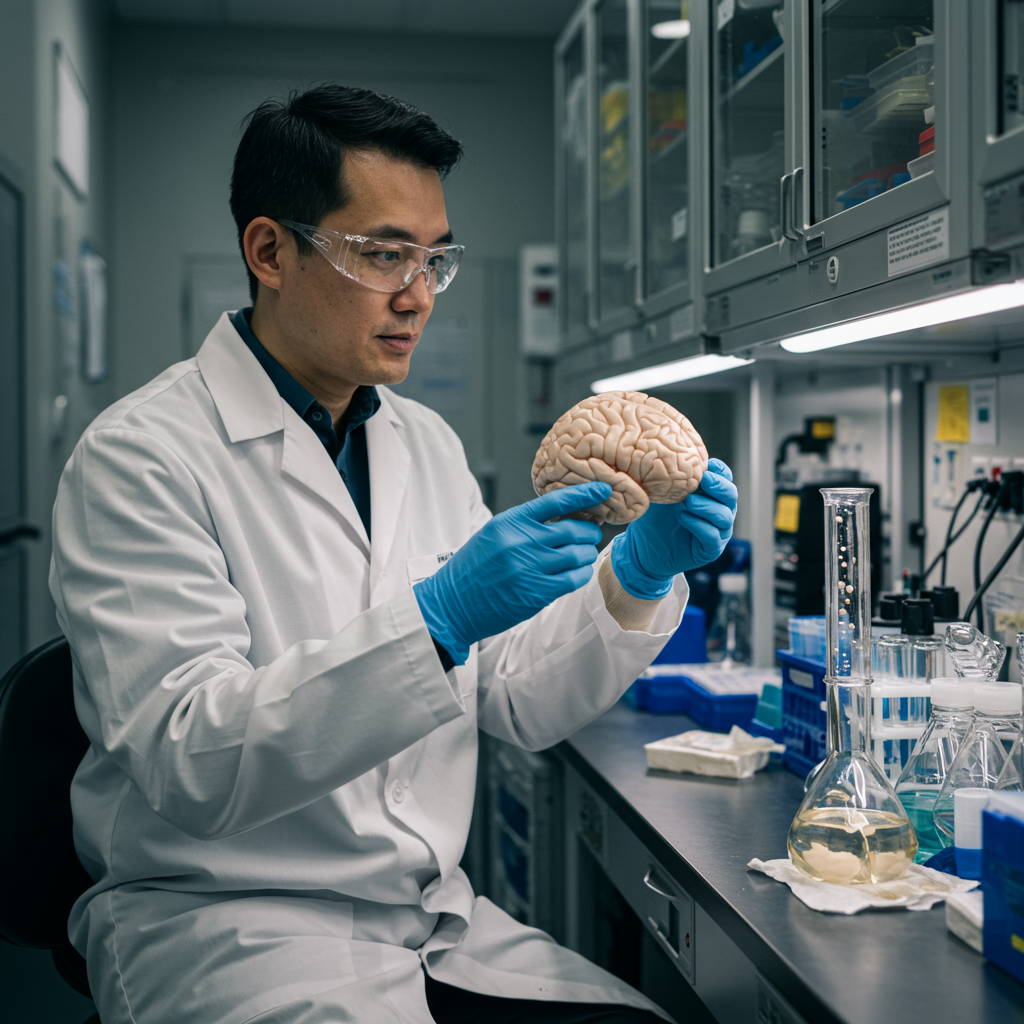
A groundbreaking discovery from the University of Sydney is offering new hope in the fight against parkinson’s disease. Scientists have identified a key brain protein implicated in the condition and developed a potential method to modify it. This innovative research, focused on reversing symptoms in animal models, paves a promising path for future human treatments aimed at slowing or even halting this debilitating neurological disorder.
Understanding the Challenge of Parkinson’s Disease
Parkinson’s disease ranks as the second most common neurological condition globally, impacting millions. This progressive disorder is characterized by the degeneration and death of dopamine-producing cells in the brain. As these crucial cells are lost, individuals experience a range of motor symptoms including tremors, muscle stiffness, slowed movement (bradykinesia), and impaired balance. Beyond motor issues, patients often face non-motor symptoms like cognitive changes, sleep disorders, and mood disturbances. Currently, there is no known cure. Available treatments primarily focus on managing symptoms rather than addressing the underlying cause or slowing progression, highlighting the urgent need for new therapeutic strategies.
A Decade of Dedicated Research
Researchers at the University of Sydney’s Brain and Mind Centre have spent more than ten years deeply investigating the biological mechanisms driving Parkinson’s disease. Their long-term commitment aims to uncover targets that could lead to treatments capable of modifying the disease course. This dedicated effort laid the groundwork for their latest significant findings.
Uncovering the Role of a Faulty Protein: SOD1
The team’s earlier work, published in 2017, made a crucial initial finding. They were the first to detect an abnormal form of a protein called SOD1 (Superoxide Dismutase 1) present in the brains of patients diagnosed with Parkinson’s disease.
Normally, the SOD1 protein plays a beneficial, protective role within brain cells. However, in the context of Parkinson’s, this protein becomes misfolded or faulty. This faulty form doesn’t function correctly. Instead, it begins to aggregate or clump together inside brain cells. These protein clumps are toxic and damage the very cells they were meant to protect, contributing to the neurodegeneration seen in the disease. Identifying this specific faulty protein provided the researchers with a clear target for potential therapeutic intervention.
Targeting Faulty SOD1: A New Approach
Building on their discovery of the faulty SOD1 protein, the same University of Sydney team, led by Professor Kay Double, embarked on a new study. Published in Acta Neuropathologica Communications, this research specifically investigated whether targeting this malfunctioning SOD1 protein could impact Parkinson-like symptoms. Their innovative approach involved using a drug treatment that modulated copper chemistry associated with the misfolded protein.
The study was conducted using mouse models specifically bred to exhibit symptoms resembling human Parkinson’s disease. This allowed the researchers to closely observe the effects of the experimental treatment on motor function and disease progression in a controlled environment.
Astonishing Results in Preclinical Trials
The critical phase of the study involved treating the mice with the experimental therapy. Researchers divided the mice with Parkinson-like symptoms into two groups. One group received a special copper supplement treatment delivered over a three-month period. The control group, meanwhile, received a placebo.
The results were remarkably positive and exceeded the researchers’ expectations. Throughout the study duration, the mice receiving only the placebo showed a clear decline in their motor skills, consistent with the progression of Parkinson-like symptoms. In stark contrast, the group treated with the special copper supplement exhibited dramatic improvements. These mice did not develop the anticipated movement problems. Their motor function was significantly enhanced, effectively reversing or preventing the symptoms observed in the untreated control group.
Professor Double shared her reaction to the outcome, stating, “We hoped that by treating this malfunctioning protein, we might be able to improve the Parkinson-like symptoms in the mice we were treating – but even we were astonished by the success of the intervention.” She added that “All the mice we treated saw a dramatic improvement in their motor skills, which is a really promising sign that it could be effective in treating people who have Parkinson disease too.” These results provide compelling evidence that targeting faulty SOD1 via copper modulation holds significant therapeutic potential.
The Promise for Human Therapy
The success observed in the mouse model offers substantial hope that this treatment approach could be translated into human therapy. While these findings are from preclinical studies, they suggest that a strategy focused on correcting the copper chemistry linked to misfolded SOD1 proteins could potentially slow or halt the progression of Parkinson’s disease in people. This would represent a major advance over current treatments that only manage symptoms. Further studies are crucial to confirm these effects and determine safety and efficacy in humans.
The Complex Nature of Parkinson’s
Researchers acknowledge that Parkinson’s disease is a complex condition. It is increasingly understood to be driven by multiple contributing factors and pathways, not just one single cause. The faulty SOD1 protein is likely one significant factor among potentially several others influencing disease development and progression in humans.
Drawing a parallel, researchers noted that similar to how HIV is managed today, Parkinson’s may require a multi-pronged approach. A single treatment targeting one factor, like faulty SOD1, might have a modest effect alone. However, when combined with other interventions addressing different aspects of the disease process, it could contribute significantly to overall health improvement and potentially a more profound impact on slowing progression. This underscores the importance of continued research across various potential targets.
Paving the Way for Clinical Trials
The next crucial step following these highly encouraging preclinical results is to move towards testing this approach in humans. The University of Sydney team is now focused on identifying the best and safest method for targeting the faulty SOD1 protein in preparation for clinical trials. This involves careful planning and regulatory processes to design trials that can rigorously evaluate the treatment’s safety and effectiveness in people with Parkinson’s.
This research represents a vital step forward and could potentially be the beginning of a new therapeutic strategy for Parkinson’s disease. The study received partial funding from the Michael J. Fox Foundation, a prominent organization dedicated to finding a cure for Parkinson’s through funded research and improving therapies for those living with the condition.
Frequently Asked Questions
What is the SOD1 protein and how does it relate to Parkinson’s?
The SOD1 (Superoxide Dismutase 1) protein normally acts protectively in the brain. However, research has found that in people with Parkinson’s disease, this protein can become faulty and misfold. Instead of providing protection, the faulty SOD1 protein tends to clump together inside brain cells, causing damage and contributing to the neurodegeneration characteristic of Parkinson’s.
What did the University of Sydney study find about copper treatment?
The University of Sydney study investigated targeting the faulty SOD1 protein using a special copper supplement treatment in mice with Parkinson-like symptoms. They found that while untreated mice showed a decline in motor skills, the treated mice did not develop these movement problems and showed significant improvement. This suggests that correcting the copper chemistry related to misfolded SOD1 could effectively reverse or prevent Parkinson-like symptoms.
When could this potential Parkinson’s treatment be available for humans?
The promising results from the mouse study are a significant step, but the treatment is not yet available for humans. The researchers’ next step is to prepare for clinical trials to test the treatment’s safety and effectiveness in people with Parkinson’s disease. Clinical trials are a rigorous process that takes time, so availability for the general public would be several years away, assuming trials are successful.
Word Count Check: 985 words