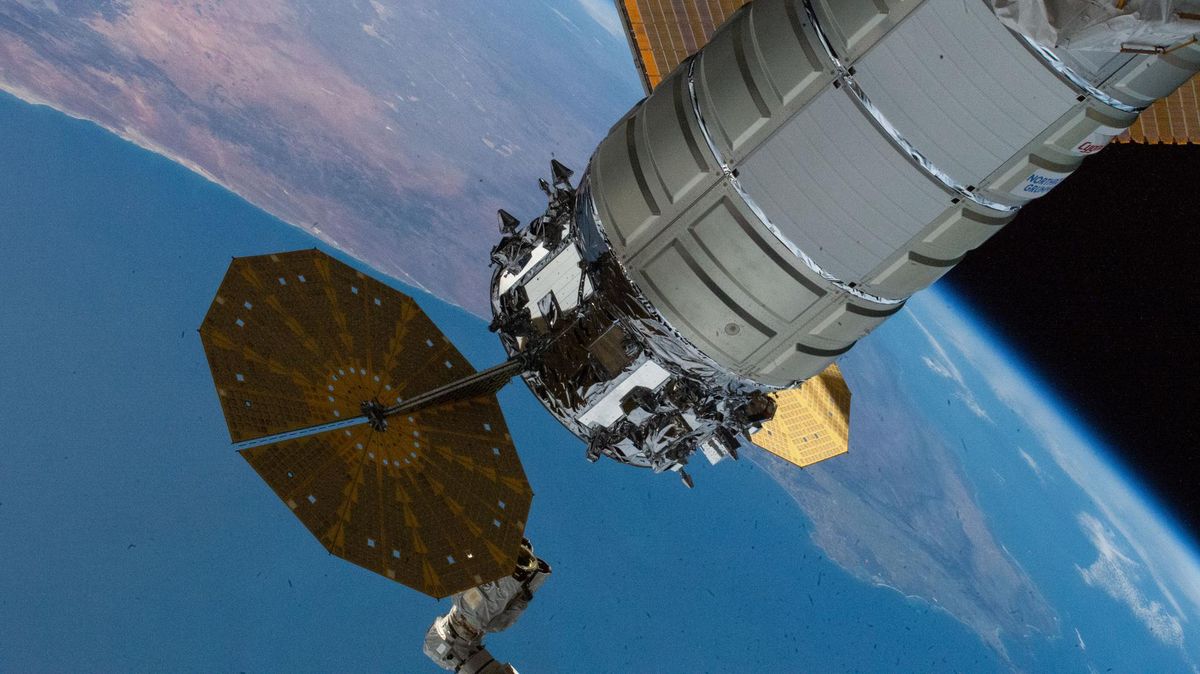
The cygnus XL departure from the International space station on October 9, 2026, marks a critical milestone in the Commercial Resupply Services-24 (CRS-24) mission, as the uncrewed freighter begins its final descent toward Earth.
Key Takeaways
- Mission Completion: The Northrop Grumman S.S. Steven R. Nagel successfully unberthed from the ISS Unity module on October 9, 2026, following a six-month orbital stay.
- Increased Capacity: As a “Cygnus XL” variant, the spacecraft delivered approximately 11,000 pounds (4,990 kg) of supplies, a significant upgrade over standard Cygnus models.
- Logistics Management: The craft is currently carrying thousands of pounds of waste and unneeded cargo to be disposed of via destructive reentry.
- Scientific Testing: The mission includes high-stakes testing of new heat shield prototypes during its scheduled atmospheric reentry on October 11, 2026.
- Robotic Precision: The complex unberthing operation was performed using the station’s Canadarm2 robotic arm and monitored by NASA astronaut Luke Delaney.
- Northrop Grumman: As the primary provider of the Cygnus spacecraft, the company is proving the viability of its upgraded XL platform. The successful deployment of the second XL-class vehicle (following the S.S. William “Willie” McCool in March 2026) validates their investment in higher-capacity logistics.
- NASA: The agency provides mission oversight and manages the station’s docking/berthing schedules. NASA also utilizes these commercial missions to test critical technologies, such as the heat shield prototypes currently aboard the S.S. Steven R. Nagel.
- SpaceX: Although a competitor in the cargo market, SpaceX remains a vital partner as the launch provider for Cygnus, utilizing the Falcon 9 rocket to deliver these massive payloads into orbit.
- International Partners: The presence of the Canadarm2 (a Canadian technology) and the collaborative nature of the ISS ensure that these commercial missions serve a global scientific community.
- For Investors in Aerospace: The successful scaling of the Cygnus XL indicates that Northrop Grumman is successfully capturing a larger share of the orbital logistics market. The ability to deliver 29% more mass per launch is a significant competitive advantage in the race for orbital infrastructure dominance.
- For the Scientific Community: This mission signals a shift toward “heavy-lift” orbital science. Researchers can expect more complex, larger-scale experiments to be delivered to the ISS in upcoming cycles, potentially leading to breakthroughs in materials science, biology, and physics.
- For Space Policy Advocates: The use of destructive reentry for waste management highlights the ongoing debate regarding space debris. As more commercial players enter Low Earth Orbit (LEO), the protocols for “cleaning up” after missions will become a central pillar of space law and environmental regulation.
- www.nasa.gov
- www.space.com
- www.space.com
What Happened: The CRS-24 Departure
On October 9, 2026, at approximately 12:44 p.m. EDT, the S.S. Steven R. Nagel, a Northrop Grumman Cygnus XL cargo spacecraft, was released from the International Space Station (ISS). The operation took place while the orbiting laboratory was positioned 260 miles (418 kilometers) above the Pacific Ocean.
According to reports from NASA, the detachment was a highly coordinated effort commanded from the ground. The station’s massive Canadarm2 robotic arm was utilized to grapple the vehicle and maneuver it away from the Earth-facing port of the Unity module. NASA astronaut Luke Delaney, who was on board the station at the time, monitored the activities to ensure a safe separation.
“We’re just really excited to have had the S.S. Steven R. Nagel on board, and all the science and research, critical hardware,” Delaney stated shortly after the spacecraft was released. He also extended gratitude to the various international teams responsible for the mission’s success, from the initial launch assembly to the complex undocking procedure.
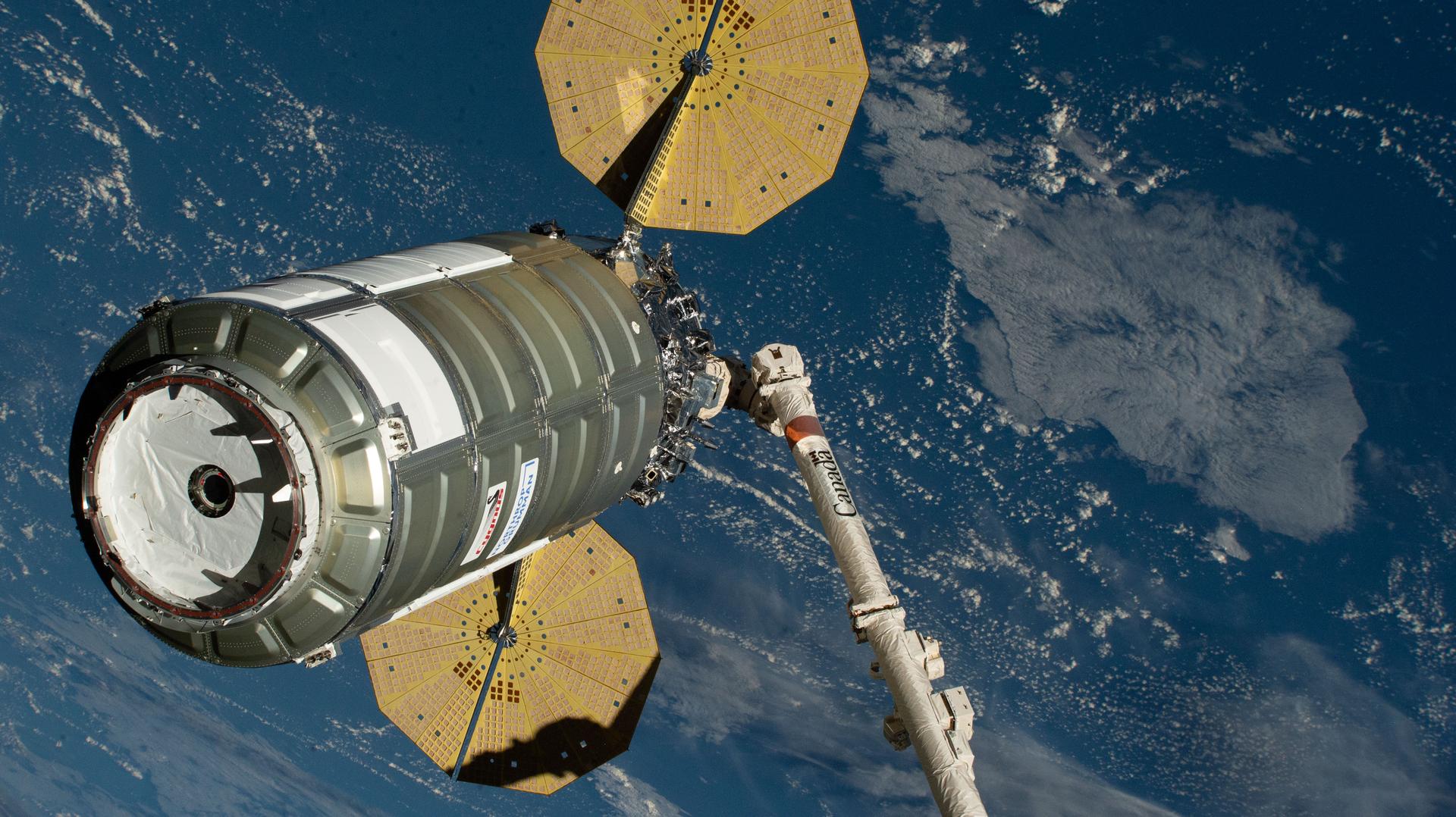
The Cygnus XL departure is the culmination of a mission that began on April 11, 2026, when the spacecraft launched aboard a SpaceX Falcon 9 rocket from Space Launch Complex 40 at Cape Canaveral Space Force Station, Florida. After spending six months servicing the station, the vehicle is now transitioning from a supply vessel to a disposal craft.
Why It Matters: The Logistics of Low Earth Orbit
While the departure of an uncrewed freighter might seem like a routine operational task, it is a fundamental component of the space station logistics required to keep the ISS functional. The orbital laboratory is a closed environment with limited volume; for every pound of new scientific equipment or food delivered, an equivalent amount of waste, broken hardware, and expired supplies must be removed.
This mission, designated as Commercial Resupply Services-24 (CRS-24), highlights the increasing importance of high-capacity cargo vehicles. The “XL” designation is not merely a label but a significant technological leap. By increasing the payload capacity to 11,000 pounds, Northrop Grumman has provided NASA and its international partners with the ability to conduct more ambitious, mass-heavy research that was previously difficult to accommodate with smaller, standard resupply vehicles.
Furthermore, the method of disposal is a key aspect of space sustainability. Unlike the SpaceX Dragon, which is a reusable capsule designed for parachute-aided ocean splashdowns, the Cygnus XL is an expendable vehicle. Its scheduled destructive reentry on Sunday, October 11, 2026, ensures that the spent spacecraft does not contribute to the growing problem of orbital debris. Instead, it will burn up entirely in Earth’s atmosphere, safely incinerating the thousands of pounds of trash it carries.
Deep-Dive: The Evolution of the Cygnus Platform
To understand the significance of the Cygnus XL departure, one must look at the progression of Northrop Grumman’s cargo capabilities. The standard Cygnus spacecraft has been a workhorse for the ISS for years, but the introduction of the “XL” variant has fundamentally altered the economics of orbital resupply.
Payload Capacity Comparison
The transition from the standard model to the XL variant represents a nearly 30% increase in lifting capacity. This allows for more robust scientific payloads, which is critical as the ISS moves into more advanced stages of its operational life.
| Spacecraft Model | Payload Capacity (Approx.) | Reusability | Primary Mission Type |
|---|---|---|---|
| Standard Cygnus | 8,500 lbs (3,856 kg) | Expendable | Routine Resupply |
| Cygnus XL | 11,000 lbs (4,990 kg) | Expendable | Heavy Cargo/Science |
| SpaceX Dragon | Variable | Reusable | Crew & Cargo |
| JAXA HTV-X | High | Expendable/Free-flyer | Advanced Science |
The Mechanics of Berthing vs. Docking
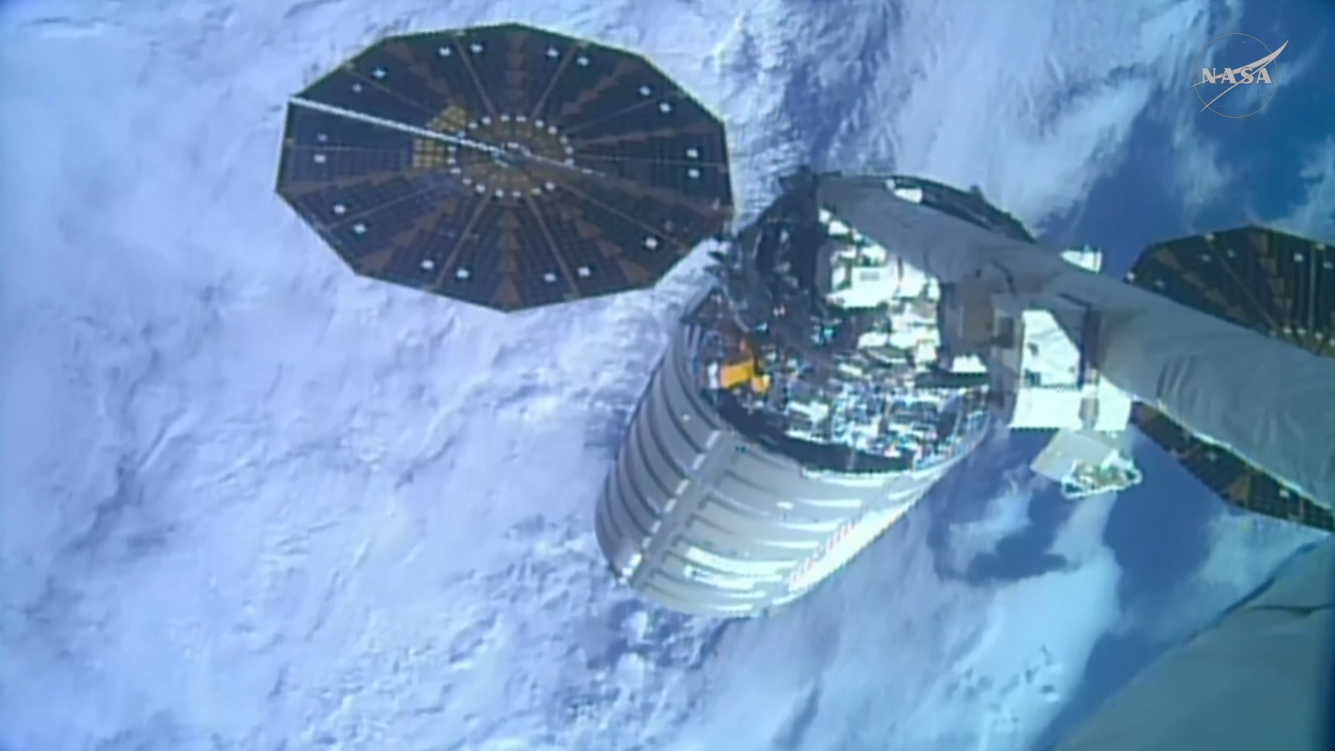
A technical distinction that often confuses observers is how the Cygnus interacts with the ISS. While vehicles like the SpaceX Dragon are capable of autonomous docking—essentially “driving” themselves into a port—the Cygnus XL relies on a berthing process.
During a berthing maneuver, the spacecraft approaches the station on its own power, but it does not latch onto the station directly. Instead, the Canadarm2 must reach out, grapple the vehicle, and physically guide it into the Unity module’s port. This method allows for greater control over the heavy, high-mass payloads that the XL variant is designed to carry, though it requires significant coordination between ground controllers and onboard astronauts like Delaney.
Stakeholders and the Commercial Space Ecosystem
The success of the CRS-24 mission is a testament to the complex web of partnerships that sustain modern space exploration. Several key organizations are involved in this lifecycle:
What It Means for You
Depending on your interest in the space sector, the Cygnus XL departure carries different implications:
Counterpoints and Open Questions
Despite the success of the departure, the transition to the XL variant has not been without its hurdles. A notable point of concern for mission planners is the reliability of new, upgraded configurations.
For example, the previous Cygnus XL mission, the NG-23 (carrying the S.S. William “Willie” McCool), faced a significant setback when an engine glitch during its initial transit caused a one-day delay in its arrival at the ISS. While the mission eventually concluded successfully, such technical hiccups in a new class of spacecraft can lead to increased insurance costs and potential scheduling conflicts for NASA’s tightly packed manifest.
Additionally, there are lingering questions regarding the long-term environmental impact of frequent atmospheric reentries. While the incineration of spacecraft is currently considered the safest method for debris management, the cumulative effect of depositing metallic particulates into the upper atmosphere via thousands of small reentries is an area of emerging scientific study that remains largely unquantified.
What Happens Next: The Final Descent
The next critical phase for the S.S. Steven R. Nagel will occur on Sunday, October 11, 2026. Following its departure, the spacecraft will perform a series of controlled thruster burns to lower its orbit.
As the vehicle hits the denser layers of Earth’s atmosphere, it will undergo a violent and brilliant reentry. This is not merely a disposal event; it is a high-speed laboratory. The spacecraft is carrying heat shield prototypes specifically designed to be tested under the extreme thermal and mechanical stresses of reentry. The data collected from this “fiery” descent will be used to inform the design of future spacecraft, potentially making the next generation of both crewed and uncrewed vehicles safer and more efficient.
Frequently Asked Questions
Is the Cygnus spacecraft reusable?
No. Unlike the SpaceX Dragon, which is designed to return to Earth for refurbishment and reuse, the Cygnus spacecraft is an expendable vehicle. Its mission ends when it is released from the ISS and subsequently burns up in the atmosphere during reentry.
Why is the spacecraft named after an astronaut?
Northrop Grumman names its spacecraft to honor significant figures in space exploration. The current craft, the S.S. Steven R. Nagel, is named after a NASA astronaut who flew four Space Shuttle missions during the 1980s and 1990s. The previous XL mission was named after William “Willie” McCool, a member of the Columbia crew.
How much trash does the Cygnus carry?
While the exact weight varies by mission, the Cygnus XL is capable of carrying “thousands of pounds” of unneeded cargo, waste, and disposal items. This is a vital service for the ISS, as it prevents the station from becoming overcrowded with non-functional equipment.
What is the difference between Cygnus and Dragon?
The primary differences are reusability and berthing. The SpaceX Dragon is reusable and typically docks autonomously with the ISS. The Northrop Grumman Cygnus is expendable and must be grappled and berthed to the station using the Canadarm2 robotic arm.
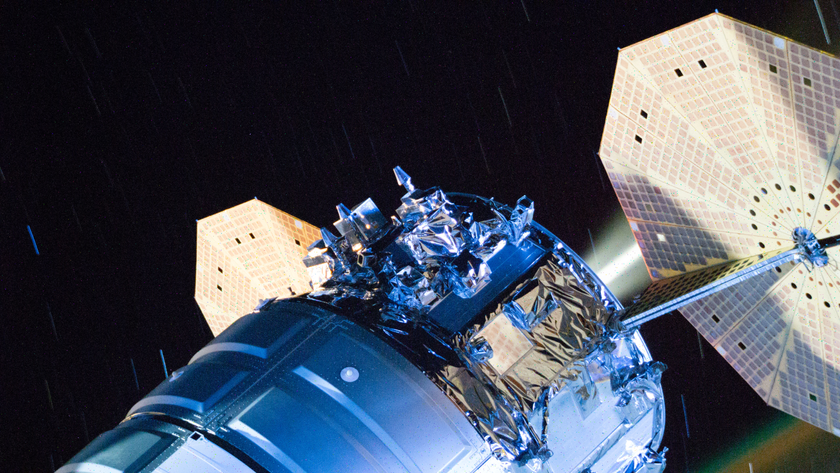
The Cygnus XL departure serves as a reminder of the relentless, rhythmic cycle of logistics that sustains human presence in space
References
Featured image: (Image credit: NASA) — via Space