The nvidia RTX Spark superchip is driving a fundamental transition in personal computing, moving the industry away from traditional application-centric workflows toward a model defined by autonomous, local AI agents.
Key Takeaways
- hardware Revolution: NVIDIA has unveiled the RTX Spark architecture, a superchip combining a Blackwell RTX GPU with a 20-core Grace CPU via NVLink-C2C interconnect.
- Local AI Dominance: The platform is designed to run massive 120-billion-parameter large language models (LLMs) with 1-million-token context windows entirely on-device.
- microsoft Integration: New Windows 11 features, including “Execution Containers,” and the NVIDIA OpenShell runtime will provide secure sandboxing for AI agents.
- New Device Class: Microsoft, Dell, and other major OEMs are launching high-end hardware, including the Surface Laptop Ultra and the Dell XPS 16 Creator Edition.
- Professional Focus: The ecosystem is being built for developers, content creators, and engineers, with specialized hardware for 12K video editing and 3D rendering.
- Dell Technologies: Chairman and CEO Michael Dell announced the Dell XPS 16 Creator Edition, which is available for preorder for an October delivery at Best Buy, priced at $3,800. He noted that the device is built for those who demand massive unified memory and RTX performance without sacrificing portability.
- ASUS: Chairman Jonney Shih indicated that ASUS is using the platform to build systems that define the future of personal computing.
- HP Inc.: Interim CEO Bruce Broussard announced upcoming HP OmniBooks powered by NVIDIA, targeting developers and creators.
- Lenovo: Chairman and CEO Yuanqing Yang described the RTX Spark as an “exciting leap forward for AI-native computing.”
- MSI: CEO Jeans Huang emphasized the platform’s ability to deliver AI acceleration and gaming performance in a compact form factor.
- Fall 2026: The primary launch of RTX Spark-powered laptops from ASUS, Dell, HP, Lenovo, Microsoft, and MSI.
- Post-Fall 2026: The arrival of hardware from Acer and GIGABYTE.
- Software Adoption: The rollout of the updated Windows 11 features to the broader consumer base, which will determine if the “agentic” experience becomes a standard part of daily computing.
- Developer Migration: The extent to which the $1,000 MacBook trade-in program successfully shifts the developer demographic from macOS to Windows-based AI workstations.
- nvidianews.nvidia.com
- techcrunch.com
The Dawn of the Personal AI Computer
On Wednesday, during San Francisco’s Tech Week, the computing industry witnessed the unveiling of a new hardware standard. Microsoft revealed the specific details and pricing for its latest high-performance devices, built upon the foundation of the NVIDIA RTX Spark architecture—a technology first announced by NVIDIA on May 31, 2026, at the NVIDIA GTC Taipei event.
At the center of this shift is the Surface Laptop Ultra. According to Microsoft, the device is designed to handle the immense computational demands of personal AI agents. The laptop is available in two base configurations: a standard model starting at $2,600 and a more powerful version starting at $3,700. For users requiring maximum specifications, including increased memory and storage, prices can reach up to $5,900. Microsoft noted that the highest-end configuration is already out of stock following the announcement.
Beyond consumer-facing laptops, Microsoft also introduced the Surface RTX Spark Dev Box. This workstation is specifically engineered for developers, starting at $6,000 and arriving pre-equipped with essential development tools such as VS Code, GitHub Copilot CLI, WSL, and PowerShell 7. The primary objective for both the laptop and the workstation is to facilitate the local, free execution of AI models using a combination of optimized CPUs, GPUs, unified memory, and advanced cooling systems.

Why It Matters: From Cloud-Dependent to Locally Autonomous
For the past several years, the most capable artificial intelligence has lived in the cloud. Users have interacted with models by sending data to remote data centers and waiting for a response. The introduction of the NVIDIA RTX Spark platform aims to break this dependency. By bringing massive computational throughput directly to the user’s desk, the platform prioritizes privacy, reduces latency, and eliminates the recurring costs associated with cloud-based AI inference.
Satya Nadella, Chairman and CEO of Microsoft, emphasized that the goal is to move beyond simple model interaction. “One of the things we realized in the last 3-4 years is that just having a model doesn’t do much for anything,” Nadella said during the event. “You really do need to orchestrate, and you need to have memory outside of the model. You need to have this harnessed layer that is able to take multiple models plus context, plus memory, and the action space.”
This shift represents a move toward “agentic” computing. Rather than a user manually opening an app to perform a task, an AI agent—running locally on the RTX Spark hardware—can orchestrate multiple models and tools to complete complex, multi-step workflows autonomously. Nadella noted that Microsoft is enabling this capability not just for its own applications, but for any developer’s agent, positioning the Windows platform as the primary environment for this new era of computing.
Deep-Dive: The RTX Spark Architecture and Technical Specifications
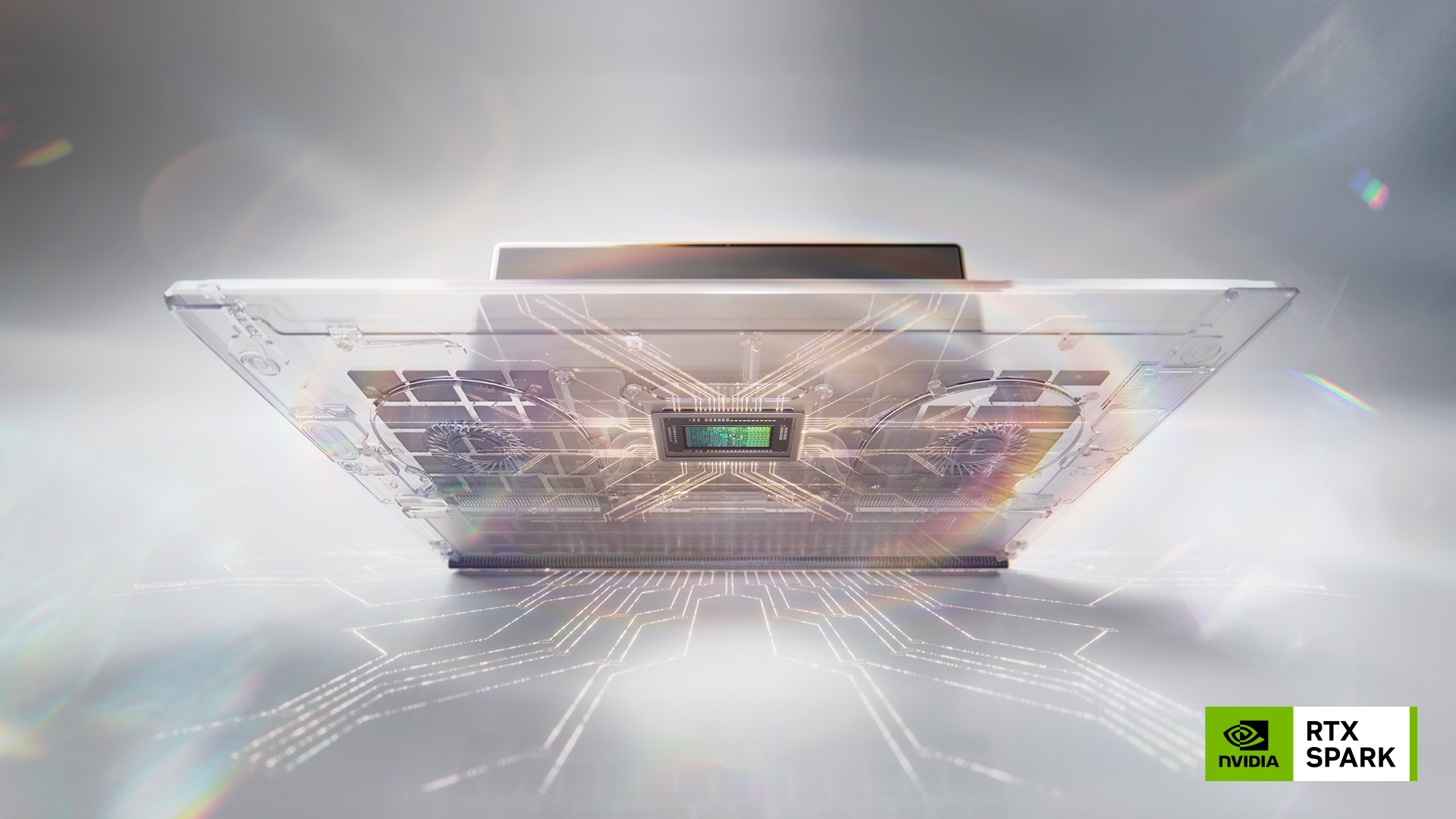
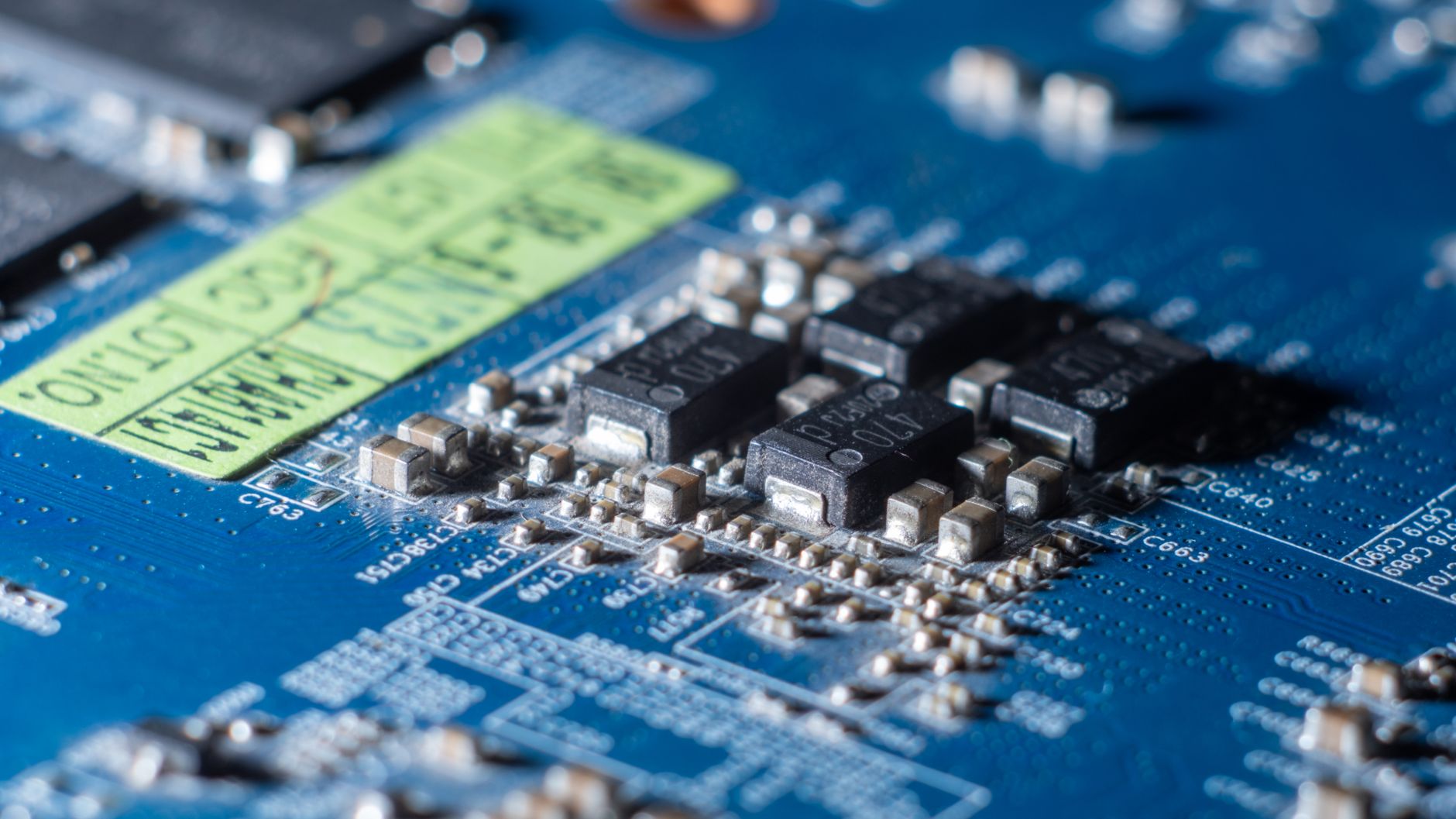
To understand how a laptop can perform tasks previously reserved for data centers, one must look at the underlying silicon. The NVIDIA RTX Spark is not a traditional single-chip processor but a “superchip” architecture. It integrates an NVIDIA Blackwell RTX GPU with a high-performance NVIDIA Grace CPU. These two components are linked by the NVLink-C2C interconnect, which allows for high-speed, low-latency communication between the processor and the graphics unit.
This architecture supports up to 1 petaflop of AI performance. Perhaps more critically for large language models, the system supports up to 128GB of unified memory. In traditional architectures, the CPU and GPU often have separate memory pools, creating bottlenecks when moving large datasets. The unified memory approach in the RTX Spark allows the GPU to access massive datasets—such as a 120-billion-parameter LLM—without the latency of moving data across a standard bus.
Hardware Comparison and Performance Metrics
| Feature | Specification | Impact on User | |
|---|---|---|---|
| Architecture | NVIDIA Blackwell + Grace | High-speed CPU/GPU synergy | Faster AI processing |
| Interconnect | NVLink-C2C | Chip-to-chip high bandwidth | Reduced latency in complex tasks |
| AI Compute | Up to 1 Petaflop | Massive parallel processing | Enables local LLM execution |
| Unified Memory | Up to 128GB | Shared memory pool | Runs massive models (120B+ parameters) |
| CUDA Cores | 6,144 | High-density parallel compute | Superior graphics and AI tasks |
| Context Window | 1 Million Tokens | Large-scale data processing | Long-term memory for AI agents |
Software and Security: The Agentic Operating System
Hardware alone cannot support autonomous agents; the operating system must also evolve. Microsoft is rolling out a revamped version of Windows 11 specifically designed to manage the risks associated with AI agents. A central feature of this update is the introduction of “Execution Containers.”
As AI agents gain the ability to interact with files, emails, and web browsers, the risk of an agent performing an unauthorized or harmful action increases. Execution Containers allow these agents to be sandboxed, meaning they can operate within a controlled environment where their access to the rest of the system is strictly limited. Satya Nadella confirmed that this feature will eventually be available to all Windows 11 users, not just those on specialized hardware.
Complementing this is the NVIDIA OpenShell runtime. This software layer, developed in collaboration with Microsoft, allows users to set strict policies regarding what an agent can access. It also facilitates “intelligent routing,” where the system decides whether a query should be handled by a local model (for privacy and speed) or a cloud model (for extreme complexity), while masking personal information before it ever leaves the device.
Vincent Koc, Chief Architect of the OpenClaw Foundation, noted that the combination of OpenShell and Microsoft’s security primitives will enable a “fully integrated stack for private, personal agents running on device.”
Stakeholders and Industry Reactions
The announcement has triggered a wide-ranging response from major technology players, from hardware manufacturers to software developers.
Creative and Professional Software
Adobe has signaled a massive commitment to the platform. Shantanu Narayen, Chair and CEO of Adobe, stated that the company is building “AI-native creative experiences” for RTX Spark. Adobe expects its flagship tools, including Photoshop and Premiere, to deliver up to 2x faster performance for AI-driven tasks such as editing, coloring, and special effects when running on this new architecture.
Similarly, Blackmagic Design CEO Grant Petty highlighted the importance of portability for video professionals, noting that lightweight RTX Spark laptops with high battery life will allow for a “next leap in on-the-go production.”
Hardware Manufacturers (OEMs)
While Microsoft and Dell have led the initial hardware reveals, the rollout is expected to be industry-wide.
Other manufacturers, including Acer and GIGABYTE, are expected to release compatible devices following the initial fall 2026 launch window.
What It Means for You
The impact of the NVIDIA RTX Spark ecosystem varies significantly depending on your professional role.
If you are a Developer
Expect a shift in how you build and test software. The ability to run 120B-parameter models locally means you can develop and debug AI agents without incurring massive cloud API costs or compromising the privacy of your training data. Microsoft is even incentivizing the switch from macOS by offering up to $1,000 off for those who trade in a MacBook Pro, targeting the significant developer presence in Silicon Valley.
If you are a Content Creator
Whether you are editing 12K 4:2:2 video or generating 4K AI-driven video, the unified memory architecture will drastically reduce rendering times. The ability to work with 90GB+ 3D scenes on a portable device will change the workflow for digital artists and architects.
If you are a Gamer
While these machines are built for productivity, they are also high-end gaming rigs. With support for DLSS 4.5 Ray Reconstruction and RTX Video with 4x Frame Generation, you can expect high-fidelity gaming at 1440p resolutions with over 100 FPS, even with ray tracing enabled.
Counterpoints and Open Questions
Despite the technical prowess of the RTX Spark platform, several challenges and risks remain.
1. The Cost of Entry: The high price points—starting at $2,600 for a Surface Laptop and $6,000 for a developer workstation—may limit the adoption of local AI agents to high-earning professionals and enterprise environments. This could create a “compute divide” between those who can afford local intelligence and those who must rely on potentially more expensive or less private cloud models.
2. Software Complexity: As noted by various analysts, the transition to an “agentic” model requires a fundamental rearchitecting of existing professional software. While Adobe has committed to this, many other software vendors may struggle to integrate with the new security primitives and execution containers, leading to a fragmented user experience.
3. Reliability and Hallucination: While the hardware can run the models, it cannot solve the inherent problem of AI hallucinations. Users must still navigate the risks of relying on autonomous agents for critical tasks, even if those agents are running securely on their own hardware.
4. The Privacy Paradox: While local execution is inherently more private, the introduction of agents that can “orchestrate” and “access” data introduces new attack vectors. The effectiveness of Windows 11 “Execution Containers” in preventing sophisticated prompt injection or agentic errors has yet to be tested in real-world, large-scale deployments.
What Happens Next
As the industry moves toward the fall 2026 release window, several key milestones will signal the success of the RTX Spark ecosystem:
Frequently Asked Questions
What is the NVIDIA RTX Spark?
The NVIDIA RTX Spark is a new superchip architecture designed specifically for personal AI computers. It combines an NVIDIA Blackwell RTX GPU with an NVIDIA Grace CPU using high-speed NVLink-C2C technology. This allows for massive AI compute power (up to 1 petaflop) and a large unified memory pool (up to 128GB) to be housed in a single laptop or desktop.
How much does the Microsoft Surface Laptop Ultra cost?
The Surface Laptop Ultra starts at $2,600 for the base model. A more powerful version with an upgraded chip starts at $3,700, and higher-end configurations with more memory and storage can cost up to $5,900.
Can I run large language models (LLMs) on these new PCs?
Yes. The primary purpose of the RTX Spark architecture is to enable the local execution of large language models. The hardware is specifically designed to run models with up to 120 billion parameters and a 1-million-token context window without needing to connect to the cloud.
Is the AI agent technology secure?
Microsoft and NVIDIA are introducing several layers of security to protect users. These include “Execution Containers” in Windows 11, which sandbox AI agents to prevent them from accessing unauthorized data, and the NVIDIA OpenShell runtime, which allows users to set strict policies on what an agent can and cannot do.
Conclusion
The launch of the NVIDIA RTX Spark and the accompanying Microsoft hardware marks a definitive shift in the purpose of the personal computer. By moving the heavy lifting of artificial intelligence from remote data centers to local, high-performance silicon, the industry is attempting to turn the PC from a passive tool into an active, intelligent teammate
References
Featured image: Image via NVIDIA Newsroom