
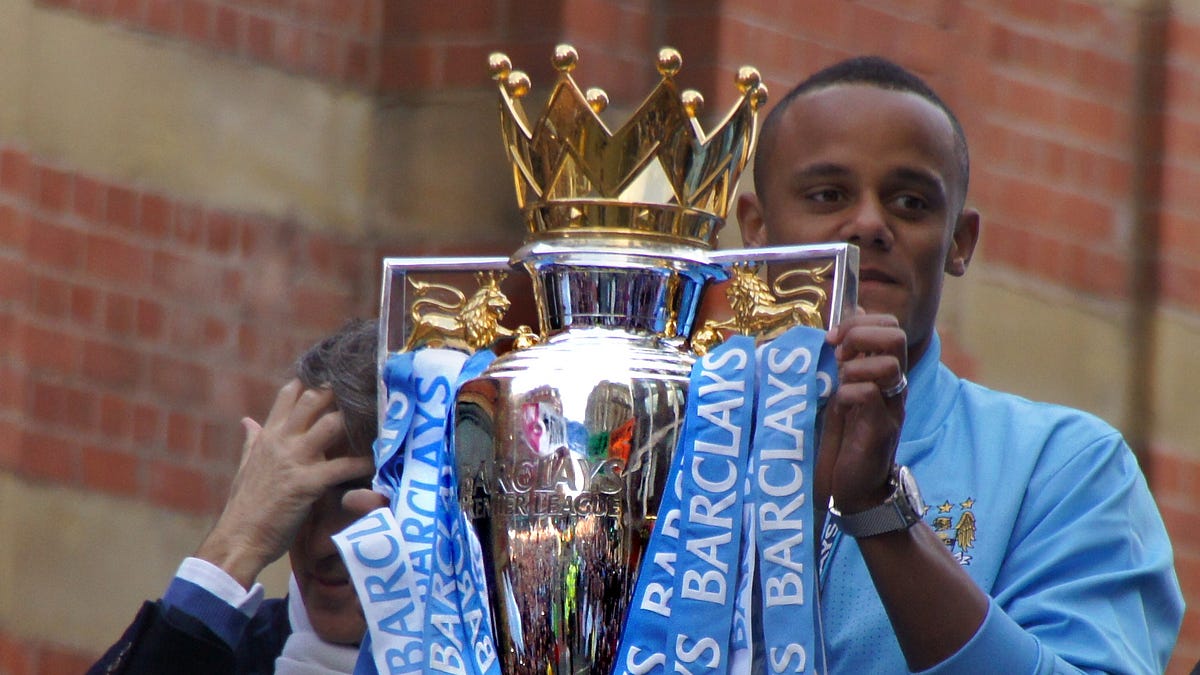
The Manchester City investigation has sent shockwaves through both the sporting and Financial worlds, raising a central question: can a single football club’s regulatory breach jeopardize billions in international trade? While the headlines focus on potential points deductions and trophy implications, the true fallout lies in the intersection of sovereign wealth, international diplomacy, and the integrity of global capital flows. As the club prepares its appeal following a landmark guilty verdict, the economic and geopolitical tremors are being felt far beyond the pitch.
As the club’s historical Man City Transfer Spending: How It Impacted Football continues to be a subject of intense scrutiny, this analysis looks at the macro-level risks triggered by the findings of the independent commission.
Key Takeaways
- Systemic Breaches: An independent commission found Manchester City guilty of multiple serious breaches of Premier League financial regulations between 2009/10 and 2017/18.
- Financial Manipulation: The club allegedly used “sham” commercial agreements to inflate revenue and hide costs by an estimated £900 million.
- Geopolitical Risk: The investigation threatens the stability of the $30 billion annual trade relationship between the UK and the UAE.
- Regulatory Shift: The emergence of an independent football regulator marks a transition from self-governance to statutory accountability in British sports.
Overview of the Manchester City Investigation
On October 3, 2026, an independent commission of judges and barristers delivered a verdict that has fundamentally altered the landscape of football governance. The commission found Manchester City Football Club guilty of multiple serious breaches of the Premier League’s financial regulations spanning nine seasons, from 2009/10 to 2017/18.
The Core Allegations and Regulatory Framework
The investigation centered on the club’s adherence to Premier League financial fair play rules and UEFA’s Club Licensing and Financial Fair Play Rules. The core of the misconduct involved a sophisticated, multi-layered scheme designed to make the club appear compliant with spending limits while actually benefiting from massive, undisclosed injections of capital.
According to the commission’s findings, the club engaged in systematic efforts to circumvent rules by artificially inflating revenues and concealing operating expenses. This was not merely a matter of accounting errors; the commission explicitly stated that “by its conduct the club clearly intended to circumvent the PL Rules.” This includes the use of “sham” commercial contracts where sponsors were only required to pay a fraction of the agreed-upon fees, with the remaining balance covertly funded by Abu Dhabi United Group Investment & Development Ltd (ADUG), the club’s owner.
The Role of Digital Evidence and External Leaks
The path to this verdict began nearly a decade ago. In 2018, Der Spiegel published leaked internal emails and documents that first brought these allegations to light. These leaks suggested that Manchester City had been inflating sponsorship income to bypass financial constraints.

Experts have noted that the club’s legal strategy appeared to be one of attrition—a deliberate attempt to “run down the clock” to outlast existing regulatory frameworks. However, the implementation of an independent football regulator with statutory powers has provided the necessary teeth to ensure these investigations reach a definitive conclusion.
The Geopolitical Dimension: UAE-UK Economic Relations
The Manchester City investigation is not merely a sporting dispute; it is a high-stakes diplomatic event. The club is owned by Sheikh Mansour, representing Abu Dhabi interests, and its primary sponsor, Etihad, is owned by the Abu Dhabi government. This creates a direct link between the club’s financial conduct and the broader UAE investment in UK relations.
Potential Halts in Sovereign Wealth Fund (SWF) Investments
The economic stakes are immense. The annual value of trade between the United Kingdom and the United Arab Emirates (UAE) exceeds $30 billion. When a major state-owned entity is implicated in a massive financial scandal, it introduces a “risk premium” to all subsequent investments from that nation.
There are growing concerns that the guilty verdict could lead to a cooling of relations, potentially resulting in a halt or slowdown of Sovereign Wealth Fund (SWF) investments in British infrastructure, technology, and sports. If the UK is perceived as a jurisdiction where regulatory enforcement can disrupt state-backed commercial interests, the attractiveness of the UK market to Middle Eastern capital may diminish.
Sports Governance as a Tool of Soft Power and Diplomacy
As Miguel Delaney, author of States of Play, noted, the situation is a clear example of “sportswashing,” where authoritarian states use high-profile sports investments to rehabilitate their global reputations. In this context, football clubs become “geopolitical projects.”
When these projects are subjected to intense regulatory scrutiny, it can be interpreted by the investing state as a political move rather than a purely regulatory one. This complicates the geopolitical impact of sports sanctions, as the line between enforcing fair play and engaging in diplomatic friction becomes increasingly blurred.
Economic Implications for the Premier League and UK Markets
The fallout of the investigation extends to the very structure of the English football economy. The findings suggest that the current competitive landscape has been distorted by an “arms race” between sovereign wealth funds and traditional private owners.
Impact on Foreign Direct Investment (FDI) in British Sports
For years, the Premier League has been a primary recipient of Foreign Direct Investment. However, the investigation highlights a systemic vulnerability. If the league’s financial rules are seen as easily circumvented by state-backed entities, it may discourage other types of FDI from private equity firms or traditional billionaires who are bound by stricter transparency requirements.
Club Valuations and the Risk Premium of Regulatory Uncertainty
Regulatory uncertainty is a poison for asset valuation. The investigation has introduced a significant “risk premium” to club valuations across the league. Investors must now account for the possibility that current revenue streams—if tied to state-linked sponsors—could be reclassified as “non-compliant” or “below fair value” by regulators. This uncertainty can stifle the sale of clubs and complicate the long-term financial planning of even the most successful organizations. This is a stark contrast to the stability seen in other major league structures, such as the Club World Cup: Ultimate Path to Final for Chelsea & City which operates under different commercial pressures.
The Mechanics of the Financial Breach: A Breakdown
To understand the scale of the Manchester City investigation, one must look at the specific mechanics used to manipulate the club’s balance sheets. The commission’s findings highlight two primary methods of financial engineering.
1. Revenue Inflation via “Sham” Contracts
The club allegedly used a circular funding model. Under this arrangement, a commercial partner would sign a contract for a high-value sponsorship (e.g., £100 million). However, the actual cash transferred from the sponsor to the club would only be a fraction of that amount (e.g., £20 million). The remaining £80 million would be covertly provided by Abu Dhabi United Group (ADUG) to the sponsor to cover the gap.
On the club’s books, this appeared as £100 million in legitimate commercial revenue, allowing them to spend more on player wages and transfer fees while appearing to remain within football club financial regulations.
2. Cost Concealment and the Fordham Entity
Beyond inflating revenue, the club also sought to lower its reported operating expenses. One method identified by the commission involved a “sham” circular arrangement with an entity named Fordham. This entity was used to purchase the image rights of players, effectively moving those costs off the club’s primary balance sheet and making the club’s profitability appear higher than it actually was.
Estimated Scale of Financial Manipulation:
| Method | Reported Effect | Estimated Impact (Low-End) | Estimated Impact (High-End) | |
|---|---|---|---|---|
| Sponsorship Inflation | Increased Revenue | £500 million | £700 million | £800 million |
| Expense Concealment | Decreased Costs | £100 million | £200 million | £300 million |
| Total Estimated Impact | Combined Effect | £600 million | £900 million+ |
Note: Figures are estimates derived from the commission’s findings regarding the intended scale of the schemes.

Comparative Analysis: Financial Scandals and Macroeconomic Shifts
Historically, football scandals have been contained within the sporting realm—think of match-fixing or individual player doping. The Manchester City case is different because it involves the fundamental mechanism of global capital: the sovereign wealth fund.
We are witnessing a shift where sports governance is no longer just about the rules of the game, but about the rules of global finance. This mirrors broader trends in international relations, where economic tools are increasingly used to exert political influence. Just as the UK PM Slams Israeli Fan Ban: A Political & Safety Battle demonstrates how sports can become a flashpoint for political tension, the City investigation shows how financial regulation can become a tool of geopolitical friction.
Geopolitical Risk Matrix: Football Sanctions vs. Sovereign Wealth Flows
To visualize the potential impact, we can map how regulatory actions against major clubs correlate with shifts in international investment patterns.
| Event Type | Impact on SWF Investment | Primary Sector Affected | Geopolitical Tension Level | |
|---|---|---|---|---|
| Major Financial Breach Verdict | High (Potential Freeze) | Sports, Infrastructure, Energy | High | Significant |
| Minor Regulatory Fine | Low (Negligible) | Sports | Low | Minimal |
| Targeted Sporting Sanctions | Medium (Diversification) | Media, Entertainment | Medium | Moderate |
| Broad Political Sanctions | Extreme (Total Halt) | All Sectors | All Sectors | Critical |
Risks, Criticism, and Counterpoints
It is essential to acknowledge the defense presented by Manchester City. The club has vehemently denied all allegations, labeling the entire investigation a “conspiracy theory.” They have announced their intention to appeal the commission’s decision, arguing that the findings do not reflect the reality of their commercial operations.
Key Counterpoints:
- The “Fair Value” Argument: The club maintains that all sponsorship deals were conducted at arm’s length and represented fair market value for their global brand.
- Legal Overreach: Critics of the Premier League argue that the investigation has become an overreach, turning football into a complex legal battleground that ignores the spirit of the sport.
- Regulatory Inconsistency: Some argue that the rules are applied inconsistently, creating an uneven playing field for clubs that do not have access to state-level backing.
What Happens Next?
As of October 2026, the situation remains in a state of legal flux. The following milestones will determine the final outcome:
- The Appeal Process: Manchester City has until Friday, October 2, 2026, to lodge their appeal. An Appeal Board will then review the commission’s decision.
- The Sanctioning Hearing: Once the guilt is finalized (either through the dismissal of the appeal or a failed challenge), a separate, private hearing will be held to determine the specific penalties. These could range from massive fines to points deductions or even expulsion from the league.
- Regulatory Reform: The case will likely accelerate the implementation of the independent football regulator in the UK, fundamentally changing how all clubs are monitored.
Conclusion: Navigating the New Era of Football Finance
The Manchester City investigation is a watershed moment. It has exposed the fragility of a regulatory system that was not designed to handle the sheer scale of sovereign wealth. For investors, the lesson is clear: in the modern era, football is no longer just a game; it is a complex, high-risk asset class subject to the whims of international geopolitics and the tightening grip of global financial regulation.
*
Frequently Asked Questions
What is the Manchester City investigation about?
The investigation, conducted by an independent commission, found that Manchester City breached Premier League financial rules between 2009 and 2018. Specifically, the club was found to have used “sham” commercial agreements to disguise funding from its owners, effectively inflating its revenue and hiding its true operating costs to circumvent spending limits.
How could the Manchester City case affect UAE investments in the UK?
The case introduces significant geopolitical risk. Because the club is owned by Abu Dhabi interests, a major regulatory sanction could strain diplomatic relations. This may lead to a “risk premium” being applied to future UAE-led investments in the UK, potentially slowing down capital flows in sectors like infrastructure, energy, and sports.
What are the potential financial penalties for football clubs?
While the specific sanctions for Manchester City are yet to be decided in a separate hearing, the Premier League has the power to impose heavy fines, points deductions, or even more severe sporting sanctions such as expulsion from competitions. The scale of the breach—estimated at £900 million—suggests that any penalty will be historically significant.
Why does football regulation matter to business investors?
Football regulation ensures a level playing field, which is essential for stable asset valuations. When rules are circumvented, it creates market distortions and regulatory uncertainty. For investors, this uncertainty makes it difficult to predict long-term returns and increases the risk of sudden, massive losses due to legal or political fallout.
Stay ahead of the curve in sports finance
References
Featured image: Image via democracyforsale.substack.com