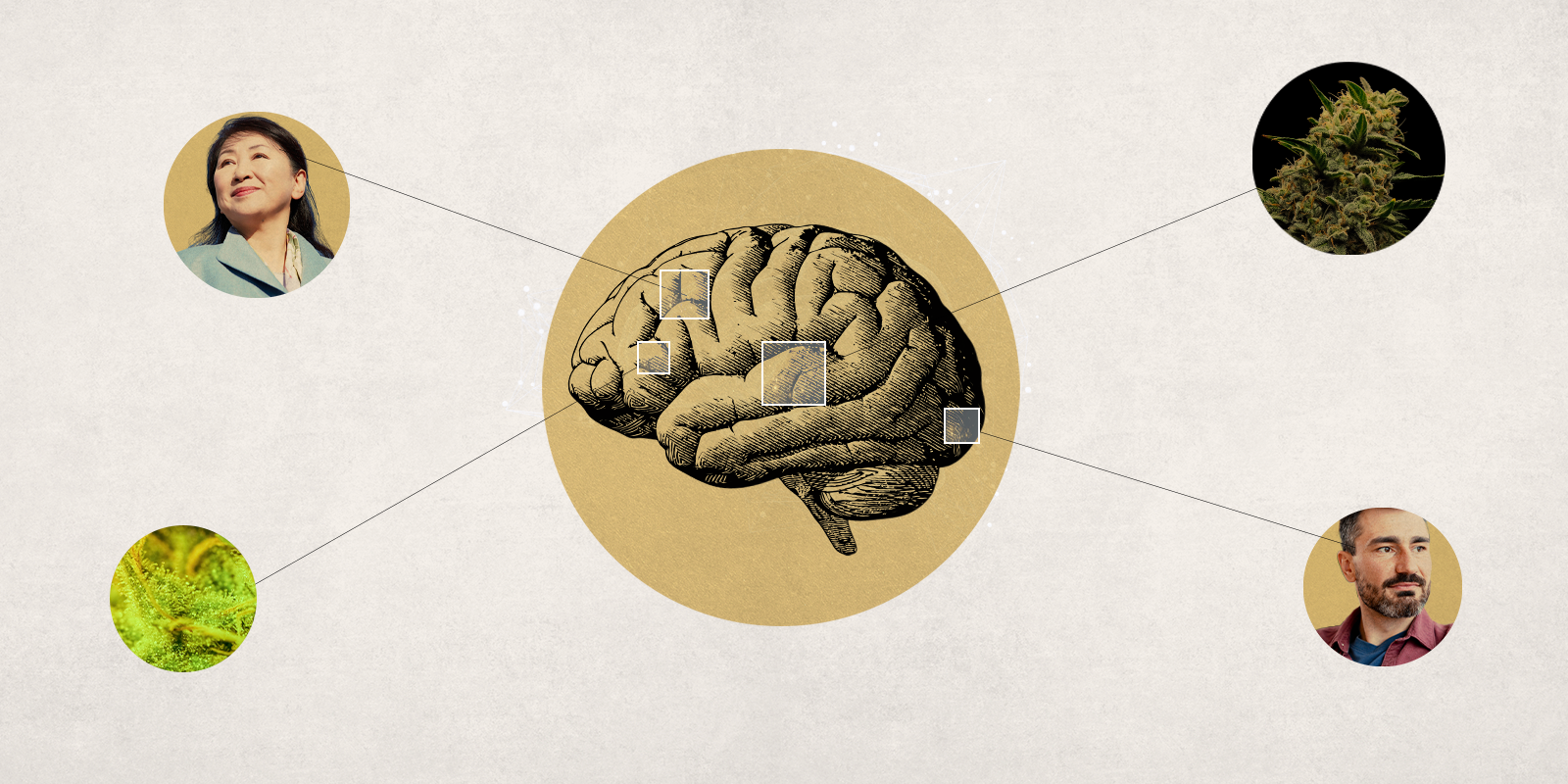
cannabis and brain health have become central to a new study that suggests a potential correlation between cannabis use and improved brain metrics in older adults. Researchers at the University of Colorado Anschutz Medical Campus (CU Anschutz) have identified that cannabis use among adults aged 40 to 77 is generally associated with larger brain volumes in specific regions and enhanced cognitive functions, such as memory and processing speed.
Key Takeaways
- Correlation, Not Causation: The CU Anschutz study identifies a link between cannabis use and brain health in older adults but does not establish that cannabis causes these changes.
- Cognitive Benefits: Moderate cannabis users showed associations with better performance in memory, learning, processing speed, and executive function.
- Dose-Dependency: The impact appears to vary by usage level, with moderate users showing the most consistent cognitive benefits.
- Brain Volume Trends: While many regions showed increased volume, high-use individuals showed decreased volume in the posterior cingulate.
- Demographic Shifts: Researchers note an increasing number of older adults using cannabis for reasons such as sleep and chronic pain.
- Complexity of Variables: The study notes that unknown factors, such as THC vs. CBD ratios and product potency, make the results highly nuanced.
- Learning and Memory: The ability to acquire and retain new information.
- Processing Speed: The rate at which the brain can perform mental tasks.
- Attention and Executive Function: The capacity to focus and manage complex cognitive processes.
- Consult Professionals: Do not assume that cannabis use will automatically lead to cognitive preservation. The relationship is highly nuanced and depends on usage patterns.
- Understand the Nuance: The study suggests that “moderate” use may offer different benefits than “high” use.
- Monitor Cognitive Changes: Because the impact on the brain is complex and potentially dose-dependent, it is important to discuss any changes in mood, memory, or cognitive clarity with a healthcare provider.
- Stay Informed on Policy: As cannabis becomes more widely available, stay aware of evolving medical guidance and the distinction between anecdotal benefits and clinical evidence.
- THC vs. CBD: The study did not have data on the specific constituents used. The ratio of Tetrahydrocannabinol (THC) to Cannabidiol (CBD) can significantly alter the effects on the brain.
- Potency and Product Type: Modern cannabis products are often significantly more potent than the varieties used by the older cohort in the UK Biobank. This makes it difficult to apply these findings directly to current consumer products.
- Causation vs. Correlation: The study remains observational. It is possible that individuals with certain brain structures or cognitive profiles are simply more likely to use cannabis, rather than the cannabis causing the brain changes.
- Long-term Effects: As Anika Guha, PhD, emphasized, we are still figuring out the long-term effects of cannabis use as people continue to age.
- Brain Connectivity: Moving beyond simple volume measurements to look at how different brain regions communicate with one another.
- Functional Analysis: Investigating how these brain structures actually function during real-time cognitive tasks.
- Psilocybin Research: Researchers have indicated intentions to explore the effects of other substances, such as psilocybin, on the aging brain.
- Clinical Trials: There is an urgent need for controlled clinical trials to distinguish the effects of different cannabinoids and to provide the solid evidence required for public health policy.
- news.cuanschutz.edu
- www.clickondetroit.com
- www.washingtonpost.com
What Happened
In a massive analysis of the UK Biobank dataset, researchers from CU Anschutz investigated how cannabis usage patterns relate to neuroimaging and cognitive assessments in a large population. The study focused on a cohort of 26,362 individuals, with an average age of 55 and a broad age range spanning from 40 to 77 years old.
By categorizing participants into three distinct groups—no use, moderate use, and high use—the research team sought to identify patterns in brain structure and mental performance. The findings, which suggest that cannabis use may be associated with maintained brain volume and preserved cognitive function during aging, offer a new perspective on a topic that has long been debated in the medical community. However, the researchers were careful to note that the findings are complex and do not provide a simple “all good or all bad” verdict on cannabis consumption.

Why It Matters
As the global population ages, the preservation of cognitive function becomes a critical public health priority. The ability to maintain memory, attention, and processing speed can significantly impact the quality of life and the prevalence of neurodegenerative conditions. This study is significant because it explores how substances commonly used by aging populations might interact with the biological processes of the brain.
Furthermore, the demographic of cannabis users is shifting. Anika Guha, PhD, a Clinical Psychologist and Faculty Research Associate in the Department of Psychiatry at CU Anschutz, noted that more older adults are utilizing cannabis due to increased availability and its perceived benefits for managing chronic pain and sleep issues. As these substances become more integrated into the daily lives of older populations, understanding their long-term neurological implications is essential for both public health policy and clinical practice.
Deep Dive: Brain Volume and Cognitive Performance
The research focused heavily on brain regions with high cannabinoid receptor (CB1) density, which are most likely to be influenced by cannabis constituents. One of the primary areas of interest was the hippocampus, a region critical for memory formation and one that is often susceptible to atrophy in the context of aging and dementia.
Cognitive Domains and Regional Volume
The researchers observed a positive relationship between cannabis use and several key cognitive metrics. Participants associated with cannabis use often performed better in:
In the context of aging, the researchers suggested that the observed larger regional brain volumes might reflect “maintained brain volume and preserved cognitive function” rather than the typical neurodegeneration or atrophy that often accompanies the aging process.
The Complexity of Dosage
One of the most vital findings of the study is that the effects of cannabis are not uniform. The data suggests a “dose-dependent” relationship, meaning the level of usage significantly alters the neurological outcome.
| Usage Category | Observed Brain & Cognitive Impact |
|---|---|
| No Use | Baseline cognitive and brain volume metrics. |
| Moderate Use | Generally exhibited the largest brain volumes and the best overall cognitive performance (learning, memory, speed). |
| High Use | Showed superior outcomes in specific areas, such as right amygdala volume and visual memory, but also showed decreased volume in the posterior cingulate. |

The Role of Sex and Biological Variables
Researchers also investigated whether sex acted as a moderator in these effects. Given that men and women may have different usage patterns and biological differences within the endocannabinoid system, understanding these interactions is crucial. While the study did not find a “clear-cut” pattern—such as men consistently outperforming women across all metrics—there were “significant interactions across several brain regions and cognitive measures.” This indicates that sex is a critical variable that requires more targeted investigation in future research.
The Counterpoint: Risks and the Posterior Cingulate
Despite the positive associations found in many regions, the study was not exclusively optimistic. A significant outlier was identified in the posterior cingulate, a part of the limbic system that plays a vital role in memory, learning, and emotion.
In high-use individuals, researchers identified a correlation with lower brain volume in this specific region. The implications of this finding remain a subject of scientific debate. While lower volume in certain areas is often viewed as a sign of atrophy, some existing research suggests that a smaller posterior cingulate volume might actually be associated with better working memory. This ambiguity highlights the difficulty in interpreting neuroimaging data without a broader context of functional connectivity.
What It Means for You
If you are an older adult or a caregiver considering cannabis for health reasons, such as managing sleep or chronic pain, these findings suggest a need for clinical caution.
Counterpoints and Open Questions
While the findings from CU Anschutz are compelling, several major questions remain unanswered, which limits the ability to draw definitive conclusions:

What Happens Next
The scientific community is moving toward more granular investigations to resolve the ambiguities presented by this study. Future research is expected to focus on:
Frequently Asked Questions
Does cannabis use cause larger brain volumes in older adults?
According to the study conducted by CU Anschutz, there is an association between cannabis use and larger brain volumes in certain regions, but the research does not prove causation. It is possible that other factors are involved, or that the relationship is more complex than a simple cause-and-effect mechanism.
What are the cognitive benefits associated with moderate cannabis use?
The research suggests that moderate users may experience benefits in several cognitive domains, including improved learning, memory, processing speed, attention, and executive function. These findings were observed in participants from the UK Biobank aged 40 to 77.
Are there any risks to high cannabis use identified in the study?
Yes. While high-use individuals showed some benefits in visual memory and the volume of the right amygdala, they also showed a correlation with lower brain volume in the posterior cingulate. This region is vital for memory and emotion, though the functional implications of this lower volume are still being studied.
Why is the distinction between THC and CBD important?
Cannabis is a complex mixture of various compounds. THC and CBD have different effects on the endocannabinoid system. Because the UK Biobank data did not specify the type or potency of cannabis used, researchers cannot currently determine if the observed brain changes are driven by one specific cannabinoid or a combination of them.
Closing
The study from CU Anschutz highlights that the relationship between cannabis and the aging brain is far from settled. While the potential for preserved cognitive function and maintained brain volume offers a promising area of study, the presence of negative findings in the posterior cingulate and the lack of data on potency and constituents necessitate a cautious approach. As the demographic of cannabis users continues to evolve, more rigorous clinical research will be required to turn these correlations into actionable medical insights.
References
Featured image: Image via news.cuanschutz.edu