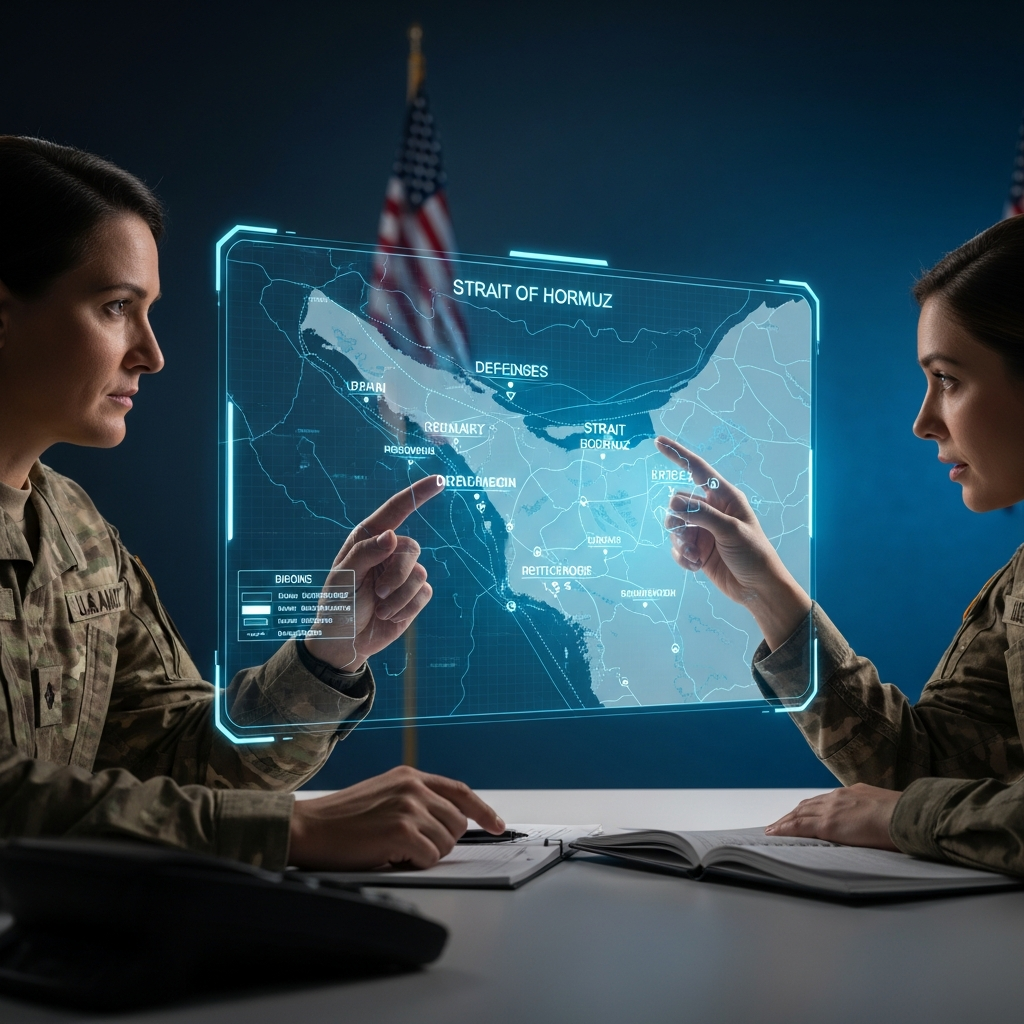
The Strait of Hormuz, a critical maritime chokepoint, remains at the heart of escalating tensions between the United States and Iran. With a fragile ceasefire currently in place, US military officials are diligently developing contingency plans. These strategies aim to neutralize Iran’s defensive capabilities within the Strait should diplomatic efforts falter. The focus is on ensuring global shipping lanes remain open, a vital concern given the significant economic implications of any disruption. This evolving situation underscores the delicate balance between diplomacy and military readiness in a region of paramount strategic importance.
The Strategic Imperative: Securing the Strait of Hormuz
The Strait of Hormuz is more than just a waterway; it’s a global economic lifeline. Situated between the Persian Gulf and the Gulf of Oman, it serves as the sole maritime passage for a substantial portion of the world’s oil supply. Iran’s ability to exert control or even effectively close this strait provides immense geopolitical leverage. Recent disruptions have sent shockwaves through global energy markets, threatening economic stability and impacting efforts to curb inflation. The current ceasefire, initiated on April 7, has paused US military strikes. However, the underlying strategic standoff persists, driving the imperative for robust contingency planning.
Unveiling US Contingency Plans: Targeted Strikes and Escalation Options
US military planners are refining a range of options, specifically focusing on “dynamic targeting” of Iranian assets. These plans are tailored for the Strait of Hormuz, the southern Arabian Gulf, and the Gulf of Oman. The primary targets include Iran’s asymmetric naval capabilities:
Small, Fast Attack Boats: These vessels are designed for rapid, surprise engagements.
Minelaying Vessels: Essential for disrupting maritime traffic and creating blockades.
- Coastal Defense Systems: Despite earlier US strikes, a significant portion of Iran’s coastal missile infrastructure remains operational.
- www.haaretz.com
- www.i24news.tv
Sources familiar with the planning indicate a shift towards a more concentrated bombing campaign around these strategic waterways. This contrasts with earlier phases of the conflict, which often targeted locations deeper within Iran. The goal is to dismantle Tehran’s capacity to disrupt or shut down international shipping, an action Iran has used as leverage against the US.
Broader Escalation Pathways Under Consideration
Beyond direct naval and coastal defense targets, US officials are also weighing more significant escalation scenarios. One option involves striking dual-use and critical infrastructure targets within Iran, including energy facilities. This controversial move would aim to compel Iran back to the negotiating table. However, current and former US officials caution that such actions could represent a dangerous expansion of the conflict. Additionally, military planners have discussed targeting specific Iranian military leaders and “obstructionists” within the regime. Ahmad Vahidi, the Commander-in-Chief of the Islamic Revolutionary Guard Corps (IRGC), has been mentioned in this context, highlighting a strategy to disrupt command and control.
The Complexities of Reopening a Vital Waterway
Even with concentrated military efforts, immediately reopening the Strait of Hormuz presents significant challenges. Expert assessments suggest that simple military strikes might not instantly restore free passage. A senior shipping broker highlighted the need for unequivocal proof of Iran’s military capability being destroyed or the US having near-certainty in mitigating risks before commercial ships would willingly transit the strait again. Furthermore, Pentagon assessments indicate it could take as long as six months to fully clear Iranian-laid mines from the waterway. This underscores the scale of the operational challenge and the potential for prolonged disruption even after military action.
Iran’s extensive arsenal of small boats capable of launching attacks on ships further complicates any US effort. Intelligence reports suggest that roughly half of Iran’s missile launchers and thousands of one-way attack drones survived earlier US bombing campaigns. Many of these assets may have been relocated to new strategic positions during the ceasefire, posing evolving threats.
US Military Readiness and Resource Strain
The ongoing conflict has placed considerable strain on US military resources. Internal Department of Defense assessments reveal a significant depletion of American ammunition stockpiles. Thousands of missiles, including expensive long-range stealth cruise missiles and Tomahawk cruise missiles, have been expended. This has necessitated the rapid relocation of munitions from US bases worldwide. The war’s cost is estimated between $28 billion and $35 billion, roughly $1 billion per day. This expenditure has prompted discussions about engaging automakers in weapons production, reminiscent of World War II efforts. The situation also highlights the Pentagon’s reliance on costly air-defense interceptors and the need for cheaper, more rapidly deployable alternatives, such as drones.
Defense Secretary Pete Hegseth acknowledged that Iran has moved some military assets during the ceasefire. He reiterated the threat to target these relocated positions if Iran refuses to agree to a deal. The US military maintains a substantial presence in the region, with 19 ships in the Middle East, including two aircraft carriers, and seven ships in the Indian Ocean. This force has been actively enforcing a blockade of Iranian ports, redirecting dozens of ships and boarding others, including a sanctioned vessel carrying oil.
Diplomatic Tensions and Internal Divisions
President Donald Trump has expressed frustration over Iran’s refusal to reopen the Strait of Hormuz, which Tehran effectively closed in response to initial US-Israeli strikes. While preferring a diplomatic resolution, Trump maintains that the ceasefire is not “indefinite.” He has repeatedly characterized the Iranian regime as “fractured,” pointing to an apparent split between the IRGC hardliners and government negotiators. This perceived internal strife, Trump suggests, complicates efforts to achieve a diplomatic agreement.
Trump has also stated he would not be rushed into a long-term peace deal, insisting Iran must cease funding proxy groups. He claimed Iran’s navy, air force, and anti-aircraft capabilities were “gone” after initial US actions, though acknowledging potential Iranian replenishment of weaponry during the ceasefire. Despite these assertions, the underlying challenges of reaching a comprehensive agreement remain substantial, with the US military standing ready to resume strikes if called upon. Notably, Israeli Defense Minister Israel Katz has publicly stated Israel’s preparedness for renewed military action, affirming that specific targets have been identified, pending a “green light” from the US.
Frequently Asked Questions
What are the primary concerns regarding the Strait of Hormuz in the US-Iran conflict?
The primary concerns center on the Strait’s critical role as a global energy chokepoint. Iran’s ability to disrupt or close this waterway impacts a significant portion of the world’s oil supply, threatening global economic stability and energy security. US military planning focuses on neutralizing Iran’s asymmetric capabilities—like fast attack boats and minelayers—to ensure freedom of navigation. The US also worries about Iran’s intact coastal defenses and relocated missile assets, complicating any efforts to fully reopen the strait.
How might a renewed US military action impact global shipping through the Strait of Hormuz?
Renewed military action, particularly focused on the Strait, could lead to severe and prolonged disruptions in global shipping. Even if initial military objectives are met, the presence of mines, the risk of asymmetric attacks from small Iranian vessels, and the sheer volume of shipping traffic make immediate full restoration of commercial transit unlikely. Experts suggest it could take months to clear mines. Shipping companies would face immense insurance costs and security risks, potentially diverting routes or halting operations, leading to higher oil prices and significant economic fallout.
What are the potential broader economic and diplomatic consequences of renewed conflict?
A renewed conflict would likely trigger significant economic repercussions, including a sharp rise in global oil prices, increased inflation, and potential instability in international markets. Diplomatically, it could further isolate Iran, but also strain US relations with allies who rely on stable energy supplies. The conflict has already depleted US ammunition stockpiles and cost tens of billions, underscoring the substantial financial and resource burdens. Moreover, targeting Iranian infrastructure or leadership could be seen as a dangerous escalation, potentially widening the conflict across the Middle East.
Conclusion
The situation surrounding the Strait of Hormuz remains a high-stakes geopolitical challenge. While diplomatic efforts continue, the US military is meticulously preparing for renewed strikes to safeguard global shipping and economic stability. The complexities of engaging Iran’s diverse military assets, coupled with the potential for broader economic and diplomatic repercussions, underscore the gravity of any decision to resume conflict. As US officials provide the President with a full spectrum of options, the world watches closely, hoping for a diplomatic breakthrough that avoids further escalation in this vital strategic region.