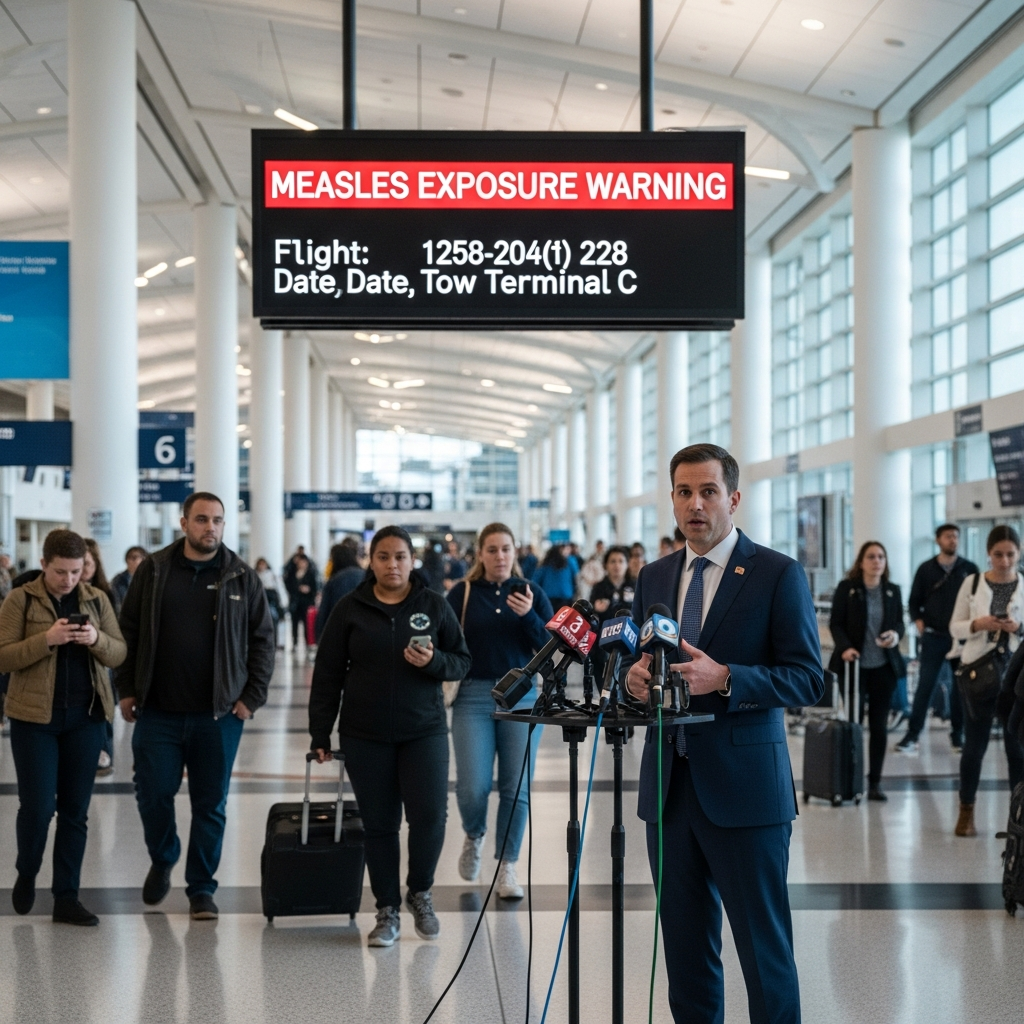
An urgent public health warning has been issued for Boston’s Logan International Airport following a confirmed measles exposure. Health officials are alerting anyone who was in Terminal C on Tuesday, April 14, between midnight and 2:30 AM, about potential contact with the highly contagious virus. Understanding the risks and taking immediate, decisive action is crucial to protect yourself and the wider community. This guide details the incident, identifies potential exposure points, and outlines the essential steps you need to take.
Urgent Public Health Warning: Measles Exposure at Logan Airport
Boston health officials, alongside state and regional partners, have confirmed a significant measles exposure event at Logan International Airport. The incident occurred when an infectious individual passed through Terminal C in the early morning hours of Tuesday, April 14, between midnight and 2:30 AM. This timeline is critical for anyone who was present in the terminal during that specific window.
The Boston Public Health Commission (BPHC) and the Massachusetts Department of Public Health (DPH) swiftly issued an alert. They are working collaboratively to identify and notify individuals who may have been exposed. This proactive measure aims to contain any potential spread of the highly infectious respiratory virus within the community.
Unpacking the Exposure Details
The infected traveler, identified as a Rhode Island resident in his 40s, had recently returned from international travel. He arrived at Logan Airport via JetBlue flight 470 from Fort Lauderdale, Florida, shortly after midnight on April 14. After departing the plane, he was present in Terminal C before leaving the state in a private vehicle bound for Rhode Island.
Beyond Logan Airport, health officials have identified additional potential exposure locations within Rhode Island:
Atmed Treatment Center in Johnston, Rhode Island: The individual visited this facility on Tuesday, April 15.
Panadería El Quetzal in Providence, Rhode Island: He was present at this bakery between 4:30 PM and 6:30 PM on Wednesday, April 15.
It is important to remember that measles is extraordinarily contagious. Kayty Himmelstein, medical director for the BPHC’s Infectious Disease Bureau, explained that the measles virus can remain viable in the air and on surfaces for up to two hours after an infected person has left an area. This emphasizes why even brief presence in an exposure zone carries a risk.
What to Do If You Were Potentially Exposed
If you were in Logan Airport’s Terminal C between midnight and 2:30 AM on April 14, or at the identified Rhode Island locations, immediate action is paramount.
Check Your Immunity Status
Your first and most important step is to verify your immunity to measles. Individuals who have received two doses of the Measles, Mumps, and Rubella (MMR) vaccine are highly unlikely to develop the illness. The same applies to those who have previously had measles. Health officials advise contacting your healthcare provider to confirm your vaccination history.
Immediate Medical Consultation
If you are unvaccinated or unsure of your immunity status and believe you may have been exposed, contact your healthcare provider immediately. It’s crucial to call ahead before visiting any clinic, office, or emergency department. This prevents potential further transmission to other patients and staff. For unvaccinated individuals, the MMR vaccine, if administered within 72 hours of exposure, may offer some protection.
Monitor for Symptoms
Following potential exposure, you should carefully monitor yourself for symptoms for 21 days. For this Logan Airport incident, this monitoring period extends through May 5. Measles typically presents with a predictable progression of symptoms.
Avoid Public Places
Unvaccinated individuals who may have been exposed should avoid public places for 21 days after the potential contact. This includes schools, workplaces, public transportation, and stores. This measure is essential to prevent the virus from spreading further within the community.
Recognizing Measles Symptoms
Understanding the signs of measles is vital for early detection and preventing transmission. The virus typically begins with symptoms that can easily be mistaken for the flu or a common cold.
Initial Flu-like Symptoms
The earliest indicators of measles include:
A persistent cough.
High fever, often reaching 104°F or higher.
A runny nose.
Red, watery eyes, also known as conjunctivitis.
These symptoms usually appear 7 to 14 days after exposure.
The Distinctive Measles Rash
A characteristic red, blotchy rash typically emerges three to five days after the initial flu-like symptoms. This rash usually begins on the face, often near the hairline, and then spreads downwards to the neck, torso, and eventually the arms and legs. The rash can last for several days before fading.
An infected person can transmit measles to others from four days before the rash appears until four days after it resolves. This extended contagious period underscores the ease with which the virus can spread undetected. Measles is a severe, potentially life-threatening illness.
The Critical Role of the MMR Vaccine
Public health officials consistently highlight the Measles, Mumps, and Rubella (MMR) vaccine as the most effective tool against measles. Its importance cannot be overstated in protecting both individuals and the wider community.
Proven Effectiveness
The MMR vaccine provides robust protection against the virus. Two doses of the vaccine are 97% effective in preventing measles. Even a single dose offers significant protection, being approximately 93% effective. For those who are vaccinated but still contract measles, the illness is typically much milder and less severe.
Dr. Bisola Ojikutu, Boston’s Public Health Commissioner, emphasized this point, stating, “This case of measles underscores the continued importance of obtaining the MMR vaccine. The MMR vaccine is highly effective at preventing measles infection and also protects against mumps and rubella. This vaccine is the best tool we have to protect ourselves and our communities from serious illness.”
Recommended Vaccination Schedule
The standard vaccination schedule for children involves two doses. The first dose is typically administered between 12 and 15 months of age. A second dose is usually given before a child starts kindergarten, around age four. This two-dose regimen ensures maximum protection.
Vaccination for Adults and Older Children
It is never too late to get vaccinated. Health officials urge unvaccinated adults and older children to get their MMR shots. If you are unsure of your immunization status, consulting your healthcare provider and getting at least one MMR dose is highly recommended. Protecting yourself through vaccination is a simple yet powerful act of public health.
Rising Measles Cases: A National and Local Concern
The Logan Airport incident is not an isolated event but rather part of a troubling resurgence of measles both locally and nationwide. This trend highlights a critical challenge for public health and reinforces the necessity of high vaccination rates.
Massachusetts and New England Context
This exposure marks the third confirmed measles case in Massachusetts this year. Previous cases include an adult from Greater Boston who had recently traveled abroad, and a school-aged child who was exposed and diagnosed outside of the state. Across New England, 16 measles cases had already been reported in the current year prior to this Logan Airport incident, signaling a regional uptick.
National and Historical Trends
Nationally, the Centers for Disease Control and Prevention (CDC) reported nearly 1,750 confirmed measles cases in the U.S. as of April 16 this year. This number reflects a concerning increase compared to previous years. Broader national trends from recent periods have shown nearly 2,000 cases across 44 U.S. jurisdictions, with 3 confirmed deaths, overwhelmingly impacting unvaccinated individuals.
This resurgence is particularly alarming because measles was declared eliminated in the U.S. just 15 years ago, a testament to successful vaccination programs. However, Dr. Robbie Goldstein, Massachusetts Public Health Commissioner (in prior reports), linked the recent increase to an “unfortunate decrease in vaccination rates.” The decline in community immunity creates fertile ground for this highly contagious virus to spread. For example, while Suffolk County boasts a 94% full vaccination rate among children, any dip in these figures across wider populations can quickly lead to outbreaks.
Frequently Asked Questions
Q1: What specific dates and locations were impacted by the recent measles exposure at Logan Airport?
The primary exposure event at Logan International Airport occurred on Tuesday, April 14, between midnight and 2:30 AM, specifically in Terminal C. The infected traveler arrived on JetBlue flight 470 from Fort Lauderdale, Florida. Additionally, health officials identified two exposure sites in Rhode Island: the Atmed Treatment Center in Johnston on April 15, and Panadería El Quetzal in Providence between 4:30 PM and 6:30 PM on April 15.
Q2: How can I check my measles immunity status and what should unvaccinated individuals do?
You can check your measles immunity by contacting your healthcare provider to review your vaccination records. Individuals who have received two doses of the MMR (Measles, Mumps, and Rubella) vaccine or have a documented history of measles are generally considered immune. If you are unvaccinated or unsure of your status and believe you were exposed, immediately contact your healthcare provider before visiting any medical facility. Unvaccinated exposed individuals should monitor for symptoms for 21 days and avoid public places to prevent potential spread.
Q3: Why are measles cases increasing, and how effective is the MMR vaccine?
Measles cases are increasing due to an unfortunate decrease in vaccination rates, which lowers community immunity and allows the highly contagious virus to spread more easily. Despite its prior elimination in the U.S., the virus is now resurging. The MMR vaccine is highly effective: two doses provide 97% protection against measles, while one dose offers about 93% protection. Health officials stress that it’s never too late for children or adults to get vaccinated, as it’s the best defense against severe illness.
Protecting Our Community: A Call to Action
The recent measles exposure at Boston Logan Airport serves as a stark reminder of this severe, yet preventable, illness. Vigilance, prompt action, and maintaining high vaccination rates are our strongest defenses. If you were at Logan Terminal C during the specified time, or at the Rhode Island exposure sites, please take the necessary steps to assess your risk and consult a healthcare professional.
We all play a crucial role in safeguarding public health. By ensuring our own immunization status and encouraging others to do the same, we collectively protect our communities from the threat of measles. Prioritize your health and contribute to the safety of those around you.