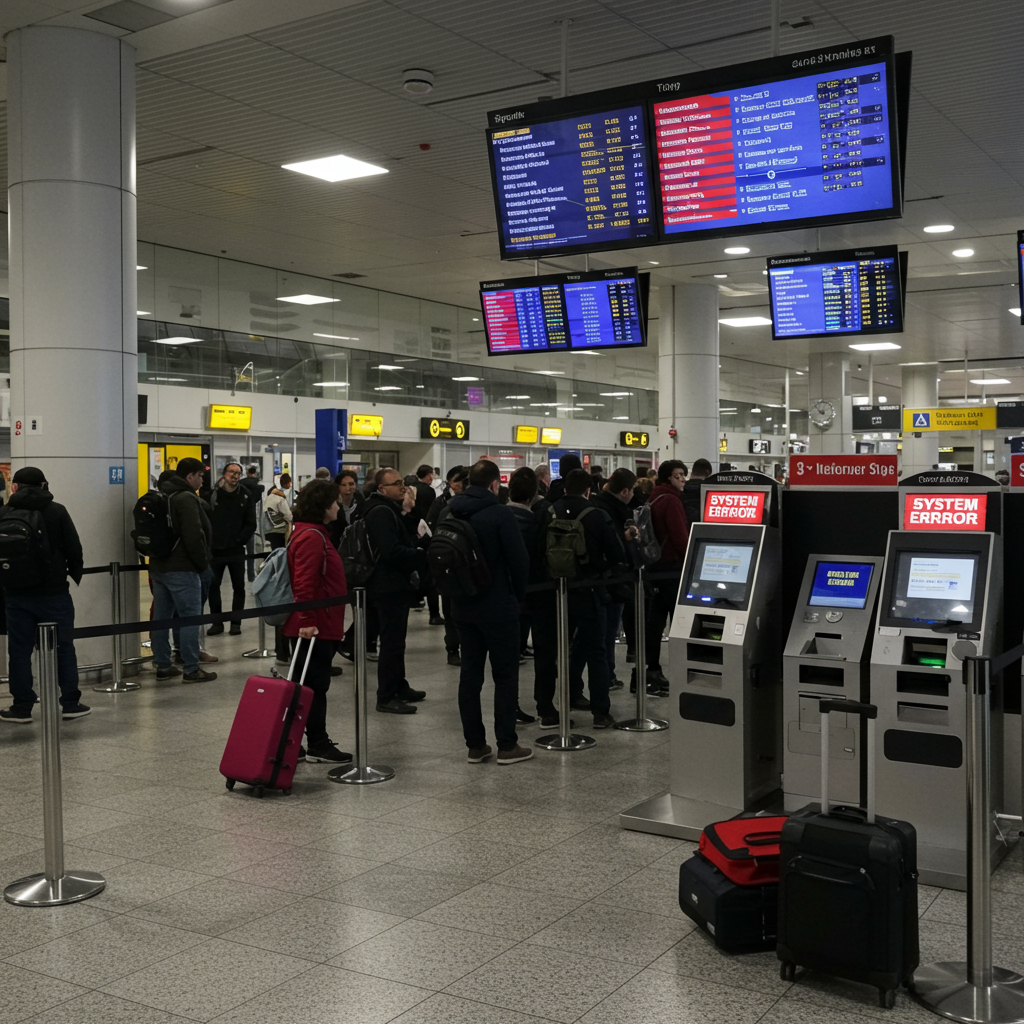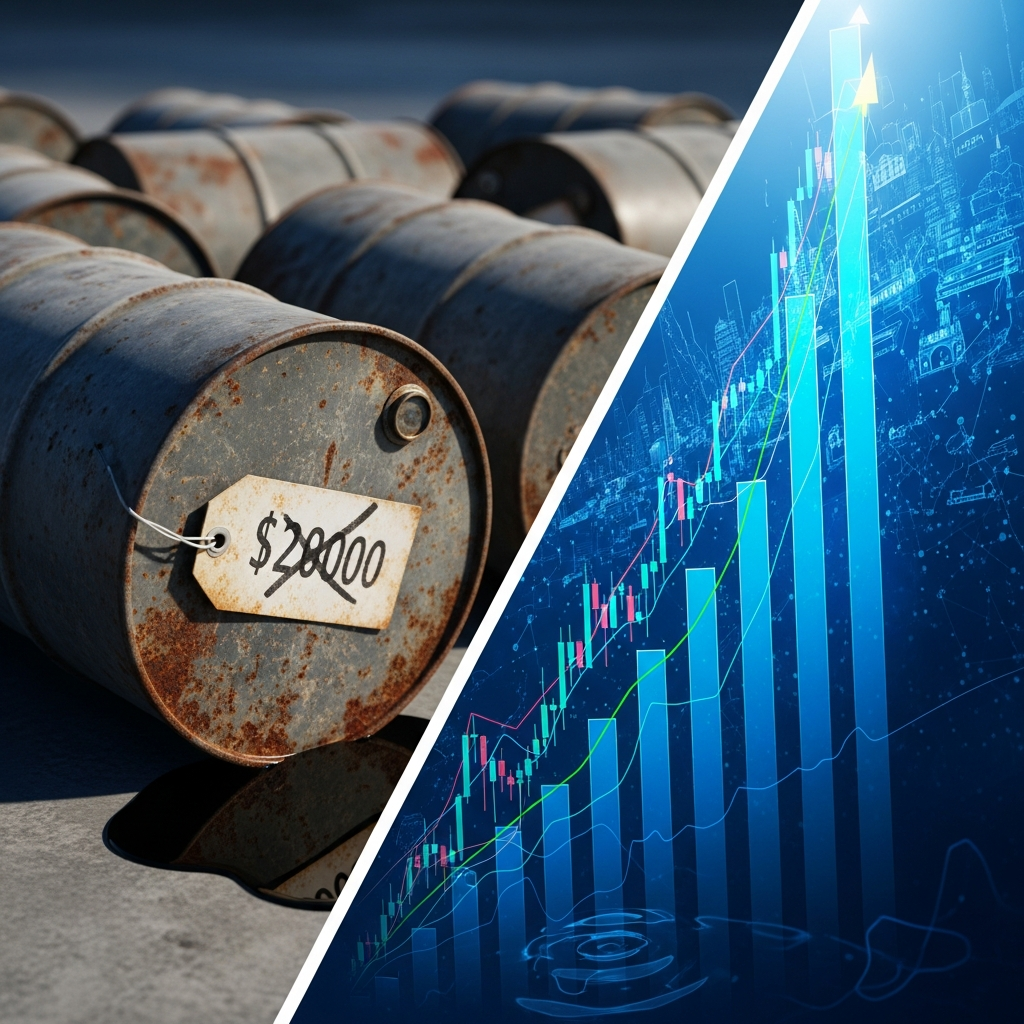
Global financial markets were rocked by a dramatic shift in April 2026, as an unexpected two-week ceasefire between the United States and Iran sent shockwaves through the investment world. This sudden de-escalation triggered a rapid re-evaluation of risk, causing oil prices to plummet while simultaneously igniting a widespread rally across international stock markets. Investors, reeling from weeks of intense geopolitical tension, found themselves navigating a volatile landscape where the promise of peace brought immediate, albeit cautious, optimism. This pivotal development underscores the profound influence of Middle East geopolitics on global economic stability and energy markets.
The Breaking News: A Fragile Truce Emerges
The catalyst for this market upheaval was the late Tuesday announcement of a conditional two-week ceasefire agreement between the U.S. and Iran. Following intense negotiations and diplomatic interventions, President Donald Trump reportedly agreed to postpone threatened attacks on Iranian civilian targets. In a reciprocal move, Iran’s foreign minister confirmed that the critically important Strait of Hormuz would be reopened for maritime passage for the agreed two-week period, managed by the Iranian military. This breakthrough followed a tense ultimatum from President Trump, who had threatened severe repercussions if Iran did not open the strait by an 8 p.m. Eastern deadline. A crucial intervention came from Pakistan’s prime minister, who successfully urged Trump to extend the deadline and Iran to open the Strait for the same duration.
Diplomatic Breakthrough and Lingering Tensions
While the agreement offered immediate relief, its fragile nature was evident. Despite the ceasefire announcement, reports of ongoing attacks persisted in Israel, Iran, and across the Gulf region early Wednesday. Neither nation specified an official start time for the truce, leaving investors and analysts closely monitoring its implementation. The swift market reaction highlighted both the deep yearning for stability and the inherent skepticism surrounding geopolitical ceasefires.
Oil Markets in Turmoil: From Spike to Plunge
The most immediate and dramatic impact of the ceasefire was felt in the global oil markets. Just days before, oil prices had surged, with benchmark U.S. crude briefly climbing above $117 a barrel, driven by fears of conflict-induced supply disruptions and Iran’s blockade of the Strait of Hormuz. However, the ceasefire agreement abruptly reversed this trend. Futures for U.S. crude oil (WTI) sank a staggering 14.3% to $96.83 a barrel, while Brent crude, the international benchmark, plunged 13.3% to $94.74. Some reports indicated even steeper drops, with Brent crude falling by 16% and US crude by 17.6% on Wednesday, marking their biggest daily falls since the COVID-19 pandemic lockdowns six years prior. Despite this dramatic decline, oil prices remained notably above their pre-war levels, when Brent traded below $73 a barrel. This signaled that while immediate fears had eased, fundamental concerns about energy supply and price stability persisted.
The Strait of Hormuz: A Global Chokepoint
The strategic importance of the Strait of Hormuz cannot be overstated. This narrow waterway is responsible for approximately 20% of the world’s total oil supply, making it a critical chokepoint for global energy trade. Iran’s earlier blockade to its “enemies” had choked crude production and transportation in the Persian Gulf, directly fueling fears of severe supply shortages and escalating inflation. The ceasefire’s provision for reopening the Strait, even temporarily, was thus a major factor in easing market anxieties. Experts like Neil Shearing of Capital Economics noted that while a framework might allow full passage, terms remained unclear, with potential transit fees of $1-2 million per tanker adding roughly $1 per barrel to oil costs—a “modest impact” but a “de facto partial nationalization” of the shipping route.
Global Stocks Rejoice: A Wave of Optimism
In stark contrast to the oil markets, global stock indices reacted with widespread exuberance. Investors, relieved by the de-escalation, unleashed a wave of buying that propelled markets upward. Wall Street experienced its most significant single-day rally in a year. The S&P 500 gained 2.5%, recovering from an earlier 1.2% dip amidst Trump’s threats. The Dow Jones Industrial Average jumped 2.9%, marking its best day since April 2025, while the Nasdaq Composite advanced 2.8%.
European markets mirrored this positive sentiment. The pan-European Stoxx 600 index surged 3.7%, recording its largest one-day rise in a year. London’s FTSE 100 closed up 2.5%, reaching its highest level since the early days of the Iran conflict. Asian Pacific markets were equally enthusiastic: Japan’s Nikkei 225 rose over 5%, South Korea’s Kospi soared 7.5%, and indices in Australia, Hong Kong, and China also posted strong gains. Sector-wise, travel and leisure stocks, which had been battered by conflict fears, saw significant boosts, while shares of major oil companies like BP and Shell tumbled in response to falling crude prices.
Beyond Equities: Broader Market Shifts
The ripple effect of the ceasefire extended beyond equities and crude oil. European gas prices slumped as energy supply fears eased. In the bond market, yields on benchmark government debt softened; the yield on the 10-year US Treasury fell to 4.24% from 4.30% earlier, though still considerably higher than its pre-war level of 3.97%. UK 10-year debt also saw yields ease to 4.7%. Additionally, gold prices, often a safe-haven asset, surprisingly rose more than 2%, and major cryptocurrencies like Bitcoin and Ether also experienced a rally, indicating broad market optimism.
The Underlying Economic Landscape and Inflation Concerns
The market’s intense reaction reflected deep underlying concerns about global economic stability. Prior to the ceasefire, the conflict with Iran had ignited fears of a “painful wave of inflation crashing through the global economy,” primarily due to prolonged disruption of oil supplies. Consumers were already feeling the pinch, with the average price for a gallon of regular gasoline across the United States leaping to $4.14, a significant jump from below $3 just days before U.S. and Israeli attacks commenced in late February. Higher borrowing costs, evidenced by elevated Treasury yields, further contributed to a slowing global economy. The ceasefire offered a temporary reprieve from these immediate inflationary pressures, but the long-term outlook remained uncertain.
Investor Sentiment: Relief Mixed with Caution
While the market’s initial reaction was overwhelmingly positive, analysts advised caution. The two-week pause was widely seen as an “off-ramp for Trump’s overly bombastic ultimatum, but not yet an off-ramp for oil markets or the war,” according to Saul Kavonic of MST Financial. Experts like Kathleen Brooks of XTB warned that markets would closely monitor the “fragile truce,” cautioning that any breakdown could send oil prices surging back above $110 per barrel. Jim Reid of Deutsche Bank highlighted open questions regarding the ceasefire’s longevity, its application to Israeli actions in Lebanon, and the prospect of a permanent cessation of hostilities. Prashant Newnaha of TD Securities cautioned that while markets were treating the ceasefire as genuine, renewed escalation could not be ruled out.
Expert Insights: Navigating a Fragile Future
The consensus among experts was that the ceasefire provided temporary relief rather than a definitive resolution. Saul Kavonic suggested the pause might allow for the release of some stored oil and LNG tankers, offering temporary market pressure relief but not increasing overall production. This underscored the fact that sustained production increases would require more confidence in a lasting peace. A crucial takeaway was the widespread belief that oil prices were unlikely to return to their pre-war levels below $73 a barrel, making “inflation persistence” a key theme for markets moving forward. This means consumers and businesses could continue to face elevated energy costs and broader inflationary pressures, even with the temporary de-escalation.
What Does This Mean for the Global Economy?
The immediate impact for the global economy is a collective sigh of relief, reducing the short-term risk of a severe energy crisis and runaway inflation. However, the underlying tensions in the Middle East persist, ensuring continued volatility. For consumers, the temporary ceasefire might halt the rapid rise in gasoline prices, but a significant rollback to pre-war levels seems unlikely. Businesses might see some stabilization in supply chains and energy costs, offering a brief window for planning. For investors, the event highlights the critical importance of monitoring geopolitical developments and understanding their profound, often immediate, effects on asset classes worldwide. The lessons from this dramatic market swing emphasize agility, diversification, and a deep understanding of global interconnectedness.
Frequently Asked Questions
What was the immediate market reaction to the US-Iran ceasefire?
The immediate market reaction to the US-Iran ceasefire in April 2026 was a dramatic plunge in oil prices and a widespread surge in global stock markets. Futures for U.S. crude oil sank over 14% to below $97 a barrel, and Brent crude dropped more than 13% to under $95. Concurrently, major stock indices like the S&P 500, Dow Jones, Nasdaq, Japan’s Nikkei, and South Korea’s Kospi all saw significant gains, with some advancing over 7%. Bond yields eased, European gas prices slumped, and even gold and cryptocurrencies rallied as investor fears of escalating conflict temporarily subsided.
Why is the Strait of Hormuz so crucial to global oil markets?
The Strait of Hormuz is exceptionally crucial to global oil markets because it is a narrow, strategically vital waterway through which approximately 20% of the world’s oil supply passes daily. Its closure or disruption by any party, such as Iran’s earlier blockade to its “enemies,” can severely impact crude production and transportation in the Persian Gulf. This leads to fears of acute supply shortages, sharp spikes in oil prices, and broader inflationary pressures across the global economy. Ensuring open passage through the Strait is paramount for maintaining stable international energy supplies and economic stability.
What are the lingering uncertainties for investors following this ceasefire?
Despite the initial positive market reaction, several significant uncertainties linger for investors following the US-Iran ceasefire. Experts warn that the truce is “fragile,” with reports of hostilities continuing even after the announcement. Questions remain about the ceasefire’s longevity, its specific application to other regional conflicts (like Israeli actions in Lebanon), and the prospects for a permanent cessation of hostilities. Additionally, while oil prices plunged, they did not return to pre-war levels, suggesting that “inflation persistence” will remain a key theme. Investors must continue to monitor geopolitical developments closely, as a breakdown in the agreement could quickly send markets back into turmoil.