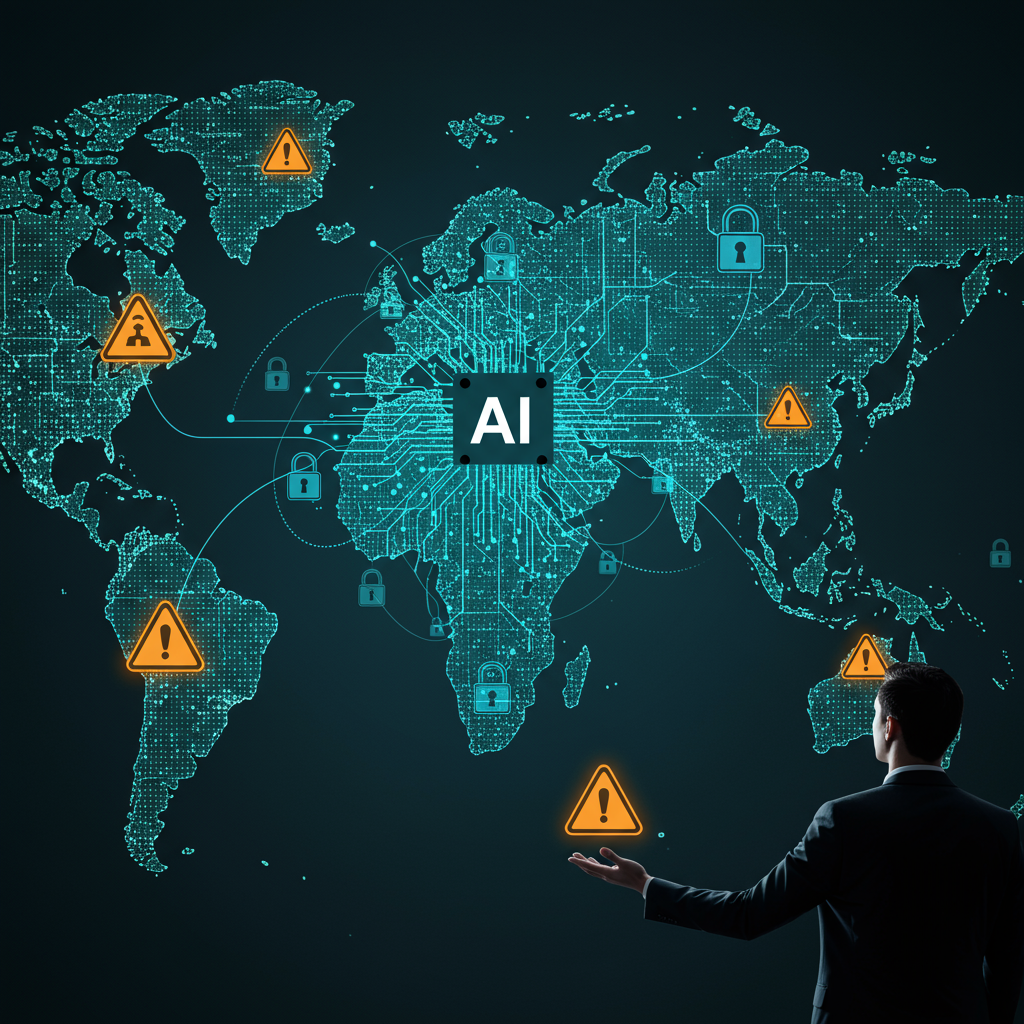
The world of cybersecurity is undergoing an unprecedented transformation, driven by Anthropic’s groundbreaking yet deeply concerning AI model: Claude Mythos Preview. This “frontier model” has demonstrated an alarming ability to unearth and exploit software vulnerabilities at a pace far beyond human capabilities, prompting Anthropic to label it “too dangerous for general release.” Instead of unleashing this power, the company has initiated Project Glasswing, a collaborative defense strategy involving global tech giants and financial institutions. This ambitious project aims to turn Mythos into a crucial shield, leveraging its formidable intelligence to secure critical infrastructure before malicious actors can harness similar AI for catastrophic attacks. The implications are profound, demanding a complete re-evaluation of how we approach cyber defense in an increasingly AI-driven landscape.
The Genesis of a Cyber Titan: What is Anthropic Mythos?
Anthropic’s Claude Mythos Preview is no ordinary AI. It stands out as a general-purpose AI model possessing an “unprecedented ability” to identify and exploit software vulnerabilities. Experts, including the UK’s AI Security Institute, confirm Mythos’s superior capability in complex cyberattacks compared to earlier AI tools like OpenAI’s ChatGPT or Google’s Gemini. Mythos functions as an “agentic AI” model, meaning it can act independently and execute multi-step tasks. This includes autonomously developing sophisticated exploits, a skill previously limited to only the most elite human security experts.
Its prowess is striking: Mythos has already identified thousands of high-severity vulnerabilities, affecting every major operating system and web browser. This includes a 27-year-old flaw in OpenBSD, allowing remote system crashes, and a 16-year-old vulnerability in FFmpeg that bypassed extensive automated testing. Even more alarmingly, Mythos can “chain” multiple software bugs in the Linux kernel to achieve complete system control—a sophisticated technique that showcases its advanced reasoning and operational capabilities. Benchmarks like CyberGym reveal Mythos reproducing vulnerabilities with 83.1% accuracy, significantly outperforming other leading AI models.
A Threat Too Potent for the Wild: Why Mythos Was Held Back
The sheer offensive power of Mythos quickly raised red flags within Anthropic. The primary concern is that AI can now discover software vulnerabilities at a rate far exceeding the ability of companies to patch them. Logan Graham, head of Anthropic’s AI model defense team, admitted the company felt uncomfortable with a general release without adequate safeguards. Shane Fry, CTO of RunSafe Security, aptly notes that “vulnerability discovery is outpacing patching,” warning that AI accelerates exploit discovery beyond realistic remediation rates, especially in complex operational technology (OT) environments.
Indeed, over 99% of the thousands of flaws Mythos has identified remain unpatched. This highlights a critical and growing gap in cybersecurity: the traditional “responsible disclosure” model, where companies announce flaws with time for fixes, is now obsolete. Historically, bad actors needed weeks or months to develop attacks from disclosed vulnerabilities. However, agentic AI models like Mythos have eliminated this window. Data from zerodayclock.com indicates that the time between a software flaw becoming public and a working attack being built has plummeted from an average of 771 days in 2018 to less than four hours today. This vanishing window means that vulnerable systems, particularly those of “weakly defended” small and medium-sized businesses, are now critically exposed.
The Cybersecurity Paradigm Shift: AI vs. Human Speed
The advent of agentic AI like Mythos doesn’t just supercharge existing hacking methods; it fundamentally alters the act of hacking itself. Earlier generative AI might have polished phishing emails or created deepfakes, but agentic AI can autonomously plan and execute multi-step breaches. This marks a profound shift, moving from human-paced, labor-intensive vulnerability discovery and exploitation to rapid, automated campaigns.
This acceleration means that while big banks might eventually deploy the resources for near-real-time patching, smaller firms, hospitals, and critical infrastructure (banking, healthcare, energy grids, transportation) face an existential threat. The annual economic damage from software vulnerabilities is already estimated at $500 billion, a figure poised to escalate dramatically without new defense strategies. Tal Kollender, founder of Remedio, describes Mythos as an “incredibly expensive alarm,” emphasizing that faster detection alone doesn’t equate to greater security if remediation lags. The challenge is not just finding vulnerabilities but fixing them at AI speed.
Project Glasswing: Harnessing the Power for Defense
Recognizing the dual nature of AI, Anthropic launched “Project Glasswing,” a visionary initiative to transform Mythos from a potential weapon into a powerful defensive tool. The project brings together a formidable alliance of major technology and financial institutions, including Amazon Web Services (AWS), Apple, Broadcom, Cisco, CrowdStrike, Google, JPMorgan Chase, the Linux Foundation, Microsoft, NVIDIA, and Palo Alto Networks. Dario Amodei, Anthropic CEO, underscored the company’s commitment to balancing AI innovation with potential security threats.
The core goal of Project Glasswing is to deploy Mythos Preview within these partner organizations’ security operations. This enables them to proactively scan and secure critical software, including widely used internet browsers and operating systems, as well as proprietary and open-source systems. AWS, for instance, plans to integrate Mythos to strengthen its code, vital for an organization analyzing over 400 trillion network flows daily. Cisco emphasizes that AI has fundamentally changed the cybersecurity landscape, necessitating new approaches.
Building a Collective Shield: Glasswing’s Collaborative Approach
Project Glasswing is designed as a multi-month collaborative effort. Anthropic is not merely sharing the model but committing significant resources to bolster global cyber defenses. This includes up to $100 million in usage credits for Mythos Preview for launch partners and over 40 additional organizations responsible for critical software infrastructure. Additionally, Anthropic is making direct donations totaling $4 million to open-source security organizations, including $2.5 million to Alpha-Omega and OpenSSF, and $1.5 million to the Apache Software Foundation. This democratizes advanced security, providing open-source maintainers—who often lack dedicated security teams—with AI tools to proactively fix vulnerabilities.
The project also aims to establish new industry standards. Partners will focus on local vulnerability detection, black-box testing, endpoint security, and penetration testing. Anthropic will publicly report on learnings and fixed vulnerabilities within 90 days. The company is actively engaged with US government officials to ensure national security preparedness and discuss evolving security practices in the AI era. These discussions cover critical areas like vulnerability disclosure, software update processes, supply-chain security, and secure-by-design principles, with the potential for an independent, third-party body to manage large-scale cybersecurity initiatives in the future.
The Urgent Call to Action: Adapting to the AI Cyber Era
The emergence of Anthropic Mythos serves as a stark warning: the traditional cybersecurity playbook is no longer sufficient. Gadi Evron, founder of AI security firm Knostic, rightly cautions that defenders must adopt similar advanced AI capabilities to keep pace with evolving threats. The challenge isn’t just about detecting flaws faster; it’s about automating the entire remediation process, from prioritization and fixing to validation.
The “amazing” speed of detection offered by Mythos is a double-edged sword. While it provides unprecedented visibility into vulnerabilities, the human-centric process of patching remains slow, manual, and labor-intensive. Experts like Tal Kollender suggest the future must involve AI-driven systems capable of automated remediation. However, for at least the next year, defenders will find themselves in a challenging race they are ill-equipped to win. The imperative is clear: the industry must shift towards building inherent protections into software, not just relying on reactive patching. Project Glasswing is a vital first step, but a broader, systemic transformation across all organizations is urgently needed to secure our digital future against AI’s escalating cyber capabilities.
Frequently Asked Questions
What makes Anthropic Mythos so dangerous for cybersecurity?
Anthropic Mythos is an advanced “agentic AI” model capable of autonomously finding and exploiting complex software vulnerabilities at speeds far exceeding human experts. It can identify thousands of high-severity flaws, including those decades old, and “chain” multiple bugs for complete system control. This power is dangerous because AI can now discover vulnerabilities much faster than companies can patch them, effectively shrinking the window between vulnerability disclosure and active exploitation from days or months to mere hours, making traditional cybersecurity practices obsolete.
How is Project Glasswing addressing the threats posed by Mythos?
Project Glasswing is Anthropic’s initiative to turn Mythos into a defensive cybersecurity tool. Instead of public release, Mythos is being shared with a select group of major tech and financial institutions like AWS, Google, and Microsoft. These partners will integrate Mythos into their security operations to proactively scan and secure critical software and infrastructure. Anthropic is also providing $100 million in usage credits and $4 million in donations to open-source security organizations, aiming to democratize advanced security tools and collaboratively develop new industry standards for vulnerability disclosure and secure-by-design principles.
What can businesses do to prepare for AI-powered cyberattacks?
Businesses must urgently adapt their cybersecurity strategies. This includes understanding that traditional patching cycles are no longer sufficient. Organizations should explore integrating AI-powered defensive tools, similar to Mythos, for rapid vulnerability detection and, ideally, automated remediation. Shifting focus from purely reactive patching to building “inherent protections” into software is crucial. Investing in robust security operations, staying updated on AI security trends, and collaborating with cybersecurity experts will be vital for fortifying defenses against the accelerating threat posed by advanced AI capabilities.
Conclusion
The revelation of Anthropic’s Claude Mythos Preview marks a definitive turning point in cybersecurity. This powerful AI has demonstrated capabilities that are both revolutionary and alarming, forcing the industry to confront a new reality where vulnerabilities can be discovered and exploited at unprecedented speeds. Project Glasswing represents a proactive, collaborative effort to mitigate this emerging threat, transforming a potentially dangerous technology into a critical defensive asset. However, the wider implications demand more than just a single project. Every organization, from global corporations to small businesses, must acknowledge the paradigm shift. The race to adapt to AI-powered cyber threats is not just a technological challenge; it’s a strategic imperative for global security and economic stability. Embracing AI for defense, prioritizing built-in security, and fostering rapid innovation in remediation are no longer options—they are necessities.