The cosmos holds countless mysteries, but few are as profound as the origin of the chemical building blocks that underpin life itself. Recently, astronomers made a breathtaking discovery, capturing an unprecedented image of one of the universe’s oldest known stars, PicII-503. Nestled deep within its primordial home, this ancient stellar furnace offers a unique window into the early universe and could finally answer a fundamental question: how did carbon, the cornerstone of all life, become so abundant across the cosmos? This remarkable find, unveiled through the powerful lens of the Dark Energy Camera, is more than just a stunning astronomical snapshot; it’s a vital piece of the cosmic puzzle, guiding us closer to understanding our own origins.
Unveiling a Primordial Relic with DECam
An exquisite image, recently captured by the advanced Dark Energy Camera (DECam), mounted on the colossal Víctor M. Blanco 4-meter Telescope in Chile, has offered humanity an unparalleled view of cosmic antiquity. This high-resolution snap reveals a dazzling field of stars. Hidden within this stellar tapestry, however, lies the true treasure: PicII-503. This ancient star resides within the distant Pictor II dwarf galaxy, a celestial island estimated to be over 10 billion years old. Located approximately 150,000 light-years from Earth in the Pictor constellation, Pictor II serves as an undisturbed cosmic cradle, preserving a star that has witnessed nearly the entire history of the universe.
The Dark Energy Camera: A Window to the Past
The Dark Energy Camera (DECam) is not just any observatory instrument. It’s a marvel of modern astronomy, designed specifically to map the universe on a grand scale and study dark energy. Its immense field of view and incredible sensitivity make it exceptionally adept at spotting faint and distant objects, much like the elusive PicII-503. The image processing, expertly carried out by scientists including T.A. Rector, M. Zamani, and D. de Martin, under the principal investigators Anirudh Chiti and Alex Drlica-Wagner, transformed raw data into this vivid portrayal of a primordial galaxy, highlighting the star that holds such immense scientific value. This capability allows researchers to peer back in time, studying conditions that existed when the cosmos was just a fraction of its current age.
PicII-503: A Glimpse into the Early Cosmos
PicII-503 is no ordinary star; it’s a stellar fossil, classified as a Population II, or second-generation, star. These are some of the most ancient stars in existence, having ignited when the universe was very young, long before heavier elements became commonplace. When the cosmos was in its infancy, only the lightest elements — primarily hydrogen and helium — had formed. Consequently, Population II stars like PicII-503 are predominantly composed of these two elements, with a striking deficiency in heavier “metals” (anything heavier than helium in astronomical terms). For instance, PicII-503 contains an astonishingly low amount of iron, roughly 1-40,000th of the iron content found in our own Sun, a much younger Population I star.
Understanding Stellar Generations
Stellar evolution describes stars in distinct “populations” based on their metallicity (the abundance of elements heavier than hydrogen and helium).
Population III stars: These hypothetical first-generation stars were born from the pristine gas of the Big Bang, composed solely of hydrogen and helium. They were likely massive, short-lived, and responsible for creating the first heavy elements through fusion and supernovae.
Population II stars: Formed from the material enriched by the deaths of Population III stars, these are old, metal-poor stars, like PicII-503. They are crucial for understanding element distribution in the early universe.
Population I stars: These are younger, metal-rich stars, like our Sun, formed from gas clouds that have been enriched by multiple generations of stellar deaths.
The rarity of undisturbed Population II stars, still residing in their birth galaxies, is what makes the discovery of PicII-503 in Pictor II so exceptionally valuable for astronomers.
The Carbon Conundrum: Why So Much Carbon?
Despite its extreme age and overall lack of heavy elements, PicII-503 possesses a peculiar and highly significant characteristic: an unusually high carbon content. Researchers have determined that this ancient star has a carbon-to-iron ratio that is more than 1,500 times greater than that observed in our Sun. This unexpected richness in carbon, a trait shared by many other Population II stars, presents a fascinating puzzle for astrophysicists. How could such a fundamental element, crucial for life, become so prevalent in the universe’s primordial era, especially within stars that are otherwise so metal-poor?
Astronomers have proposed various theories to explain this carbon abundance. One leading hypothesis involves the specific mechanisms of supernova explosions, the violent end-of-life events for massive stars. However, verifying these theories has always been a significant challenge. Most Population II stars that we observe today have migrated far from their original birthplaces over billions of years. This cosmic wandering makes it incredibly difficult to accurately reconstruct the precise conditions under which they formed and were enriched with elements.
Stellar Archaeology in Action: Proving Supernova Theories
This is where PicII-503 truly shines as a scientific marvel. Its unparalleled location within its original dwarf galaxy, Pictor II, provides an undisturbed cosmic laboratory. This allows astronomers to act as “stellar archeologists.” By meticulously studying the star’s precise elemental composition and comparing it with its surrounding galactic environment, scientists can rigorously test long-standing hypotheses about element formation and distribution in the early universe. The fact that PicII-503 has remained in situ for billions of years is a cosmic stroke of luck.
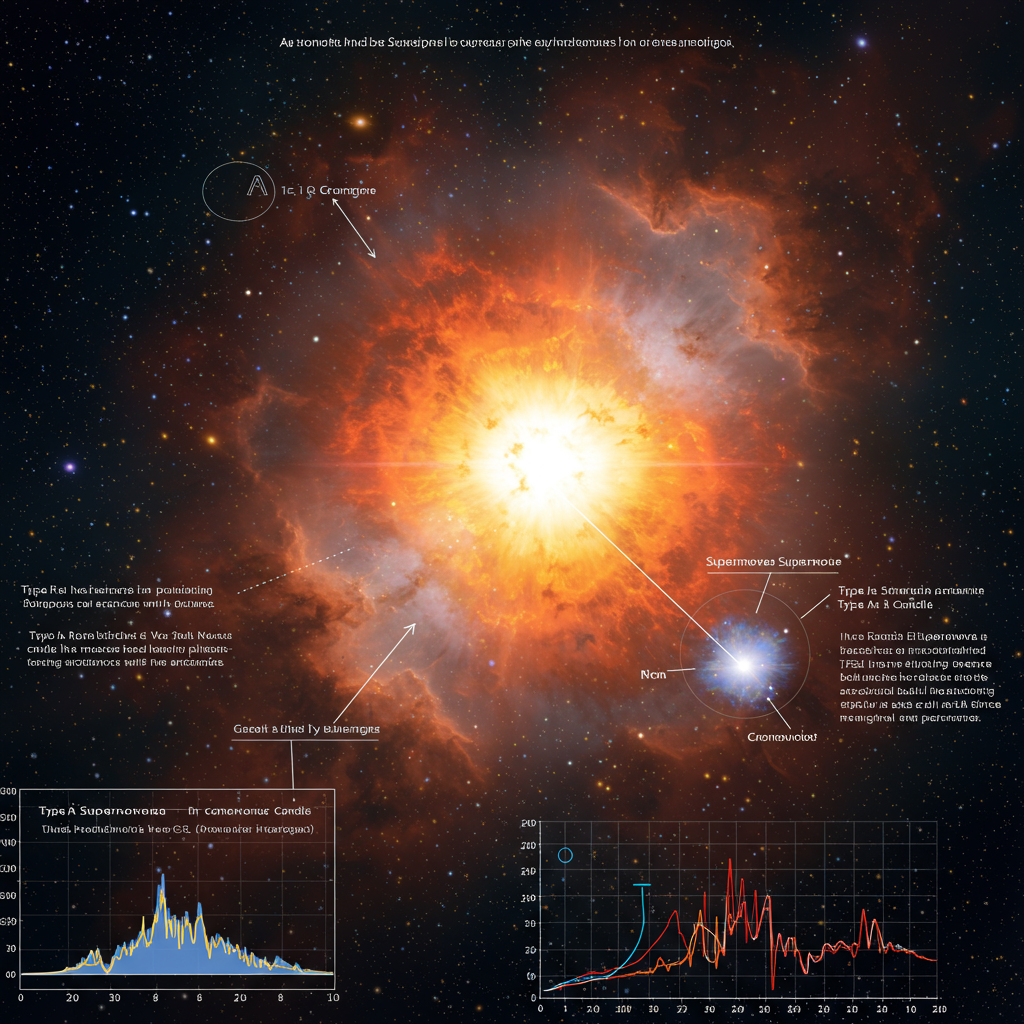
The carbon-rich makeup of PicII-503 lends strong support to a particular theory concerning massive star supernovae. This theory suggests that during the cataclysmic collapse and explosion of a star at the end of its life, lighter elements like carbon, which reside in the star’s outer layers, are preferentially ejected much farther into space than heavier elements. This powerful outward propulsion ensures a wide dispersal of carbon, sowing the seeds of this vital element across vast cosmic distances. This preferential scattering mechanism would explain why carbon could become so widespread, even in the earliest epochs of the universe, and why it’s found in abundance in some of the oldest stars.
From Exploding Stars to Life’s Building Blocks
The implications of this theory, bolstered by the observations of PicII-503, are profound. If carbon is indeed efficiently dispersed across the cosmos through supernova explosions, it provides a compelling explanation for its ubiquitous presence. This widespread availability of carbon, facilitated by the energetic processes of early massive stars, makes it an exquisitely suitable and fundamental building block for the emergence and evolution of life. Without such an efficient mechanism for distributing carbon, the chemical complexity required for life as we know it might never have arisen. This discovery thus directly connects the fiery deaths of primordial stars to the very possibility of life flourishing throughout the universe.
The Broader Impact of Elemental Abundance
Understanding the initial distribution of elements like carbon, oxygen, and nitrogen in the early universe is critical for many fields of astronomy. It impacts our models of:
Galaxy Formation: How early galaxies assembled and evolved.
Planetary Formation: The raw materials available for planet formation around subsequent generations of stars.
Astrobiology: The potential for life to arise on exoplanets.
PicII-503 offers a tangible link to these foundational cosmic processes, providing empirical data to refine our theoretical understanding.
Future Insights from Ancient Starlight
The study of stars like PicII-503 is just beginning. As telescopes become even more powerful and observational techniques more refined, astronomers will continue to identify and analyze more of these ancient cosmic relics. Each new discovery will provide further insights into the universe’s past, solidifying our understanding of how elements formed and how the conditions for life were established. The field of “stellar archaeology” promises to be a vibrant area of research, continually pushing the boundaries of our knowledge. Learning from these primordial stars is essential for charting the complete evolutionary story of our universe, from the Big Bang to the complex life forms that gaze up at the night sky.
Frequently Asked Questions
What makes PicII-503 one of the oldest known stars in the universe?
PicII-503 is classified as a Population II, or second-generation, star. These stars formed over 10 billion years ago when the universe was very young, shortly after the first stars (Population III) created the initial heavy elements. Unlike younger stars like our Sun, PicII-503 is predominantly composed of hydrogen and helium, with significantly lower amounts of heavier elements like iron, indicating its extreme age and early formation in the cosmos.
How did astronomers determine PicII-503’s unusual carbon-rich composition?
Astronomers used the Dark Energy Camera (DECam) on the Víctor M. Blanco 4-meter Telescope to capture detailed light from PicII-503. By analyzing the star’s spectrum – the specific wavelengths of light it emits or absorbs – scientists could precisely determine its elemental makeup. This spectral analysis revealed an astonishingly high carbon-to-iron ratio, more than 1,500 times greater than that of the Sun, despite its overall metal-poor nature.
Why is the discovery of PicII-503’s carbon abundance significant for understanding the origins of life?
The unusual carbon richness of PicII-503, combined with its location in its original galaxy, supports the theory that supernova explosions efficiently dispersed lightweight carbon throughout the early universe. This widespread distribution made carbon, the essential building block for complex organic molecules, readily available across the cosmos from its earliest stages. This understanding is critical because without abundant carbon, life as we know it could not have evolved, linking primordial stellar deaths directly to the potential for life.
Conclusion
The stunning capture of PicII-503 offers more than just an awe-inspiring image; it provides an invaluable scientific treasure. This universe’s oldest star, preserved within its original galaxy, acts as a cosmic time capsule, allowing scientists to unravel the mysteries of element formation in the primordial cosmos. Its unusual carbon abundance strengthens theories about how supernovae distributed life-essential elements across the universe, effectively bridging the gap between stellar astrophysics and the ultimate question of our own existence. As we continue to explore these ancient celestial bodies, each discovery brings us closer to understanding the incredible journey of matter, from explosive star deaths to the intricate chemistry of life itself. The quest to understand our cosmic origins is an ongoing adventure, and stars like PicII-503 illuminate the path.