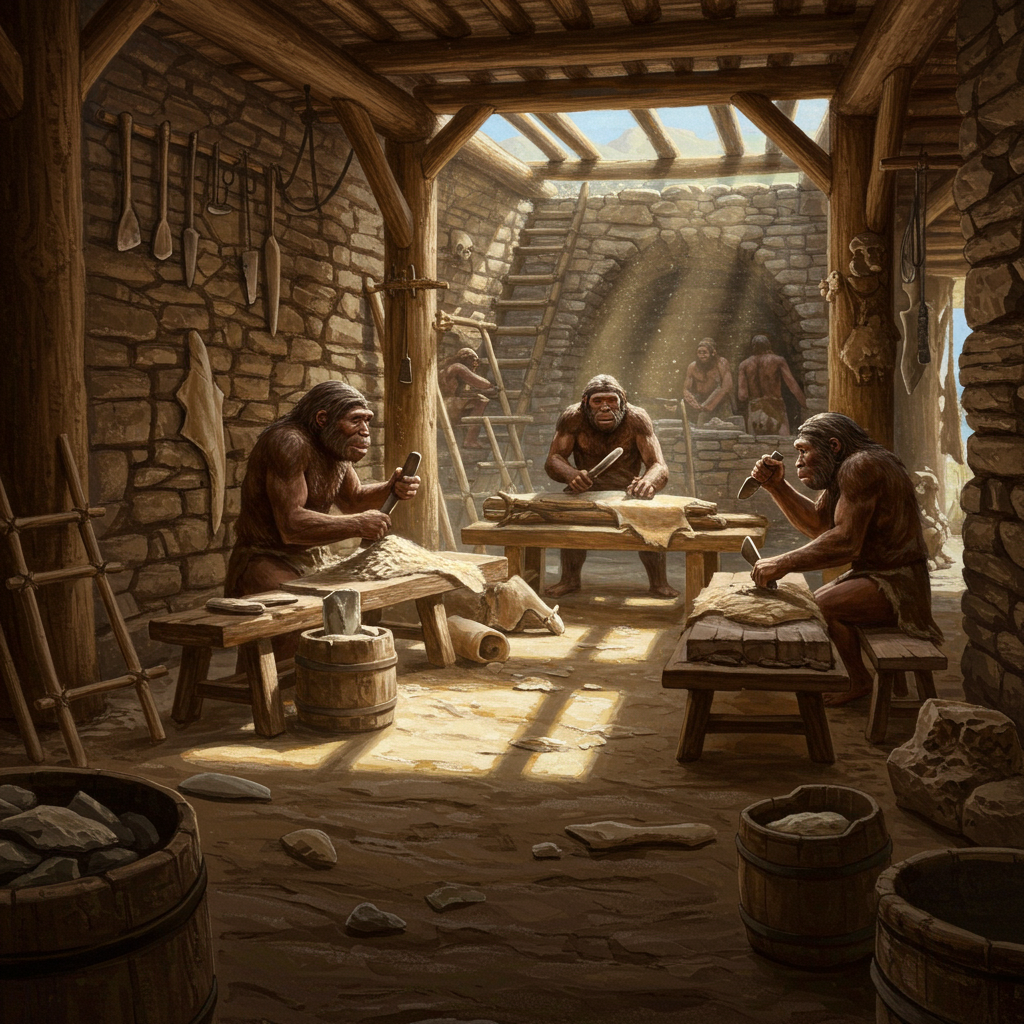
For generations, popular culture depicted neanderthals as simple, brutish cave dwellers. Recent archaeological breakthroughs are dismantling this outdated image, revealing a far more complex and capable ancient human relative. Groundbreaking discoveries show Neanderthals engaging in sophisticated technological processes previously thought unique to modern humans much later in time.
Evidence uncovered at sites in Germany and Gibraltar points to Neanderthals operating what researchers are calling “factories” tens of thousands of years before modern humans arrived in Europe. these weren’t modern industrial complexes, of course. Instead, they were specialized locations where Neanderthals efficiently processed resources on a significant scale. These findings highlight their advanced planning, technical knowledge, and innovative behavior.
The 125,000-Year-Old “Fat Factory” in Germany
One particularly striking discovery comes from the Neumark-Nord region in central Germany. Archaeological research there revealed a site dating back approximately 125,000 years. This area shows compelling evidence that Neanderthals were systematically extracting fat from animal bones through a complex rendering process.
Discovery at Neumark-Nord
Excavations at the Neumark-Nord 2/2B site between 2004 and 2009 yielded a wealth of artifacts. Researchers found over 118,000 bone fragments. They also uncovered 16,500 flint tools, hammerstones, and significant signs of controlled fire use. The sheer volume of material indicates intensive activity at this location.
Analysis of the bone fragments provided crucial insights. Many bones were broken near areas known to contain high concentrations of fat. Two-thirds of the bone material measured smaller than 3 centimeters. This size is consistent with fragments produced when bones are deliberately crushed for grease extraction.
The Sophisticated Fat Rendering Process
The evidence suggests Neanderthals employed a deliberate, multi-step process. First, they likely smashed large animal bones using hammerstones and anvils. This broke the bones open, allowing access to the fatty marrow and spongy tissue inside. Then, they would gather these fragmented bones.
The fragments were then processed further, likely by boiling them. Signs of heating on bones, stones, and charcoal at the site support the use of controlled fires. Boiling fragmented bones is an effective way to render, or extract, the grease. This labor-intensive method required specific tools and careful management.
According to researchers like Prof Wil Roebroeks and Dr Lutz Kindler, this practice demanded careful planning. It involved knowledge of animal anatomy and nutrition. It also required specialized tools and the ability to manage fire at specific temperatures. This level of complexity challenges older ideas about Neanderthal intelligence.
Why Fat Was Essential for Survival
Understanding why Neanderthals went to such effort reveals a critical survival strategy. Like modern humans, Neanderthals were hunter-gatherers relying heavily on animal foods. This meat-heavy diet posed a risk: protein poisoning, sometimes called “rabbit starvation.” This dangerous condition results from consuming too much protein without enough fat or carbohydrates.
Fat provides more than double the calories per gram compared to protein or carbs. Accessing calorie-dense bone grease offered a vital nutritional buffer. It would have been especially crucial during periods when hunting was less successful or when other fat sources were scarce. This resource intensification provided essential calories and nutrients, potentially impacting their ability to thrive and survive.
Beyond Processing: Storage and Resource Management
The Neumark-Nord site location itself was advantageous. It sat on the edge of a lake, providing direct access to water needed for the boiling process. The concentration of bones from 172 large mammals in a limited area is also significant. Researchers suggest bones were likely collected from across the landscape.
These bones would then be transported to this centralized processing site. This implies a degree of planning and coordination. It also supports the idea of intensive rendering periods. Prof Sabine Gaudzinksi-Windheuser noted that bone grease production is only efficient with a large volume of bones. This suggests a system of accumulating material. Researchers even proposed that the Neumark-Nord lakes might have been used for “pond storage.” This method involves submerging carcasses in cold water to help preserve them before processing.
The exceptional preservation of the entire landscape at Neumark-Nord provides a unique window into Neanderthal life. It shows distinct areas used for different activities. There was likely hunting, initial butchering, and then specialized, centralized processing like fat rendering. This paints a much more sophisticated picture of their resource utilization across their environment.
The 65,000-Year-Old “Glue Factory” in Gibraltar
Another discovery showcasing Neanderthal ingenuity comes from Gorham’s Cave in Gibraltar. Here, archaeologists unearthed a 65,000-year-old hearth. Researchers believe this structure was a sophisticated “glue factory.” It predates the arrival of modern humans in the Iberian Peninsula by about 20,000 years.
Engineering a Specialized Hearth
Neanderthals were already known to use adhesives. They created tar and resin to attach stone tools to handles (hafting). These composite tools were often reinforced with sinew or plant fiber. However, the Gibraltar hearth shows a deliberate, engineered structure specifically for producing these sticky substances.
The hearth was a round pit, roughly 9 inches (22 cm) across and 3.5 inches (9 cm) deep. It featured sharply cut vertical walls. Two short trenches, about an inch long, extended from the pit. While simple in design, this structure suggests careful planning for controlled heating.
Crafting Advanced Adhesives
Analysis of the hearth contents provided vital clues. Materials found included charcoal, partially burned rockrose shrub, cooled plant resin lumps, and thin twigs. Scientific analysis (gas chromatography-mass spectrometry) identified traces of urea, zinc, burning compounds, and plant wax. These findings matched results from experiments simulating ancient tar production.
Based on the evidence, researchers proposed the Neanderthal process. They would fill the pit with rockrose leaves, known for their sticky resin when heated. This was covered with wet sand and soil, perhaps mixed with guano. This layer sealed the pit, minimizing oxygen flow.
A small fire built on top provided heat. This fire, using thin twigs, would reach approximately 300°F (150°C). This precise temperature was key. It heated the rockrose to distill the resin without burning the plant material itself. Maintaining this temperature and controlling oxygen levels were critical for successful resin extraction.
Demonstrating Technical Skill and Collaboration
To test their hypothesis, the research team built a replica of the hearth. They successfully produced enough resin in about four hours to haft two stone spear points. This confirmed the process was viable. The experiment also offered insights into potential social dynamics.
Managing the fire and accessing the hot contents likely required at least two individuals. The two small trenches extending from the pit could mark where two people dug from opposite sides. They would need to retrieve the heated material before it cooled and solidified, making resin separation difficult. This suggests collaborative work in technological tasks. The glue factory demonstrates sophisticated engineering skills, a deep understanding of material properties, precise fire control, and possibly teamwork among Neanderthals.
Reshaping Our View of Neanderthals
These discoveries are part of a growing body of evidence. They collectively paint a picture of Neanderthals far removed from the old, simplistic image. Recent findings also point to Neanderthals wearing clothing, caring for disabled individuals (like the child “Tina”), and engaging in distinct burial practices. They interbred with modern humans, and their DNA continues to influence our health today.
The “fat factories” and “glue factories” specifically highlight their advanced technological capabilities. They demonstrate planning, resource management, and innovation. These abilities were previously thought to have emerged much later, primarily with modern humans. Instead, we see shared traits and ingenuity across different hominin groups.
These examples of specialized production sites underline Neanderthals’ capacity for complex behaviors. They were not just surviving; they were developing sophisticated techniques. They were maximizing resources and potentially improving their chances of survival. This new understanding brings Neanderthals much closer in complexity to historically documented foragers than previously assumed.
Frequently Asked Questions
What is a Neanderthal “fat factory” and how did it work?
A Neanderthal “fat factory” refers to archaeological evidence found at sites like Neumark-Nord in Germany. It indicates a location where Neanderthals systematically extracted fat or grease from animal bones. The process involved smashing marrow-rich bones into small fragments using tools like hammerstones. These fragments were then likely boiled using controlled fires to render the fat. This sophisticated process provided essential calories and nutrients.
Where were these ancient Neanderthal ‘factories’ discovered?
Evidence for these specialized processing sites has been found in different locations. The “fat factory” dating back 125,000 years was discovered at the Neumark-Nord site in central Germany. A distinct “glue factory,” suggesting sophisticated adhesive production 65,000 years ago, was unearthed in a hearth structure within a cave in Gibraltar, located on the Iberian Peninsula.
Why are these discoveries important for understanding Neanderthals?
These discoveries are crucial because they challenge long-held assumptions about Neanderthals being intellectually limited or merely primitive. The complex processes involved in running these “factories”—like precise fire control, resource management, specialized tool use, and potential collaboration—demonstrate advanced cognitive abilities and technical skills. They reveal Neanderthals as innovative problem-solvers who developed sophisticated strategies for survival, bringing their perceived capabilities much closer to those of early modern humans.
These findings compel us to revise our understanding of Neanderthal capabilities. They were sophisticated engineers, skilled crafters, and strategic resource managers. Their innovations, developed independently, underscore their intelligence and adaptability. The ongoing research continues to reveal the depth of their complex lives, highlighting their significant place in the story of human evolution.