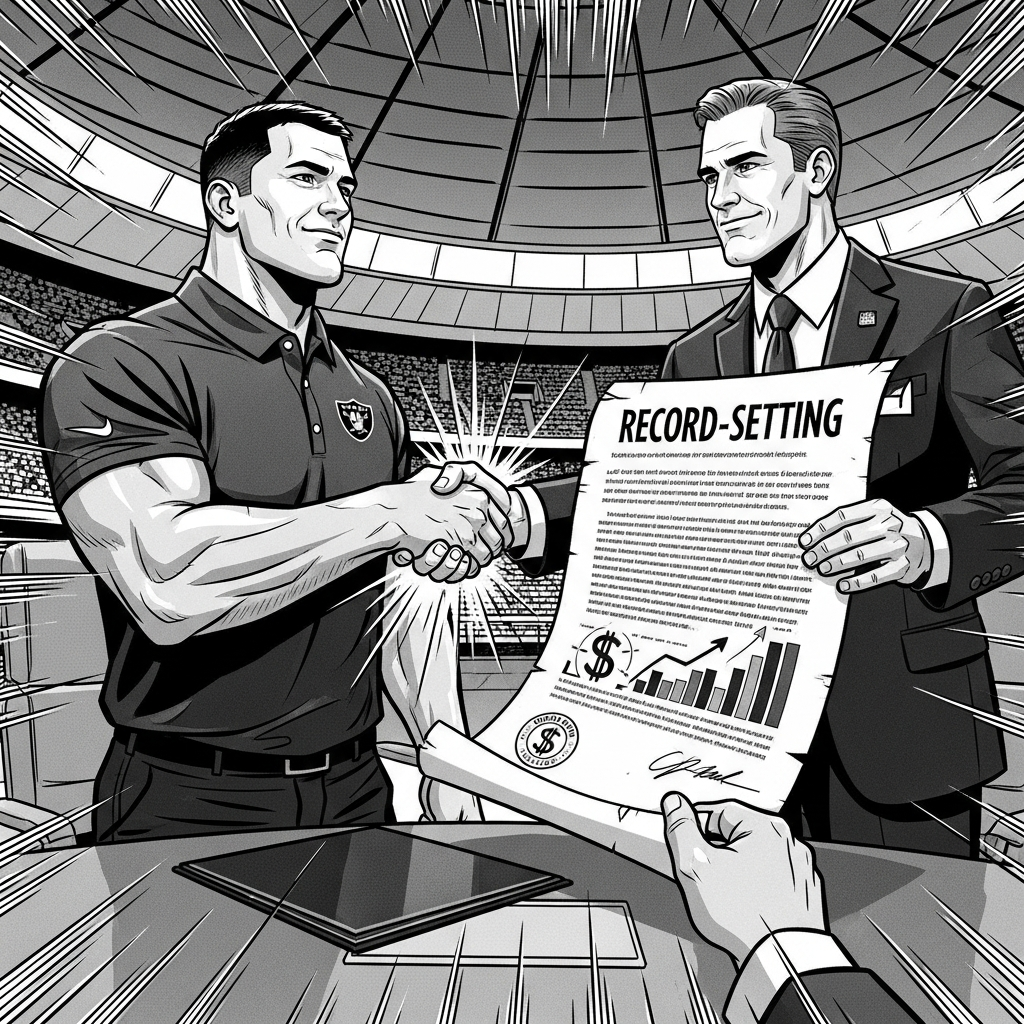
The NFL free agency period erupted with a flurry of high-stakes contracts and strategic roster adjustments. One of the most talked-about moves involved the Las Vegas Raiders making a record-setting commitment to offensive center Tyler Linderbaum. This pivotal signing, alongside other significant player transactions across the league, underscores evolving team priorities and player valuation in today’s competitive landscape. From the Chiefs securing a versatile running back to the Colts’ calculated wide receiver gamble, teams are actively reshaping their futures.
Raiders Make History with Tyler Linderbaum Contract
The Tyler Linderbaum Raiders deal instantly became a headline event. Las Vegas secured the three-time Pro Bowl center with a massive three-year, $81 million contract, setting a new benchmark for the position. This agreement, slated for official signing with the new league year, translates to an average annual value (AAV) of $27 million. This figure represents an astonishing 50% increase over the previous highest-paid center, Creed Humphrey, who earns $18 million per year. Such a significant jump in positional value is rarely seen in the NFL.
Linderbaum’s unique circumstances allowed him to reach the open market. His high option and tag costs made a long-term deal with his former team, the Ravens, prohibitive. It’s uncommon for a top-tier offensive lineman to become available, sparking a fierce bidding war. While most teams initially projected his value around $22-25 million, Linderbaum ultimately surpassed even his own $25 million target, effectively resetting the entire center market for years to come.
Why the Linderbaum Deal Fits the Raiders’ Vision
For the Raiders, this move is a strategic triumph, especially from a financial perspective, given their ample cap space. Linderbaum is deemed an ideal fit for new head coach Klint Kubiak’s offensive scheme. Kubiak’s system heavily emphasizes the center’s role in pre-snap operations. It also values athletic linemen capable of excelling in zone running plays. Linderbaum’s skill set perfectly aligns with both requirements.
His exceptional football IQ is also expected to be invaluable, particularly in easing the transition for presumptive first-round pick Fernando Mendoza as he enters the professional ranks. Rather than risking losing a player of Linderbaum’s caliber to a competitor like Washington or Cleveland over a few million dollars, the Raiders opted to secure their man. This decision, while bold, positions them strongly for future offensive success. It illustrates a willingness to pay a premium for a truly elite talent who perfectly matches their strategic needs.
Shifting Landscape: Colts’ Wide Receiver Strategy and Chiefs’ Backfield Boost
Beyond the offensive line, other key positions saw significant movement, impacting team dynamics and future drafts. The Indianapolis Colts made a calculated gamble with their wide receiver corps. They signed Alec Pierce to a four-year, $116 million deal and subsequently traded consistent playmaker Michael Pittman Jr. to the Steelers. Breer characterizes this as a risky move, despite acknowledging Pierce’s undeniable talent as a downfield threat.
Pittman consistently delivered for the Colts, recording 80 or more catches in four of the last five seasons. Pierce, while excellent at creating big plays with his build-up speed, posted a career-high of 47 catches last year. To justify his substantial contract, Pierce will need to significantly expand his game beyond downfield targets. The Colts’ rationale appears to be that Pierce’s unique vertical ability is harder to acquire than Pittman’s more traditional, high-volume role. This bold pivot reflects a clear strategic direction for the Colts’ passing game, complementing targets like Tyler Warren and Josh Downs. Furthermore, the Colts’ broader roster strategy, including the potential transition tag for quarterback Daniel Jones, directly impacted Alec Pierce’s contract negotiations and free agency options.
Kenneth Walker III Bolsters Kansas City’s Offense
Meanwhile, the Kansas City Chiefs made a decisive move to strengthen their running back position, securing Kenneth Walker III with a three-year, $43.05 million agreement. This deal aligns perfectly with the cap space freed up by trading Trent McDuffie, demonstrating shrewd financial management. Walker is a versatile three-down back, excelling both between the tackles and as a pass-catcher, evidenced by his 133 receptions during his time with the Seahawks. This makes him an ideal fit for Andy Reid’s dynamic offense.
This signing addressed a critical need, especially with Isiah Pacheco’s impending free agency. The Chiefs also viewed the upcoming draft class as relatively weak at running back, with few prospects projected to go in the early rounds. By acquiring Walker, Kansas City freed up its valuable high draft picks (9th, 29th, and 40th overall) to target other positions. The Chiefs further solidified their defense by adding nose tackle Khyiris Tonga, making it a productive day for the reigning Super Bowl champions.
Titans’ Blueprint and Other Noteworthy Free Agency Moves
The Tennessee Titans adopted a strategic blueprint similar to the Commanders and Patriots in recent seasons. They aggressively targeted free agents with existing connections to their new coaching staff. This approach brings in “known commodities” who can instantly embody the program’s culture and accelerate integration. Key signings included:
Corner Cor’Dale Flott (three years, $45 million)
Receiver Wan’Dale Robinson (four years, $70 million)
Tight End Daniel Bellinger (three years, $24 million) – all from OC Brian Daboll’s Giants.
Backup QB Mitch Trubisky (two years, $5.25 million) – with Daboll in Buffalo.
Defensive Lineman John Franklin-Myers (three years, $63 million) – with Robert Saleh on the Jets.
Corner Alontae Taylor (three years, $58 million) – with assistant GM Dave Ziegler in New Orleans.
For this strategy to yield similar success to Washington and New England, the development of young quarterback Cam Ward into a breakthrough player will be paramount for the Titans.
Quick Hits: Significant Contracts and Market Dynamics
Tua Tagovailoa to Falcons: Tua’s move to Atlanta is highly praised, ensuring him starter reps through the spring and summer. This opportunity, due to Michael Penix Jr.’s ACL rehab, allows Tagovailoa to develop chemistry and impress his new coaches, crucial if he’s pressed into action during the season.
Jaelan Phillips to Panthers: The Carolina Panthers executed the day’s biggest contract, signing edge rusher Jaelan Phillips to a four-year, $120 million deal, with $80 million guaranteed. Despite Phillips’ significant injury history for a 26-year-old, the Panthers’ brass viewed him as the “clear best player on the market.” This high-risk, high-reward move could significantly impact Carolina’s young edge rusher development, particularly Nic Scourton.
Rashid Shaheed to Seahawks: The Seahawks’ three-year, $51 million deal for Rashid Shaheed surprised many, given existing large contracts for Cooper Kupp and an impending one for Jaxon Smith-Njigba. However, Seattle reportedly plans to effectively integrate all three receivers into their offensive scheme.
Devin Lloyd Market Watch: The market for Jaguars linebacker Devin Lloyd is under scrutiny. His reported target of $20 million annually now seems ambitious, especially after fellow top linebacker Quay Walker signed for under $15 million with the Raiders.
Vederian Lowe to 49ers: The San Francisco 49ers’ two-year, $12 million deal for swing tackle Vederian Lowe is noteworthy, particularly as the team navigates the ongoing Trent Williams situation.
A.J. Brown Trade Leverage: The potential trade of A.J. Brown presents a fascinating “staring contest.” While the Patriots appear to be the only team from Brown’s wish list actively pursuing a trade, giving them some leverage, the Eagles also hold considerable power as Brown is the only “top-shelf receiver on the trade market.”
Frequently Asked Questions
What makes Tyler Linderbaum’s deal with the Raiders so significant for the NFL market?
Tyler Linderbaum’s three-year, $81 million contract with the Las Vegas Raiders is significant because it sets a new financial benchmark for centers in the NFL. His $27 million average annual value is a 50% increase over the previous highest-paid center. This record-setting deal will influence future negotiations for top offensive linemen, particularly centers, by recalibrating their market value across the league. It reflects a growing appreciation for the position’s critical role in modern offenses.
How do the Colts’ wide receiver decisions involving Alec Pierce and Michael Pittman Jr. impact their offensive strategy?
The Colts’ decision to sign Alec Pierce for $116 million and trade Michael Pittman Jr. marks a shift towards prioritizing Pierce’s unique downfield threat ability. While Pittman provided consistent, high-volume production, Pierce offers a “build-up speed burner” capability that is harder to find. This strategy aims to complement other targets by focusing on big plays. However, Pierce will need to expand his route tree and volume to fully justify his contract and fill the void left by Pittman’s departure.
Why did the Kansas City Chiefs target Kenneth Walker III, and how does this affect their draft plans?
The Kansas City Chiefs targeted Kenneth Walker III to address a critical need for a versatile, three-down running back, especially with Isiah Pacheco’s impending free agency and a perceived thin draft class at the position. Walker’s ability to run between tackles and catch passes makes him an ideal fit for Andy Reid’s offense. By securing Walker with a three-year, $43.05 million deal, the Chiefs freed up their valuable high draft picks (9th, 29th, and 40th overall) to focus on other positions, significantly enhancing their overall draft flexibility.
Conclusion
The initial wave of NFL free agency has clearly showcased teams making bold, calculated decisions to secure key talent. The Tyler Linderbaum Raiders contract exemplifies a growing trend of significant investment in premium offensive line play, reflecting its critical importance to overall team success. From the strategic roster build of the Titans leveraging coaching connections to the high-stakes gambles on wide receivers and running backs by the Colts and Chiefs, respectively, every move carries substantial implications. As teams continue to navigate salary cap challenges and draft strategies, these early free agency fireworks paint a compelling picture of the league’s evolving competitive landscape. Stay tuned as these pivotal player movements reshape the upcoming season and beyond.