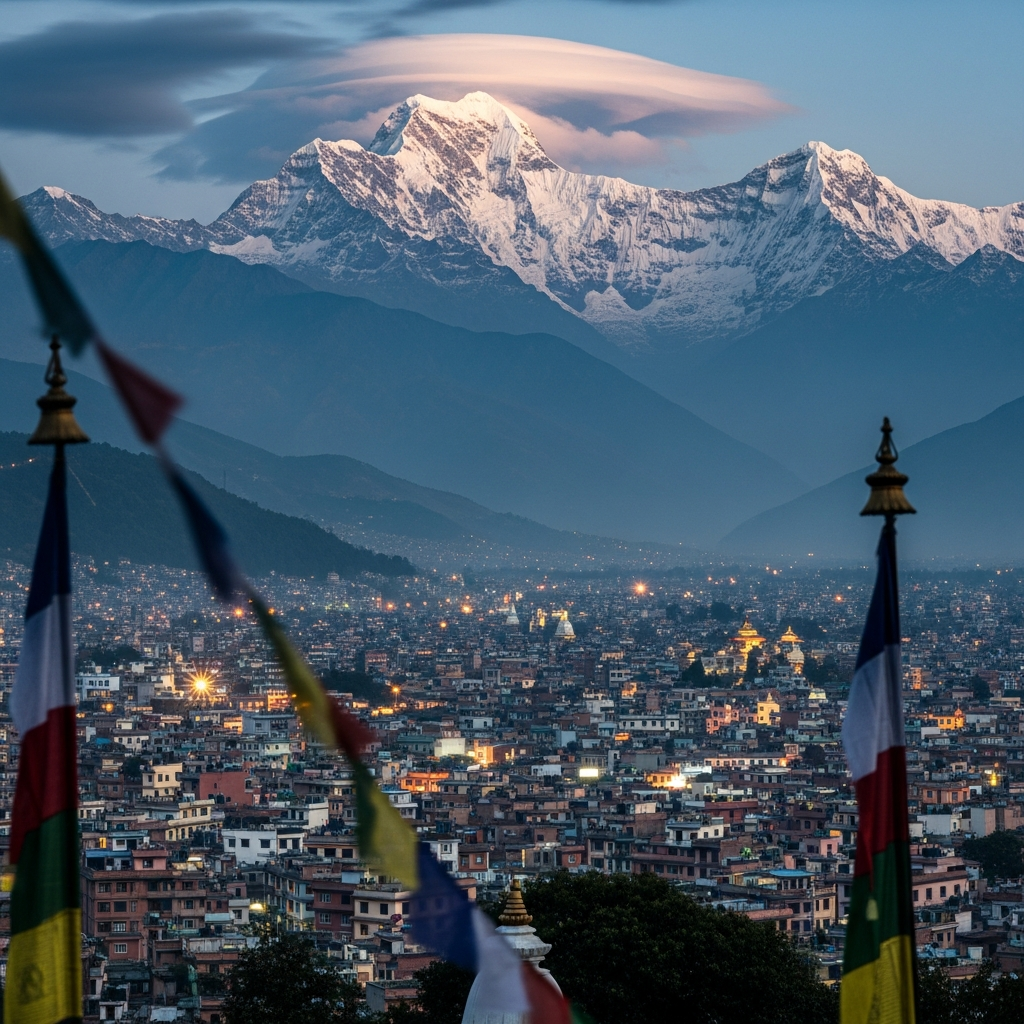
Nestled amidst the majestic Himalayan ranges, Nepal stands as a landlocked nation of immense strategic importance and profound natural beauty. This vibrant country, with Kathmandu as its bustling capital, offers a compelling blend of rich history, unique geographical diversity, and an evolving economic landscape. From its fertile plains bordering India to the world’s highest peaks touching the sky, Nepal’s story is one of resilience, international engagement, and a continuous journey toward development. Understanding Nepal means exploring its intricate physical features, its economic backbone, and the political shifts that have shaped its modern identity.
Nepal at a Glance: A Land of Contrasts
Nepal’s position on the southern slopes of the Himalayas places it uniquely between two global giants: India to the east, south, and west, and China’s Tibet Autonomous Region to the north. Its territory stretches approximately 500 miles (800 kilometers) from east to west and between 90 to 150 miles from north to south, encompassing a total area of 147,181 square kilometers (56,827 square miles). This relatively small nation boasts an incredible variety of landscapes, influencing every aspect of its existence.
Geographic and Political Foundations
Historically, Nepal maintained a policy of isolation. This changed dramatically with a palace revolt in 1950, which re-established the crown’s authority by 1951. Nepal joined the United Nations in 1955, gradually opening its doors to the international community. A significant shift occurred in 1991 with the establishment of a multiparty parliamentary system. Following a decade of Maoist insurgency and complex negotiations, the monarchy was dissolved in 2008. Nepal then transitioned into a democratic republic, adopting a new constitution on September 20, 2015. Today, it operates as a federal multiparty republic with a bicameral parliament, comprising a 59-member National Assembly and a 275-member House of Representatives. Nepali is the official language, and while there’s no official state religion, the country is known for its diverse spiritual heritage.
Demographics and Human Development
With an estimated population of 30,425,000 in 2026, Nepal ranks 52nd globally. Projections indicate growth to 32,719,000 by 2030. Key demographic insights from 2021-2022 reveal that 66.2% of the population resides in urban areas, with 33.8% in rural regions. Life expectancy at birth stands at 71.7 years for males and 73.2 years for females. Literacy rates among those aged 15 and above are 81% for males and 63% for females, reflecting ongoing efforts in education. In 2024, the Gross National Income (GNI) was $43.7 billion, with a per capita GNI of $1,470, highlighting its status as one of the world’s least developed nations.
The Rugged Landscape: Nepal’s Diverse Geography
Nepal’s challenging mountainous terrain covers roughly 75 percent of its area. This rugged landscape is a defining characteristic, shaping its economy, infrastructure, and cultural diversity. The country is broadly divided into four distinct physical belts, each extending from east to west.
Four Principal Physical Belts
The Tarai: This low, flat, and fertile plain runs along the Indian border. It represents the northern extension of the vast Gangetic Plain. The Tarai features a rich agricultural belt in its southern part and historically marshy, malaria-endemic regions further north.
The Churia Foothills and Inner Tarai Zone: Rising sharply, the Churia Range exceeds 4,000 feet. Between the Churia and the Mahābhārat Range lie wide basins, known as the Inner Tarai. These basins, at elevations of 2,000-3,000 feet, have been significantly cleared for cultivation and timber.
The Mid-Mountain Region: This complex system of ranges, reaching 8,000-14,000 feet, is situated between the Mahābhārat Range and the Great Himalayas. It includes the Mahābhārat Range itself, characterized by a steep southern face and a more gentle northern slope. The Inner Himalaya, or Lesser Himalaya, also falls within this zone, featuring perpetually snow-capped peaks. The iconic Kathmandu and Pokharā valleys, vital political and cultural centers, are flat lacustrine basins, formed by glacial and fluvial deposits during the Pleistocene Epoch.
The Great Himalaya Range: Towering from 14,000 to over 29,000 feet, this belt is home to many of the world’s highest peaks. Mount Everest, Kānchenjunga I, Lhotse I, Makālu I, Cho Oyu, Dhaulāgiri I, Manāslu I, and Annapūrna I all exceed 26,400 feet within this range. This extreme altitude zone is sparsely populated, with only scattered high mountain settlements.
Rivers and Hydroelectric Potential
Nepal’s major rivers, including the Kosi, Nārāyani (Gandak), and Karnāli, generally flow southward. They carve deep transverse valleys and gorges across the formidable Himalayan ranges. Their watersheds often originate north of the highest peaks, frequently in Tibet. These extensive river systems hold immense potential for hydroelectric power generation. If fully developed and utilized for domestic use and export (primarily to India), hydroelectricity could become a cornerstone of Nepal’s economy. Joint irrigation-hydroelectric projects are already in place with India on the Kosi and Nārāyani. Additionally, a 60,000-kilowatt hydroelectric project at Kulekhani, supported by international funding, commenced operations in 1982. While upper mountain courses experience minimal flooding, serious flood issues are prevalent in the low-lying Tarai plain. Water pollution is a growing concern, affecting Tarai rivers and surface waters in the Kathmandu and Pokharā valleys due to domestic and industrial discharges, making them unsuitable for drinking without treatment.
Nepal’s Economy: Challenges and Opportunities
Nepal faces significant economic hurdles as one of the world’s least developed nations. Its landlocked status, limited substantial resources, and inadequate transportation network severely constrain growth. The economy relies heavily on importing basic materials while exporting forest and agricultural products to foreign markets. Essential imports include fuel, construction materials, fertilizers, metals, and most consumer goods. Key exports comprise rice, jute, timber, and textiles. Political and administrative systems have historically struggled to implement necessary changes in trade and investment policies, hindering economic acceleration and foreign capital attraction. Furthermore, government development programs, despite foreign aid, have largely failed to address the direct needs of rural populations effectively.
Agriculture: The Economic Backbone
Agriculture remains the cornerstone of the Nepalese economy, employing the majority of its population. This sector generates over half of the country’s export earnings. Rice, corn (maize), and wheat are the primary crops cultivated. However, agricultural productivity remains low due to shortages of fertilizers and improved seeds, inefficient farming techniques, and a heavy reliance on unpredictable weather patterns stemming from minimal irrigation. Other important crops include potatoes, sugarcane, and millet. Livestock, such as cattle, buffalo, goats, and sheep, are also vital to the rural economy. Despite a small overall surplus in food grains, significant supply and demand dislocations exist. Mountain areas frequently experience shortages between harvests, while substantial amounts of food grain move from the Tarai region to India. The lack of adequate transportation infrastructure prevents surplus food from the Tarai from reaching food-deficit areas in the mid-mountain region, though some does reach Tibet. The Tarai offers the greatest potential for agricultural expansion. In contrast, the mid-mountain region’s potential is limited by high population density, extensive cultivation leading to deforestation, exacerbated erosion, reduced yields, and landslides. Efforts are underway to combat soil erosion and deforestation.
Forestry and Untapped Minerals
Forestry covers approximately one-third of Nepal’s land area, mostly under state ownership. Despite challenges like overcutting and poor management, timber stands as one of the country’s most valuable resources and a significant potential revenue source. Most forest products are exported to India. The state-owned Timber Corporation of Nepal supplies wood to the Kathmandu Valley. In terms of mineral resources, Nepal possesses small, scattered, and largely undeveloped deposits. These include coal (lignite), iron ore, magnesite, copper, cobalt, pyrite, limestone, and mica. The country’s immense hydroelectric potential, however, offers a promising alternative for future economic growth.
Manufacturing and Emerging Industries
Nepal’s manufacturing sector, though small, is experiencing growth, primarily dominated by localized operations that process agricultural products. The jute industry in Birātnagar serves as a key foreign exchange earner. Other industries encompass sugar factories, sawmills, meat-processing plants, rice and oil mills, brick and tile manufacturing, construction materials, paper production, food grain processing, cigarette manufacturing, cement production, and brewing. The private sector hosts a larger number of industrial enterprises, with cottage industries forming a significant part. Major manufacturing hubs include Birātnagar, the Birganj–Hitaura corridor, and the Kathmandu Valley.
Tourism: A Growing Sector
Tourism represents a small but expanding industry in Nepal. Foreign visitors are largely concentrated in the Kathmandu Valley, benefiting from its superior infrastructure, including hotels, dining options, roads, and international transport links. However, areas such as Pokharā, the iconic Mount Everest region, and the Nārāyani area (renowned for big game safaris) possess significant undeveloped tourism potential, promising future growth for Nepal’s economy.
Trade and Transportation Hurdles
Nepal’s trade relations are predominantly with India, a consequence of historical ties and geographic proximity. China and the United States also feature as notable trade partners. Efforts have been made to diversify trade through agreements with countries such as Japan, South Korea, Pakistan, Germany, and Poland. The state trading agency, National Trading Limited, aims to foster commercial entrepreneurial activity. Historically, large-scale commercial activities have been managed by foreign entities, primarily from India. Nepal’s foreign trade and balance of payments have faced persistent setbacks, with exports often failing to keep pace with imports of consumer goods and basic supplies. This heavy reliance on the Indian market for trade and on the port of Kolkata for sea access has periodically led to friction between the two nations.
Transportation infrastructure in Nepal is notably limited, characterized by low road mileage and fewer motor vehicles compared to other nations of similar size. Road construction, supported by foreign aid from India, China, Great Britain, and the United States, has been ongoing since the 1970s. The primary mode of transport throughout the mountainous terrain and valleys remains an extensive network of footpaths, which also serve as main trade routes often following river systems. Limited road transport is supplemented by a few railway lines (narrow-gauge from Amlekhganj to Raxaul and Janakpūr to Jaynagar, both connecting to India, though their significance has diminished with increased road use) and air transport. The Nepal Airline Corporation is the national flag carrier, with Tribhuvan International Airport in Kathmandu serving as the main international hub. Gautam Buddha International Airport in Siddharthanagar opened in 2022, enhancing air connectivity. An aerial ropeway, constructed by the United States in the 1950s, continues to transport goods between Kathmandu and Hitaura to the capital.
Geopolitical Significance and Foreign Aid
Nepal holds considerable geopolitical importance due to its strategic location between India and China. Its foreign policy carefully navigates relations with these two regional powers to safeguard its independence. A strong and stable Nepal is crucial as it can deny China direct access to the rich Gangetic Plain, effectively marking the southern boundary of the Chinese sphere north of the Himalayas. Despite this strategic significance, Nepal remains one of the world’s least developed nations, largely attributable to its prolonged geographic and self-imposed isolation. It receives economic assistance from numerous countries, including India, China, the United States, the United Kingdom, Japan, Denmark, Germany, Canada, and Switzerland. The extent of this aid is often influenced by its pivotal strategic location.
Frequently Asked Questions
What defines Nepal’s unique geography and how does it impact the country?
Nepal’s geography is uniquely defined by its location on the southern slopes of the Himalayan mountain range, featuring four distinct physical belts. These include the low-lying Tarai plains, the Churia foothills, the mid-mountain region, and the towering Great Himalaya Range, which hosts many of the world’s highest peaks. This rugged, mountainous terrain, covering 75% of the country, significantly impacts Nepal by limiting transportation infrastructure, influencing agricultural practices, and creating varied climates and ecosystems. It also presents challenges for development but offers immense hydroelectric potential.
Which economic sectors are most vital to Nepal’s growth and what are their primary challenges?
Agriculture forms the backbone of Nepal’s economy, employing the majority of the population and generating over half of its export earnings, primarily through rice, corn, and wheat. Forestry and a growing manufacturing sector, focused on agricultural processing like jute, also contribute. The biggest challenges include low agricultural productivity due to limited irrigation and outdated techniques, undeveloped mineral resources, an inadequate transportation network, and political-administrative systems that have historically failed to implement necessary trade and investment policy reforms to attract foreign capital and accelerate growth.
Why is Nepal considered one of the least developed nations, despite its strategic importance?
Nepal is classified as one of the world’s least developed nations primarily due to its landlocked geography, which makes trade and transportation challenging. A scarcity of substantial natural resources for economic development, coupled with a severely inadequate internal transportation network, further compounds this. Historically, prolonged geographic and self-imposed isolation hindered progress. While Nepal holds significant geopolitical importance between India and China and receives considerable foreign aid, political instability and administrative systems have struggled to implement effective economic policies, leading to persistent reliance on imports and foreign assistance.
Conclusion
Nepal is a land of profound contrasts, where ancient traditions meet modern aspirations under the shadow of the world’s highest mountains. From its complex geopolitical positioning to its diverse topographical features and a developing economy striving for self-sufficiency, Nepal continues to evolve. While facing significant challenges rooted in its geography and historical policies, the nation’s immense hydroelectric potential, burgeoning tourism sector, and the resilience of its people offer clear pathways for future growth. Understanding Nepal provides a valuable insight into a country navigating its identity and development in a strategically vital part of the world.