The United States and Israel’s military conflict with Iran has entered its second intense week, marked by a rapid and unprecedented escalation of hostilities. The conflict, which began on February 28, 2026, has seen President Donald Trump declare an intent to expand U.S. targets, pushing the Middle East into a profound crisis with far-reaching global repercussions. As U.S. troops killed in the war return home, the human and economic tolls continue to mount, threatening international stability and vital trade routes.
Unprecedented Escalation: Trump’s Rhetoric and Expanding Targets
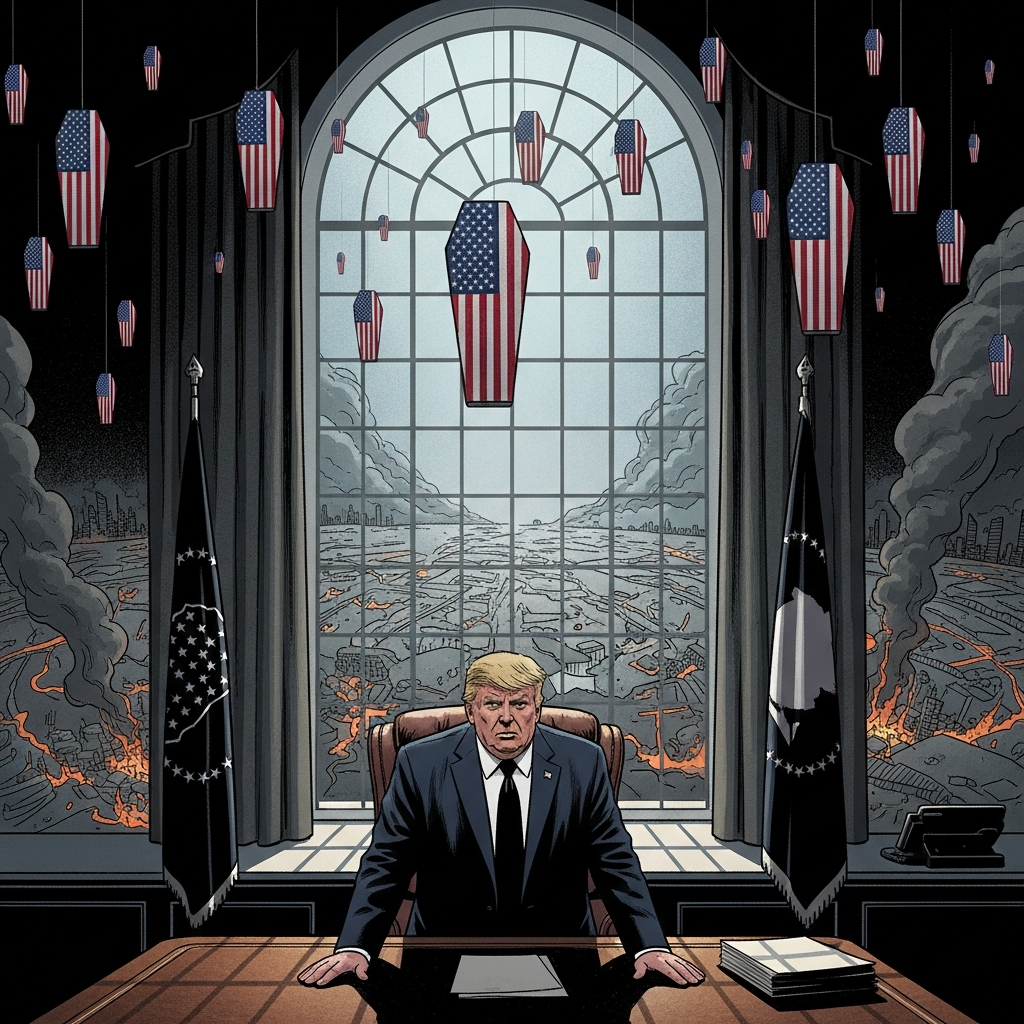
President Trump has adopted an assertive stance, warning that Iran “will be hit very hard” and threatening to broaden U.S. target lists to “new areas and groups of people.” His rhetoric suggests a desire for “complete destruction and certain death” for Iran, citing its “bad behavior.” Trump explicitly stated that negotiations would only occur after Iran’s “unconditional surrender,” emphasizing a highly personalized approach to the conflict. He envisions a post-surrender Iran where the U.S. and allies would help rebuild its economy, but insists on having a role in selecting an “acceptable leader” for the nation.
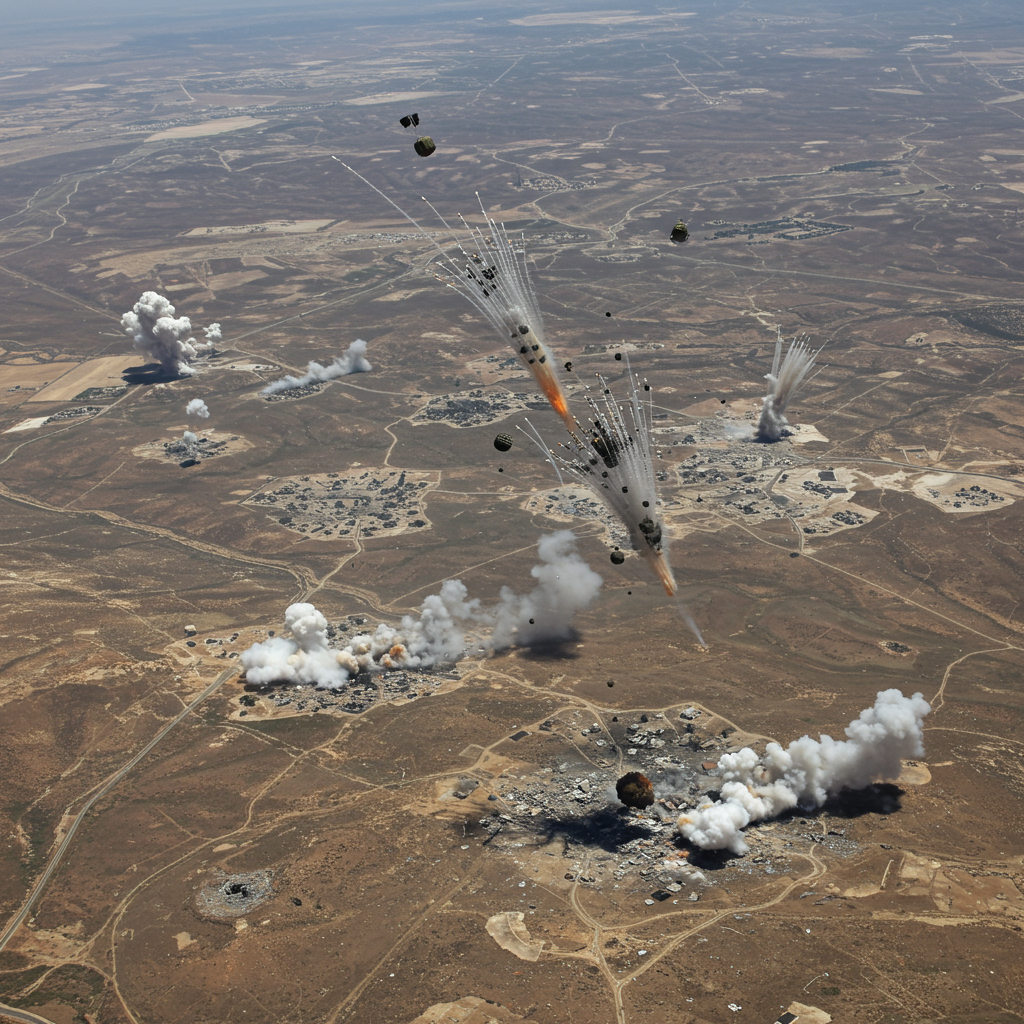
Initial U.S. and Israeli coordinated attacks have reportedly decimated Iran’s military capabilities. Pentagon officials claim that Iran’s navy and air force have been “wiped out,” with estimates suggesting an 80% reduction in its missile capacity. The U.S. has utilized B-2 bombers to drop “dozens of 2,000-pound penetrators” on deeply buried ballistic missile launchers. Meanwhile, the USS Charlotte submarine successfully sank the Iranian warship IRIS Dena off the coast of Sri Lanka, illustrating the expanding geographical scope of the conflict.
Casualties and Leadership Fallout
The conflict has resulted in significant casualties on both sides. Iran’s Red Crescent Society reported over 1,300 deaths, with Iranian government figures citing at least 1,230 people killed by U.S. and Israeli strikes, including 1,114 civilians. These strikes tragically include an incident at a school in Minab, where 175 people, many of them schoolgirls, were reportedly killed. On the U.S. side, six American service members were killed in Kuwait following an Iranian retaliatory strike, as their remains returned to the U.S. for an honors ceremony attended by grieving families. Israel has reported at least 10 deaths from Iranian attacks.
The U.S.-Israeli campaign also targeted Iran’s leadership, resulting in the death of Supreme Leader Ayatollah Ali Khamenei and dozens of top officials. A leadership council is now discussing succession, with Mojtaba Khamenei, the late leader’s son, emerging as a leading contender. However, President Trump has deemed Mojtaba “unacceptable” as a future leader, while Iran’s UN Ambassador Amir Saeid Iravani firmly rejected any foreign interference in their leadership selection process, asserting it is solely the will of the Iranian people.
Regional Contagion and Allied Reactions
The military actions quickly broadened beyond direct U.S.-Iran engagements, engulfing numerous neighboring countries. Iran retaliated with missile and drone strikes targeting Israel and U.S. military bases in Kuwait, Qatar, Bahrain, Jordan, and the UAE. Civilian areas, hotels, airports, and crucial oil and gas infrastructure in these Gulf states have also been hit. Alerts sounded in Dubai and Qatar reported intercepted Iranian missiles and drones, leading to temporary suspension of flights from major hubs like Dubai International Airport. Ten suspected Iranian agents were reportedly arrested in Qatar.
Azerbaijan experienced its first Iranian drone strikes, prompting vows of retaliation. Lebanon has become a significant flashpoint, with Iran-backed Hezbollah launching attacks on Israel. Israeli retaliatory strikes have killed nearly 300 people in Lebanon, including in Beirut, leading the Lebanese government to distance itself from Hezbollah and Prime Minister Nawaf Salam to warn of a “humanitarian disaster.” A British air force base in Cyprus was also targeted by a drone strike, and a U.S. warship intercepted an Iranian missile heading for Turkey.
Strained Alliances and Diplomatic Maneuvers
The conflict has severely tested America’s allies and international relations. Spain notably refused the U.S. use of its two joint military bases, prompting a threat from Trump to cut off all trade. France, Italy, and the UK, initially wary of the U.S.-Israeli actions, have bolstered their military presence in the Middle East to protect citizens and prevent further escalation. The UK, after initial refusal, allowed “limited defensive action” from its bases, frustrating Trump. Greece committed to deploying Patriot missile systems to protect Bulgaria amidst regional anxieties.
Globally, China, a key Iranian ally and the world’s largest importer of oil and gas, dispatched an envoy to the Middle East, urging de-escalation and negotiations due to concerns about energy markets. Russia, another Iranian ally, provided intelligence to Iran and President Putin offered condolences for Iranian casualties, though largely remaining on the sidelines, potentially benefiting from disrupted oil markets due to its own ongoing conflict in Ukraine. Ukraine, interestingly, offered to send drone experts to the Middle East to help U.S. partners counter Iran’s Shahed drones, leveraging its extensive experience.
Economic Fallout and Global Vulnerability
The most significant global impact of the escalating conflict is on the world economy. Iran’s effective closure of the Strait of Hormuz—a vital transit point for approximately one-fifth of the world’s oil supply—has sent shockwaves through energy markets. Oil prices have surged above $90 per barrel, reaching their highest levels since September 2023, and U.S. gasoline prices have risen sharply. This threatens to fuel inflation globally, with stock markets experiencing significant declines. The targeting of energy facilities, including oil depots and refineries in Iran and Gulf states, marks a unique and dangerous dimension of this conflict compared to past Middle East engagements.
Iraq has shut down some oil production, and Saudi Arabia’s largest refinery suspended operations after being struck. India, a major crude oil buyer, is particularly vulnerable to oil price volatility. In response, the U.S. Treasury Department issued a waiver, temporarily allowing Indian refineries to purchase previously sanctioned Russian oil. Trump, despite rising gas prices and a declining stock market, stated that the conflict is “far more important” and would ultimately boost U.S. economy and regional stability “in the long term.” He dismissed Iran’s apology to its neighbors as a sign of surrender, proclaiming Iran “no longer the ‘Bully of the Middle East,’ but rather ‘THE LOSER OF THE MIDDLE EAST.'”
Strategic Considerations and Future Outlook
President Trump’s administration outlined the next phase of the war as “systemically dismantling Iran’s missile production capability,” a mission to “raze or level” the industry. Israeli Prime Minister Benjamin Netanyahu linked the current war to a long-held ambition to “strike the terrorist regime squarely in the face,” with U.S. assistance. Israeli officials claim the strikes were necessary due to concerns about Iran expanding its weapons arsenal and a “new secret plan” to develop a nuclear weapon.
Despite Iran’s President Pezeshkian’s initial apology to neighboring countries, he later asserted Iran’s “inherent right to defend itself” and vowed that his country would “never surrender.” Iran’s Revolutionary Guards declared they could sustain an “intense war” against the U.S. and Israel for six months, threatening to use “advanced and less-used long-range missiles.” With no clear path to de-escalation, officials from both sides suggest the conflict could last a month or more, highlighting the profound uncertainty and danger ahead for the Middle East and the global community.
Frequently Asked Questions
What are the immediate consequences and global impact of the escalating US-Iran conflict?
The escalating US-Iran conflict has led to severe immediate consequences. Militarily, there’s been widespread destruction of Iranian military infrastructure and significant casualties on both sides. Geopolitically, the conflict has spread across the Middle East, affecting Kuwait, Qatar, Israel, Lebanon, Azerbaijan, Turkey, and Cyprus. Economically, the closure of the Strait of Hormuz has caused global oil prices to surge above $90 per barrel, fueling inflation fears and causing stock market declines, with direct targeting of energy facilities representing a new threat to global supply chains.
Which countries and key strategic locations have been directly affected by the US-Iran war?
The conflict has directly impacted a wide array of nations and strategic sites. Countries like Iran, Israel, Kuwait, Qatar, Bahrain, Jordan, the UAE, Saudi Arabia, Lebanon, Azerbaijan, Turkey, and Cyprus have all experienced strikes or increased military presence. Key locations include the Strait of Hormuz (a vital oil transit point), Mehrabad Airport in Tehran, Al Udeid airbase in Qatar, British air force bases in Cyprus, and oil/gas infrastructure across the Gulf. Diplomatic relations are strained, particularly with U.S. allies like Spain and the UK, and global powers like China and Russia are actively involved in diplomatic efforts.
How has the US-Iran conflict impacted global energy markets and international trade?
The US-Iran conflict has profoundly impacted global energy markets and international trade. The most critical factor is Iran’s effective closure of the Strait of Hormuz, which disrupts the flow of approximately one-fifth of the world’s oil supply. This has directly caused crude oil prices to surge, contributing to rising gasoline costs and global inflation concerns. The conflict has also led to the targeting of oil refineries and depots in Iran and Gulf states, further threatening supply. International trade routes are impacted, with thousands of seafarers and cruise passengers stranded in the Persian Gulf due to airspace closures and heightened security.
The escalating US-Iran conflict presents a complex and volatile situation with profound military, humanitarian, and economic implications. The highly charged rhetoric, widespread military actions, and severe economic consequences underscore the urgent need for de-escalation. However, with both sides expressing unwavering defiance, the path forward remains fraught with uncertainty, signaling a prolonged period of instability for the Middle East and beyond.