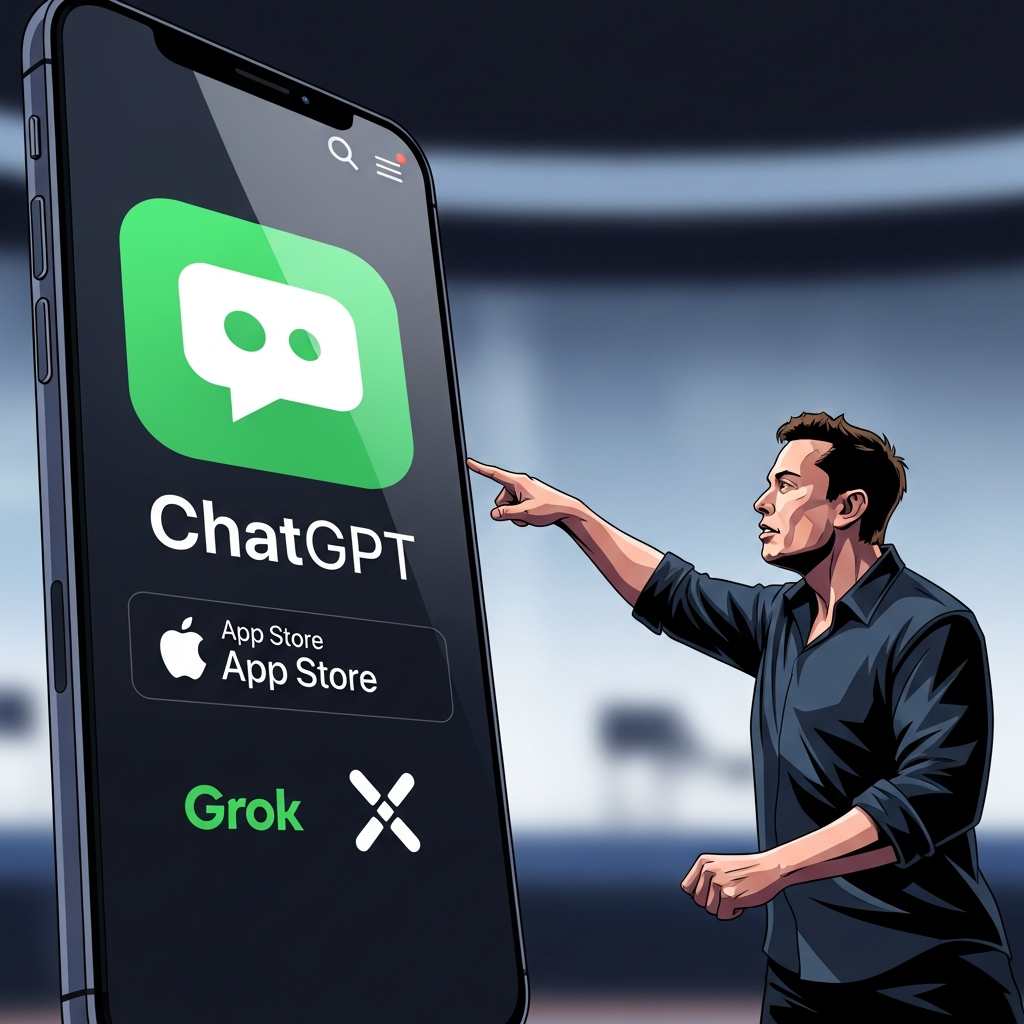
A fierce new front has opened in the ongoing battle between tech giants. This time, it pits visionary entrepreneur Elon Musk against Apple, one of the world’s most powerful companies. At the heart of the dispute are explosive allegations from Musk, who claims Apple’s App Store exhibits a clear bias. He suggests this favoritism unfairly promotes OpenAI’s ChatGPT while sidelining his own ventures, specifically X and the xAI chatbot, Grok. This article dives deep into Musk’s accusations, Apple’s strong rebuttal, and the wider implications for fair competition in the booming AI landscape.
The Spark: Musk’s Allegations of App Store Favoritism
Elon Musk, never one to shy away from controversy, ignited this debate with pointed claims. He publicly alleged that Apple’s App Store provides preferential treatment to OpenAI’s ChatGPT. Musk firmly believes this bias makes it “impossible for any AI company besides OpenAI to reach #1” in the App Store rankings. His concerns highlight a perceived uneven playing field for developers.
Musk didn’t just make broad statements. He presented specific data to support his accusations. He noted that despite his social media platform, X, leading the News category, and Grok 4 being made completely free for all users, Grok’s overall ranking remains low. Grok currently sits around fifth overall and second in the highly competitive Productivity category. In stark contrast, ChatGPT consistently holds the coveted top position. For Musk, these numbers suggest more than just organic user demand at play. He infers a systemic issue preventing other AI chatbots from achieving top-tier visibility.
Apple’s Stance: A Fair and Unbiased Platform?
Apple has not taken Musk’s allegations lightly. The tech giant issued a firm rejection of his claims. In a public statement, Apple reiterated its long-standing policy: “The App Store is designed to be fair and free of bias.” This assertion directly challenges Musk’s narrative of favoritism. The company prides itself on offering a level playing field for all developers.
Apple further explained its ranking and recommendation system. The company states that its platform relies on a sophisticated combination of charts, advanced algorithms, and careful editorial curation. These elements are not arbitrary. Instead, they are based on objective criteria. The goal is to ensure “safe discovery for users and valuable opportunities for developers.” This official explanation aims to underscore transparency and fairness.
A Closer Look at Apple’s OpenAI Embrace
Despite Apple’s declarations of impartiality, there’s an undeniable connection between Apple and OpenAI. This relationship adds a layer of complexity to the App Store bias debate. Apple has visibly embraced OpenAI’s technology in various ways. The company has prominently featured ChatGPT within its App Store editorial content. This kind of promotion can significantly boost an app’s visibility and perceived credibility among users.
More significantly, Apple has deeply integrated OpenAI’s technology into its own ecosystem. This strategic partnership was a cornerstone of the recent Apple Intelligence rollout. OpenAI’s capabilities are now embedded directly into Siri, Apple’s voice assistant. They also power various writing tools across Apple devices. This deep integration raises questions about how a platform can remain entirely unbiased when one competitor’s technology is so intrinsically linked to its own core offerings.
Beyond the Rankings: Musk’s Legal Threats and Broader Tech Battles
The dispute has escalated beyond a mere war of words. Elon Musk has gone so far as to threaten “immediate legal action” over his concerns regarding App Store bias. While no formal lawsuit has been filed yet, the threat itself highlights the seriousness of the situation. Musk is known for pursuing legal avenues when he feels his interests or principles are challenged.
This standoff occurs against a broader backdrop of intense legal scrutiny for Apple. The tech giant is currently facing a major antitrust case from the U.S. Department of Justice. This lawsuit alleges that Apple has illegally maintained a monopoly in the smartphone market. Furthermore, Apple is in the process of appealing a significant court order stemming from a legal battle with Epic Games. That ruling mandated revisions to some of its App Store rules, specifically concerning third-party payment options. These ongoing legal challenges suggest a larger industry-wide conversation about platform power and fair competition.
The AI Landscape: OpenAI’s Growth and GPT-5’s Impact
The context of this controversy is also shaped by OpenAI’s continued rapid growth and innovation. Just prior to the recent launch of GPT-5, OpenAI announced substantial bonus payouts. These bonuses benefited approximately one-third of its workforce, impacting around 1,000 employees. This move underscores OpenAI’s financial success and market position.
The launch of GPT-5 itself further cements OpenAI’s dominance. The advanced AI model is now accessible to all users. Plus subscribers benefit from increased usage limits, while Pro subscribers gain access to GPT-5 Pro. This premium version offers enhanced reasoning capabilities, promising more comprehensive and precise responses. OpenAI’s continuous technological advancements and market success naturally fuel discussions around its competitive advantage and whether that advantage is entirely organic.
What This Means for Developers and Consumers
This high-profile dispute between Elon Musk and Apple carries significant weight. For app developers, it reignites concerns about the perceived gatekeeping power of major app stores. The debate highlights the critical importance of app store visibility for success. If claims of favoritism hold true, it could stifle innovation and limit opportunities for smaller AI companies. This could create an environment where only a select few can thrive, regardless of their technology’s merit.
For consumers, the outcome could impact choice and innovation. A truly unbiased app store fosters a diverse ecosystem of applications. This leads to better products and more competitive pricing. If certain apps are unfairly promoted or suppressed, users might miss out on superior or more innovative alternatives. The ongoing conversation about platform power, fair competition, and the ethical implications of AI development remains crucial.
Frequently Asked Questions
What are Elon Musk’s specific allegations against Apple regarding App Store favoritism?
Elon Musk alleges that Apple’s App Store unfairly prioritizes OpenAI’s ChatGPT. He claims this makes it “impossible” for other AI companies, including his own Grok chatbot, to achieve the top ranking. Musk cites specific data, noting that Grok, despite being free and X leading the News category, consistently ranks lower than ChatGPT in overall and productivity categories. He infers this discrepancy is due to deliberate favoritism, not purely organic user demand.
How does Apple explain its App Store ranking system amidst bias claims?
Apple firmly rejects Musk’s allegations of bias, stating its App Store is “fair and free of bias.” The company explains that its ranking and recommendation system relies on a combination of charts, algorithms, and editorial curation. These elements are based on objective criteria. Apple asserts their system ensures “safe discovery for users and valuable opportunities for developers,” maintaining that rankings are a reflection of user engagement and objective performance metrics, not preferential treatment.
What are the potential implications of this Apple-Musk dispute for AI developers?
This dispute could have significant implications for AI developers. If Musk’s claims gain traction, it might lead to increased scrutiny of app store policies regarding competition and transparency. This could potentially pressure platforms like Apple to further clarify or adjust their ranking algorithms. For smaller AI developers, fairer, unbiased ranking systems could create more opportunities for discovery and growth, fostering a more diverse and innovative AI app ecosystem. Conversely, if current practices continue, it could solidify the dominance of established players and their partners.
The Future of App Store Competition and AI Integration
The clash between Elon Musk and Apple is more than just a public disagreement between two influential figures. It represents a critical inflection point for the tech industry, particularly concerning artificial intelligence. The questions raised about App Store fairness, platform gatekeeping, and the delicate balance between fostering innovation and maintaining control are paramount. As AI continues its rapid integration into our daily lives, the policies governing its distribution and visibility will shape the future of technology. This dispute underscores the urgent need for transparency and equity in the digital marketplace. Both developers and consumers will be keenly watching to see how this high-stakes controversy unfolds.