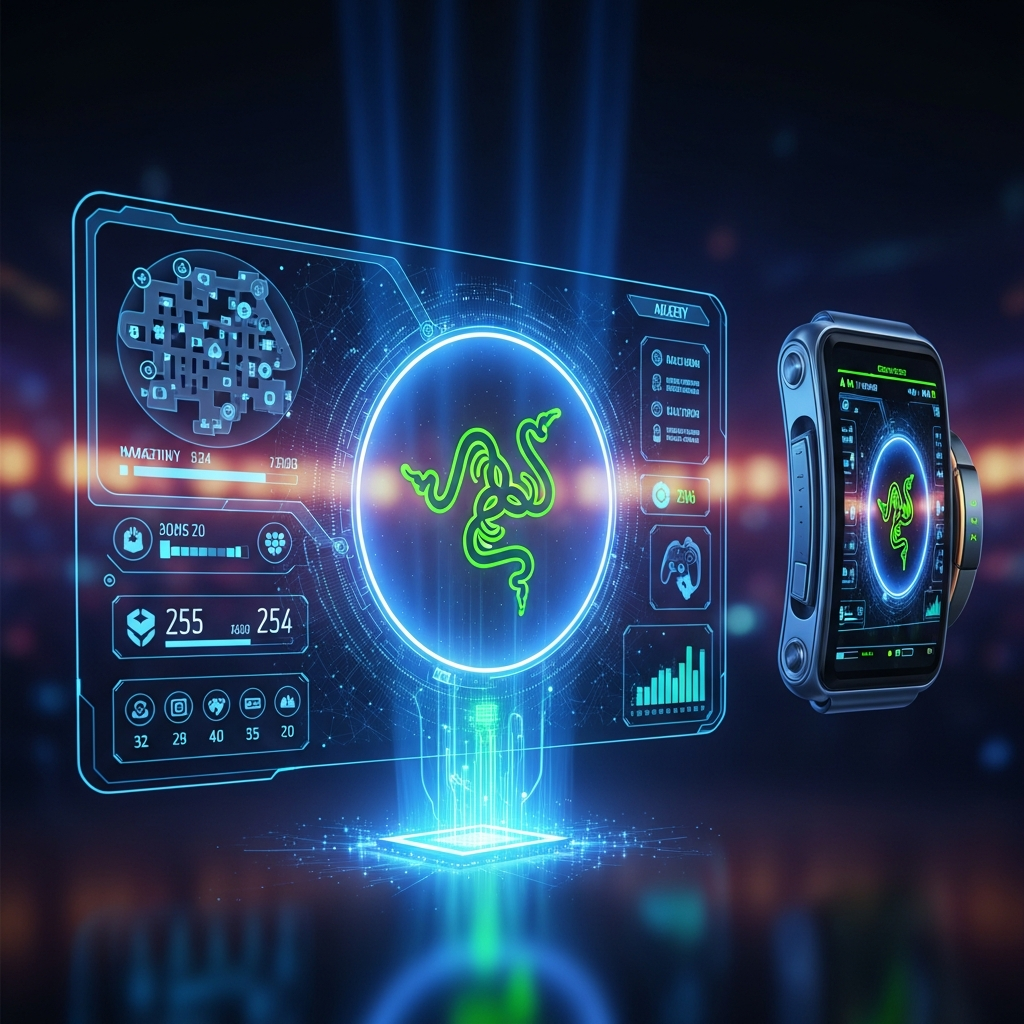
Razer, the global leader in gaming hardware, is embarking on an ambitious journey to redefine interactive entertainment. With a substantial $600 million investment earmarked for artificial intelligence initiatives, the tech giant aims to capture what it calls the “untapped” AI gaming demand. This strategic move, encompassing groundbreaking AI wearables, innovative developer tools, and significant talent acquisition in Singapore, signals Razer’s intent to lead the next wave of technological evolution in gaming. This article dives into Razer’s comprehensive AI strategy, exploring its visionary products and the potential impact on gamers and the broader tech landscape.
Razer’s Bold AI Vision: A $600 Million Commitment to Innovation
Razer’s commitment to artificial intelligence is unequivocal. The company has pledged over $600 million towards AI research and development in the coming years. This massive investment underscores its belief that AI will be central to the future of gaming and consumer electronics. To drive this vision, Razer plans to hire 150 AI scientists, building a formidable team of experts dedicated to pushing technological boundaries.
The decision to go private in 2022 was a strategic enabler for this long-term focus on AI. Unburdened by immediate public market pressures, Razer can now prioritize foundational, multi-year investments. This allows the company to explore innovative concepts that might take longer to mature, but hold immense disruptive potential. Razer’s CEO, Tan Min-Liang, believes AI will organically integrate into gaming, rather than requiring the company to divert from its core audience of 150 million users on its software platform. This organic integration is crucial for mainstream adoption.
Project Motoko: Redefining AI Wearables for the Gaming Era
At the forefront of Razer’s AI push is Project Motoko, an innovative AI wearable concept unveiled at CES 2026. Unlike traditional smart glasses, Motoko integrates advanced AI capabilities directly into a headphone form factor. This unique approach leverages the existing 1.4 billion headset users, offering a more familiar and comfortable entry point into AI wearables.
Project Motoko headphones feature dual first-person-view cameras and multiple microphones. These eye-level cameras are engineered for real-time object and text recognition. Meanwhile, the multi-microphone array captures both near and distant audio, enhancing situational awareness. Powered by Qualcomm Snapdragon silicon, Motoko is designed to integrate seamlessly with leading AI models, including OpenAI, Google Gemini, and xAI’s Grok.
Razer’s strategic decision to use headphones over smart glasses is deliberate. Headphones offer more internal space for components like larger batteries, crucial for extended use. Project Motoko boasts an impressive battery life of up to 36 hours on a single charge, significantly outperforming competitors like Meta’s Ray-Ban AI glasses, which typically offer around six hours. Furthermore, headphones provide superior sound quality, an essential aspect for gamers. Razer notes that most consumers already own audio gear, while regular glasses-wearing is less universal. Prescription wearers also often avoid costly lens investments in smart glasses, making headphones a more accessible wearable for a broader audience.
Groundbreaking Functionalities and Market Potential
The functionalities promised by Project Motoko are diverse and practical. Users can benefit from real-time text translation, custom workout programming based on observed environment, and even recipe suggestions derived from available ingredients. Razer intends to release Project Motoko later this year at a “slight premium” over its current high-end headphones, which retail for about $400. While Project Motoko, like many of Razer’s CES showcases, remains a concept, its potential impact on daily life and gaming interaction is substantial. It demonstrates Razer’s vision for how Razer AI Gaming can move beyond the screen.
Expanding the AI Ecosystem: From Holograms to Developer Tools
Razer’s AI ambitions extend beyond personal wearables. Another intriguing concept, Project AVA, introduces a desk-bound cylindrical device. This holographic AI assistant provides a physical, interactive form for AI, using cameras and microphones to engage with users. Project AVA is slated for release in the second half of 2026, with a $20 reservation fee.
Beyond consumer hardware, Razer is also investing in AI for developers. The Razer QA Companion, an AI tool launched in November 2025, is already transforming game development. This innovative tool assists game developers in identifying 25% more bugs and reducing quality assurance time by a remarkable 50%. Approximately 50 studios have already adopted this solution, showcasing Razer’s expertise in applying AI to practical industry challenges. This dual focus on consumer-facing products and B2B tools highlights a comprehensive Razer AI strategy.
Razer’s Global Growth: Singapore as an AI and Gaming Hub
Razer’s expansion isn’t limited to technological innovation; it also involves significant strategic growth. The company is actively building its presence in Singapore, aiming to boost its local staff count from 600 to 1,000 by 2023. This substantial increase in workforce underpins its aggressive expansion across South-east Asia. It also fortifies capabilities in burgeoning business sectors, including console gaming, cryptocurrencies, and, critically, artificial intelligence.
The opening of Razer’s new $100 million South-east Asia headquarters in Singapore’s one-north technology and business hub underscores this commitment. Razer CEO Tan Min-Liang emphasized the goal to “invest and build a Singaporean gaming and tech ecosystem.” This regional headquarters will generate new roles across hardware, software, and services divisions, particularly seeking engineering talent for new growth categories and personnel for emerging digital services like AI. Singapore is becoming a key hub for Razer AI Gaming development and global reach.
The Broader AI Landscape: Driving Innovation in Creative Industries
Razer’s significant AI investments reflect a broader industry trend where artificial intelligence is rapidly transforming creative and technological sectors. For example, Canva, a design software giant valued at $40 billion, recently acquired Leonardo.AI, an Australian generative AI platform. Leonardo.AI specializes in creating hyper-realistic art and allows users to construct entire ecosystems of consistent-style assets. This unique focus makes it particularly well-suited for professionals in industries like game design and video production.
Notably, Leonardo.AI counts leading AAA gaming studios, including Razer Axon, among its users. This connection demonstrates that even as Razer develops its own AI capabilities, it also leverages advanced external AI tools. Canva’s acquisition aims to integrate Leonardo.AI’s “Phoenix foundational model” into its “Magic Studio” products, empowering professionals with faster, more innovative visual communication tools. This synergy across different tech companies highlights the pervasive influence of AI in democratizing creativity and supercharging human potential, directly impacting how gaming content is created and experienced.
Frequently Asked Questions
What is Project Motoko and why is Razer betting on AI headphones?
Project Motoko is Razer’s innovative AI wearable concept, integrating AI directly into a pair of headphones. It features dual cameras for real-time object/text recognition and multi-microphones for audio capture. Razer is betting on AI headphones due to several strategic advantages: they target the existing 1.4 billion headset users, offer more internal space for components and larger batteries (up to 36 hours), and provide superior sound quality compared to smart glasses. This approach avoids common smart glass limitations like comfort, prescription lens issues, and short battery life, making AI more accessible and practical.
How is Razer expanding its AI capabilities and global presence?
Razer is making a massive $600 million investment in AI research and development, planning to hire 150 AI scientists. Strategically, the company went private to focus on these long-term AI goals. Globally, Razer is significantly expanding its presence in Singapore, aiming to increase its local staff to 1,000 by 2023. This expansion, centered at its new $100 million South-east Asia headquarters, will create new roles in hardware, software, and services, specifically targeting AI, console gaming, and other emerging digital sectors to support its growth across the region.
What impact will Razer’s AI investment have on the gaming industry?
Razer’s substantial AI investment is poised to have a transformative impact on the gaming industry. CEO Tan Min-Liang believes the application of AI in gaming is “completely untapped,” aiming for AI to organically integrate into the gaming experience. Products like Project Motoko could introduce new forms of interactive gameplay and utility, while tools like Razer QA Companion are already streamlining game development by reducing bugs and QA time. By focusing on both consumer wearables and developer tools, Razer is laying the groundwork for more immersive, intelligent, and efficiently produced next-generation gaming experiences, leveraging its 150 million user base.
The Dawn of a New Gaming Era
Razer’s $600 million push into artificial intelligence marks a pivotal moment for the company and the gaming industry. By innovating with products like Project Motoko, a pragmatic yet visionary AI wearable, and supporting developers with advanced AI tools, Razer is not just investing in technology; it is investing in the future of interaction, entertainment, and creativity. As AI continues its rapid evolution, Razer stands poised to lead the charge, transforming the “untapped” potential of Razer AI Gaming into a mainstream reality for millions worldwide. This strategic foresight, coupled with significant talent acquisition and global expansion, positions Razer as a key architect of the next-generation digital experience.