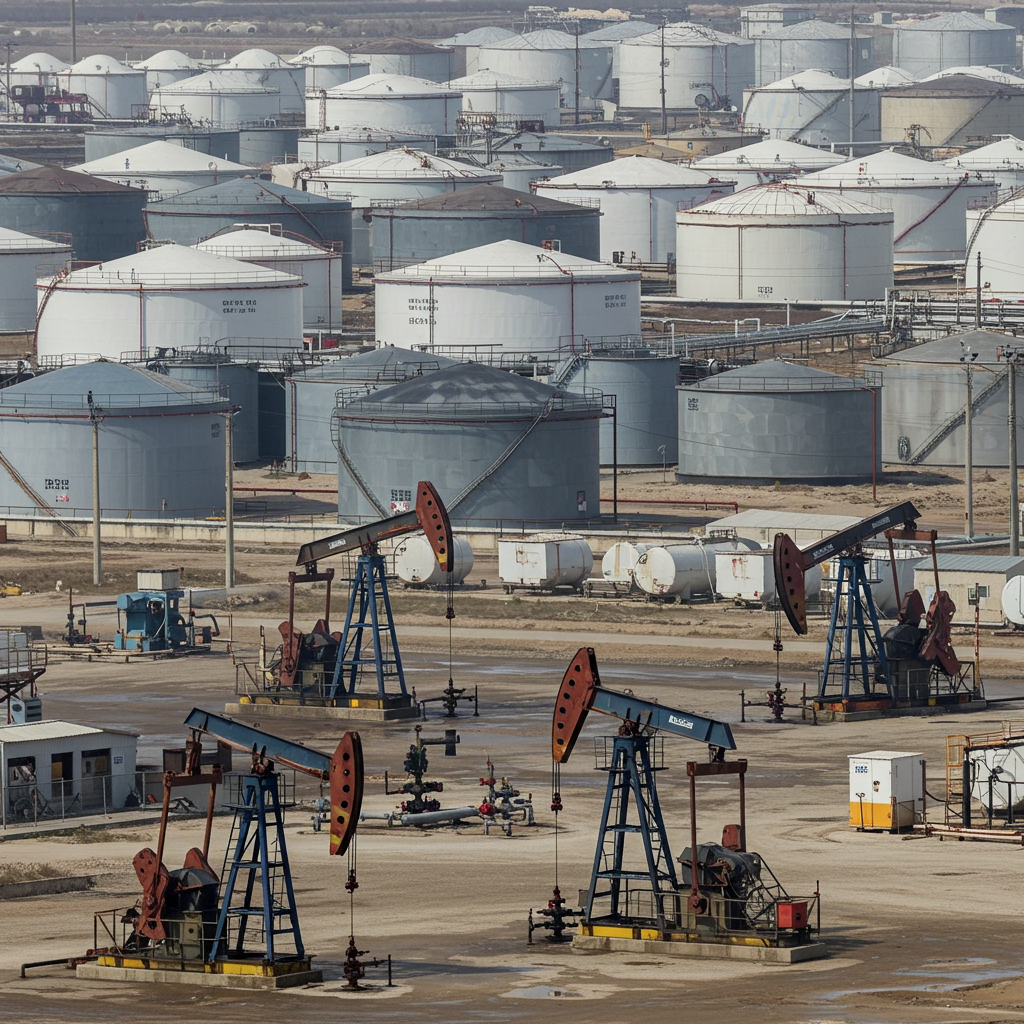
The global oil market is poised for a significant shift. OPEC and its allies, known as OPEC+, have just delivered a surprise move: a rapid acceleration in oil production increases. This pivotal decision is set to flood the market with more crude sooner than anticipated, virtually guaranteeing a return to surplus conditions later this year. For consumers, this could translate to lower fuel costs, a welcome development that aligns neatly with calls from figures like US President Donald Trump for reduced energy prices. However, for oil producers worldwide, from the giants in saudi Arabia to the drillers in the US shale patch, this sudden surge poses a substantial financial challenge, potentially squeezing revenues and forcing strategic reconsiderations.
OPEC+’s Unexpected Decision
In a swift video conference call, the OPEC+ group finalized plans to ramp up oil output more aggressively than previously scheduled. This wasn’t just a minor adjustment; it marked a clear change in strategy. The alliance agreed to bring back a substantial amount of production that had been voluntarily withheld since 2023. This accelerated timeline aims to reverse those cuts much faster than initial plans suggested, pushing significant volumes of crude back onto the market within months.
The Details of the Production Hike
Starting in August, OPEC+ members will collectively increase output by a considerable 548,000 barrels per day (b/d). This is a faster pace than the 411,000 b/d increments seen in prior months. Looking ahead, the group also indicated that another 548,000 b/d increase could be approved for September at their next meeting in early August. If both tranches are implemented, it would effectively complete the reversal of the 2.2 million b/d cuts made in 2023, achieving this milestone a full year earlier than the original roadmap projected. This aggressive schedule reflects a new urgency within the cartel.
Why OPEC+ Feels Confident (For Now)
Despite the long-term forecasts of a surplus, OPEC+ leaders, particularly Saudi Arabia, appear confident that the market can absorb these extra barrels, at least through the summer months. Their optimism is rooted in observations of current physical market indicators. They point to factors like declining US crude inventories, especially at the critical Cushing hub, and sharply depleted US diesel stockpiles as evidence of robust immediate demand. Pricing spreads in the futures market also don’t currently signal an imminent glut.
Further reinforcing this confidence is the decision by state-run Saudi Aramco, the world’s largest oil company, to hike premiums for its flagship crude sold to customers in Asia. These price increases were larger than many analysts expected. This move symbolizes Saudi Arabia’s belief in the market’s current strength and its ability to handle the planned supply boost without triggering an immediate price collapse. Beyond just short-term demand, a strategic motivation for accelerating production is to regain market share lost in recent years to competing suppliers, notably the dynamic US shale industry.
The Skeptical View: Why a Surplus Looms
While OPEC+ expresses near-term confidence, many independent market forecasters hold a significantly more skeptical view regarding the sustainability of current market tightness and the long-term need for the increased supply. They predict a pronounced shift towards a surplus later in the year, particularly in the fourth quarter. Institutions like the International Energy Agency (IEA) were already forecasting a surplus equivalent to roughly 1.5% of global consumption for Q4, even before OPEC+’s latest announcement.
Major investment banks such as Goldman Sachs and JPMorgan Chase have also been forecasting further declines in oil prices. Their predictions suggest prices could fall towards $60 per barrel this year. These bearish forecasts are driven by concerns over factors that could dampen future demand. These include potential faltering economic growth in key markets like China and the possible negative impact of global trade tensions, specifically citing the potential effects of US President Donald Trump’s proposed trade tariffs on global economic activity.
Impact of Global Factors and Tariffs
The specter of trade wars adds another layer of uncertainty to the oil market outlook. President Trump’s administration has indicated plans for higher tariff rates on goods from numerous trading partners. While intended to leverage trade deals, these tariffs can slow global trade and economic growth, directly suppressing demand for energy. The market anticipates that such friction could reduce the amount of oil needed worldwide, reinforcing the expectation of a surplus once OPEC+ adds its planned volumes. This connection between trade policy and energy demand is a key element in the bearish forecasts.
Market Reaction and Compliance Challenges
The oil market’s own behavior has seemed to align more closely with the skeptical forecasts than with OPEC+’s stated confidence. In the two weeks leading up to the OPEC+ decision, oil futures prices in London had already fallen by a notable 11%. This price decline occurred despite ongoing geopolitical tensions, such as the conflict between Israel and Iran, which typically tend to support higher prices due to supply risk fears. The market’s decline before the supply increase was announced suggests that traders were already unconvinced that the market required extra barrels, indicating an underlying expectation of softening demand or ample supply.
While the official announcement details significant supply additions, the actual impact on the physical oil market might be slightly less than the headline numbers suggest. This is because Saudi Energy Minister Prince Abdulaziz bin Salman is reportedly pushing member countries that have a history of producing above their agreed-upon quotas to refrain from taking their share of the new production hikes. Efforts are being made to ensure better compliance. Reports indicate that Russia and Iraq are showing some signs of compensating for past overproduction, though countries like Kazakhstan are noted as continuing to exceed their limits. Despite potential mitigation efforts through compliance enforcement, analysts largely agree that the “official return of barrels” fundamentally alters the supply landscape, setting a clear trajectory towards increased supply and potential oversupply. Some analysts still point to current physical market indicators, like strong diesel premiums, as signs of underlying tightness, arguing that prices may not fall sharply unless these specific indicators show a weakening trend.
Implications for Prices and Producers
The supply additions approved by OPEC+ are conditional. The group retains the flexibility to “pause or reverse subject to evolving market conditions.” However, if these increases proceed as planned, without any change in trajectory, they are expected to “almost inevitably deepen a slide in prices.” This outcome is precisely what US President Donald Trump has advocated for. Lower fuel costs are seen as a way to alleviate cost-of-living pressures on consumers and potentially support his broader economic agenda, including tariff policies and encouraging the Federal Reserve to lower interest rates. The potential price slide from increased OPEC+ supply aligns perfectly with these political goals.
The Strategic Dilemma for Saudi Arabia
Conversely, falling oil prices present a significant challenge for producers. The US shale industry, a key competitor to OPEC and a segment whose executives largely supported President Trump, is already experiencing strain. Recent surveys indicate that US shale companies expect to drill significantly fewer wells this year than initially planned, primarily due to faltering prices making new drilling less profitable. The financial pressure extends to Saudi Arabia itself, despite its confidence and market share goals.
The International Monetary Fund estimates that Saudi Arabia requires oil prices above $90 a barrel to balance its government budget. This level is crucial for funding Crown Prince Mohammed bin Salman’s ambitious economic transformation plans, known as Vision 2030. Riyadh is currently dealing with a rising budget deficit and has already had to scale back spending on some major development projects. While Saudi Arabia possesses the theoretical ability to cut supply if prices fall too far, the current decision suggests a strategic choice. In the face of expected lower prices driven by external economic pressures and increasing non-OPEC supply, Saudi Arabia appears to be prioritizing maintaining its share of the global oil market rather than attempting to prop up prices unilaterally. As one analyst aptly summarized, the decision indicates a choice to “accept the world for what it is” by securing market share in a potentially lower-price environment.
Frequently Asked Questions
Why is OPEC increasing oil production faster than planned?
OPEC+ is accelerating production increases to phase out voluntary cuts implemented in 2023 much sooner than expected. While some analysts are skeptical, OPEC+ leaders believe the market can absorb the extra supply in the short term due to strong summer demand, evidenced by low US crude and diesel inventories. A strategic reason is also to regain market share lost to competing producers like US shale drillers.
How will OPEC’s oil supply increase affect global oil prices?
The accelerated supply increases are expected to push the global oil market into a surplus later this year, particularly in the fourth quarter. This increased supply pressure is likely to lead to lower oil prices, potentially falling towards levels around $60 per barrel according to some major investment banks. The market’s reaction, with prices falling before the decision, already reflected this expectation.
Are market experts forecasting an oil market surplus after the OPEC decision?
Yes, many independent market experts and institutions were already forecasting an oil market surplus later in the year, even before the accelerated OPEC+ production increases were announced. The International Energy Agency (IEA), for example, predicted a Q4 surplus. Major banks like Goldman Sachs and JPMorgan Chase also forecast falling prices, citing factors like weakening demand in China and the potential negative impact of global trade tariffs.
Conclusion
OPEC+’s decision to rapidly increase oil supply is a critical turning point for the market. While the cartel expresses confidence in near-term demand, the consensus among independent forecasters points towards a looming surplus and subsequent price pressure. This strategic gamble by OPEC+ forces producers into a difficult position, particularly impacting the economics of US shale and creating fiscal challenges for states like Saudi Arabia that rely on high oil revenues. As the extra barrels hit the market, the world will watch to see if demand holds sufficiently or if the projected surplus significantly depresses prices, aligning the market outcome with the political objectives of consuming nations like the United States.
Word Count Check: 1085 words