A vital resupply mission soared into orbit on Saturday, April 11, 2026, as a SpaceX Falcon 9 rocket launched Northrop Grumman’s enhanced Cygnus XL cargo spacecraft. This crucial flight, designated NG-24, carried over 11,000 pounds of essential supplies and scientific experiments for the International Space Station (ISS) and its Expedition 74 crew. The successful liftoff from Florida marked another milestone in commercial spaceflight, ensuring astronauts have the resources needed to continue groundbreaking research hundreds of miles above Earth. Following the launch, the Falcon 9 booster executed a flawless landing, showcasing SpaceX’s commitment to reusability and efficiency.
The Mission: Liftoff & Critical Payload
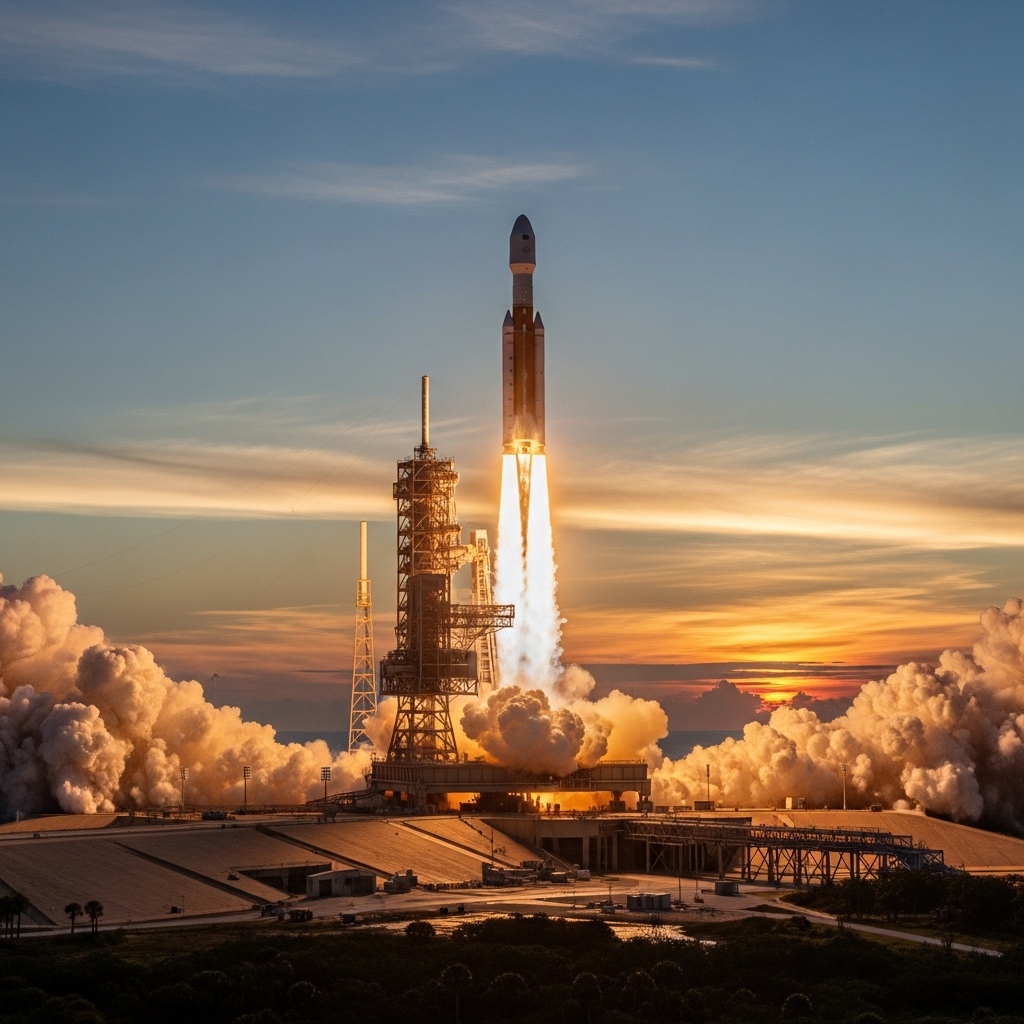
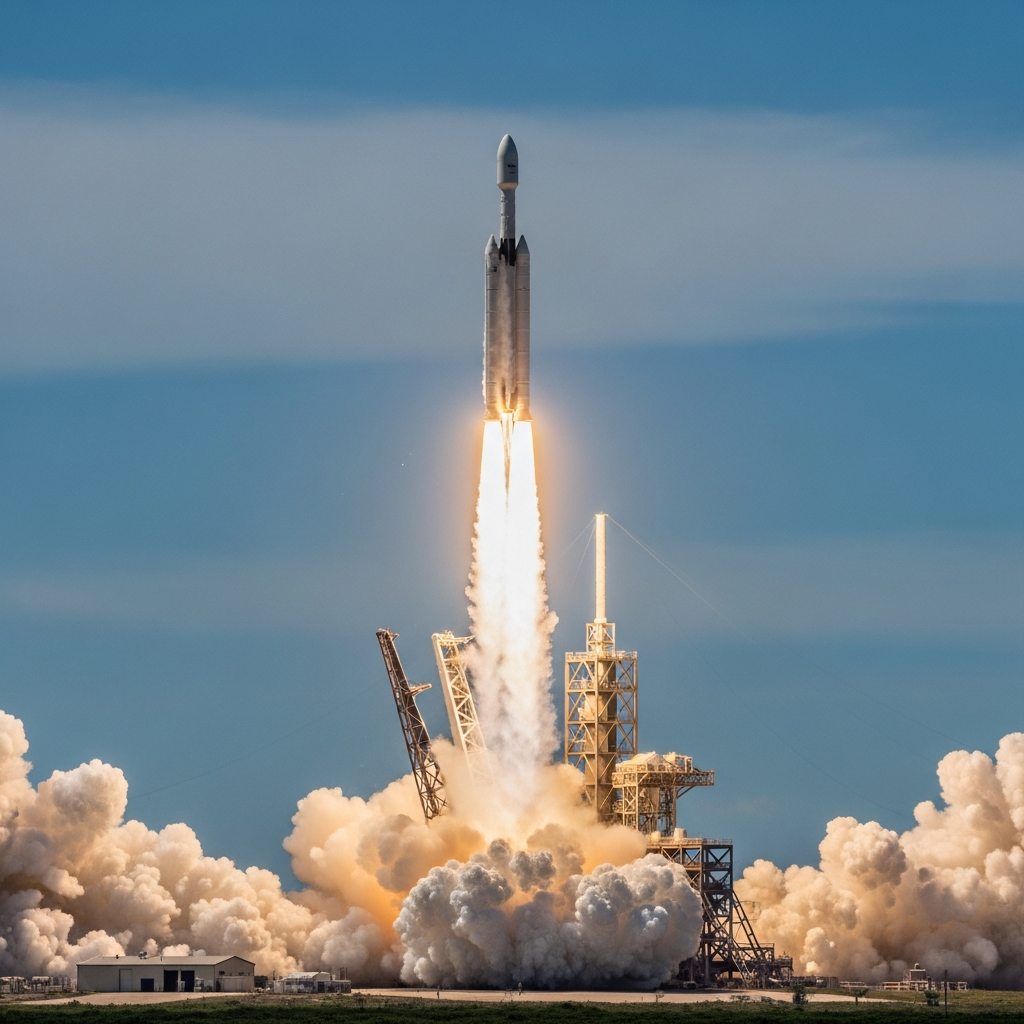
The powerful SpaceX Falcon 9 rocket ignited its engines at precisely 7:41 a.m. EDT (1141 GMT) on April 11, 2026, piercing the blue sky above Cape Canaveral Space Force Station in Florida. This spectacle heralded the start of Northrop Grumman’s 24th resupply mission to the ISS for NASA. The Cygnus XL freighter, packed with nearly 5 metric tons of gear, was on its way to support the orbiting laboratory. NASA spokesperson Sandra Jones highlighted the mission’s importance during live commentary, stating, “And liftoff! Science and supplies soaring to the International Space Station aboard the S.S. Steven R. Nagel.” This delivery is fundamental for maintaining the station’s operational capabilities and enabling ongoing scientific discovery.
A Falcon 9’s Reusable Triumph
Minutes after propelling the Cygnus XL into space, the SpaceX Falcon 9 first stage booster performed an immaculate return to Earth. It executed a controlled descent and made a smooth, upright landing at a SpaceX pad back at Cape Canaveral Space Force Station. This particular booster had a distinguished service record, completing its seventh flight on this mission. Its prior assignments included launching Northrop Grumman’s previous cargo flight (NG-23), NASA’s Crew-11 astronaut mission, Axiom Space’s Ax-4 astronaut flight, and three Starlink satellite deployments. This consistent reusability underscores a significant advancement in spaceflight technology, reducing costs and increasing launch cadence for future missions.
Cygnus XL: A Bigger, Better Cargo Bay
The “XL” in Cygnus XL signifies a substantial upgrade in payload capacity compared to its predecessors. This enhanced version of the Cygnus cargo spacecraft can transport approximately 11,000 pounds (4,990 kilograms) of science equipment and supplies. The original Cygnus variant typically maxed out at about 8,500 pounds (3,856 kg). This increased capacity is critical for delivering more ambitious scientific investigations and essential provisions to the ISS, thereby broadening the scope of experiments conducted by the Expedition 74 crew. The Cygnus XL is also approximately five feet longer than previous versions, allowing for greater volume for both pressurized cargo and disposal waste. The NG-24 mission marks the second flight for this larger Cygnus variant, with the first (NG-23) successfully launching in September 2025.
Honoring a Space Legend: The S.S. Steven R. Nagel
Each Northrop Grumman Cygnus spacecraft is named in honor of a pivotal figure in human spaceflight. For the NG-24 mission, the vessel proudly bears the name S.S. Steven R. Nagel. Steven R. Nagel was a highly respected NASA astronaut who served from 1979 to 1995. An accomplished Air Force test pilot, Nagel flew four Space Shuttle missions, commanding two of them, and accumulated over 720 hours in space. His career showcased immense dedication to space exploration and scientific advancement. Nagel passed away in 2014 at the age of 67 after a long illness, but his legacy continues to inspire the aerospace community, now etched in the stars by this cargo freighter.
Journey to the Orbital Outpost
After its separation from the Falcon 9 upper stage, approximately 14 minutes after liftoff, the NG-24 Cygnus XL began its initial orbital journey. Its crucial solar arrays were scheduled to deploy about an hour after launch, providing power for its two-day transit. The robotic spacecraft is slated to arrive at the International Space Station on Monday, April 13. Live coverage of its arrival will commence at 12 p.m. EDT across NASA+, Amazon Prime, and the agency’s official YouTube channel. NASA astronauts Jack Hathaway and Chris Williams are tasked with capturing the Cygnus XL using the station’s intricate Canadarm2 robotic arm. This delicate capture maneuver is anticipated to occur around 12:50 p.m. EDT, after which the spacecraft will be berthed to the Unity module’s Earth-facing port.
Grappling with Canadarm2
Unlike some other cargo vehicles that perform autonomous dockings, Cygnus spacecraft are specifically designed to be grappled by the ISS’s Canadarm2. This 57.7-foot-long robotic arm is a vital asset for station operations, used for everything from capturing visiting vehicles to moving modules and assisting spacewalkers. Astronauts inside the station meticulously control the arm, bringing the Cygnus in for a secure attachment. This intricate berthing process ensures the cargo ship is safely connected, allowing the crew to begin unloading its valuable contents.
The Lifespan of a Cygnus: Essential But Disposable
While incredibly valuable for delivering supplies, the Northrop Grumman Cygnus XL is a “one-way” vehicle. It is not designed to return to Earth. Instead, after spending several months attached to the ISS and being fully unloaded, the Cygnus will be repurposed. Astronauts will load it with trash and unneeded equipment from the station. Once its mission is complete, the Cygnus XL will be detached from the ISS, perform a controlled de-orbit maneuver, and then burn up safely in Earth’s atmosphere. This process ensures the vehicle’s safe disposal without creating harmful space debris, mirroring the successful conclusion of the first Cygnus XL mission in March 2026.
ISS Resupply: A Fleet of Lifelines
The Northrop Grumman Cygnus XL is one of four robotic cargo spacecraft crucial for servicing the International Space Station. This diverse fleet includes Japan’s HTV-X, Russia’s Progress, and SpaceX’s Dragon. Each plays a vital role in keeping the orbiting outpost operational and well-stocked. A key distinction among these is that SpaceX’s Dragon is currently the only reusable cargo freighter, capable of returning sensitive cargo and research samples to Earth. The Cygnus, HTV-X, and Progress vehicles, by contrast, are single-use and meet a fiery end upon re-entry. Collectively, these missions ensure a steady flow of spare parts, research materials, food, water, and other essential crew supplies, supporting continuous human presence in low Earth orbit. To date, SpaceX has completed over 30 Dragon resupply missions, while Northrop Grumman has now successfully executed 24 Cygnus flights.
Looking Ahead: The Future of Cargo Missions
The NG-24 Cygnus XL mission highlights the ongoing importance of commercial partnerships in supporting the International Space Station. As the station continues its vital research well into the 2030s, reliable and increasingly capable cargo delivery systems like the Cygnus XL will remain indispensable. The increased payload capacity of the “XL” variant allows for more complex experiments and larger quantities of resources, pushing the boundaries of what’s possible in microgravity. These missions also provide invaluable experience for private companies, fostering innovation that will undoubtedly shape future lunar and Martian exploration endeavors. The synergy between government agencies like NASA and commercial entities like Northrop Grumman and SpaceX is a testament to the collaborative spirit driving modern space exploration forward.
Frequently Asked Questions
What is the Cygnus XL, and what vital cargo does it carry?
The Cygnus XL is an upgraded, larger version of Northrop Grumman’s robotic cargo spacecraft designed to resupply the International Space Station (ISS). For the NG-24 mission, it carried approximately 11,000 pounds (nearly 5 metric tons) of critical supplies. This includes science equipment for new experiments, essential crew provisions like food and water, spare parts for station systems, and other maintenance items. The “XL” designation signifies its enhanced capacity compared to earlier Cygnus variants, allowing for more substantial and varied payloads.
Who was Steven R. Nagel, and why was the Cygnus spacecraft named in his honor?
Steven R. Nagel was a distinguished NASA astronaut and Air Force test pilot who served from 1979 to 1995. He completed four Space Shuttle missions, commanding two of them, and accumulated over 720 hours in space. Northrop Grumman names each of its Cygnus spacecraft after individuals who have made significant contributions to human spaceflight. The S.S. Steven R. Nagel for the NG-24 mission honors his profound legacy and dedication to space exploration, ensuring his contributions are remembered as the vessel travels to the ISS.
How does the Cygnus XL compare to other ISS resupply spacecraft?
The Cygnus XL is one of four robotic cargo vehicles that regularly service the ISS, alongside Russia’s Progress, Japan’s HTV-X, and SpaceX’s Dragon. A key distinction is that the Cygnus XL, Progress, and HTV-X are “one-way” vehicles, designed to burn up safely in Earth’s atmosphere after being filled with station waste. In contrast, SpaceX’s Dragon is the only reusable cargo freighter among them, capable of returning sensitive scientific experiments and valuable cargo back to Earth for analysis. The Cygnus XL’s main advantage is its significant cargo volume and payload mass capacity.
Conclusion
The successful launch of Northrop Grumman’s S.S. Steven R. Nagel Cygnus XL, boosted by a SpaceX Falcon 9, represents a continued triumph in commercial space logistics. This NG-24 mission delivered over 11,000 pounds of vital science and supplies, sustaining the incredible work of astronauts aboard the International Space Station. From the precision landing of the Falcon 9 booster, showcasing reusability, to the upgraded capacity of the Cygnus XL itself, each element underscores the relentless innovation driving modern space exploration. As humanity continues to push beyond Earth’s confines, these essential resupply missions, powered by dedicated teams and advanced technology, remain the lifeblood of our endeavors in orbit.