The dream of slowing or even reversing the hands of time on our brains has long captivated scientists. For millions worldwide, the specter of age-related cognitive decline, including memory loss and impaired learning, casts a long shadow. Now, groundbreaking research from the University of California – San Francisco (UCSF) offers a powerful beacon of hope. Scientists have pinpointed a specific protein that appears to drive much of this decline, and, astonishingly, they’ve found a way to stop it in its tracks, with results showing a genuine reversal of impairments in animal models.
The Discovery: Pinpointing FTL1 as a Driver of Decline
Aging takes a significant toll on the hippocampus. This critical brain region is the command center for learning and memory. Understanding what changes here with age has been a central challenge in neuroscience.
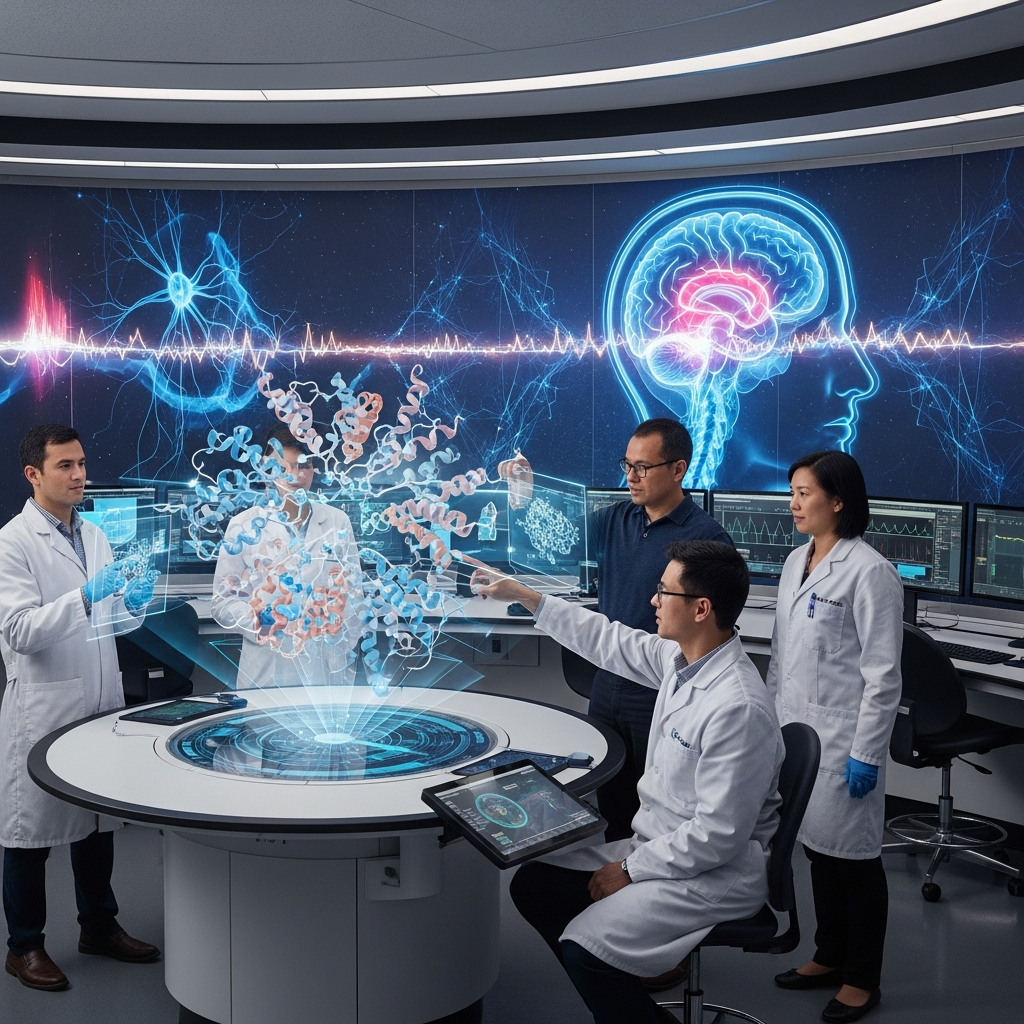
Researchers at UCSF embarked on a meticulous quest. They tracked shifts in genes and proteins. Their focus was the hippocampus of mice over time. Among countless candidates, one protein consistently stood out. It showed stark differences between young and old animals. This protein, identified as FTL1, became the focal point of their investigation.
How FTL1 Accelerates Brain Aging
Older mice consistently displayed higher levels of FTL1. This elevation wasn’t just a passive observation. It directly correlated with significant neurological changes. These changes included fewer connections between neurons in the hippocampus. Furthermore, these older mice performed poorly on cognitive tests. This suggested a clear link between FTL1 levels and diminished cognitive function.
To confirm FTL1’s role, the team conducted a pivotal experiment. They boosted FTL1 levels in young, healthy mice. The results were remarkably swift and stark. The brains of these young mice began to mimic those of much older animals. Both their structure and function shifted dramatically. Their behavior soon reflected this premature aging.
Further lab experiments on individual nerve cells provided more detail. Cells engineered to overproduce FTL1 developed simplified structures. Instead of complex, branching networks, they formed short, single extensions. This structural simplification hinders the efficient communication between neurons, a hallmark of an aging brain.
The Reversal: Turning Back the Clock
The most astonishing findings came from reversal experiments. Researchers decided to reduce FTL1 levels in older mice. The animals showed clear and compelling signs of recovery. Their brains began to rejuvenate. Connections between brain cells notably increased. Their performance on memory tests improved significantly.
Dr. Saul Villeda, a senior author of the study, highlighted the impact. “It is truly a reversal of impairments,” he stated. Dr. Villeda, from the UCSF Bakar Aging Research Institute, emphasized the depth of this breakthrough. “It’s much more than merely delaying or preventing symptoms.” This research, published in Nature Aging, offers a new paradigm for combating age-related cognitive decline.
Understanding the Mechanism: FTL1 and Metabolism
Beyond its structural impact, FTL1 also affects cellular energy use. The study revealed that higher FTL1 levels in older mice slowed cellular metabolism. This refers to the rate at which brain cells produce energy. A sluggish metabolism can impair cellular function. It directly impacts the brain’s ability to learn and remember.
Crucially, researchers found a way to counteract this metabolic slowdown. They treated affected cells with a compound known to boost metabolism. This intervention successfully prevented the negative effects linked to FTL1. This suggests that targeting cellular energy pathways could be a viable therapeutic strategy. It could potentially work in conjunction with FTL1 regulation.
Broader Implications: Hope for Future Treatments
These findings open promising new avenues. Dr. Villeda believes they could pave the way. Treatments that specifically target FTL1 are now a tangible goal. These therapies could counter its detrimental effects in the brain. “We’re seeing more opportunities to alleviate the worst consequences of old age,” he remarked. “It’s a hopeful time to be working on the biology of aging.” This research was supported by organizations like the Simons Foundation and the National Institutes of Health. It underscores a collective effort in this critical field.
Related Research: Other Pathways to Combat Cognitive Decline
The UCSF FTL1 discovery is part of a larger scientific push. Researchers worldwide are tackling neurodegeneration. Diverse strategies are emerging, each offering unique insights.
For instance, separate research from Heidelberg University identified a “death switch” in the brain. This mechanism appears to drive Alzheimer’s disease progression. It involves a toxic interaction. Specifically, the NMDA receptor and TRPM4 ion channel form a “death complex.” This complex damages and kills nerve cells. Scientists developed a compound, FP802. This compound can deactivate the complex in mouse models. It leads to less cellular damage and improved memory. It also reduces amyloid buildup. This suggests a novel therapeutic strategy. Instead of directly targeting plaques, it blocks a downstream cellular mechanism.
Another exciting approach comes from UCSF and Gladstone Institutes. Scientists there identified two existing cancer drugs. Letrozole and irinotecan showed promise. They could reverse some Alzheimer’s brain damage in mice. These drugs, already FDA-approved for cancer, target different aspects of the disease. Letrozole acts on neurons. Irinotecan affects glia. This combination therapy was discovered using computational mapping. This approach identifies drugs that reverse Alzheimer’s gene expression patterns. These diverse research efforts highlight the multi-faceted nature of brain aging. They also demonstrate the innovative methods being used to find solutions.
What This Means for You: Looking Ahead
While the FTL1 findings are in mice, their implications are profound. They suggest a future where age-related cognitive decline might be manageable. Even reversal could be possible for humans. This is a significant leap beyond merely delaying symptoms. It offers genuine hope for a healthier, more vibrant cognitive future.
However, clinical use in humans is still a journey. Extensive pharmacological development is needed. Toxicological testing and comprehensive clinical trials are next. But the initial findings provide a strong foundation. They validate FTL1 as a critical target. Continued research and investment will be crucial. These efforts will translate laboratory breakthroughs into real-world treatments. Staying informed about these scientific advancements is vital. It prepares us for a future where brain aging could be less of a threat.
Frequently Asked Questions
What is FTL1 protein, and how does it contribute to brain aging?
FTL1 is a specific protein identified by UC San Francisco scientists. It was found at consistently higher levels in the hippocampus of older mice compared to younger ones. This elevation of FTL1 appears to drive age-related cognitive decline. It does this by reducing connections between brain cells (neurons) and slowing down cellular metabolism, which impairs the brain’s ability to learn and remember. In lab experiments, higher FTL1 levels caused nerve cells to develop simplified structures, hindering effective neural communication.
Can these FTL1 findings lead to treatments for human cognitive decline?
Yes, the findings are highly promising for human applications. The research has paved the way for developing treatments that specifically target FTL1. By reducing FTL1 levels, scientists observed a “reversal of impairments” in older mice, including increased brain cell connections and improved memory. While human clinical trials are still in the future, this discovery provides a powerful new therapeutic target for age-related cognitive decline, potentially offering more than just delaying symptoms but actively reversing them.
How does FTL1 research compare to other brain aging discoveries?
The FTL1 research offers a novel approach by targeting a specific protein causing structural and metabolic changes in the hippocampus. This differs from other strategies, such as Heidelberg University’s work on deactivating a “death complex” (NMDA/TRPM4 interaction) that drives Alzheimer’s progression. Another approach involves repurposing existing cancer drugs (letrozole and irinotecan) to reverse Alzheimer’s damage by altering gene expression, as researched by UCSF/Gladstone. All these efforts, including the FTL1 study, represent distinct but complementary pathways in the urgent quest to combat various forms of neurodegenerative disease and cognitive decline.
A Future of Sharper Minds
The journey to unlock the secrets of brain aging is long and complex. Yet, discoveries like that of the FTL1 protein ignite immense hope. They highlight the incredible potential of scientific inquiry. We are at the cusp of a new era in brain health. An era where age-related cognitive decline may no longer be an inevitable part of aging. With continued dedication, the vision of a future with sharper minds for longer becomes increasingly real.