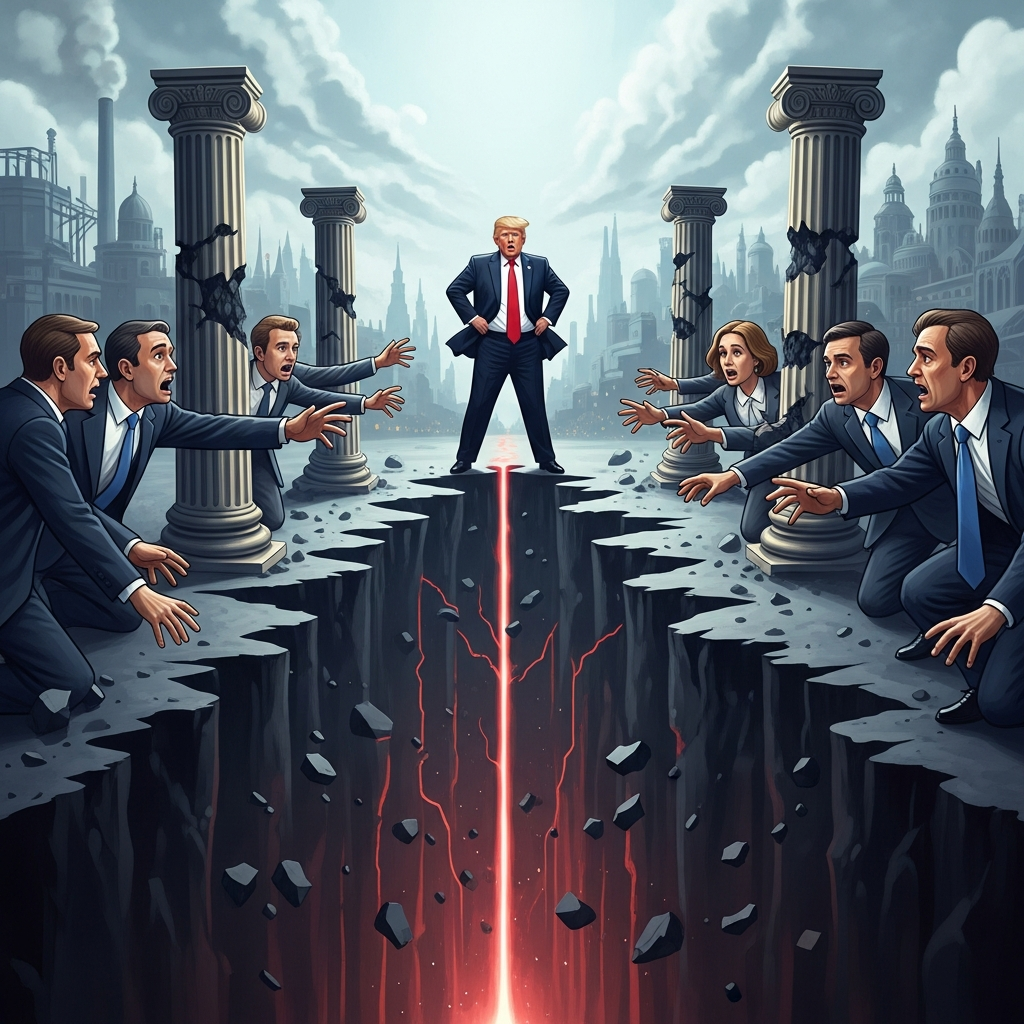
The foundational pillars of the transatlantic alliance, long considered inviolable, are shaking. As former U.S. President Donald Trump’s influence reasserts itself, a deep chasm is widening between America and its European allies. This rift, exacerbated by recent aggressive U.S. demands and differing geopolitical priorities, has left many European leaders fearing a genuine and potentially irreversible U.S. withdrawal from NATO. The very fabric of the North Atlantic Treaty Organization, forged in the crucible of post-war unity, now faces its most significant challenge. This growing uncertainty has Europe grappling with an unprecedented question: how to secure its future without a reliably steadfast American partner?
The Deepening Transatlantic Divide
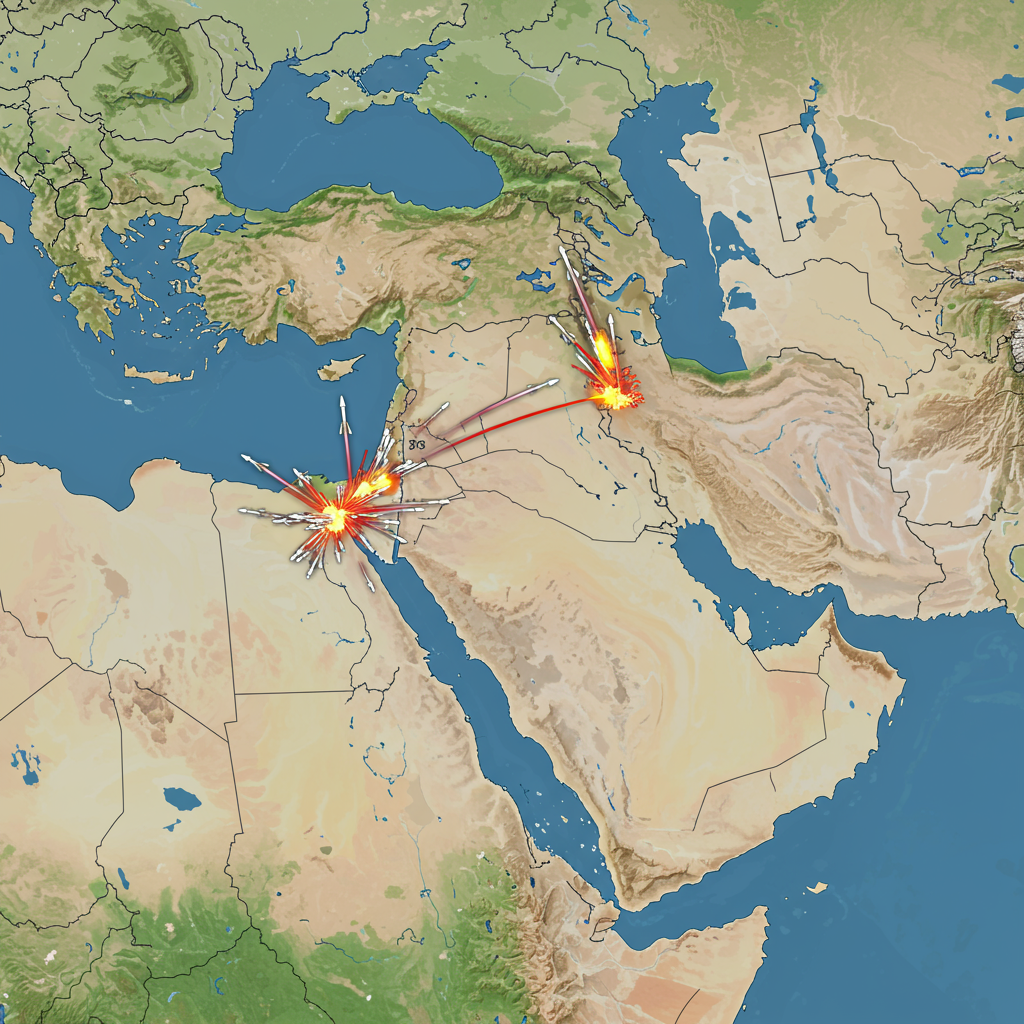
Historically, non-European conflicts have often tested NATO’s unity. Crises like the Suez conflict, the Vietnam War, and the invasion of Iraq each strained the alliance. Today, America’s air campaign in the Middle East, particularly against Iran, coupled with its aggressive stance on other issues, threatens to tear the alliance apart. Donald Trump has expressed profound frustration with European allies, especially their reluctance to support U.S. operations aimed at reopening the Strait of Hormuz. More concerning, some European countries have actively complicated American military efforts in the region, fueling Trump’s resentment.
Trump’s Doctrine: From Iran to Greenland
Trump’s foreign policy, characterized by an “America First” ethos, views the transatlantic alliance through a transactional lens. His demands extend beyond military cooperation. He has vehemently pushed for the United States to acquire Greenland, a semi-autonomous territory of Denmark, citing U.S. national security imperatives. Trump believes Denmark, a NATO member, is incapable of adequately protecting Greenland from encroaching Russian and Chinese interests. He has reportedly threatened punitive tariffs on European exports if Denmark and its allies do not comply with this demand. This audacious proposal, dismissed by experts as a “gangster-like demand,” signals a fundamental shift in U.S. expectations of its partners.
Europe’s Breaking Point: From Accommodation to Confrontation
For years, European leaders attempted a “softly-softly” approach to manage Trump’s unpredictable behavior. However, his renewed insistence on acquiring Greenland, combined with the threat of severe economic repercussions, has reached a breaking point. As one German Finance Minister reportedly declared, “we will not allow ourselves to be blackmailed.” The idea of an ally using economic coercion as a “geopolitical weapon” has pushed Europe into “uncharted territories,” according to France’s Finance Minister. European public opinion largely opposes such moves, with polls showing a significant majority of Americans also against a forced acquisition of Greenland.
Responding to Pressure: Europe’s Strategic Recalibration
Facing what they perceive as an existential threat to their sovereignty and economic stability, European nations are now adopting a more assertive, two-pronged approach. This “good cop, bad cop” strategy, reminiscent of Theodore Roosevelt’s “speak softly, while carrying a big stick,” aims to compel Trump to compromise.
A Unified Front: Economic Leverage and Diplomatic Outreach
The “good cop” involves offering to support the U.S. in prioritizing Arctic security, suggesting collaborative efforts rather than unilateral demands for territorial transfer. Meanwhile, the “bad cop” is a credible threat of retaliation. EU diplomats are reportedly considering imposing €93 billion (approximately £80 billion) in tariffs on U.S. goods or restricting access for American businesses to the EU’s vast single market. As the world’s largest trader of goods and services, the EU wields immense economic power. This unified economic front aims to make the cost of Trump’s adventurism too high, potentially leading him to gain Greenland but lose crucial allies and face increased consumer costs back home.
Beyond direct confrontation, Europe is planning a coordinated strategic communication campaign. This involves extensive outreach to the U.S. Congress, state governors, American communities of European descent, and businesses with European ties. European leaders plan a “charm offensive” across U.S. states, supported by a European-funded social media campaign designed to counter anti-EU narratives. The goal is to appeal to the broader American public, who, according to polls, do not widely share Trump’s hostile views toward long-standing allies.
Ukraine: A Crucial Test of European Resolve
The ongoing war in Ukraine significantly complicates the transatlantic dynamic and highlights Europe’s vulnerabilities. Many European governments have mistakenly viewed their support for Ukraine as a detached endeavor. However, experts emphasize that Ukraine’s security is inextricably linked to Europe’s. Russia already considers itself at war with Europe, employing disinformation, drone incursions, and other disruptive tactics. Ukraine, despite enormous casualties, is actively reducing the threat to Europe by pinning down Russian forces. Yet, Ukraine faces a severe disadvantage in population and resources, making a long war of attrition unsustainable without robust and consistent external support.
Under a potential future Trump administration, U.S. military and financial aid to Ukraine could dwindle or even cease. Trump has consistently shown an affinity for Russian President Vladimir Putin, portraying the U.S. as a mediator rather than an adversary. He has blamed Ukraine for the conflict and pressured President Zelenskyy for concessions while making no demands on Putin. This stance, reflected in a reported U.S.-proposed peace plan in November 2025 that would have forced Ukraine to cede critical territory, underscores Trump’s disregard for Ukraine’s sovereignty and Europe’s security.
NATO’s Legal Labyrinth: Can the U.S. Really Withdraw?
The question of whether a U.S. President can unilaterally withdraw from NATO is fraught with legal complexity. While the National Defense Authorization Act (NDAA) of 2024 aimed to prevent such a move without congressional approval, legal experts deem these constraints “far from solid.” Trump could attempt to invoke broad presidential authority over foreign policy or claim withdrawal is necessary for national defense as Commander-in-Chief.
This potential constitutional showdown, likely to be challenged in court, would have profound implications. Regardless of the legal outcome, the mere suggestion of a U.S. exit significantly “erodes trust, cohesion, and the credibility of collective defense,” according to legal scholars. Such uncertainty weakens deterrence and emboldens potential adversaries, directly challenging NATO’s foundational principle of collective defense under Article 5.
Beyond the Brink: Long-Term Implications and Europe’s Path Forward
A major break between the U.S. and Europe would create a substantial opening for other global powers, particularly China, allowing its influence to expand unchecked. Russia, already observing the “unravelling” of the Western alliance, would also see an opportunity to sow further discord. Trump’s disregard for multilateral institutions, evident in his efforts to establish alternative bodies like a “Board of Peace” to rival the UN, further undermines global cooperation.
Strategic Autonomy and Deterrence
Europe must urgently prepare for a future with minimal, or even no, U.S. support. This requires accelerating the build-up of conventional forces and integrating European and Ukrainian military capabilities. Given that Russia’s 2024 defense spending outpaced all European countries combined (on a purchasing power parity basis), Europe’s defense industry must reconfigure for large-scale production. Critical capabilities, such as intelligence and command and control systems, traditionally provided by the U.S., need European alternatives. Furthermore, European nuclear powers like the UK and France may need to extend their nuclear protection to other European countries to provide a credible deterrent against Russian aggression.
European leaders face a difficult balancing act: uphold international principles and sovereignty while mitigating the domestic economic concerns of a potential transatlantic trade war. Unity among all European nations, including the UK, is paramount. The current crisis, while alarming, could inadvertently push multilateral institutions to modernize and compel Europe to “grow a spine” and assume greater responsibility for its own security.
Frequently Asked Questions
What key events are driving the current crisis in the transatlantic alliance and fears of a US NATO withdrawal?
The crisis stems primarily from Donald Trump’s aggressive foreign policy and transactional view of alliances. Key drivers include his anger over Europe’s refusal to assist in a U.S. war against Iran, his unprecedented demand to acquire Greenland from Denmark, and his skepticism regarding continued U.S. military and financial aid to Ukraine. These actions have exposed deep ideological differences and fueled concerns that the U.S. may abandon its long-standing commitments to NATO.
How are European leaders responding to escalating US demands and potential NATO instability?
European leaders initially pursued a conciliatory “softly-softly” approach but have now shifted to a more assertive “good cop, bad cop” strategy. The “good cop” involves offering collaboration on Arctic security. The “bad cop” is a credible threat of economic retaliation, including imposing significant tariffs on U.S. goods or restricting access for American businesses to the EU market. Additionally, Europe is planning extensive diplomatic outreach to the U.S. public and Congress to counter anti-EU narratives.
What are the potential long-term consequences for European security if the United States weakens its commitment to NATO?
A weakened U.S. commitment to NATO could have catastrophic long-term consequences for European security. It would embolden adversaries like Russia and China, potentially leading to increased aggression and instability. Europe would be forced to rapidly accelerate its own defense capabilities, assume greater responsibility for collective security, and find alternatives to crucial U.S. intelligence and command-and-control systems. This shift could fundamentally alter the geopolitical landscape, eroding trust in multilateral institutions and fostering greater European strategic autonomy.
Conclusion
The transatlantic alliance stands at a critical juncture. The specter of a U.S. withdrawal from NATO, driven by an unpredictable foreign policy and increasingly divergent priorities, forces Europe to confront its greatest security challenge since the Cold War. While the legalities of a U.S. exit remain murky, the mere threat has already eroded trust and cohesion within the alliance. Europe’s path forward demands a unified, assertive stance: a recalibration of its own defense capabilities, a strategic use of its formidable economic leverage, and a clear articulation of its sovereign interests. Only by demonstrating strength and unity can Europe navigate this unprecedented crisis, safeguarding its security and preserving the values that underpin the transatlantic relationship, even if the nature of that relationship is forever altered.