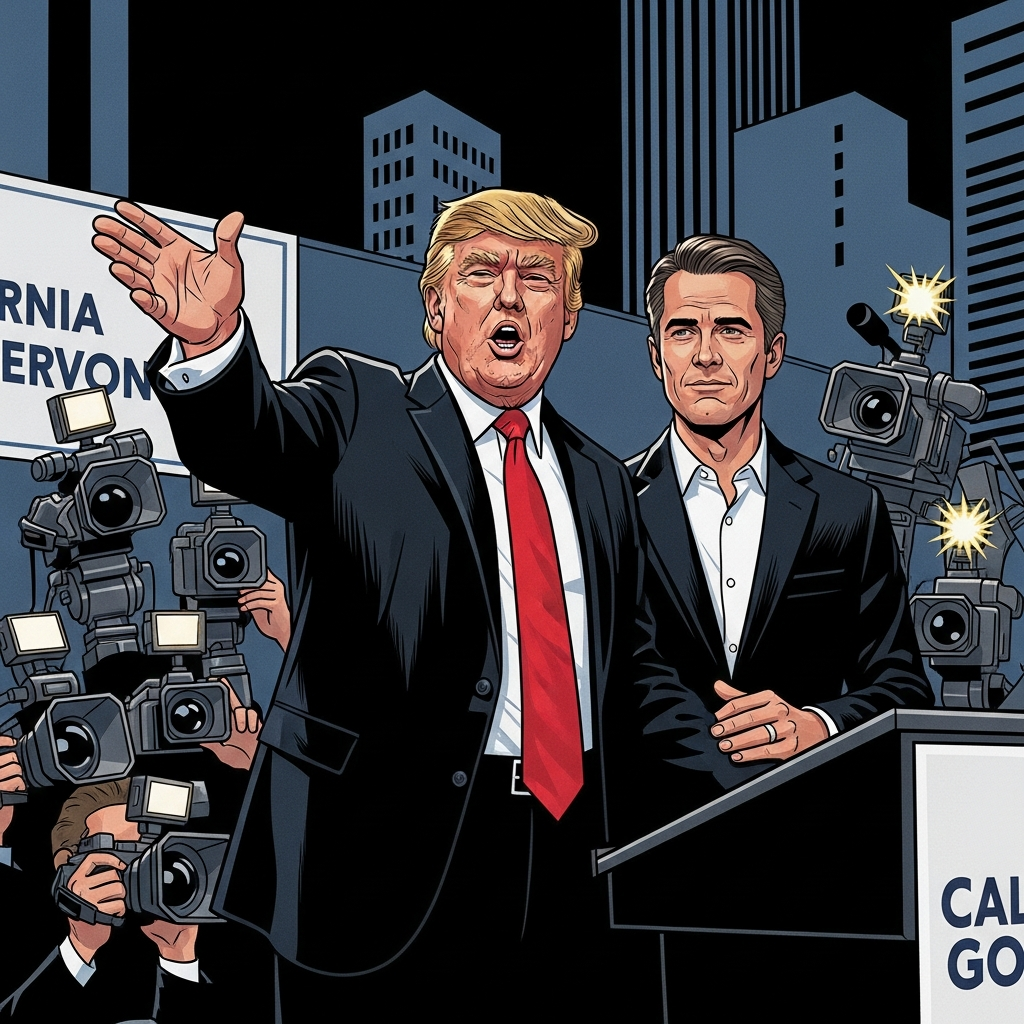
President Donald Trump announced the temporary withdrawal of National Guard troops from Chicago, Los Angeles, and Portland, Oregon. This significant policy shift comes in the wake of a series of decisive legal defeats that largely curtailed his administration’s ability to deploy federalized troops in these Democratic-led cities. While Trump claimed the presence of these forces had “greatly reduced” crime, state and local officials celebrated the decision as a victory against perceived federal overreach and the politicization of military assets. This article delves into the legal challenges, political reactions, and broader implications of Trump’s National Guard withdrawal.
The Unprecedented Federal Intervention
Beginning in early 2025, President Trump initiated federal deployments of the National Guard to several U.S. cities, including Chicago, Los Angeles, and Portland. These actions were part of a broader “crime crackdown” initiative. The administration cited rising crime rates and the need to protect federal personnel and property amidst protests, particularly those related to immigration enforcement. Trump frequently framed these deployments as essential for restoring order in cities he characterized as struggling with crime and instability.
A Standoff in Key Cities
The federalization of National Guard troops in these cities quickly sparked controversy and legal challenges. In Chicago, troops were sent but never actively deployed on the streets due to immediate legal roadblocks. Similarly, troops designated for Portland faced swift judicial opposition. Los Angeles saw an initial deployment, but their presence was met with legal action and strong pushback from state officials, leading to a gradual scaling back of federal control. Governors and mayors in these localities argued that the deployments were unwarranted, unconstitutional, and an attempt to use military forces for political purposes. They accused the administration of “dangerous political theatre” rather than genuine public safety efforts.
A Cascade of Legal Defeats: The Courts Weigh In
The primary impetus behind Trump’s withdrawal was a series of adverse court rulings that systematically dismantled his administration’s legal justification for the deployments. These legal setbacks highlighted the critical boundaries between federal and state authority regarding domestic military operations.
Supreme Court’s Pivotal Role in Chicago
A landmark decision came from the Supreme Court, which refused to allow the Trump administration to deploy federalized National Guard troops in the Chicago area. This ruling, issued after a delay of more than two months, was a significant defeat for the president. The high court majority stated that the government had “failed to identify a source of authority that would allow the military to execute the laws in Illinois” at this preliminary stage. Justice Brett Kavanaugh, while agreeing to keep the Chicago deployment blocked, suggested more presidential latitude in future scenarios. Three conservative justices—Samuel Alito, Clarence Thomas, and Neil Gorsuch—publicly dissented, arguing the court had no basis to reject the administration’s claim for enforcing immigration laws. This decision, though not a final ruling, set a powerful precedent impacting other ongoing lawsuits nationwide.
Battles Beyond Chicago: California and Oregon Rulings
Beyond Illinois, the Trump administration faced similar legal hurdles. In Portland, a federal judge issued a permanent injunction, definitively blocking the deployment of National Guard troops there. All 200 California National Guard troops, initially federalized for deployment in Oregon, were subsequently sent home.
California also saw a significant legal reversal. Following a ruling by U.S. District Judge Charles Breyer, the Department of Justice withdrew its request to maintain federal control over troops in Los Angeles. This effectively mandated their return to state control under Governor Gavin Newsom. Critics, including California Attorney General Bonta, decried the six-month deployment as using troops as “political pawns” and highlighted their “unlawful participation in indiscriminate immigration raids.”
Political Reactions and Lingering Questions
The withdrawal announcement triggered a wave of reactions from across the political spectrum, underscoring the deep divisions surrounding the federalization of military forces in domestic matters.
Governors’ Triumph and White House Response
Democratic governors and city mayors widely celebrated the news. Illinois Governor JB Pritzker hailed the Supreme Court’s decision as a “big win for Illinois and American democracy,” arguing that Trump was “forced to stand down.” Chicago Mayor Brandon Johnson echoed this sentiment, calling the ruling a rebuke of Trump’s attempts to “militarize and demonize our city.” California Governor Gavin Newsom’s office famously remarked that Trump’s announcement was the political equivalent of “you can’t fire me, I quit,” implying the withdrawal was compelled by the courts.
Conversely, the Trump administration maintained its stance. White House spokeswoman Abigail Jackson asserted that the president had activated the Guard to protect federal personnel and property from “violent rioters.” She added that “nothing in today’s ruling detracts from that core agenda,” vowing the administration would continue to safeguard the American public. A Department of Justice spokesperson reiterated the Guard’s instrumental role in the president’s efforts to reduce crime and enforce laws.
The Specter of Future Deployments
Despite the withdrawals, President Trump’s social media post carried a stark warning: “We will come back, perhaps in a much different and stronger form, when crime begins to soar again – Only a question of time!” This statement suggests that the administration views the current pullback as temporary. It raises the possibility of future interventions, potentially under different legal or operational frameworks, reigniting concerns about the sustained role of federal forces in local law enforcement.
Broader Implications for Federal vs. State Authority
The string of judicial rulings against federalized National Guard deployments holds profound implications for the balance of power between the presidency and individual states. These cases serve as a critical reassertion of state sovereignty and the limits of presidential authority in domestic affairs.
Defining the Boundaries of Presidential Power
Legal experts, like ABC7 Chief Legal Analyst Gill Soffer, explained that the Supreme Court’s decision affirmed the president’s ability to federalize the National Guard. However, it clarified that this power is contingent on the U.S. military having the authority to enforce the specific laws in question and being otherwise unable to enforce them. The court determined that the federalized Guard deployments in these cases did not meet this stringent legal threshold. This underscores that unilateral federal military deployment without a state’s request or the invocation of specific acts like the Insurrection Act of 1807 faces significant judicial scrutiny.
The Role of the National Guard: Civilian or Military?
These legal battles also underscored the nuanced role of the National Guard. While Guard members can be federalized for specific missions, their primary purpose is generally to serve their state under the command of the governor. When federalized, their roles often shift to support functions like guarding federal buildings or assisting immigration enforcement, as was the case here. Critically, without the invocation of the Insurrection Act, they are legally barred from direct law enforcement activities against civilians. This distinction became a central point of contention, with state officials emphasizing the fundamental principle of keeping military and civilian affairs separate and apolitical. While deployments in Washington, D.C. (a federal territory) and New Orleans (at the request of a Republican governor) continued, the decisions in Chicago, LA, and Portland reinforced the critical role of state consent in federal military actions within state borders.
Frequently Asked Questions
Why did President Trump withdraw the National Guard from Chicago, LA, and Portland?
President Trump announced the withdrawal of National Guard troops from these cities primarily due to a series of significant legal setbacks. Courts, including the Supreme Court regarding Chicago, ruled against the administration, finding a lack of legal authority for these federalized deployments without state consent or specific circumstances like a “danger of rebellion.” These judicial decisions effectively blocked the administration’s ability to maintain federal control over the Guard for its stated purposes of crime reduction and immigration enforcement in these areas.
What was the National Guard’s role during these federal deployments?
During these federalized deployments, the National Guard’s role was largely restricted due to ongoing legal challenges. Their primary duties were confined to guarding federal buildings and providing support services for immigration enforcement. Crucially, without the invocation of the Insurrection Act of 1807, they were legally barred from directly participating in local law enforcement activities or policing protests on city streets. This limitation was a point of contention and a key factor in the legal rulings against their broader deployment.
What precedent did the Supreme Court’s ruling set for presidential authority in domestic troop deployments?
The Supreme Court’s refusal to allow the Chicago deployment set a significant precedent by clarifying limits on presidential authority for federalizing the National Guard in domestic contexts. The ruling indicated that the president’s power to deploy troops within states is not unilateral; it requires the federal military to have specific authority to execute the laws in question and be unable to do so through ordinary means. This reinforces state sovereignty and suggests that presidents cannot easily federalize state-controlled military assets for general law enforcement or political purposes without meeting a high legal threshold or obtaining state consent.
Conclusion
The withdrawal of National Guard troops from Chicago, Los Angeles, and Portland marks a crucial juncture in the ongoing debate over federal power and state sovereignty. Triggered by a decisive series of legal defeats, most notably from the Supreme Court, this event underscored the constitutional limits on a president’s ability to deploy federalized military forces within state borders. While President Trump hinted at a potential return “in a much different and stronger form,” the rulings provided a clear reassertion of judicial oversight and the vital distinction between federal and state authority. This outcome offers valuable insights into the legal frameworks governing domestic military deployments and the critical checks and balances designed to protect civilian control and prevent the politicization of armed forces.