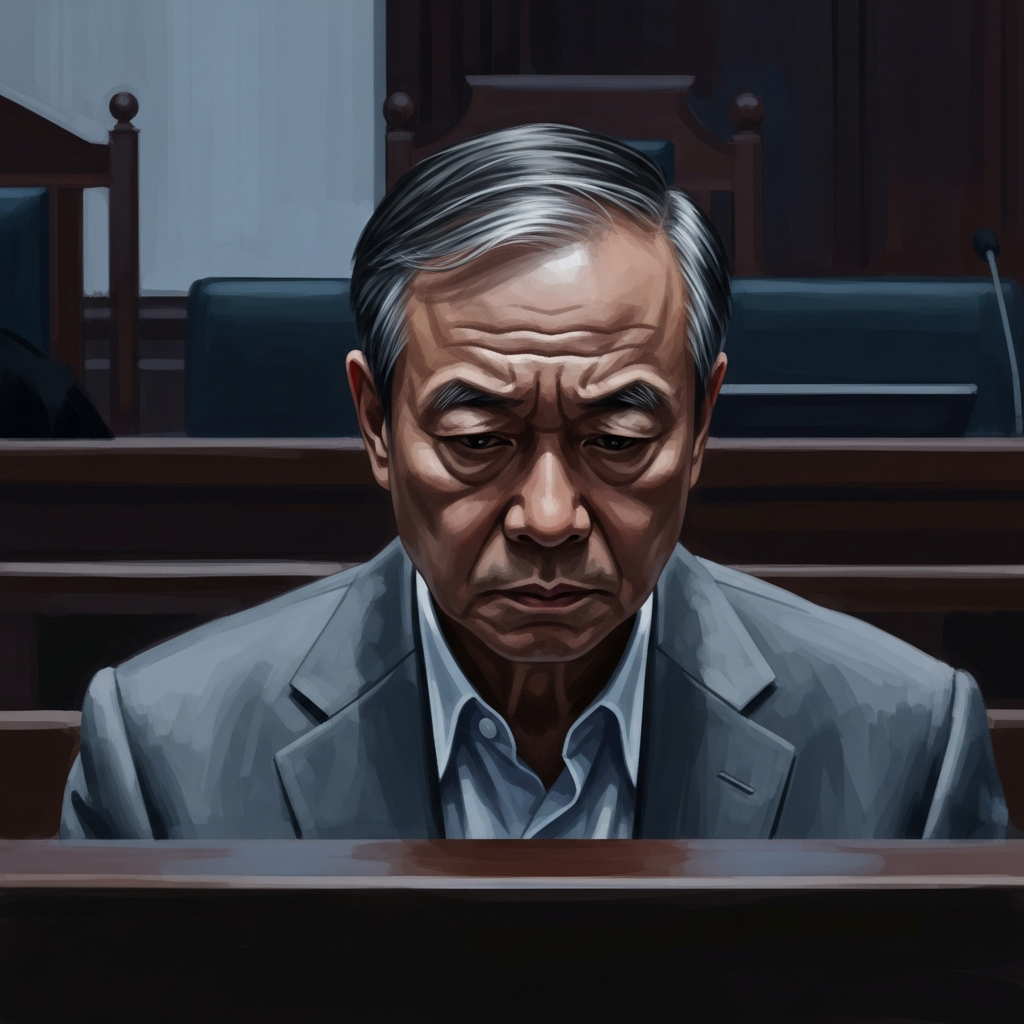
Hong Kong has delivered a historic verdict, finding pro-democracy activist and media titan Jimmy Lai guilty on national security charges. This pivotal decision, announced on December 15, 2025, marks a significant moment for both Hong Kong’s judicial independence and global press freedom. Lai, a 78-year-old British citizen, now faces a potential life sentence, with the ruling drawing immediate and widespread international condemnation.
The conviction of Lai, a prominent critic of Beijing and a symbol of Hong Kong’s pro-democracy movement, concludes a lengthy and closely watched trial. His case is widely seen as a litmus test for the city’s promised “high degree of autonomy” and civil liberties, which many argue have eroded since Beijing imposed the National Security Law (NSL) in 2020. This verdict underscores the profound transformation of the once-vibrant semi-autonomous city.
Landmark Conviction: Charges and Courtroom Drama
Jimmy Lai was found guilty on multiple serious charges by a Hong Kong national security court. These include two counts of colluding with foreign forces and an additional sedition charge under a separate, colonial-era law. The extensive 855-page verdict, issued more than five years after his initial arrest in 2020, detailed the court’s findings.
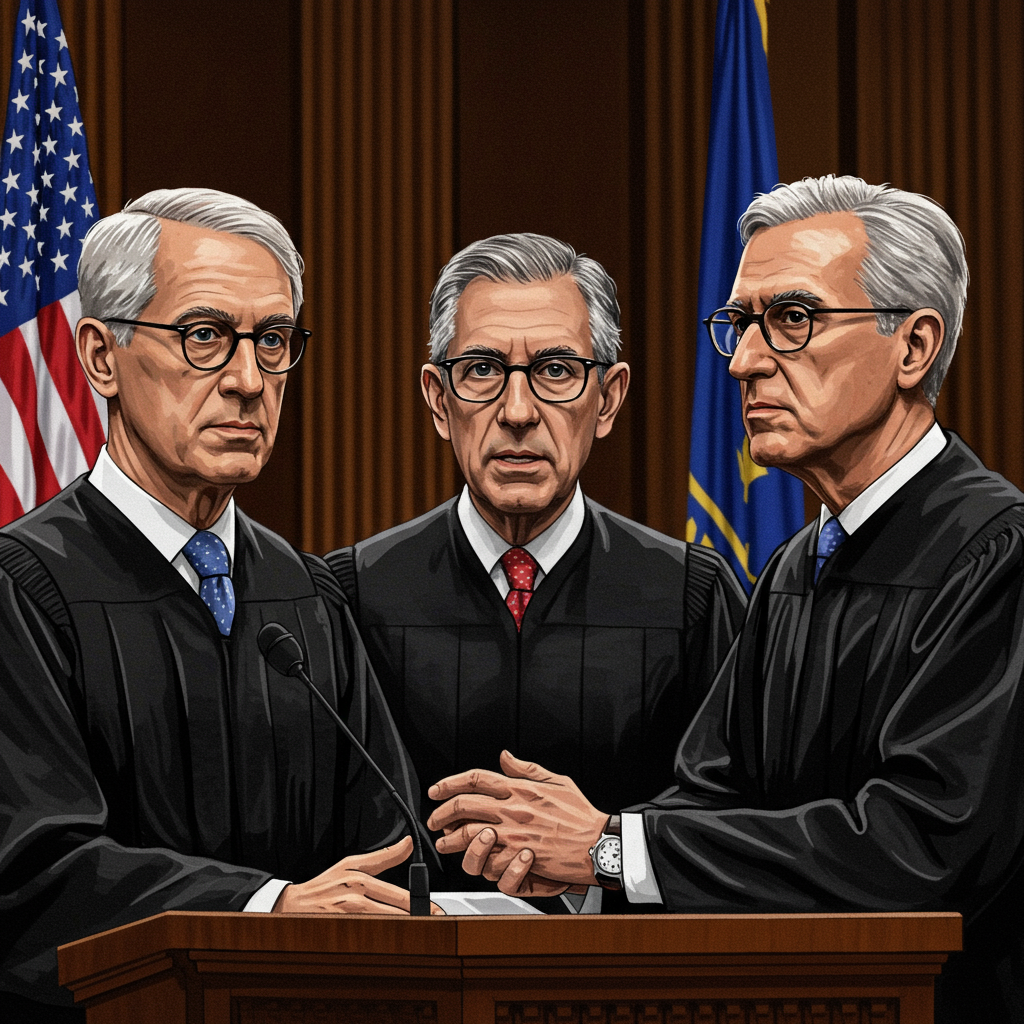
Judge Esther Toh presided over the proceedings, which concluded in a courtroom filled with anticipation. Among those present were Lai’s wife, one of his sons, and Cardinal Joseph Zen, a well-known pro-democracy advocate who baptized Lai in 1997. The prosecution argued that Lai actively sought meetings with foreign officials, including American leaders, and advocated for sanctions against China. These actions were deemed direct evidence of his intent to collude with external powers, aiming to undermine the Chinese government and incite disaffection.
Lai, who staunchly pleaded not guilty throughout his 156-day trial, maintained that his discussions with foreign contacts were merely to relay events in Hong Kong, not to influence foreign policy. He famously dismissed his critical remarks as “armchair punditry.” However, the court dismissed his denials, asserting that evidence showed “constant invitations” to the U.S. to challenge the Chinese government. The judge concluded that Lai harbored “hatred and resentment” for the People’s Republic of China, aiming for the downfall of its ruling Communist party.
The Specifics of the Verdict
The conviction on two counts of colluding with foreign forces focused on Lai’s alleged efforts to solicit foreign governments to impose sanctions or other measures against China. Prosecutors presented evidence, including critical articles and online broadcast comments, to support their claim that Lai attempted to “create a false impression” of China. His high-profile meetings with figures like former U.S. Secretary of State Mike Pompeo and then-Vice President Mike Pence during the 2019 protests were central to the prosecution’s case. They contended these interactions demonstrated an “unwavering intent to solicit” hostile actions. Lai also faced accusations of conspiring with executives from his Apple Daily newspaper, the advocacy group “Fight for Freedom Stand with Hong Kong,” and the Inter-Parliamentary Alliance on China (IPAC). Six former Apple Daily executives and two alleged co-conspirators testified for the prosecution after pleading guilty themselves.
The sedition charge, levied under a colonial-era law, further solidified the court’s finding that Lai sought to “excite disaffection” against Chinese authorities through his publications and activism. Lai’s lawyer argued for freedom of expression, accusing the prosecution of treating fundamental human rights as foreign concepts. Despite this, the verdict holds that his actions crossed a line into criminal behavior.
Jimmy Lai’s Journey: From Stowaway to Scapegoat
Jimmy Lai’s life story is an extraordinary narrative, often paralleled with Hong Kong’s own journey. He arrived in Hong Kong as a 12-year-old child stowaway, fleeing Maoist China. From these humble beginnings, he built a fortune in fast fashion, founding the successful retail chain Giordano. However, the 1989 Tiananmen Square massacre profoundly reshaped his path, steering him towards media.
Driven by a conviction that “delivering information is equal to delivering freedom,” Lai founded Next Magazine and later the groundbreaking Apple Daily newspaper before Hong Kong’s 1997 handover to China. Apple Daily became known for its blend of sensational tabloid journalism and a fiercely pro-democracy stance, frequently encouraging public participation in protests. Lai himself actively joined the massive anti-government demonstrations in 2019.
A Voice Silenced: The Apple Daily Legacy
Apple Daily quickly became a standard-bearer for the pro-democracy movement, known for its “fearless investigations” and commitment to keeping “Hong Kong honest.” Lai often used his publications to openly criticize authorities, famously lambasting Chinese premier Li Peng in a 1994 column. This drew immediate political and financial retaliation from the Chinese state, ultimately leading him to divest from Giordano.
Lai’s activism intensified over the years. He supported protests against proposed national security laws in 2003 and actively backed the 2014 Occupy Central movement. The paper’s front-page cut-out letter encouraging readers to ask then-US President Donald Trump to “help save Hong Kong” later became a key piece of evidence in his trial.
The demise of Apple Daily in 2021 was a stark consequence of the NSL. Authorities raided its offices, arrested senior executives, froze $2.3 million of its assets, and forced its closure. The newspaper’s final edition sold out all one million copies, a defiant act of solidarity by Hongkongers. Six of its editors and writers subsequently became prosecution witnesses against Lai. Despite advice from friends to flee, Lai, a British citizen, chose to remain, stating he preferred jail to abandoning the city that “gave me everything.”
Global Outcry: International Reactions to the Verdict
The conviction of Jimmy Lai has ignited a firestorm of criticism from across the globe, seen as a significant blow to press freedom and human rights. Pro-democracy activist groups, as well as global human rights and press freedom organizations, vehemently condemned the verdict.
Frances Hui, policy and advocacy coordinator at the Committee for Freedom in Hong Kong Foundation, stated that the “Hong Kong court has been compromised and has been politicized in the past five years,” viewing the verdict as further proof that the legal system is “no longer the system that we once respected.” Rights groups like Human Rights Watch labeled it “a cruel judicial farce,” accusing the Chinese government of abusing Lai’s case to silence critics.
Calls for Release and Condemnation
Many governments have also denounced the verdict. The United Kingdom and Taiwan have explicitly called on Hong Kong authorities to release Lai. The UK government condemned the verdict as “politically motivated persecution” for “peacefully exercising his right to freedom of expression,” reiterating calls for the NSL’s repeal. U.S. Secretary of State Marco Rubio echoed calls for Lai’s release, stating the conviction highlighted Beijing’s determination to suppress dissent and “silence those who seek to protect freedom of speech and other fundamental rights.” Former US President Donald Trump himself appealed to Chinese President Xi Jinping for Lai’s release, citing his age and poor health.
Lai’s son, Sebastien, urged the UK to escalate pressure on Beijing, suggesting his father’s release should become a precondition for closer relationships with China. His daughter, Claire, expressed her father’s desire to abandon political activism if freed, wishing to dedicate his life to faith and reunite with his family.
Conversely, Beijing’s Hong Kong and Macao Affairs Office welcomed the verdict. They denounced Lai as a “lackey” for external forces who endangered China’s national security. Hong Kong Chief Executive John Lee also welcomed the decision, stating Lai’s actions “damaged the country’s interests.” Chinese state media affirmed the case sends a “clear message” that attempts to undermine Hong Kong’s stability will face severe punishment.
The National Security Law: A Wider Crackdown
Jimmy Lai’s trial is a stark illustration of the far-reaching impact of the National Security Law, which Beijing imposed on Hong Kong in 2020. Enacted largely in response to the mass anti-government protests of 2019, the NSL grants authorities broad powers to criminalize a wide range of dissenting behaviors, with penalties including life imprisonment. Critics argue the law, passed without consulting the Hong Kong legislature, has effectively stifled any remaining opposition in the region.
Since its implementation, hundreds of people have been arrested under the NSL. The law’s impact extends beyond high-profile figures like Lai. Student leader Joshua Wong has faced new national security charges while already incarcerated, and in 2024, 45 lawmakers and activists were sentenced to prison terms of up to a decade on similar charges. The law has a nearly 100% conviction rate as of May 2025, and bail is frequently denied for those accused.
Eroding Freedoms and Judicial Independence
Hong Kong, once celebrated for its vibrant press and protest culture, has seen open dissent largely disappear. Numerous civil society groups have disbanded, and tens of thousands of residents have emigrated, fearing political retribution. The forced closure of Apple Daily in 2021 served as a chilling warning to other media outlets. News organizations have since significantly scaled back critical coverage of China due to fears of prosecution. This has led to a sharp decline in Hong Kong’s global press freedom ranking, which has plummeted to 140th out of 180 countries.
Concerns about judicial independence in Hong Kong have intensified. Authorities postponed Lai’s trial start in December 2022, citing national security risks for barring a British lawyer from representing him. This further fueled worries that the legal system is being politicized. While Hong Kong authorities maintain the rule of law is intact, the systematic targeting of pro-democracy voices paints a different picture.
The Future: Sentencing, Appeals, and Hong Kong’s Path
Jimmy Lai’s conviction marks a significant turning point, but his legal battle is far from over. His sentence will be announced later, with a mitigation hearing scheduled to begin on January 12. The 78-year-old potentially faces a life sentence for the collusion charge. His defense team has not yet announced whether they intend to appeal the verdict.
Concerns about Lai’s health have been consistently raised throughout his long incarceration. His family reports that his health has substantially declined during his more than 1,800 days in prison, suffering from advanced diabetes and heart palpitations. Despite this, his family says his Catholic faith and the study of scripture have sustained him, even through long periods in solitary confinement. The government, however, stated medical examinations found no abnormalities and care was adequate.
Political activist Finn Lau, who once worked with Lai, highlighted Lai’s enduring motivation to remain in Hong Kong. He believed someone needed to stand up to the Chinese Communist Party, regardless of the immense personal cost. Lai’s son, Sebastien, acknowledges that if his father were released today, he would find a vastly different Hong Kong, stripped of the freedoms he fought for. He believes his father has “done everything he can” and harbors no regrets. The world watches closely to see the ultimate fate of Jimmy Lai and, by extension, the future of civil liberties in Hong Kong.
Frequently Asked Questions
What specific charges led to Jimmy Lai’s conviction?
Jimmy Lai was convicted on two counts of colluding with foreign forces and one charge of sedition under a separate colonial-era law. The collusion charges stemmed from allegations that he sought meetings with foreign officials, including American leaders, and advocated for sanctions against China. The sedition charge was related to publishing material deemed to “excite disaffection” against Chinese authorities through his publications like Apple Daily.
What are the broader implications of the National Security Law on Hong Kong?
The National Security Law (NSL), imposed by Beijing in 2020, has profoundly reshaped Hong Kong. It has led to the arrest of hundreds of pro-democracy figures, the closure of independent media outlets like Apple Daily, and a significant chilling effect on free speech and dissent. Critics argue it has eroded judicial independence, reduced press freedom, and prompted an exodus of residents, effectively stifling the city’s once-vibrant civil society.
How have international bodies reacted to the Jimmy Lai verdict?
The international reaction has been largely condemnatory. Pro-democracy groups, human rights organizations, and press freedom advocates have vehemently criticized the verdict as a blow to judicial independence and media freedom. Governments from the UK, US, and Taiwan have called for Lai’s immediate release, citing concerns about politically motivated prosecution and his deteriorating health. Conversely, Beijing and Hong Kong authorities welcomed the verdict, labeling Lai a “lackey” of external forces who endangered China’s national security.