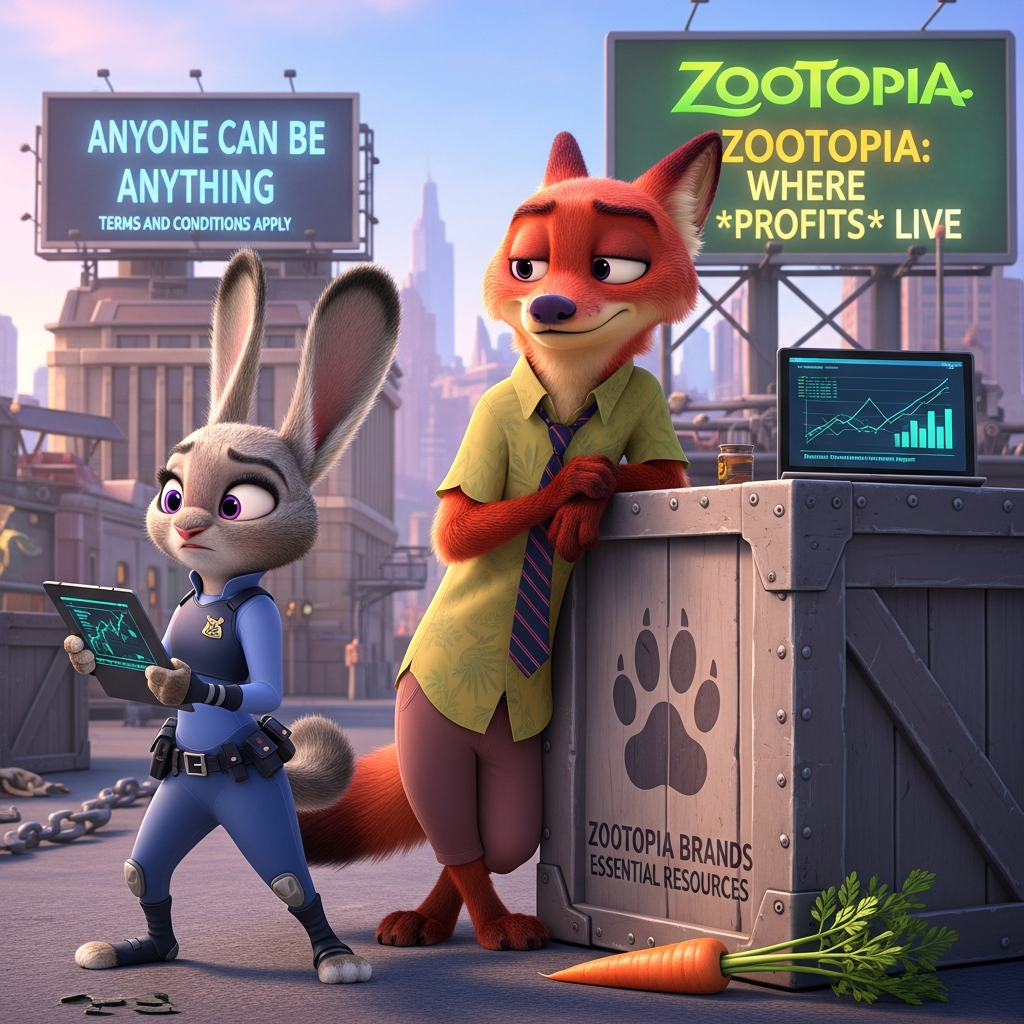
The magic of Disney often comes with a dose of skepticism, especially when it involves another sequel. Nearly a decade after the runaway success of the original, Zootopia 2 emerges, prompting many to question its narrative purpose. Yet, this animated follow-up quickly silences doubts with its unexpected depth. This Zootopia 2 review will explore how the film transcends typical family fare. It offers a surprisingly sharp, politically aware narrative.
Director Byron Howard, joined by Jared Bush, brings back the beloved animal metropolis. The film, despite early artistic doubts, is a financial juggernaut. It is already breaking box office records in China. Its global earnings are poised for impressive numbers. However, the true conversation starter lies beyond the economics. It’s in the bold new direction of its social commentary.
The Return to Zootopia: A City Evolving
The initial Zootopia (2016) introduced us to a world where anthropomorphic animals coexist. It brought together the unlikely police duo, Nick Wilde (Jason Bateman) and Judy Hopps (Ginnifer Goodwin). They foiled a city-wide conspiracy in the first film. Now, in Zootopia 2, their partnership has matured. The slick fox and bouncy rabbit are a well-oiled team. This sequel opens by briefly revisiting their past triumphs. It quickly moves to a new mystery.
A strange snake scale appears at a crime scene. This discovery shatters Zootopia’s long-held peace. Reptiles, a feared class of creatures, have been absent for years. Their sudden presence ignites fear and suspicion. Nick and Judy follow a trail of clues. This leads them to a rogue viper, Gary De’Snake. Voiced by Academy Award winner Ke Huy Quan, Gary is unexpectedly soft-spoken. He is attempting to steal an ancient diary. This artifact is a centerpiece for Zootopia’s centennial. Gary’s seemingly simple heist soon unravels into a complex web. It hints at deeper injustices within the city.
Nick and Judy: Partnership Without Romance
The film cleverly sidesteps traditional romantic expectations. Nick and Judy remain platonic friends. This choice subverts a common trope in buddy-cop narratives. For some fans, this might be a point of contention. The story focuses instead on their evolving professional bond. They navigate a new ideological schism. Judy is driven by an innate desire to help the marginalized. Nick, by nature, is more of a loner. His loyalty, however, remains fiercely dedicated to Judy. Their bond, while deeply personal, avoids a romantic conclusion. It prioritizes their working relationship.
Beyond Simple Prejudice: Zootopia 2’s Profound Metaphor
The original Zootopia attempted a metaphor for discrimination. It explored tensions between herbivores and carnivores. However, this allegory often felt “half-baked” and “clumsy.” It tied predatory nature to “immutably vicious characteristics.” This approach was a “major misstep” in racial allegory. It oversimplified complex societal issues. The sequel, nearly a decade later, takes a drastically different path. It abandons the simplistic divides. Neither the herbivore-carnivore split nor the “large” versus “small” animal dynamic remains relevant.
Zootopia 2 tackles discrimination head-on. It moves beyond “kiddie gloves” and mere “hurt feelings.” Instead, it constructs a compelling metaphor for systemic exploitation. The narrative introduces a financial underclass of reptiles. These creatures were unjustly driven from their homes generations ago. Wealthy businesspeople, a family of aristocratic lynxes, benefited from their displacement. These lynxes, reminiscent of characters from Succession, built their fortunes on corruption. They used fearmongering and propaganda to maintain power.
This updated metaphor is remarkably “politically coherent.” It mirrors numerous real-world crises. One can easily draw parallels to the displacement of communities globally. It reflects financially driven militias and systemic injustices. The film portrays racism not as individual prejudice. It exposes it as a system of exploitation. This system yields significant financial benefits for those in power. It’s a “fascinating outcome” for a children’s movie. Young viewers may walk away with a richer understanding of power dynamics.
Ke Huy Quan’s Standout Performance as Gary De’Snake
Ke Huy Quan shines as Gary De’Snake. He imbues the rogue viper with “charming sincerity.” Gary is a “saccharine, soft-spoken” freedom fighter. His sole desire is for his family to return home. They were unjustly expelled from Zootopia. Quan’s performance anchors a critical aspect of the plot. He personifies the film’s exploration of displacement. Gary’s personal quest drives much of the narrative. It effectively highlights the film’s bold new direction.
Strengths and Stumbles: A Balanced View
Despite its intellectual prowess, Zootopia 2 isn’t without flaws. The article suggests it’s not a “major disaster.” However, its narrative isn’t consistently “good” either. The film genuinely tries to atone for the original’s missteps. Yet, these sincere attempts are sometimes buried. They get lost beneath “malformed” character beats. The ideological clash between Nick and Judy, while central, feels underdeveloped. Judy’s altruism primarily strengthens Nick’s bond with her. It doesn’t significantly broaden his worldview.
The dynamic between the two leads lacks a “real spark.” They speak of “belonging together.” Still, any romantic tension remains in “emotionless limbo.” The audience is often left to fill narrative blanks. Even character dialogue struggles to convey deep motivations. The film truly excels when its leads are separated. This allows various subplots to accelerate. It lets Quan’s sincere portrayal of Gary take center stage. This enables a faster narrative pace.
The Challenge of Scale and Action Sequences
One notable weakness is the “consistent lack of scale” in action scenes. Zootopia is built for animals of all sizes. This means buildings and technology vary greatly. Rooms accommodate stallions. Computers are sized for chipmunks. This diverse environment makes establishing rules for chases difficult. Expectations for movement are hard to set or subvert. Unlike Toy Story, where size constraints are clear, Zootopia 2‘s pliability can confuse the action. Hurdles and obstacles often lack clear definition.
The film does pepper in older pop culture references. Pulp Fiction, The Shining, The Godfather appear. These are clearly aimed at parents. Fortunately, they don’t halt the plot. The sequel’s brisk pace helps. It “papers over numerous story elements that may not fully work.” Some ideas feel copied from its predecessor. Other character beats needed a second draft. Still, the film’s ambition shines through.
A Formative Moment for Young Minds?
For all its occasional haphazardness, Zootopia 2 stands out. It’s “shockingly thoughtful” in its core conception. The film crafts an animal metropolis. It teaches children about complex societal structures. It helps them grasp how the world around them is shaped. This unique approach is profound. It’s easy to imagine a young adult looking back. They might view this film as a “formative intellectual moment.” It offers a powerful lens for understanding systemic injustice. While perhaps not an emotional milestone, it could be a significant intellectual one. This Zootopia 2 review concludes that the film is a valuable, if imperfect, piece of modern animated cinema. It pushes boundaries, making it worth the watch.
Frequently Asked Questions
What is the core political metaphor in Zootopia 2, and how does it differ from the first film?
Zootopia 2 shifts its political metaphor from the original’s “clumsy” racial allegory. The first film focused on inherent predatory traits of carnivores. The sequel, however, powerfully portrays a “financial underclass.” This involves reptiles unjustly displaced from their homes. Wealthy, aristocratic lynxes profit from this exploitation. The film frames discrimination as a system of economic benefit for those in power. It connects directly to real-world issues of displacement and systemic inequality, offering a more cogent and mature critique.
Who are the main new characters in Zootopia 2, and what role does Ke Huy Quan play?
The primary new character is Gary De’Snake, voiced by Academy Award winner Ke Huy Quan. Gary is a rogue viper described as “saccharine, soft-spoken.” He is attempting to steal an antique diary. He is revealed to be a freedom fighter whose family was driven out of Zootopia. Quan’s performance is highlighted for its “charming sincerity.” His character’s quest to bring his kin home drives a significant part of the plot, adding emotional depth to the film’s themes of displacement and justice.
Is Zootopia 2 suitable for children, considering its complex themes?
Yes, Zootopia 2 is suitable for children, though its themes are surprisingly complex. While presented in an accessible animated format, the film delves into systemic exploitation and displacement. It avoids simplifying these issues into mere “hurt feelings.” The review notes it can be a “formative intellectual moment” for young audiences. It helps them grasp power dynamics and societal injustices in a thoughtful way. Parents might find it sparks important conversations. Despite some narrative flaws, its intellectual depth is a key takeaway.
Conclusion:
Zootopia 2 proves to be more than just another Disney sequel. It delivers a remarkably thoughtful narrative. Its sharp political metaphor, focusing on systemic exploitation, elevates the film. While character dynamics and action sequences have their stumbles, its ambition is undeniable. The performances, particularly Ke Huy Quan’s, add significant value. This film isn’t just entertainment; it’s a potential catalyst. It encourages young audiences to think critically about the world’s complex issues. It may be imperfect, but Zootopia 2 ultimately offers a refreshing and impactful viewing experience.