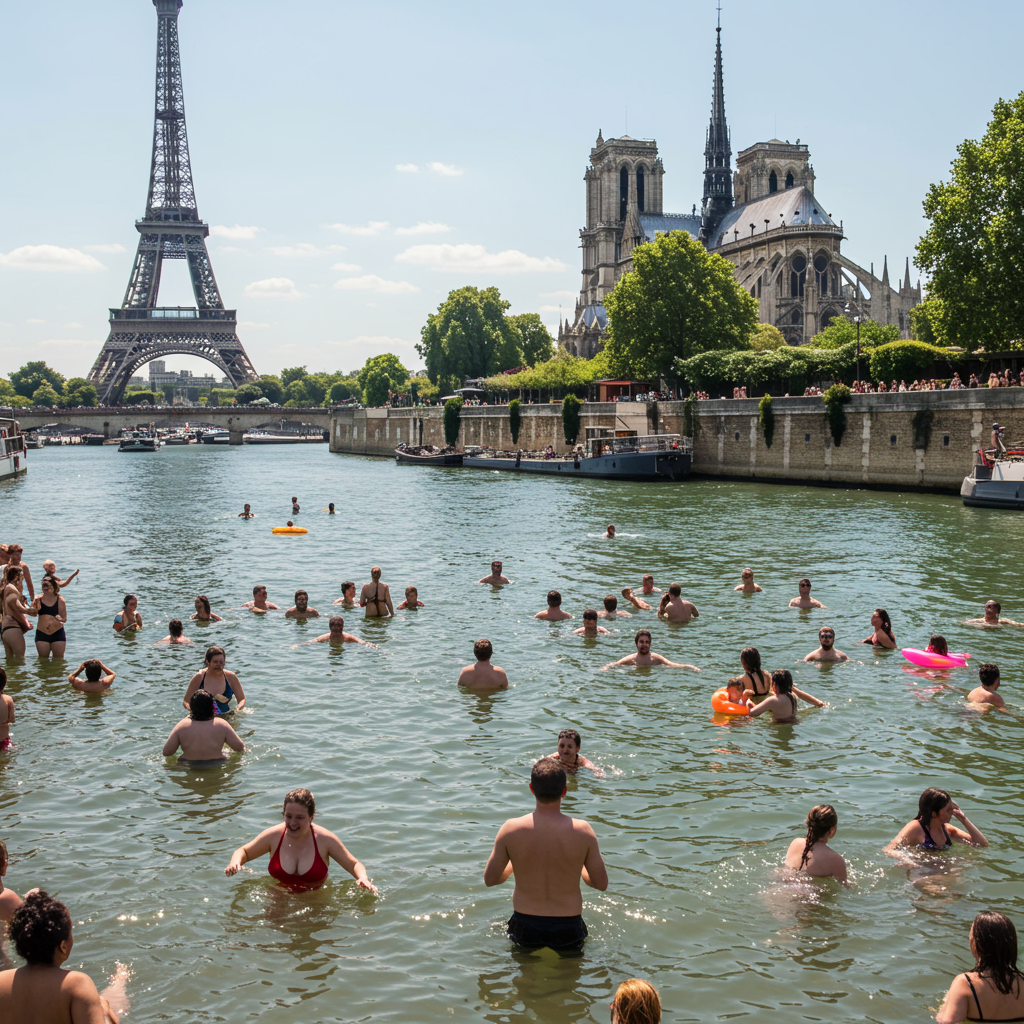
For the first time in over a century, the iconic river Seine is officially open for public swimming. Parisians and visitors alike can now take a refreshing dip in designated areas, a historic moment made possible by a monumental cleanup effort. This ambitious project, costing between €1.4 billion and €1.6 billion ($1.5 to $1.6 billion), has transformed the long-polluted waterway. The opening, which began Saturday, July 5, 2025, marks a significant legacy of the 2024 Paris Olympic Games.
A Century in Waiting: The Return of Seine Swimming
Swimming in the Seine had been legally banned since 1923. This century-long prohibition was primarily due to severe pollution and the inherent dangers of busy river boat traffic. For generations, the dream of swimming in the heart of Paris remained out of reach. Now, three new public swimming sites on the riverbanks welcome swimmers. Locations include popular spots close to Notre Dame Cathedral and the Eiffel Tower, plus a third area in eastern Paris. These designated areas offer a safe and monitored environment for this historic return to urban water recreation.
The move to open the Seine for public swimming is deeply symbolic. It signifies Paris reclaiming its central waterway, transforming it from a polluted barrier into a vibrant space for leisure and community. Sports coach and influencer Lucile Woodward captured the sentiment, calling it a “symbolic moment when we get our river back.” She participated in one of the first amateur open water events, highlighting the enthusiasm among those eager to embrace this new reality. Swimming outside these specific, marked bathing zones remains illegal, emphasizing that safety in a busy urban river environment is paramount.
€1.4 Billion Cleanup Transforms Paris’s Iconic River
The catalyst for this transformation was undeniably the 2024 Paris Olympics. The city planned to use the Seine for events like the triathlon and marathon swimming. This goal spurred an unprecedented investment in cleaning the river. Authorities implemented a range of sophisticated infrastructure projects designed to drastically improve water quality. These efforts were crucial in meeting the strict standards required for international sporting competitions and now, public use.
A key component of the cleanup involved building new disinfection units. A massive underground storage basin was also constructed. This basin holds large volumes of wastewater during heavy rainfalls. Historically, such rainfall would overwhelm sewer systems, causing untreated water to spill directly into the Seine. The storage basin prevents significant amounts of bacteria-laden runoff from entering the river. Furthermore, houseboats that previously discharged sewage directly were mandated to connect to municipal sewer systems. Homes located upstream from Paris also had their wastewater redirected to treatment plants instead of flowing straight into the river via rainwater systems. These combined efforts represent a comprehensive approach to tackling the various sources of pollution.
Safety First: Ensuring Water Quality and Swimmer Safety
Ensuring the safety of swimmers is a top priority for Parisian authorities. They have established rigorous monitoring protocols. Paris Deputy Mayor Pierre Rabadan confirmed that water quality tests are conducted daily. This constant testing is crucial for guaranteeing the water meets European safety regulations. The results since early June have reportedly been consistently in line with these standards, with only minor exceptions attributed to heavy rain or boat activity.
Like French beaches, a flag system is in place at the swimming sites to provide clear guidance to visitors. A green flag indicates good water quality and safe swimming conditions. A red flag signals that conditions are unsafe, either due to poor water quality or strong currents. Officials express confidence in the improved conditions. Mayor Anne Hidalgo herself demonstrated this confidence by displaying a bottle of seemingly clean river water. Deputy Mayor Rabadan acknowledged that while water quality seems better than the previous year, it’s a natural environment, and weather variations will inevitably have an impact. Swimmers are required to wear bright yellow lifebuoys for visibility and safety. A team of lifeguards is also stationed at each site to keep a watchful eye on participants, especially important as people experience swimming in the Seine for the first time in their lives.
Mixed Reactions: Joy, Skepticism, and the Future of Urban Waterways
The public opening of the Seine for swimming has elicited a range of reactions, from pure joy to cautious skepticism. Eager residents lined up before sunrise on the opening day. The atmosphere was reportedly filled with excitement, laughter, and shouts of delight as people took their first dips. Swimmers described the experience as “extraordinary,” noting the surprisingly pleasant temperature and the unique feeling of swimming right in the city center, with iconic landmarks as a backdrop. Amine Hocini, a 25-year-old swimmer, highlighted how “pleasant” it was, especially during warm weather. Lucile Woodward found swimming near Île Saint-Louis to be “chic” and felt confident, believing the river, having undergone intense scrutiny and testing, was likely among the safest globally.
However, not everyone is ready to jump in. Skepticism persists among some Parisians and experts. Dan Angelescu, founder of a water monitoring tech company, raised concerns about the limitations of current official testing methods, suggesting they might undercount bacteria levels. He believes there are only a few days each swimming season when water quality is truly acceptable. Longtime residents like François Fournier, watching from a bridge, remained hesitant, citing past observations of debris and preferring to wait until the water feels “really squeaky clean.” While some minor floating debris like leaves and plastic wrappers were noted, the once-prevalent sewage odor has largely disappeared, replaced by a mild, earthy river scent. This blend of enthusiastic adoption and lingering caution reflects the scale of the transformation and the public’s long-held perceptions of the river.
Planning Your Seine Swim: What You Need to Know
For those eager to experience swimming in the Seine, here are some key details to keep in mind:
Season Dates: Swimming in the designated public areas is available from July 5 to August 31, 2025.
Hours: Sites are open at scheduled times during the day. Specific hours may vary by location.
Cost: Access to the public swimming sites is free.
Age Limits: Minimum age requirements apply, either 10 or 14 years old, depending on the specific swimming site. Children must be accompanied by an adult.
Safety Gear: All swimmers are required to wear a bright yellow lifebuoy.
Location: Swimming is only permitted within the marked, designated bathing areas. Swimming elsewhere in the Seine remains illegal.
Facilities: The sites offer facilities such as changing rooms for convenience.
Water Quality: Always check the flag status before entering the water (green = safe, red = unsafe). This indicates the daily water quality assessment.
This initiative is more than just a recreational opportunity; it represents a significant step in urban environmental recovery. It serves as a global example of how substantial investment and political will can revive even highly polluted urban waterways. While challenges like weather-related water quality variations may still occur, the opening of the Seine for swimming is a powerful testament to a city reconnecting with its natural heart.
Frequently Asked Questions
Why was swimming in the Seine banned for over 100 years, and what changed?
Swimming in the River Seine was banned in 1923 primarily due to severe pollution from industrial and urban wastewater, as well as dangers posed by river navigation. For decades, the river was considered too dirty and unsafe. The major change was a massive cleanup project costing over €1.4 billion, significantly accelerated by Paris hosting the 2024 Olympic Games, which planned to use the river for aquatic events. This investment funded new infrastructure like wastewater storage basins, disinfection units, and mandatory sewer connections for boats and upstream homes, drastically improving water quality to meet European standards on most days.
Where exactly can I swim in the River Seine in Paris, and when are the sites open?
You can legally swim in the River Seine in three designated public bathing sites that opened on Saturday, July 5, 2025. These locations are near iconic landmarks like Notre Dame Cathedral and the Eiffel Tower, plus a third site in eastern Paris. Swimming is only allowed within these specific marked areas. The public swimming season runs from July 5 to August 31, 2025. The sites are open during scheduled times each day, and access is free. Always check the green or red safety flag at the site before entering the water.
Is the Seine water truly safe for swimming despite some concerns?
According to Parisian officials, the water quality in the designated swimming areas meets European standards on most days, based on daily testing. They report significantly low levels of key bacteria like E. coli and enterococci at the open sites. However, some independent experts express skepticism about the testing methodology, suggesting it may not capture the full picture of variability and potential risks. While authorities are confident and have implemented safety measures like lifeguards and mandatory lifebuoys, weather conditions, particularly heavy rain, can temporarily impact water quality. Swimmer experiences have been largely positive, with many feeling confident, but some residents remain hesitant. It’s important to check the daily safety flag and be aware that water quality can fluctuate.
The opening of the Seine for swimming is a remarkable achievement, showcasing the potential for urban environmental recovery. It’s a new chapter for the historic river and a unique opportunity for people to experience Paris from a completely different perspective. While challenges remain, the initial joy and public engagement signal a hopeful future for recreational use of the Seine.