
Key takeaways
- Japan’s space agency JAXA told a Cabinet Office committee on November 16, 2026 that it was abandoning the planned 2031 Hayabusa2 rendezvous with asteroid 1998 KY26, according to the Japanese newspaper Yomiuri Shimbun.
- JAXA’s stated reason is that the last normally functioning main ion engine on the 12-year-old spacecraft malfunctioned in mid-August, leaving too little thrust for the required orbital changes.
- Harvard astrophysicist Avi Loeb says the cancellation removes the only way to get a high-resolution look at the roughly 36-foot-wide object, which he argues could be the lost 1988 Soviet probe Phobos 1.
- NASA Administrator Jared Isaacman has said he has seen no evidence that the object is anything other than an asteroid, and a 2025 NASA-led orbital study attributed its motion to solar radiation forces.
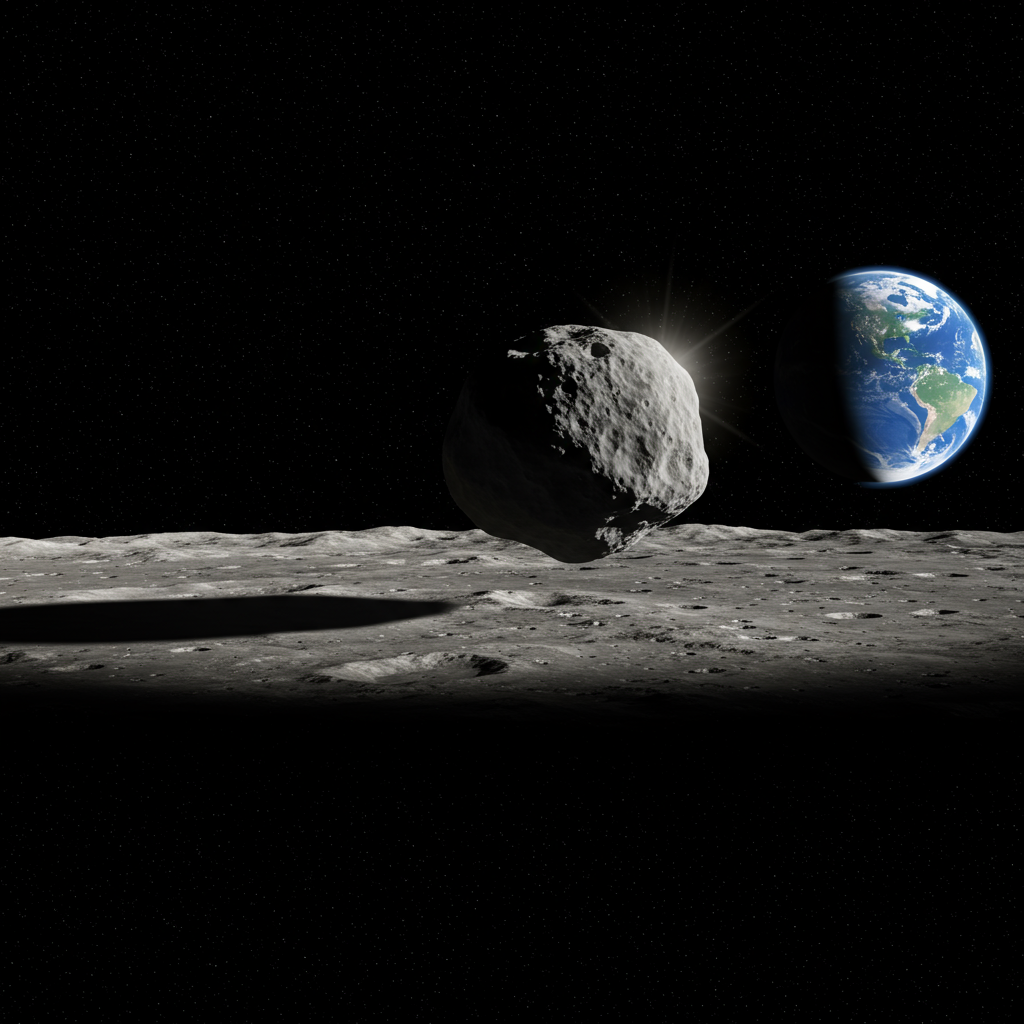
The Hayabusa2 mission to the object known as 1998 KY26 has been called off, and Harvard astrophysicist Avi Loeb says the decision removes the only realistic chance to settle whether the roughly 36-foot-wide object is a natural rock or a lost Soviet spacecraft. Loeb made the argument to Fox News Digital in an article published on November 22, 2026. He pointed to the Japan Aerospace Exploration Agency’s (JAXA) decision to scrap a rendezvous that had been planned for 2031.
The dispute mixes a hardware failure, a contested scientific hypothesis and a pointed question about timing. This analysis separates what is documented from what is Loeb’s interpretation. It also covers what astronomers can still do from Earth orbit and beyond to test the idea.
What happened: JAXA drops the KY26 rendezvous
According to Yomiuri Shimbun, JAXA reported to the Space Policy Committee of Japan’s Cabinet Office on November 16 that it was giving up the 2031 rendezvous with 1998 KY26. The agency said the last normally functioning main ion engine on Hayabusa2 malfunctioned in mid-August.
JAXA officials explained in their report, the newspaper said, that reaching KY26 in 2031 already required an Earth gravity-assist maneuver. They said combining working parts from two damaged engines left the 12-year-old spacecraft without enough thrust to perform the necessary orbital changes. The agency is instead redirecting the spacecraft to a 2028 flyby of asteroid 2015 BM510, according to the newspaper.
The cancellation arrived days after Isaacman appeared on Fox & Friends and dismissed speculation about the object. “I’ve not seen any evidence to suggest this is … anything other than an asteroid,” he said, according to Fox News.

Why the Hayabusa2 mission mattered to the KY26 debate
The Hayabusa2 mission was never designed to test a Soviet-probe hypothesis. Yet Loeb’s argument is that a close pass was the only dependable way to answer the question. He told Fox News Digital that even the James Webb Space Telescope and the largest ground-based telescopes cannot resolve the object into multiple pixels.
“There is no way by which we can actually resolve the object, or get a high-resolution image of its surface, without coming close to it — without a flyby,” Loeb said.
The point is about physical scale. An object about 36 feet across is tiny at astronomical distances. Telescopes can measure how much light it reflects, how that light changes as the object spins, and how its path bends over time. None of those measurements amount to a picture of its surface. Without an image, any claim about its structure has to rest on indirect evidence, and indirect evidence can often be read more than one way.
Loeb went further, predicting that if Japan’s spacecraft reached KY26 in July 2031, scientists would find a label reading “Made in the USSR” rather than ice or rock. That is a vivid forecast, not a finding, and no mainstream space agency has endorsed it. The Fox News report does not say JAXA, NASA or any independent team has confirmed anything of the kind.
Three positions on what KY26 is
The public record in this story contains three distinct stances. They differ in who is making them and what evidence they rely on.
| Position | Who holds it | Basis cited |
|---|---|---|
| KY26 is an ordinary asteroid | NASA Administrator Jared Isaacman | He has seen no evidence suggesting otherwise |
| KY26’s path comes from sunlight pressure on a non-spherical body, not hidden comet activity | NASA’s Center for Near-Earth Object Studies (2025 orbital study) | Solar radiation forces, described as “the natural push of sunlight and thermal emission on its non-spherical shape” |
| KY26 is not an asteroid and may be the lost Phobos 1 probe | Avi Loeb and colleagues | Acceleration he says gravity cannot explain, high reflectivity, fast rotation, and a trajectory resembling Phobos 1 |
The first two positions are not identical. One is a general statement from an agency chief, the other a specific technical conclusion from an orbital study. Both lean toward a natural explanation, and both are consistent with each other.
Inside Loeb’s case for a lost spacecraft
Loeb’s argument rests on several observations that he says are hard to reconcile with a typical rock or comet.
Acceleration and the missing comet tail
Loeb says KY26 accelerates in a way gravity alone cannot explain. A familiar natural explanation is that a comet sheds gas that acts like a weak thruster. Loeb acknowledges the possibility. “It could be a comet shedding some gas backward that is pushing it forward, but in that case we should have seen the gas,” he said. “We should have seen the dust because for comets we see a tail and the dust particles are being pushed away from the sun by the solar radiation.”
He and his colleagues calculated that sunlight reflecting off solar panels could produce the observed push without any “dark comet” tail. They found the trajectory closely resembles that of Phobos 1, a Soviet spacecraft launched toward Mars in July 1988 that shut down after a faulty command.
Brightness and rotation
Loeb also cites two physical traits. First, the object rotates about once every five minutes. Second, it is far brighter than expected. “This object reflects about half of the sunlight that is impinging on it, whereas a typical rock or iceberg reflects about 5% of the sunlight impinging on it,” he said, calling the brightness “surprising.”
Those figures are Loeb’s, as reported by Fox News, and they have not been independently confirmed in the material reviewed for this article. They are also precisely the quantities that better thermal and spectral data could test.
NASA’s counter-explanation
NASA previously told Fox News Digital that a 2025 orbital study led by its Center for Near-Earth Object Studies concluded that KY26’s complex trajectory is driven by solar radiation forces rather than hidden comet-like activity. The agency’s phrasing was “the natural push of sunlight and thermal emission on its non-spherical shape.”
This matters because the disagreement is narrower than it first appears. Both sides agree that sunlight contributes to the motion. The difference lies in what object would produce that effect: a lumpy natural body whose shape and heat radiation nudge it along, or a spacecraft with large reflective panels. Distinguishing the two would require knowing the object’s true shape, size, surface reflectivity and composition. That is exactly the information a close encounter would have supplied.
The timing question: coincidence or not?
Loeb has made the timing of the cancellation part of his public argument. “I was surprised that the cancellation by JAXA occurred just a day or two after I spoke about it publicly, because the malfunction in the engine was known for several months,” he told Fox News Digital.
He then offered a probability estimate. “The probability that we’re dealing with a coincidence where within a day after my public discourse, JAXA decides to cancel this mission is a day divided by the duration over which it was known that the fourth engine is malfunctioning – and that was over 100 days or so,” he said. “So, I would argue that the probability for a chance coincidence is less than 1%, but it could still be a coincidence.”
How to read that claim
Loeb himself concedes it could be chance, and that qualifier is important. A few observations frame the claim without dismissing it:
- What is documented. JAXA’s briefing to the Cabinet Office committee took place on November 16, according to Yomiuri Shimbun, and the engine malfunction dates to mid-August. Roughly three months separate the two, which is consistent with Loeb’s “over 100 days or so.”
- What is inferred. The reported sequence does not show that Loeb’s public remarks influenced JAXA. Nothing in the source material suggests JAXA responded to him, and JAXA’s stated reason is technical.
- What the probability assumes. The calculation treats every day in the window as equally likely for a decision. Government agencies often report to committees on fixed schedules or after internal reviews finish. Those are not random days. This is an analytical caution, not a reported fact about JAXA’s process.
Loeb also raised an engineering question. Because Hayabusa2 was designed over several years, he asked why Japanese engineers did not try an Earth gravity-assist maneuver to compensate for the lost engine thrust rather than pivot to another target. JAXA’s report, as relayed by Yomiuri Shimbun, answers part of that: the 2031 plan already relied on an Earth gravity assist, and the remaining engine capability was still insufficient for the orbital changes needed.
What Webb can still do
Even without a flyby, Loeb says one major remote tool remains. He wants astronomers to use NASA’s James Webb Space Telescope to measure the heat radiating from KY26 and analyze its chemical spectrum.
“So far, we detected a reflection of sunlight from this object, but the Webb telescope can potentially detect the heat emitted by the object, and that will offer us an opportunity to learn both about the size, the surface temperature of the object, as well as the composition of the object,” Loeb said.
The logic is straightforward. Reflected sunlight depends on both an object’s size and how reflective it is, and those two factors are tangled together. Thermal emission helps untangle them. If an object is small and highly reflective, it should stay cooler and radiate differently from a larger, darker one. Such measurements could test Loeb’s claim that KY26 reflects about half the sunlight that hits it, against the roughly 5% he says is typical for a rock or iceberg.
There is a limit, though. Thermal and spectral data would narrow the possibilities but would not produce a surface image. A result consistent with a bright, small body would not by itself prove a spacecraft. Likewise, a result consistent with ordinary rock would not satisfy everyone who finds the object puzzling. Observing time on Webb is also allocated through a competitive process, and the source material does not say whether any proposal for KY26 has been submitted.
Background: what Phobos 1 was
Phobos 1 was a Soviet spacecraft launched toward Mars in July 1988. Fox News describes it as lost after a faulty command caused it to shut down, and NASA-credited images accompanying the report illustrate the probe. Loeb and his colleagues examined whether KY26 could be that probe, based on the similarity between the object’s trajectory and the spacecraft’s.
A lost spacecraft drifting in a solar orbit for decades is not physically absurd in principle. Whether this particular object is that spacecraft is a different matter. The idea is a hypothesis built on trajectory matching, and trajectory matching alone is open to alternative explanations such as the sunlight-and-shape effect NASA describes. The size also bears on the question: the source describes KY26 as roughly 36 feet wide. The source material does not provide Phobos 1’s dimensions, so no size comparison is possible here.
The Tesla Roadster lesson
Loeb offered a recent example of how misclassification can happen. In January 2025, he noted, astronomers briefly cataloged an object near Earth as an asteroid before realizing it was the Tesla Roadster that SpaceX launched into space in 2018. The mistake was caught only because humans knew its flight path.
The example cuts in two directions. It shows that a human-made object can be mistaken for a natural one when only limited data are available. It also shows that the error was corrected using documented launch records. For KY26 there is no equivalent public flight path that confirms or rules out a Soviet origin in the material reviewed, which is why the debate persists.
Loeb stressed that KY26 orbits the sun at a distance of a fraction to a few times the Earth-sun separation and poses no threat of hitting Earth. His broader point is about attitude. He argued that space agencies should remain open-minded when tracking unexplained objects.
Looking ahead: the Rubin Observatory
Loeb tied the episode to a bigger prospect. “Hopefully, the Rubin Observatory in Chile that is funded by the Department of Energy and the National Science Foundation will find dozens of interstellar objects in the coming decade, and we should be curious enough to check whether all of them are rocks or icebergs, because if one of them is technological in origin, that will change our view on our place in the universe,” he said.
That statement is a hope and a call for rigor, not a prediction that any object is artificial. The practical implication is that a larger census of unusual objects would give scientists more material to compare and more chances to catch outliers. KY26 itself is described in the report as being in an orbit close to the sun rather than as an interstellar visitor, so the connection is conceptual rather than physical.
What it means for you
- If you follow space news, expect the KY26 question to move to telescope data rather than a spacecraft visit. Look for any announcement of Webb observations of the object’s heat and spectrum.
- If you are wary of alarming headlines, note that Loeb says KY26 poses no threat to Earth, and nothing in the reported material suggests any hazard.
- If you care about how science handles outlier claims, this case is a useful example. A named scientist is making a bold claim, a federal agency study offers a natural explanation, and a hardware failure removed the easiest test.
- If you follow Japan’s space program, the key practical change is the new target: Hayabusa2 is now slated for a 2028 flyby of asteroid 2015 BM510 instead of the 2031 KY26 rendezvous.
Counterpoints and open questions
Several issues remain unresolved, and readers should weigh them against Loeb’s framing.
- Extraordinary claim, indirect evidence. The Phobos 1 theory rests on trajectory similarity, brightness and spin. NASA’s 2025 study offers a natural mechanism for the same motion. Neither side has surface imagery.
- The reflectivity figure is unverified here. The claim that KY26 reflects about half of incoming sunlight is Loeb’s. The material reviewed does not include an independent confirmation, and it does not say what uncertainty accompanies the estimate.
- The timing argument is probabilistic, not causal. Loeb says the coincidence probability is under 1% but allows that it could be a coincidence. JAXA has stated a technical reason, and no source indicates its decision was linked to outside commentary.
- Engineering feasibility. Loeb asks why a gravity-assist workaround was not attempted. JAXA’s account, via Yomiuri Shimbun, is that the plan already needed one and thrust was still insufficient. Outside engineers have not been quoted evaluating that judgment in the reported material.
- Terminology. Fox News’s headline refers to a mission to land on the object, and Loeb speaks of landing in July 2031. The JAXA report as described by Yomiuri Shimbun refers to a rendezvous. Whether a landing was ever planned is not established in the available material.
- Isaacman’s comment is a statement of what he has seen. He said he had seen no evidence of anything other than an asteroid. That is different from a finding that disproves the alternative.
There are also practical unknowns. It is not clear from the source material whether any Webb observation of KY26 has been requested or scheduled, or how long such a campaign would take. NASA has not, in the reporting reviewed, said it plans additional work on the object beyond the 2025 study.
What happens next
- 2028: JAXA’s redirected Hayabusa2 is planned to fly past asteroid 2015 BM510, according to Yomiuri Shimbun.
- July 2031: The date Loeb had expected a Hayabusa2 encounter with KY26 will pass without one, based on JAXA’s report.
- Webb observations: Loeb’s preferred remaining test is a thermal and spectral measurement of KY26. Watch for any proposal or announcement from astronomers or NASA on this.
- Further orbital studies: NASA’s Center for Near-Earth Object Studies has already published a 2025 analysis. New data could refine or challenge it.
- Rubin Observatory: Loeb expects the Chile-based facility to find many more interstellar objects over the coming decade, which could supply more cases for comparison.
The bottom line
The Hayabusa2 mission to 1998 KY26 was a spacecraft plan that ended because of a failed ion engine. It became part of a larger argument because a Harvard astrophysicist says the object may be a lost Soviet probe and NASA’s leadership sees an asteroid. The facts that are firmly established are modest: JAXA’s November 16 report, the mid-August engine failure, the new 2028 target and NASA’s 2025 orbital study. The rest depends on measurements that have not yet been made, and with the flyby gone, telescope data is now the main path to an answer.
Frequently asked questions
Why did JAXA cancel the Hayabusa2 rendezvous with 1998 KY26?
According to Yomiuri Shimbun, JAXA told the Cabinet Office’s Space Policy Committee on November 16 that the last normally functioning main ion engine malfunctioned in mid-August. Combining parts from two damaged engines left the 12-year-old spacecraft without enough thrust for the orbital changes needed, even with an Earth gravity assist. The agency is redirecting Hayabusa2 to a 2028 flyby of asteroid 2015 BM510.
What does Avi Loeb think 1998 KY26 is?
Loeb argues that KY26 is not an asteroid and may be the lost Soviet probe Phobos 1, launched toward Mars in July 1988. He cites acceleration he says gravity cannot explain, a rotation of about once every five minutes, and reflectivity of about half the incoming sunlight. He acknowledges the timing of the cancellation and the object’s motion could still have natural explanations.
What does NASA say about KY26?
NASA Administrator Jared Isaacman said he has seen no evidence suggesting the object is anything other than an asteroid. NASA also told Fox News Digital that a 2025 orbital study from its Center for Near-Earth Object Studies attributed KY26’s trajectory to solar radiation forces acting on a non-spherical shape, not hidden comet-like activity.
Can anyone still test the Phobos 1 theory?
Loeb says a close flyby is the only way to get a high-resolution surface image, and that route is now closed for Hayabusa2. He suggests using the James Webb Space Telescope to measure the object’s heat and analyze its chemical spectrum, which could reveal its size, surface temperature and composition. He says KY26 poses no threat to Earth.
References
- Harvard scientist may never prove mysterious space object’s origin after mission scrapped — foxnews.com
Featured image: Photo by Mikhail Nilov on Pexels