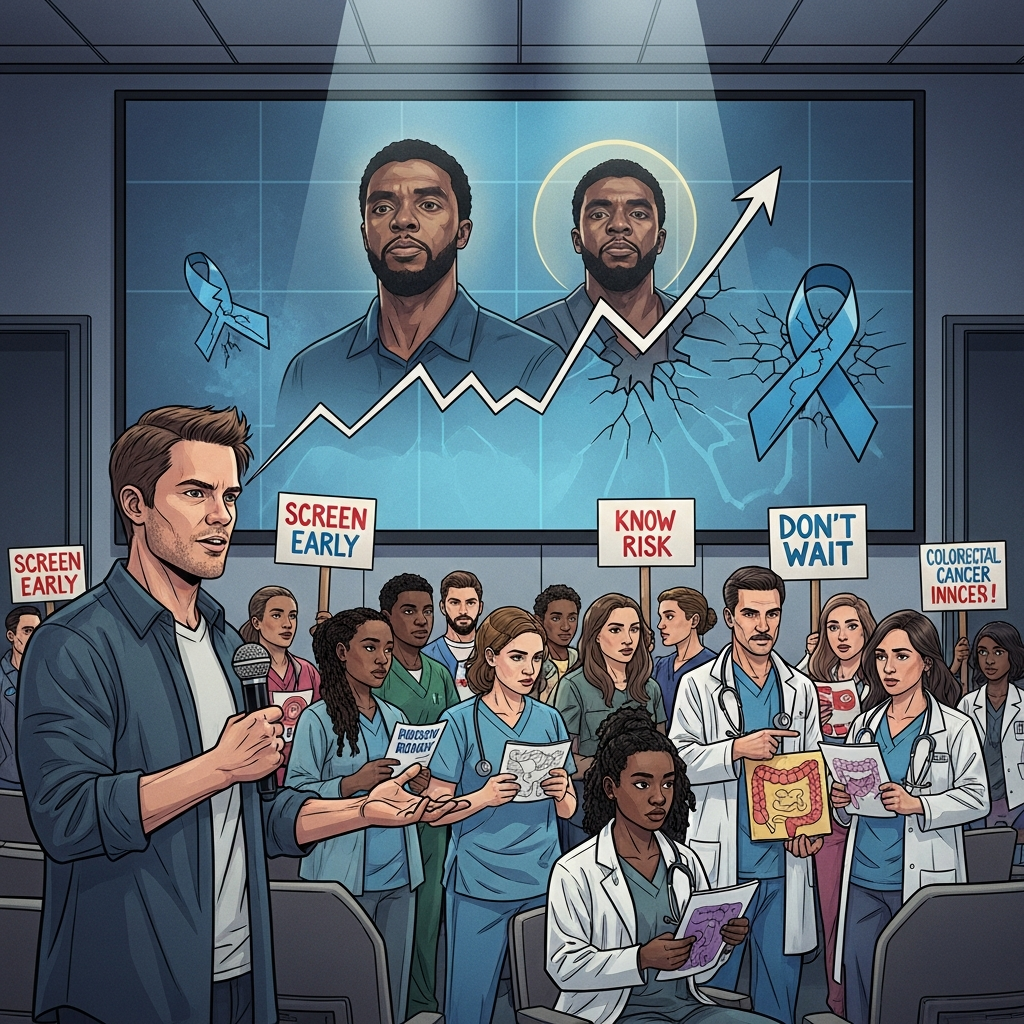
Colorectal cancer (CRC) has emerged as an alarming public health crisis, especially for younger adults. It is now the leading cause of cancer-related deaths for Americans under 50. This troubling shift underscores a critical need for increased awareness, proactive screening, and community support. From prominent figures like James Van Der Beek and Chadwick Boseman to countless others, this insidious disease claims lives prematurely. Fortunately, local initiatives like the Borland Groover Foundation’s “March To Get Screened” 5K are actively fighting back. They are raising vital awareness and funding for early detection in Northeast Florida.
The Alarming Surge of Colorectal Cancer in Younger Adults
Recent data paints a stark picture. Colorectal cancer has dramatically risen to become the top cancer killer for individuals under 50 in the U.S. This isn’t just a slight increase; it’s a significant shift. In 1990, CRC was the fifth leading cause of cancer deaths in this age group. By 2023, it claimed the top spot. This alarming trend arrived seven years earlier than experts predicted, signaling an urgent crisis.
According to the American Cancer Society, over 150,000 cases of colorectal cancer will be diagnosed this year. It stands as the nation’s second leading cancer killer overall, behind only lung cancer. Disturbingly, while death rates for other major cancers (like lung and breast cancer) have declined in younger populations, CRC mortality rates continue to climb. This makes it an “absolute outlier” among top cancers. Projections suggest a staggering 90% increase in CRC incidence among Americans aged 20 to 39 by 2030. Currently, nearly 60 young Americans are diagnosed with colorectal cancer daily. That’s a new diagnosis every 25 minutes.
Why the Unprecedented Rise? Experts Investigate
The exact reasons for this unprecedented rise in young-onset colorectal cancer remain largely unclear. Scientists are actively investigating multiple potential factors. One prominent theory is the “birth cohort effect.” This suggests that people born after the 1950s face a heightened and increasing risk with each subsequent generation. It implies an unidentified “exposure” or “risk factor” introduced in the mid-20th century.
Experts are exploring changes in modern lifestyles and environments. This includes increased consumption of ultra-processed foods, processed meats, and foods packaged in plastic. The potential role of microplastics, now known to cross biological barriers, is also under scrutiny. Other areas of investigation involve declining physical activity levels, rising obesity rates, and shifts in the gut microbiome. There’s a consensus that no single cause is likely responsible. This complex issue requires multidisciplinary research.
Symptoms Often Missed: Urgent Warnings from Young Survivors
A critical factor contributing to increased mortality is late diagnosis. Roughly 60% to 75% of young people with colorectal cancer are diagnosed at advanced stages. At this point, treatment becomes significantly more challenging. Young individuals often dismiss early symptoms, mistakenly believing they are too young for such a serious illness. They might self-diagnose rectal bleeding as hemorrhoids, a common initial assumption.
Personal stories underscore this danger. Becca Lynch, diagnosed with stage 3B colon cancer at 29, initially dismissed her symptoms. She experienced “pencil thin” and frequent bowel movements, followed by thick, dark blood. She only sought medical advice after seeing an Instagram video from another young colon cancer patient. Similarly, Prosanta Chakrabarty, an evolutionary biologist, received an advanced colon cancer diagnosis at 47. This was despite living a healthy lifestyle and even getting annual colonoscopies. Their experiences highlight how subtle symptoms can be overlooked.
Recognize These Key Symptoms: Don’t Delay Care
It is vital for everyone, especially younger adults, to be aware of potential colorectal cancer symptoms. If you experience any of these for more than a couple of weeks, consult a doctor immediately:
Changes in bowel habits: Diarrhea, constipation, or a change in the consistency of your stool that lasts for more than a few days.
Rectal bleeding or blood in your stool: This can appear bright red or dark, tarry.
Persistent abdominal discomfort: Cramps, gas, or pain.
A feeling that your bowel doesn’t empty completely.
Weakness or fatigue: Often due to anemia caused by blood loss.
Unexplained weight loss.
Doctors must also adapt to this demographic shift. Healthcare providers, accustomed to treating older patients, might not consider CRC screening for younger individuals. Experts urge doctors to discuss fertility preservation and sexual dysfunction with young patients before treatment begins.
The Power of Early Detection: Screening Saves Lives
Early detection truly makes all the difference. Screening can identify precancerous polyps before they turn into cancer. It can also find cancer at an early, highly treatable stage. The U.S. Preventive Services Task Force recently lowered the recommended age for routine colorectal cancer screening from 50 to 45 for most people. This change reflects the rising incidence in younger adults. Half of those diagnosed before age 50 are between 45 and 49, making them eligible for current screening guidelines.
For asymptomatic individuals, preliminary screening options like stool tests (e.g., Cologuard, FIT test) can be a first step. However, a colonoscopy remains the gold standard for comprehensive detection and polyp removal. Don’t let embarrassment be a barrier to discussing bowel-related symptoms or seeking timely screening. Advocacy efforts by survivors like Becca Lynch aim to break this stigma and encourage prompt medical attention.
March To Get Screened: A Community United in Northeast Florida
In response to this growing public health concern, the Borland Groover Foundation is hosting its annual “March To Get Screened” 5K Race and 1 Mile Fun Run. This family-friendly event is a powerful initiative designed to promote colon cancer awareness. It underscores the life-saving importance of routine screening. Set for Sunday, March 29, 2026, at the St. Johns Borland Groover Durbin Crossing Endoscopy Center, this local race has become Northeast Florida’s largest digestive health fundraiser.
Founded by colon cancer survivor Jan Pratt, the event embodies hope and action. Its core mission is to empower the community to take charge of their digestive health. Registration for the event begins at 7 a.m., with the timed 5K starting at 8 a.m. Attendees can enjoy music, activities, and food for all ages. Community Outreach Manager Carole Rogero of Borland Groover emphasizes the far-reaching impact of the event. “March To Get Screened is about coming together as a community to promote screening at age 45 and support patients who may not otherwise have access to care,” she states.
Making a Tangible Difference: Funds for a Cancer-Free Future
The proceeds from the March To Get Screened event drive critical programs. They directly support individuals in need and advance education. Importantly, these funds are not used for Borland Groover’s operational costs. Instead, they are dedicated to:
Free Colonoscopies: Providing essential screenings for eligible patients who lack insurance or financial means.
Screening Vouchers: Offering colonoscopy vouchers for underinsured members of the community, improving access to preventive care.
Financial Assistance: Providing up to $5,000 for cancer treatments for eligible patients facing financial hardship.
Educational Materials: Funding the distribution of vital information to medical facilities and the public.
Since its inception, March To Get Screened has raised over $500,000. These funds directly support colorectal cancer awareness, patient assistance, and screening initiatives. The Borland Groover Foundation, a 501(c)(3) nonprofit, is committed to building a healthy community “free from colon cancer through service, education and empowerment.” In the past three years alone, their BG Cares program has helped over 150 patients receive crucial screenings. The event also reinforces Borland Groover’s “This Is 45” initiative. This campaign encourages adults to begin colorectal cancer screening at age 45, aligning with national guidelines.
Borland Groover: A Legacy of Digestive Health Innovation
Borland Groover, founded in 1947, stands as one of America’s largest and most respected gastroenterology clinics. With several locations across St. Johns County, including St. Augustine, the practice is a cornerstone of digestive health in Northeast Florida. Their commitment extends beyond clinical care. They offer cutting-edge technology and advanced treatments for a wide range of digestive diseases. This includes utilizing minimally invasive techniques once reserved for general surgery.
The clinic is also deeply engaged in clinical research. Their efforts aim to develop pharmacologic solutions for complex gastrointestinal conditions and ultimately find cures for diseases. Borland Groover’s comprehensive services include:
Colonoscopy: For colorectal cancer screening and detection.
Upper Endoscopy: Examining the upper digestive tract.
Endoscopic Ultrasound (EUS): Advanced imaging for precise diagnosis.
Biliary Endoscopy (ERCP): Specialized procedures for bile ducts and pancreas.
- Diagnosis and Management: Long-term care for both acute and chronic gastrointestinal conditions.
- www.staugustine.com
- www.theguardian.com
- colorectalcancer.org
- www.scientificamerican.com
- www.nbcnews.com
This integrated approach—from advanced clinical care to pioneering research and community outreach—positions Borland Groover as a vital leader in the fight against colorectal cancer.
Frequently Asked Questions
Why is colorectal cancer increasing so rapidly in young adults?
The exact reasons for the sharp rise in colorectal cancer among young adults are still under investigation. Experts point to a “birth cohort effect,” suggesting an unidentified risk factor emerged in the mid-20th century affecting subsequent generations. Potential contributors include changes in diet (more processed foods), reduced physical activity, shifts in the gut microbiome, environmental factors like microplastics, and rising obesity rates. Unlike older adults, whose CRC rates are declining, young-onset cases are unique in their continuous increase.
Where can I get screened for colorectal cancer in Northeast Florida, and what support is available?
In Northeast Florida, the Borland Groover Foundation, a prominent gastroenterology clinic with locations including St. Augustine and St. Johns County, is a key resource. They host the annual “March To Get Screened” 5K event, which provides funding for free colonoscopies for eligible patients, screening vouchers for the underinsured, and financial assistance for cancer treatments. These initiatives are part of their commitment to making essential digestive health care accessible to the community.
When should young adults start getting screened for colorectal cancer, and what symptoms warrant immediate medical attention?
Current national guidelines recommend that most adults begin colorectal cancer screening at age 45. However, if you have a family history of CRC or other risk factors, your doctor might suggest starting earlier. It’s crucial for young adults to pay attention to their bodies and not dismiss symptoms, as late diagnosis is common. Seek immediate medical attention if you experience persistent changes in bowel habits, rectal bleeding, blood in your stool, unexplained weight loss, or chronic abdominal pain, even if you are under 45. Early detection dramatically improves treatment outcomes.
Take Action Today: Your Health Can’t Wait
The rise of colorectal cancer in young adults is an urgent call to action. It underscores the profound importance of awareness, early detection, and community support. By understanding the risks, recognizing symptoms, and advocating for timely screening, we can collectively change this grim trajectory. Events like the “March To Get Screened” 5K exemplify how community efforts, combined with leading medical expertise, can make a tangible difference. Don’t wait. Get informed, get screened if you’re 45 or older (or sooner if symptomatic), and consider supporting initiatives that empower a future free from colon cancer. Your health, and the health of your loved ones, depend on it.