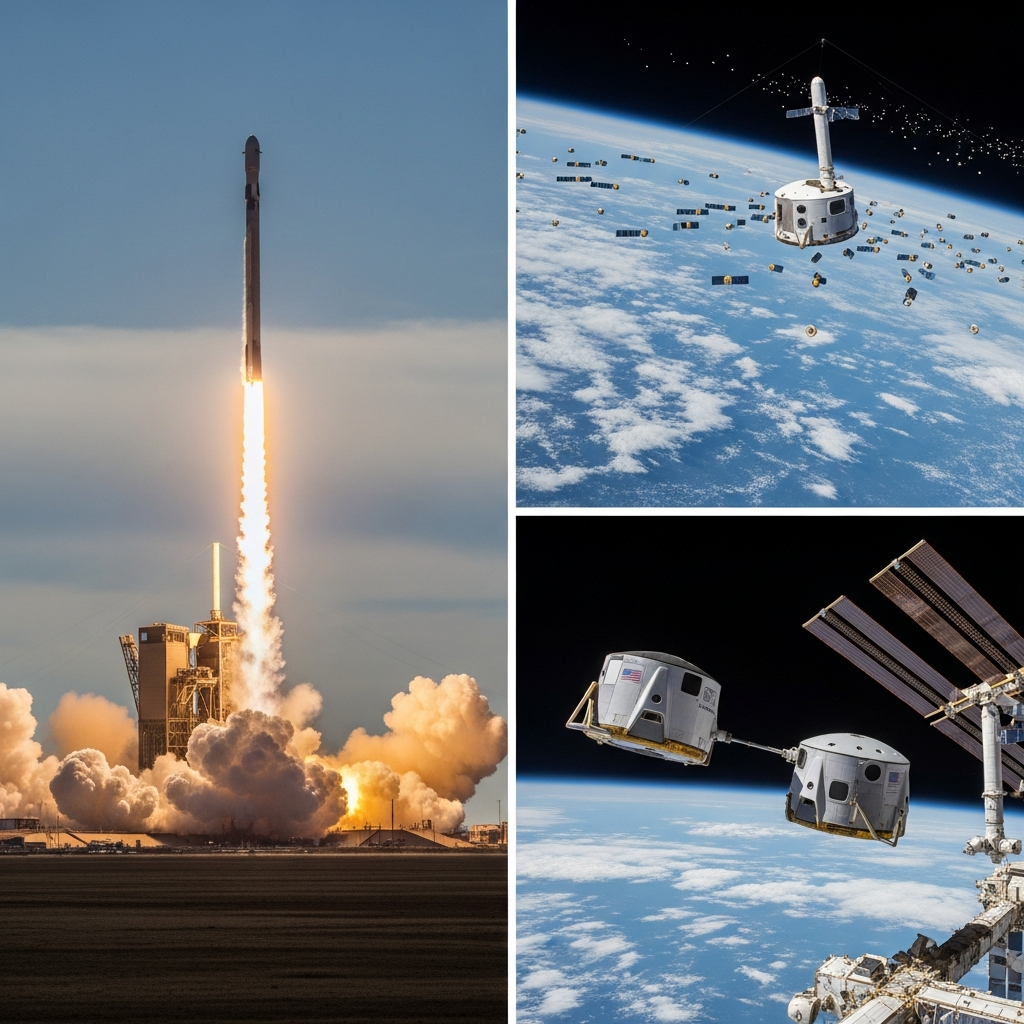
SpaceX ignited the space world with a truly historic weekend on February 14, 2026, achieving two monumental milestones within hours. The company successfully launched its 600th Falcon 9 rocket, deploying a fresh batch of Starlink satellites. Simultaneously, its Crew Dragon spacecraft “Freedom” made a precise docking with the International Space Station, marking SpaceX’s 20th human spaceflight mission. This remarkable convergence of events underscores SpaceX’s unparalleled operational tempo and growing influence across commercial, scientific, and national security space sectors.
A Historic Double-Header for Space Exploration
The mid-February weekend unfolded as a testament to SpaceX’s relentless innovation and ambition. From California’s coast to the orbital outpost, the company showcased its dual prowess in satellite deployment and human spaceflight. These achievements highlight a pivotal moment in the ongoing evolution of private space endeavors.
Falcon 9 Reaches 600: A Starlink Milestone
The 600th Falcon 9 launch occurred on Saturday evening, February 14, 2026, from Space Launch Complex 4 East (SLC-4E) at Vandenberg Space Force Base. This mission, designated Starlink 17-13, successfully sent 24 Starlink V2 Mini satellites into low Earth orbit. Liftoff was precisely at 5:59:59 p.m. PST (8:59:59 p.m. EST / 01:59:59 UTC), marking a precise end-of-window launch. The rocket soared on a southerly trajectory, delivering its critical broadband internet payload.
The mission utilized Falcon 9 first stage booster B1081. This booster demonstrated incredible durability, completing its 22nd flight. Its extensive service record includes supporting four crucial missions for NASA: Crew-7, CRS-29, PACE, and TRACERS. More than eight minutes after liftoff, B1081 executed a flawless vertical landing on the autonomous drone ship ‘Of Course I Still Love You’, positioned in the Pacific Ocean. This marked the 178th landing on that specific vessel and an astounding 571st overall booster landing for SpaceX, further solidifying its reusable rocket technology. All 24 Starlink satellites were successfully deployed later that evening.
Crew Dragon “Freedom” Docks with the ISS
Adding to the weekend’s excitement, just hours before the 600th Falcon 9 launch, SpaceX’s Crew Dragon spacecraft named “Freedom” achieved a successful rendezvous with the International Space Station (ISS). This significant event occurred at 3:15 p.m. EST (20:15 UTC) on the same Saturday, February 14. The Crew-12 mission, carrying three NASA astronauts and one Roscosmos cosmonaut, launched approximately 34 hours prior from Pad 40 at Cape Canaveral Space Force Station.
The Crew-12 mission, launched on Friday, February 13, 2026, defied superstition with a smooth countdown and liftoff. The crew comprises NASA astronauts Jessica Meir (Commander) and Jack Hathaway, Roscosmos cosmonaut Andrey Fedyaev, and European Space Agency astronaut Sophie Adenot. This journey represented the 20th human spaceflight mission for SpaceX. NASA Administrator Jared Isaacman personally oversaw this launch, highlighting the mission’s importance to national and international space endeavors. The successful docking underlined SpaceX’s established reliability in safely transporting crews to orbit.
The Unprecedented Pace of SpaceX Operations
The simultaneous achievements of the 600th Falcon 9 launch and the 20th Crew Dragon docking are not isolated events. They reflect SpaceX’s relentless operational tempo, fundamentally transforming the space industry. This rapid cadence has reshaped timelines for satellite deployment and human access to space.
Driving the Starlink Megaconstellation Forward
The Starlink program exemplifies this aggressive launch schedule. The Starlink 17-13 mission contributed another 24 V2 Mini satellites, crucial for expanding the global broadband internet constellation. This aggressive deployment rate is evident in the numbers: by January 29, 2026, SpaceX had already launched its 11,000th Starlink satellite since May 2019. In 2026 alone, the company had already delivered seven batches of Starlink satellites, totaling 195 new spacecraft to low Earth orbit from both Vandenberg and Cape Canaveral. Such rapid expansion is key to providing reliable, low-latency internet access worldwide.
Falcon 9’s Reliability: The Cornerstone of Success
The remarkable reusability of the Falcon 9 first stage is the bedrock of SpaceX’s high-cadence operations. Booster B1081’s 22nd flight and the 571st overall booster landing illustrate this mastery. Each successful landing, whether on the ‘Of Course I Still Love You’ drone ship in the Pacific or ‘A Shortfall of Gravitas’ in the Atlantic, dramatically reduces launch costs. This cost-effectiveness makes space more accessible for various missions. The ability to reuse boosters multiple times offers significant economic and environmental advantages over traditional expendable rockets.
Broader Implications for Space and Beyond
SpaceX’s dual triumphs on this historic weekend extend far beyond just mission statistics. They signify a maturing space ecosystem, with profound implications for national security, scientific research, and future exploration. The efficiency and reliability demonstrated by the Falcon 9 and Crew Dragon are pivotal for current and future space endeavors.
Securing Vital Capabilities: GPS and National Security
SpaceX’s capabilities are increasingly vital for national security. Just weeks prior, on January 27, 2026, a Falcon 9 successfully launched the U.S. Space Force’s GPS 3 SV09 satellite. This mission was notable as it marked the third instance where a GPS satellite was moved from a United Launch Alliance (ULA) Vulcan rocket to a Falcon 9. This flexibility, driven by the National Security Space Launch (NSSL) program, allows the Space Force to deploy critical GPS capabilities faster and alleviate congestion in other launch manifests. These satellites, equipped with M-Code technology, provide enhanced positioning, navigation, and timing for defense operations.
Looking Ahead: The Future of ISS and Deep Space
The busy schedule for the International Space Station, following the Crew-12 arrival, highlights the increasing demand for orbital access. This includes upcoming cargo missions and spacewalks. SpaceX’s proven ability to consistently deliver both cargo and crew is indispensable for maintaining the ISS. Furthermore, the experience gained from hundreds of Falcon 9 launches and numerous human spaceflight missions directly supports the development of next-generation rockets like Starship and ambitious deep-space exploration goals, including the Artemis lunar program.
Frequently Asked Questions
What makes the 600th Falcon 9 launch a significant milestone for SpaceX?
The 600th Falcon 9 launch is a monumental achievement, showcasing the rocket’s unparalleled reliability and the company’s rapid operational cadence. It signifies the maturity of SpaceX’s reusable rocket technology, with booster B1081 completing its 22nd flight. This high frequency of launches, exemplified by the rapid deployment of Starlink satellites, allows for swift expansion of orbital constellations and significantly reduces the cost of access to space, fundamentally transforming the commercial and government space sectors.
Where do SpaceX’s Falcon 9 rockets typically launch from, and what is the significance of Vandenberg Space Force Base?
SpaceX Falcon 9 rockets primarily launch from two locations: Cape Canaveral Space Force Station in Florida and Vandenberg Space Force Base in California. Cape Canaveral is typically used for launches requiring an eastward trajectory, often for missions to the International Space Station (ISS) or geosynchronous orbit. Vandenberg Space Force Base, located on the West Coast, is crucial for launches requiring a southerly trajectory, which is ideal for deploying satellites into polar orbits, such as many Starlink missions. This allows for diverse orbital access and efficient management of launch schedules.
What does SpaceX’s rapid launch cadence mean for the future of space travel and internet services?
SpaceX’s rapid launch cadence, highlighted by the 600th Falcon 9 and its 20th human spaceflight, signifies a new era of space accessibility. For internet services, it means a faster build-out of the Starlink megaconstellation, bringing high-speed, low-latency broadband to underserved areas globally. For space travel, it accelerates scientific research, commercial opportunities, and exploration. The proven reliability and reusability of the Falcon 9 reduce costs, enabling more frequent missions and paving the way for ambitious future endeavors like lunar and Martian missions.
Conclusion
The historic weekend of February 14, 2026, cemented SpaceX’s position at the forefront of global space innovation. The 600th Falcon 9 launch, propelling the Starlink constellation forward, combined with the 20th successful Crew Dragon docking at the ISS, paints a vivid picture of a company executing at an astonishing scale. These milestones are more than just numbers; they represent the successful convergence of ambitious engineering, robust reusability, and strategic vision. As SpaceX continues to push the boundaries of what’s possible, the future of space exploration, global connectivity, and humanity’s reach beyond Earth looks brighter and more accessible than ever before.