
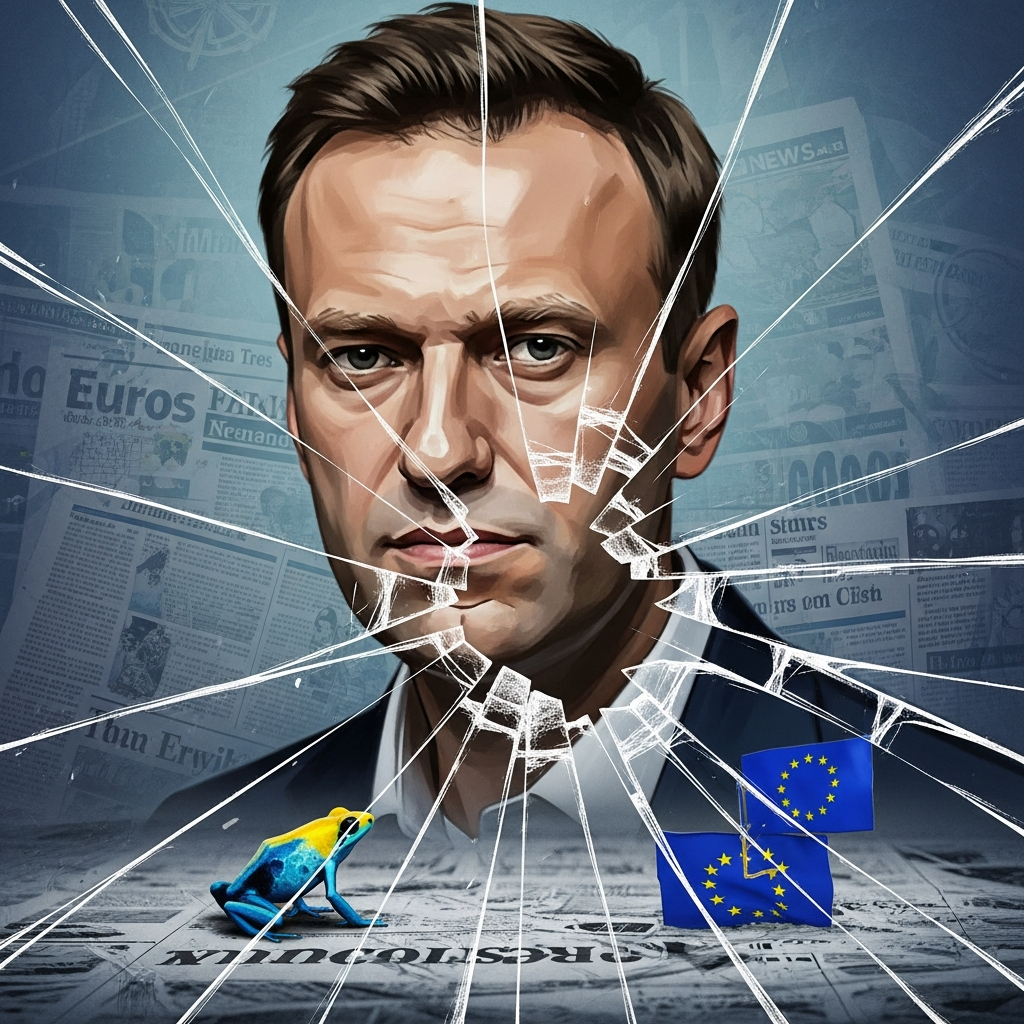
In a groundbreaking development that has sent shockwaves through the international community, several European nations have formally accused Russia of poisoning and killing its prominent opposition leader, Alexei Navalny. Their definitive conclusion points to a highly potent toxin derived from dart frogs, identified as epibatidine. This grave accusation, backed by laboratory findings, directly challenges the Kremlin’s narrative and intensifies calls for accountability on the global stage.
This article delves into the detailed allegations, the nature of the deadly toxin, and the far-reaching implications for Russia and international law. We explore the evidence presented by European powers, Russia’s steadfast denials, and the historical context of alleged state-sponsored poisonings.
The Deadly Toxin: Epibatidine Unveiled
At the heart of these serious allegations lies epibatidine, a lethal neurotoxin. Naturally found in the skin secretions of certain wild dart frogs native to South America, it is not indigenous to Russia. European scientists, however, suspect that the substance used in Navalny’s case was manufactured in a laboratory, potentially making its origin harder to trace.
Epibatidine’s effects on the human body are devastating. Exposure can lead to severe shortness of breath, debilitating convulsions, and seizures. It also dramatically slows the heart rate, often proving fatal even upon minimal contact. The specificity of this toxin, coupled with Navalny’s sudden death and reported symptoms, strongly points towards a deliberate act of poisoning, according to Western intelligence.
How Epibatidine Works in the Human Body
Epibatidine functions by targeting nicotinic acetylcholine receptors in the nervous system. This interference disrupts crucial nerve signals, leading to the rapid onset of severe neurological and physiological distress. Its potency is remarkable, making it a highly effective and swift-acting agent for incapacitation and death. The suspected lab-synthesis suggests a sophisticated operation, moving beyond naturally acquired toxins to a refined chemical weapon.
European Nations Present Conclusive Evidence
A powerful coalition of five European nations – the United Kingdom, France, Germany, Sweden, and the Netherlands – has jointly stated their findings. They assert that rigorous analyses of tissue samples taken from Alexei Navalny’s body “conclusively confirmed the presence of epibatidine.” This scientific validation forms the bedrock of their accusation against the Russian government.
These countries, all members of NATO, released a joint statement expressing “confidence” that the Russian dissident was poisoned by the Russian government. They explicitly refuted Russia’s claim of natural causes, stressing that “given the toxicity of epibatidine and reported symptoms, poisoning was highly likely the cause of his death.” Furthermore, they emphasized Russia’s culpability by stating, “Navalny died while held in prison, meaning Russia had the means, motive and opportunity to administer this poison to him.” This crucial argument underpins the direct accusation against the Kremlin.
The “Means, Motive, and Opportunity” Argument
The argument from the European nations rests on three pillars:
Means: Russia, as a state, possesses the capability to develop or acquire highly potent toxins like synthesized epibatidine and administer them covertly.
Motive: Navalny was President Vladimir Putin’s fiercest political opponent and a prominent anti-corruption crusader. Silencing dissenting voices is a known tactic.
Opportunity: Navalny was imprisoned in an Arctic penal colony under strict state control. This environment provided an unparalleled opportunity for the state to administer such a substance without external interference. British Foreign Secretary Yvette Cooper explicitly stated, “Only the Russian government had the means, the motive and the opportunity to use that toxin against Alexei Navalny in prison.”
Alexei Navalny’s Legacy and Tragic End
Alexei Navalny, 47, died on February 16, 2024, in a high-security penal colony above the Arctic Circle. At the time of his death, he was serving a 19-year sentence. Both he and his supporters consistently described these charges of fraud and contempt of court as politically motivated, designed to silence his vocal opposition to President Vladimir Putin. His death followed his courageous decision to return to Russia in 2021, despite knowing he faced immediate arrest and imprisonment.
Navalny’s unwavering stance against corruption and his ability to mobilize public sentiment made him a significant threat to the Russian establishment. His demise in state custody, under highly suspicious circumstances, has reignited global outrage and focused international scrutiny on the Kremlin’s treatment of its political adversaries.
Kremlin’s Stance: Denials Amidst Growing Pressure
The Russian government has vehemently denied any involvement in Navalny’s death since the very beginning. Officials have consistently maintained that he died from natural causes, allegedly feeling unwell after a walk. Russian Foreign Ministry spokesperson Maria Zakharova has stated that Russia would only offer substantive comment once the full test results and “formulas for the substances” are publicly presented. She dismissed current statements as “information leaks aimed at distracting attention from the West’s pressing problems.”
These denials, however, have done little to quell the accusations from Western powers. The discrepancy between Russia’s official narrative and the “conclusive” European lab findings underscores the deep chasm in trust between Russia and the West.
A Pattern of Allegations: Russia’s History with Poisons
The accusation surrounding Navalny’s death is not an isolated incident. It falls within a broader, disturbing pattern of alleged Russian state-sponsored poisonings targeting dissidents and former intelligence agents abroad.
Previous Incidents
2020 Novichok Poisoning: Alexei Navalny himself was famously poisoned with a Novichok nerve agent during a business trip in Russia. He survived after being airlifted to Germany for treatment, directly blaming the Kremlin for the attack.
2018 Skripal Poisoning: In 2018, Russian double agent Sergey Skripal and his daughter were poisoned with Novichok in Salisbury, England. A UK public inquiry later concluded that President Putin must have ordered the attack, which also resulted in the death of British citizen Dawn Sturgess.
2006 Litvinenko Poisoning: Former Russian agent Alexander Litvinenko died in London from radioactive polonium-210. A British inquiry attributed his death to two Russian agents, an act believed to have been sanctioned at the highest levels of the Russian state.
In every single one of these high-profile cases, Russia has consistently denied any involvement, often attributing them to provocations or natural causes. This established pattern makes the current epibatidine accusation even more chilling for international observers.
International Repercussions and the OPCW
In response to these latest findings, the five European countries have announced their intention to report Russia to the Organisation for the Prohibition of Chemical Weapons (OPCW). They are formally informing the Director-General of this alleged breach of the Chemical Weapons Convention. Furthermore, some statements have highlighted Russia’s “repeated disregard for international law” and breaches of both the Chemical Weapons Convention and the Biological and Toxin Weapons Convention.
Such a report to the OPCW carries significant weight. It underscores the international community’s commitment to upholding bans on chemical and biological weapons. Holding Russia accountable for these “repeated violations” is deemed essential for the credibility of international arms control treaties and global security.
Voices of Outrage: Yulia Navalnaya and Western Leaders
Reactions from high-profile figures have been swift and decisive. Alexei Navalny’s widow, Yulia Navalnaya, who has consistently accused Putin of her husband’s murder, declared that her initial suspicion had now become a “science-proven fact.” Speaking at the Munich Security Conference, flanked by European foreign ministers, she reaffirmed her conviction, stating, “Putin killed Alexei with chemical weapon” and labeling him “a murderer” who “must be held accountable.”
British Foreign Secretary Yvette Cooper emphasized that these findings “shine a light on the Kremlin’s barbaric plot to silence his voice.” French Foreign Minister Jean-Noël Barrot posted on X (formerly Twitter) that the alleged poisoning indicates “Vladimir Putin is prepared to use biological weapons against his own people in order to remain in power.” These strong statements reflect a unified Western condemnation and a clear message that such actions will not be overlooked.
The precise methods by which samples from Navalny’s body were obtained or where they were assessed remain undisclosed publicly. However, British Foreign Secretary Cooper confirmed that “UK scientists worked with our European partners to pursue the truth” regarding Navalny’s death. This collaborative effort emphasizes the seriousness and scientific rigor behind the European conclusions.
Broader Geopolitical Impact
The formal accusation that Russia used a dart frog toxin to assassinate Alexei Navalny has profound geopolitical implications. It further isolates Russia on the international stage, deepening mistrust and hardening diplomatic stances with Western powers. Such an alleged act of state-sponsored chemical weapon use against a domestic political opponent would represent a stark violation of international norms and laws. It reinforces the perception of Russia as a rogue state willing to employ extreme measures to maintain power and suppress dissent, further straining relations that are already tense due to ongoing conflicts and geopolitical rivalries. The long-term consequences could include increased sanctions, diplomatic expulsions, and a continued push for international justice.
Frequently Asked Questions
What is epibatidine and how does it affect the human body?
Epibatidine is an extremely potent neurotoxin found naturally in the skin of certain dart frogs in South America. When introduced into the human body, it rapidly attacks the nervous system. Its effects include severe shortness of breath, uncontrollable convulsions, debilitating seizures, and a dangerous slowing of the heart rate, often leading to death quickly. European scientists suspect the epibatidine used on Alexei Navalny was lab-synthesized, making it a sophisticated, man-made chemical weapon.
Which European nations formally accused Russia in Alexei Navalny’s death?
A coalition of five European nations—the United Kingdom, France, Germany, Sweden, and the Netherlands—have formally accused Russia of poisoning Alexei Navalny with epibatidine. They jointly released statements based on laboratory analyses of Navalny’s tissue samples, which they assert “conclusively confirmed” the presence of the lethal neurotoxin. These nations have also announced their intention to report Russia to the Organisation for the Prohibition of Chemical Weapons (OPCW).
Why are these accusations significant for Russia’s international standing?
These accusations are profoundly significant for Russia’s international standing because they imply the state’s use of a chemical weapon against a political opponent, directly violating international laws like the Chemical Weapons Convention. Such an act, if proven, would further solidify Russia’s image as an aggressor and a rogue state, leading to increased diplomatic isolation, potential further sanctions, and intensified calls for accountability in international forums. It also highlights a disturbing pattern of alleged state-sponsored poisonings, undermining global trust in Russia.
Conclusion
The formal accusations by five European nations, pointing to epibatidine as the agent of Alexei Navalny’s death and directly implicating Russia, represent a critical turning point. Backed by scientific analysis, these claims put immense pressure on the Kremlin, which maintains its steadfast denials. This incident adds a chilling new chapter to the history of alleged Russian state-sponsored poisonings, reinforcing concerns about international law and human rights. As the call for accountability grows louder, the world watches to see how international bodies like the OPCW will respond and what consequences, if any, Russia will ultimately face for the death of its most formidable opposition leader.