Netflix’s opulent Regency-era drama, Bridgerton, famed for its lavish costumes and enchanting romances, has once again captured audience attention – this time, for an unexpected reason. Eagle-eyed fans of the show’s recently released Season 4 have uncovered a subtle yet glaring Bridgerton editing error that momentarily shatters the period illusion. This small production mistake has ignited widespread discussion among viewers, sparking debates about historical accuracy versus artistic license in television.
Our initial look suggests this minor gaffe, reminiscent of past blunders in other hit series, has become a hot topic across social media. The incident involves a modern accessory making an anachronistic appearance, prompting many to wonder if Netflix will quietly address the oversight as it has with similar issues before. This article delves into the details of the Bridgerton anachronism, explores the fan reactions, and places it within the broader context of production challenges in period dramas.
The Glaring Anomaly: A Modern Accessory in the Regency Era
The heart of the controversy centers on actress Katie Leung, who portrays the cunning Lady Araminta in the new season. While filming a scene, a small, flesh-colored Band-Aid was visibly present on her ear. This patch was evidently intended to conceal a cartilage piercing, a common modern body modification. However, its presence immediately stood out to observant viewers.
The anachronism is clear: Band-Aids, as we know them today, were not invented until 1920. This places their existence well beyond the early 19th-century setting of Bridgerton. Araminta, characterized as the formidable stepmother to Yerin Ha’s Sophie Baek, is a complex figure whose cruelty is reportedly rooted in a painful backstory. Yet, even her intricate character design couldn’t distract from this misplaced item. The contrast between the meticulously designed Regency world and this contemporary medical patch was too stark for many fans to overlook.
Viral Scrutiny: How Fans Uncovered the Oversight
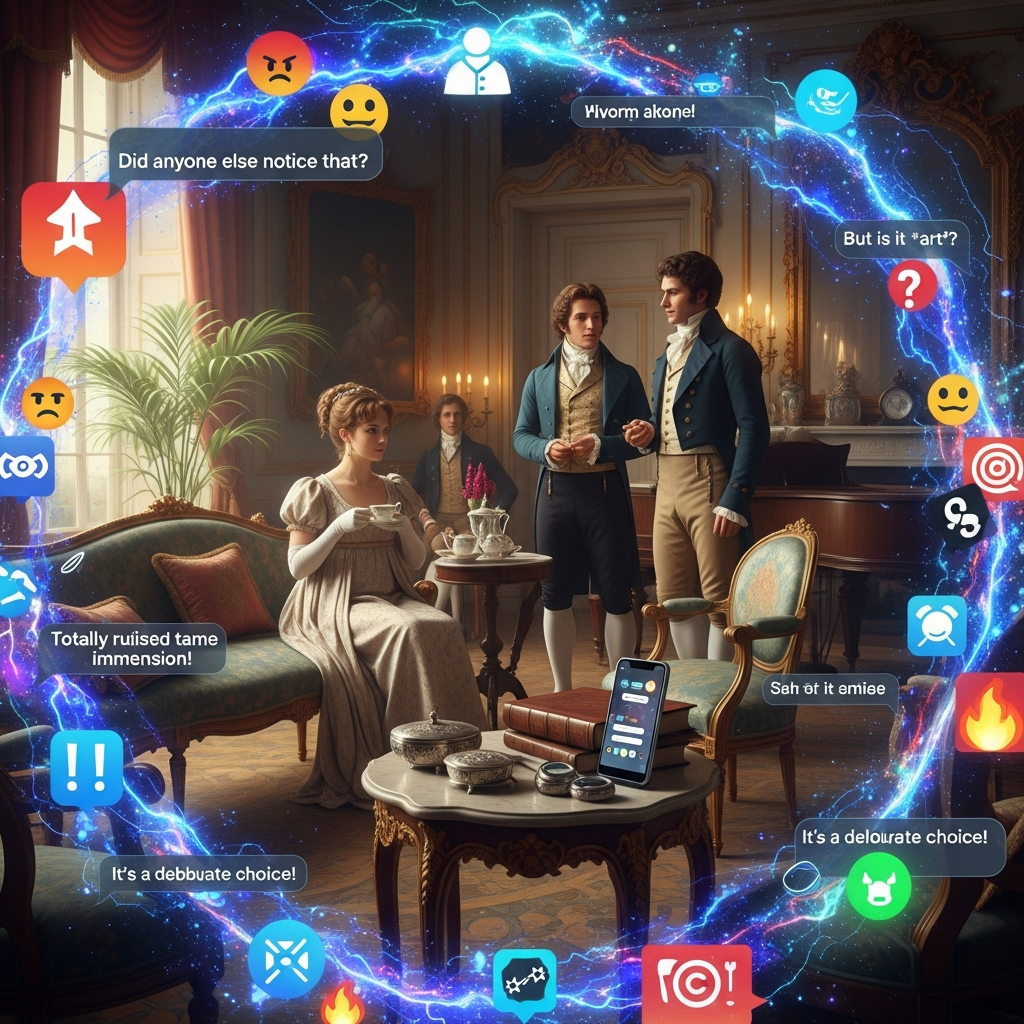
The discovery of this Bridgerton editing error spread like wildfire across social media platforms, particularly TikTok. Fans quickly shared zoomed-in clips and screenshots, with one popular post playfully asking, “Bandaids in this era? The ton want to know.” Comment sections exploded with confirmation from other viewers who had also spotted the mistake. This rapid identification highlights the intense scrutiny and dedication of Bridgerton‘s global fanbase, renowned for appreciating the show’s elaborate details, from feathered accessories to corsets.
Some fans even suggested alternative, period-appropriate coverings for the piercing, such as a jeweled ear cuff, or simply wished for better concealment from the production team. This collective effort in spotting minute details showcases the powerful “ton’s gossip machine” extending from the show’s narrative directly into its viewership’s online discourse.
The Authenticity Debate: Artistic License vs. Historical Fidelity
The anachronistic Band-Aid sparked a lively debate among fans regarding Bridgerton‘s commitment to historical accuracy. Some viewers staunchly defended the series, arguing that it has always taken creative liberties. They pointed to other modern elements like fake eyelashes, contemporary musical choices, and diverse casting, asserting that the show is not, and never intended to be, a strictly historically accurate portrayal of the Regency era. For these fans, focusing on such a minor detail detracts from the overall enjoyment and the show’s primary goal: captivating romance and engaging drama. As one user noted, “People in the comments complaining about seeing piercing holes the actors have are wild. They have lives outside of their roles.”
Conversely, others criticized the production for the oversight, feeling that even minor Regency era inaccuracy can break the immersive illusion of a period drama. They emphasized that while Bridgerton embraces creative freedom, core period aesthetics should remain consistent. This tension reflects an ongoing challenge for period piece creators: balancing artistic vision with audience expectations for authenticity, especially in an era of heightened fan scrutiny.
Not Alone: Past Production Blunders in Popular Culture
The Bridgerton Band-Aid incident is far from an isolated event in television history. Major productions frequently encounter similar blunders, often caught by devoted fans. Perhaps the most famous example is the infamous Starbucks coffee cup spotted in a scene during the final season of HBO’s Game of Thrones. This oversight quickly became a global meme.
Netflix itself has a history of quietly fixing such issues. For instance, in Stranger Things Season 5, a character named Holly Wheeler was seen wearing a shirt with a visible Under Armour logo. This was anachronistic for the show’s 1980s setting, as the brand was not founded until 1996. Following viewer complaints, Netflix digitally removed the logo, demonstrating a precedent for addressing these types of Netflix bloopers. The Duffer Brothers, creators of Stranger Things, are even known for making “micro-corrections” retroactively, like fixing a continuity error regarding Will Byers’ birthday.
Other minor Stranger Things errors included visible orange and blue electrical tape scene markers on the ground in a Season 5 episode, and a flashback contradiction where Castle Byers was built on a sunny day despite Jonathan’s earlier recollection of a rainy, all-night endeavor. These instances highlight that production mistakes, whether minor or more significant, are an almost inevitable part of large-scale television production.
Netflix’s Potential Response and Why These Errors Captivate Us
Given Netflix’s history of quietly making digital corrections, it is plausible that the Katie Leung Band-Aid might also be edited out in future versions of the Bridgerton episode. These fixes, often made without official announcement, demonstrate a platform’s responsiveness to fan feedback and a commitment to maintaining production quality, even post-release.
But why do these small errors, like a production mistake in Bridgerton, capture so much attention? The phenomenon speaks to the deep engagement viewers have with their favorite shows. Fans often become detectives, poring over scenes, not necessarily out of malice, but from a place of genuine immersion and passion. Spotting an anachronism or continuity error can become a shared, interactive experience, turning viewers into active participants in the show’s ongoing narrative, even if it’s just about correcting a tiny detail. It also reminds us that even with vast budgets and intricate planning, human error is always a factor in large-scale productions.
Frequently Asked Questions
What was the specific editing error discovered in Bridgerton Season 4?
In Bridgerton Season 4, eagle-eyed fans spotted a modern, flesh-colored Band-Aid on the ear of actress Katie Leung, who portrays Lady Araminta. This accessory was presumably covering a cartilage piercing. The error is anachronistic because Band-Aids were not invented until 1920, making their appearance in the early 19th-century Regency setting of the show historically inaccurate. The oversight quickly went viral across social media.
Has Netflix fixed similar historical inaccuracies in other popular shows?
Yes, Netflix has a precedent for digitally correcting such errors. A notable example comes from Stranger Things Season 5, where a character was seen wearing a shirt with an Under Armour logo, a brand founded in 1996, despite the show being set in the 1980s. Following fan complaints, Netflix quietly removed the logo from the scene. This suggests that the platform is responsive to feedback regarding anachronisms and production oversights, and may apply similar “micro-corrections” to Bridgerton.
Why do fans intensely scrutinize period dramas like Bridgerton for anachronisms?
Fans scrutinize period dramas for anachronisms due to a combination of deep immersion, a passion for historical detail, and the interactive nature of modern fandom. While Bridgerton is known for its creative liberties (like contemporary music), many viewers still expect a degree of visual and historical consistency. Spotting an error, like a Regency era inaccuracy, becomes a shared online activity, allowing fans to engage further with the show and assert their expertise. It also highlights the meticulous care required in productions striving for both historical accuracy and artistic freedom.
Conclusion: The Enduring Allure of the Ton (and its Imperfections)
The discovery of the Bridgerton editing error in Season 4 serves as a fascinating snapshot of modern television production and fan culture. It underscores the challenges faced by period dramas in maintaining an immaculate historical façade, even with vast resources. From forgotten coffee cups in Westeros to modern sportswear in Hawkins, these fleeting imperfections are a reminder that even the most elaborate illusions are crafted by human hands.
Ultimately, while the Katie Leung Band-Aid may have briefly broken the Regency spell for some, it has also sparked engaging discussions, deepened fan engagement, and provided another testament to the enduring power of shows like Bridgerton to captivate audiences, flaws and all. As viewers continue to binge-watch, the “ton’s gossip machine” remains ever-active, ready to celebrate triumphs and, occasionally, point out a charming little slip-up.