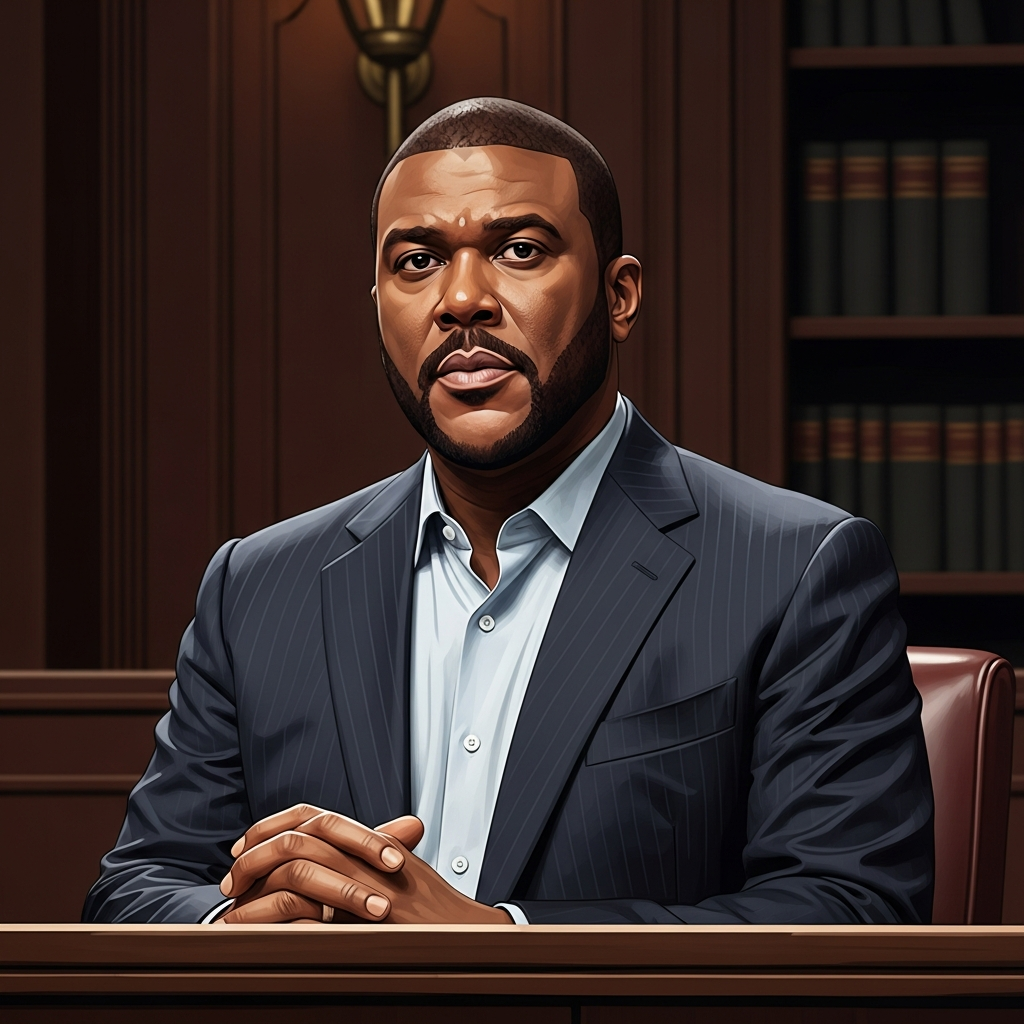
The renowned filmmaker and media mogul, Tyler Perry, is currently entangled in a second high-profile sexual assault lawsuit, adding another layer of legal complexity to his illustrious career. Actor Mario Rodriguez, known for his role in Perry’s film Boo! A Madea Halloween, has filed a lawsuit alleging multiple instances of sexual assault and battery. This new legal challenge follows closely on the heels of a separate $260 million lawsuit filed earlier by actor Derek Dixon, intensifying scrutiny on Perry’s conduct within the entertainment industry.
Rodriguez’s complaint, lodged in a California state court, outlines a series of alleged encounters spanning several years at Perry’s Los Angeles home. The lawsuit contends that Perry leveraged his significant industry power and influence to make unwanted sexual advances, creating a coercive environment for aspiring actors. These serious allegations have been vehemently denied by Perry’s legal team, who characterize the claims as a financially motivated “failed money grab.”
Mario Rodriguez’s Detailed Allegations Against Tyler Perry
Mario Rodriguez’s lawsuit paints a troubling picture of alleged misconduct that began in 2014 or 2015. Rodriguez claims their initial connection formed through a gym trainer at Equinox. Soon after, Perry reportedly reached out to Rodriguez, offering him an audition for Boo! A Madea Halloween. Following his casting, Rodriguez states he was invited to Perry’s home, where the alleged assaults commenced.
One early incident during a movie screening at Perry’s home reportedly involved Perry placing his hands on Rodriguez’s legs, rubbing his inner thigh near his penis. When Rodriguez attempted to leave, Perry allegedly offered, “Man if you would just come, I would take care of you for the rest of your life and you wouldn’t have to worry about anything.” Rodriguez alleges a similar incident in 2016, after filming for Boo! A Madea Halloween concluded, where Perry again grabbed his leg and inner thigh during a discussion about future career prospects.
Escalating Claims and Payments
Further allegations detail more explicit encounters. In 2018, Rodriguez claims Perry contacted him about a role in The Oval, leading to dinner and a subsequent visit to Perry’s residence. There, Perry allegedly “tightly hugged” Rodriguez, attempted to unbuckle his pants, and “reached into Mr. Rodriguez’s underwear and grabbed his penis.” The lawsuit also states Perry made “sexual moaning noises” while pressing his body against Rodriguez. Rodriguez asserts he managed to free himself, after which Perry reportedly apologized and gave him $5,000.
Another incident in 2019 describes Perry allegedly grabbing Rodriguez’s hand and placing it on his own penis, repeating the offer: “If you were to just be with me, I would take care of you, and you wouldn’t have to ever worry about anything.” Rodriguez declined these advances and again received $5,000. These payments, Rodriguez alleges, followed his rejections of Perry’s advances.
Tyler Perry’s Firm Denial and Legal Counter-Strategy
Tyler Perry, through his attorney Alex Spiro, has forcefully rejected all of Mario Rodriguez’s allegations. Spiro released a statement dismissing the lawsuit as “yet another demand from more than a decade ago which will also be a failed money grab.” This defense strategy implies that the claims lack merit and are primarily motivated by financial gain. Spiro also highlighted that the “very same lawyer,” Jonathan Delshad, representing Rodriguez, had recently failed in another matter against Mr. Perry, suggesting a pattern of similar, unsuccessful attempts.
This consistent denial frames the legal battle as a challenge against what Perry’s team views as opportunistic claims rather than legitimate grievances. Such a stance is common in high-profile cases, where defendants frequently argue that accusers are seeking to exploit their fame and wealth.
Lionsgate Named as a Defendant: Broader Accountability
Notably, Mario Rodriguez’s lawsuit extends beyond Tyler Perry, also naming Lionsgate, the distributor of Boo! A Madea Halloween, as a defendant. Rodriguez accuses Lionsgate of “reckless disregard” and turning a blind eye to Perry’s alleged misconduct. The lawsuit claims that the film distributor was “aware” of Perry’s alleged inappropriate behavior and “continues to provide Perry with funding to create films… to make sure that actors working with Perry are not assaulted.”
This inclusion raises questions about institutional accountability within Hollywood and the responsibility of studios and distributors to ensure a safe working environment. The claim suggests a systemic failure to intervene or investigate known allegations, potentially expanding the scope of liability beyond the individual accused. Rodriguez is seeking at least $77 million in damages from both Perry and Lionsgate.
The Derek Dixon Lawsuit: A Pattern of Allegations
The Mario Rodriguez lawsuit gains significant context when viewed alongside the earlier $260 million lawsuit filed by actor Derek Dixon in June. Dixon, who appeared in Perry’s series The Oval and Ruthless, also accused the filmmaker of sexual harassment, assault, and battery. Dixon’s complaint detailed an alleged incident in June 2021 where Perry purportedly groped him while Dixon was staying at Perry’s guesthouse. Dixon’s lawsuit also cites alleged text messages spanning several years, which reportedly contain repeated sexual comments and advances from Perry.
Rodriguez stated that learning of Dixon’s claims empowered him to come forward. He realized Perry was allegedly “continuing to use his power and influence to sexually assault hopeful actors.” This inspiration led Rodriguez to “obtain justice, and to finally stop Mr. Perry.” The emergence of a second accuser with similar allegations could suggest a pattern of behavior, which legal experts often consider significant in such cases. Dixon’s lawsuit, initially filed in California, has since moved to federal court in Georgia. Perry’s attorney for Dixon’s case similarly dismissed those claims as a “scam.”
Power Dynamics and Industry Impact
These lawsuits underscore the precarious position of aspiring actors in the entertainment industry, often reliant on powerful figures like Tyler Perry for career advancement. The alleged leverage of power—offering roles or career support in exchange for compliance—highlights a long-standing concern within Hollywood. The #MeToo movement brought many such hidden dynamics to light, encouraging victims to speak out against abuses of power. The dual Tyler Perry sexual assault lawsuit cases serve as a stark reminder of these ongoing challenges.
Jonathan Delshad, the attorney representing both Rodriguez and Dixon, has emphasized the strength of his clients’ claims, particularly pointing to alleged text messages as supporting evidence. He expressed his clients’ eagerness for a day in court to hold Perry accountable, hoping a jury awards damages sufficient to make Perry “regret his actions.” Delshad has also criticized the defense’s “money grab” narrative, asserting that it “do[es] nothing but enable Mr. Perry to continue to victimize people like Mr. Rodriguez.”
Frequently Asked Questions
What are the main allegations in the Tyler Perry sexual assault lawsuits?
The lawsuits primarily allege sexual assault, sexual battery, and intentional infliction of emotional distress. Actor Mario Rodriguez claims Tyler Perry made unwanted sexual advances and assaulted him on multiple occasions between 2014 and 2019, often at Perry’s home and allegedly leveraging industry power. A previous lawsuit by actor Derek Dixon also alleges sexual harassment, assault, and groping by Perry, along with inappropriate text messages, over several years. Both accusers claim Perry made financial offers following some alleged incidents.
Who are Mario Rodriguez and Derek Dixon, the accusers in these cases?
Mario Rodriguez is an actor who appeared as “Frat Guy #10” in Tyler Perry’s 2016 film Boo! A Madea Halloween. He filed his lawsuit seeking $77 million in damages, also naming Lionsgate as a defendant. Derek Dixon is another actor who worked on Perry’s BET series The Oval and Ruthless. Dixon filed his lawsuit earlier, seeking $260 million in damages. Rodriguez stated that he was inspired to come forward after learning of Dixon’s legal action against the filmmaker.
What is Tyler Perry’s response to these sexual assault claims, and what are the potential consequences?
Tyler Perry, through his attorneys Alex Spiro and Matthew Boyd, has vehemently denied all allegations in both lawsuits. His legal team has consistently characterized the claims as “failed money grabs” and “scams,” suggesting they are financially motivated and lack merit. The potential consequences for Perry could include significant financial penalties if found liable, a substantial blow to his public image, and ongoing legal battles that could divert his focus and resources from his prolific career in film and television. Lionsgate, also named in Rodriguez’s suit, could face its own legal liabilities.
Conclusion
The dual Tyler Perry sexual assault lawsuit filings by Mario Rodriguez and Derek Dixon represent a significant legal challenge for one of Hollywood’s most successful figures. These lawsuits detail serious allegations of sexual misconduct and abuse of power, painting a potentially damaging picture for the filmmaker. While Tyler Perry and his legal team maintain a strong denial, categorizing the claims as financially motivated, the ongoing legal proceedings are set to examine the evidence and testimonies closely. The outcomes of these cases could not only profoundly impact Perry’s personal and professional life but also send further ripples through the entertainment industry, reinforcing conversations about accountability and safety for all aspiring talent. The legal battle is far from over, with both sides preparing for what promises to be a complex and closely watched court process.