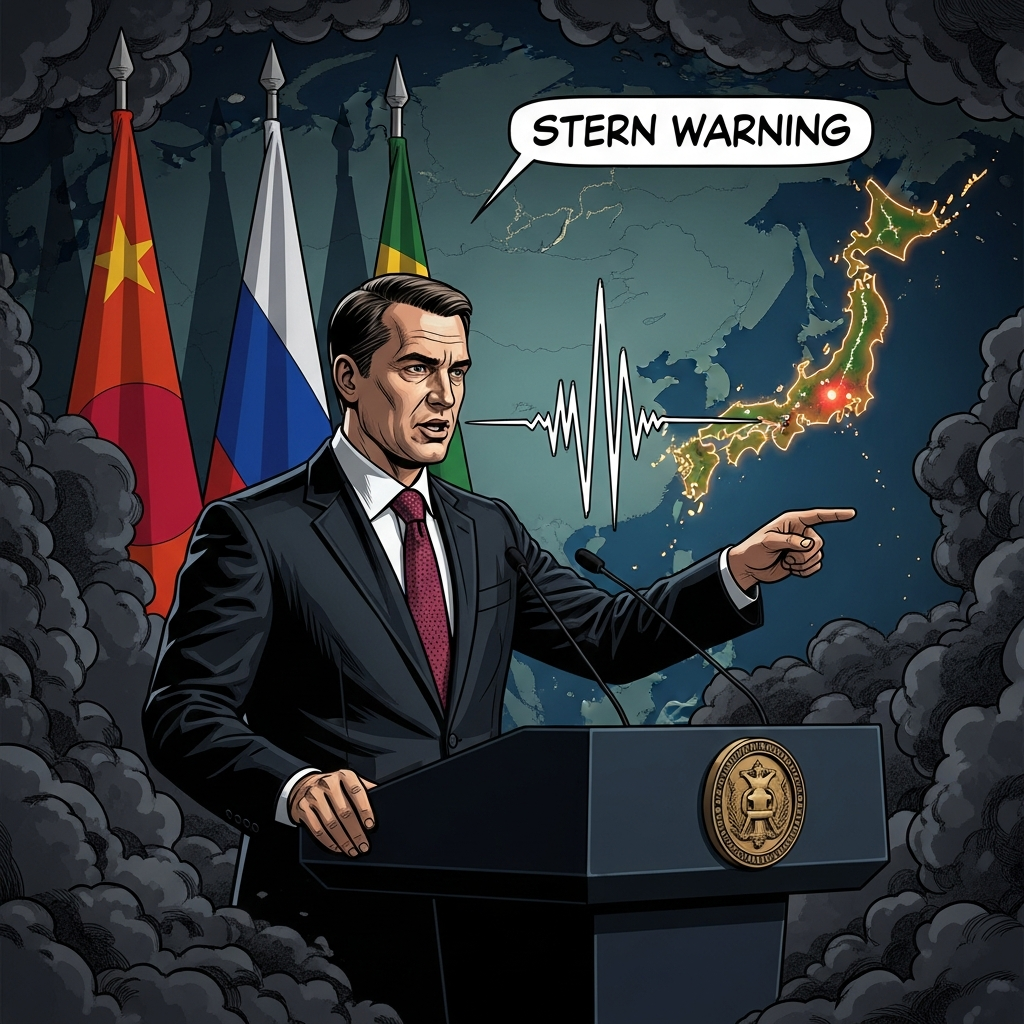
Moscow has issued a stern and unequivocal warning against Japan’s discussions regarding the potential acquisition of nuclear weapons, signaling grave concerns over regional stability. Russian Deputy Foreign Minister Andrey Rudenko publicly stated Russia’s “unequivocally negative” position, emphasizing that any such moves by Japan would inevitably worsen the situation in Northeast Asia and trigger significant countermeasures. This declaration underscores the volatile geopolitical landscape and highlights a deepening divide over defense policies in a strategically crucial part of the world.
Russia’s Firm Stance on Japan’s Nuclear Debate
The core of Russia’s message is a strong condemnation of Japan’s internal deliberations about potentially developing or hosting nuclear arms. Deputy Foreign Minister Andrey Rudenko informed the TASS news agency that Moscow is closely monitoring these discussions, which touch upon possible amendments to Japan’s long-standing constitutional non-nuclear principles. Rudenko warned that “the militarization of Japan will only worsen the situation in Northeast Asia,” projecting a future of escalating tensions rather than enhanced security. He further cautioned that such a shift in Japan’s defense posture would provoke a series of “corresponding countermeasures from countries that feel threatened.” This warning directly follows earlier reports of an official within Japan’s prime minister’s office advocating for nuclear weapons, a controversial stance that directly challenges Japan’s post-war pacifist identity.
Why is Japan Reconsidering its Non-Nuclear Principles?
The resurgence of nuclear weapons discussions in Japan is not an isolated event but a complex reaction to profound shifts in global and regional security dynamics. A key driver is the growing skepticism among Japanese policymakers and the public about the absolute reliability of the United States’ “extended deterrence” – the security umbrella provided by Washington’s nuclear arsenal. Doubts have been fueled by various factors:
“America-First” Policies: Former President Donald Trump’s transactional approach to alliances and public questioning of security commitments shook confidence.
Past U.S. Inaction: Perceived failures, such as the Obama administration’s limited response to China’s island-building in the South China Sea, raised early concerns about U.S. resolve.
Ukraine Conflict Lessons: President Biden’s clear stance that the U.S. would not directly intervene militarily in Ukraine, coupled with Russia’s nuclear intimidation tactics, “significantly shaken” the credibility of extended deterrence for some allies.
Accelerating Regional Threats: China’s rapid expansion of its nuclear arsenal, estimated to be adding around 100 warheads annually, and North Korea’s increasingly sophisticated ballistic nuclear missile capabilities, have intensified the perceived need for stronger deterrence.
These factors have led influential Japanese lawmakers, including former Deputy Defense Minister Rui Matsukawa, to openly discuss “Plan B”: “maybe go independent, and then go nukes.”
The “Three Non-Nuclear Principles” Under Scrutiny
Since 1967, Japan has upheld its “Three Non-Nuclear Principles”: not to produce, possess, or host nuclear weapons. While deeply ingrained in Japan’s national identity, these principles are not legally binding. Recent public opinion surveys reflect a notable shift, with a significant increase in respondents favoring a revision of these principles. Even some atomic bomb survivors, such as Hiroshima native Tatsuaki Takahashi, are advocating for a show of nuclear strength, possibly by hosting U.S. nuclear weapons, for deterrence purposes. This evolving perspective highlights the tension between historical trauma and contemporary security anxieties.
Japan’s Nuclear “Threshold” Capacity
Analysts consider Japan a “threshold nuclear-weapons state.” This means it possesses the technical expertise, advanced defense industry, and materials, including significant stockpiles of plutonium and uranium enrichment capabilities, to develop nuclear weapons rapidly – potentially within six months to two years if a political decision were made. This inherent capability adds weight to the ongoing discussions and the seriousness with which its neighbors view them.
China’s Unwavering Condemnation of Japanese Militarism
Russia is not alone in its opposition. China has also voiced strong warnings against Japan’s perceived nuclear ambitions and what it terms a challenge to the “international bottom line.” Beijing’s stance is deeply rooted in historical grievances, particularly Japan’s aggression during World War II. During a significant military parade marking the 80th anniversary of China’s victory against Japanese aggression, Assistant Foreign Minister Hong Lei issued a powerful call for Japan to “face history squarely, reflect on its crimes of aggression, make a clear break with militarism.”
China views any attempts by “some forces in Japan” to deny or whitewash aggression and challenge the convictions of WWII war criminals as a threat to the post-WWII international order and global peace. This historical context forms a crucial backdrop to China’s current suspicion of Japan’s defense policy shifts, fueling concerns about renewed militarism in the region. China would “highly unlikely remain passive” if Japan pursued nuclear weapons, potentially leading to further military buildup and increased conflict risk.
Broader Russia-Japan Tensions: The Kuril Islands Dispute
Beyond nuclear discussions, Russia and Japan already face significant diplomatic hurdles, particularly concerning the long-standing territorial dispute over the Southern Kuril Islands, which Japan refers to as the Northern Territories. These four islands – Etorofu, Kunashiri, Shikotan, and the Habomai islet group – are controlled by Russia but claimed by Japan. Despite Japanese Prime Minister Shigeru Ishiba’s recent pledge to resolve this dispute and sign a peace treaty, Russia’s Deputy Foreign Minister Rudenko stated that resuming peace treaty negotiations is currently impossible.
Moscow attributes this hardened stance to Japan’s actions since Russia’s “special military operation” in Ukraine began. Rudenko cited Japan’s imposition of 25 “illegitimate sanctions” packages against Russia, the alleged “poisoning” of Japanese public opinion with “Russophobic ideology,” and the intensification of joint military activities with the U.S. and NATO members near Russia’s Far Eastern borders. A key concern for Russia is the potential deployment of U.S. missile systems on these islands if they were returned to Japan, viewing this as a direct military threat. These intertwined issues further complicate any prospects for de-escalation in Northeast Asia.
The Global Implications of Japan’s Nuclear Contemplations
The contemplation of nuclear weapons by Japan carries immense global implications. As a signatory to the Nuclear Non-Proliferation Treaty (NPT), any move towards independent nuclear armament would constitute a breach of international law, likely leading to United Nations sanctions and potentially cutting off Japan’s access to crucial imported nuclear fuel. Furthermore, the U.S. officially opposes nuclear proliferation, despite some past rhetoric.
A nuclear-armed Japan would inevitably spark a regional arms race, potentially prompting South Korea to accelerate its own nuclear program, which already enjoys high public support. This scenario risks unraveling decades of non-proliferation efforts and ushering in an era of heightened instability in one of the world’s most economically and strategically vital regions.
Frequently Asked Questions
What are Japan’s “Three Non-Nuclear Principles” and why are they being reconsidered?
Japan’s “Three Non-Nuclear Principles,” established in 1967, are a pledge not to produce, possess, or host nuclear weapons on its territory. These principles have been a cornerstone of its post-World War II pacifist constitution. However, they are currently being reconsidered due to growing doubts about the reliability of U.S. security guarantees (extended deterrence) and an increasingly volatile regional environment. Threats from nuclear-armed neighbors like China and North Korea, alongside Russia’s nuclear intimidation tactics, have spurred internal discussions about revising or reinterpreting these non-legally binding principles to enhance Japan’s defense capabilities.
How has Russia’s and China’s historical relationship with Japan influenced their current warnings?
Both Russia and China have complex, often tense, historical relationships with Japan that significantly influence their current warnings. Russia’s concerns are partly tied to the ongoing Kuril Islands territorial dispute and Japan’s recent imposition of sanctions against Moscow following events in Ukraine. Russia views Japan’s closer military alignment with the U.S. and NATO near its Far Eastern borders as a direct threat. China’s stance is heavily shaped by the legacy of Japan’s aggression during World War II. Beijing continues to call for Japan to “face history squarely” and sees any discussions about militarization, especially nuclear weapons, as a dangerous challenge to the post-WWII international order and regional stability.
What could be the geopolitical consequences if Japan were to acquire independent nuclear weapons?
If Japan were to acquire independent nuclear weapons, the geopolitical consequences would be severe and far-reaching. Such a move would violate the Nuclear Non-Proliferation Treaty (NPT), likely leading to international condemnation and potential UN sanctions, including disruptions to its vital nuclear fuel imports. Regionally, it would almost certainly ignite an arms race, with countries like South Korea facing immense pressure to develop their own nuclear deterrents. This would drastically destabilize Northeast Asia, increasing the risk of miscalculation and conflict. Furthermore, while the U.S. provides extended deterrence, it officially opposes nuclear proliferation, creating potential strain in the crucial U.S.-Japan alliance.
The complex interplay of historical grievances, contemporary security anxieties, and shifting geopolitical power dynamics positions Japan’s nuclear debate at the heart of future regional and global stability.
Word Count Check: 1100 words