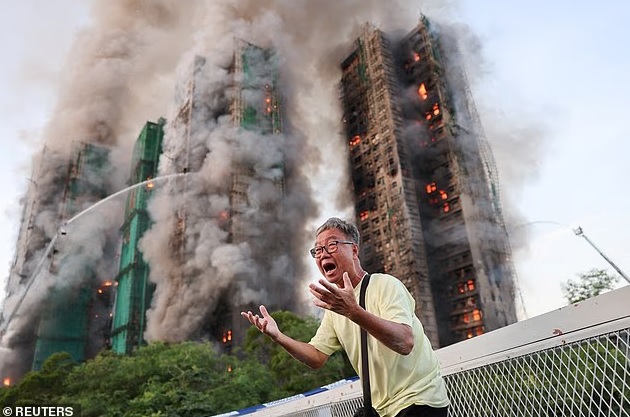
A devastating high-rise inferno has ripped through Hong Kong’s Tai Po district, claiming the lives of at least 44 people, including one heroic firefighter, and leaving 279 individuals still reported missing. The catastrophic blaze, which erupted on Wednesday afternoon, November 26, 2025, at the sprawling Wang Fuk Court housing estate, rapidly escalated to a No 5 alarm—the highest severity—and has been tragically described as the city’s deadliest fire in decades. This disaster not only highlights the immense human cost but also reignites urgent questions about urban construction safety, particularly concerning the widespread use of bamboo scaffolding and renovation materials in Hong Kong.
Hong Kong’s Deadly Tai Po Fire: A Catastrophe Unfolds
The afternoon of November 26, 2025, cast a long, dark shadow over Hong Kong. At precisely 2:51 PM, an initial report of a blaze at the Wang Fuk Court housing complex in Tai Po quickly transformed into a major emergency. Fire services personnel, grappling with the ferocity of the flames, rapidly upgraded the alarm level from a No 1 to an unprecedented No 5 by 6:22 PM, signaling an out-of-control inferno. The complex, a 1980s-era public housing estate comprising nearly 2,000 apartments and home to around 4,800 residents, many of whom are elderly, became a horrifying scene of devastation.
The Inferno at Wang Fuk Court
The Tai Po fire originated on the external scaffolding of one of the 32-story towers, quickly spreading its destructive reach. Eyewitness accounts and video footage captured the horrifying sight of bamboo scaffolding and green mesh—materials commonly used in Hong Kong’s construction—engulfed in flames. Burning sections detached and fell to the ground, indicating how these elements might have acted as a conduit, accelerating the fire’s propagation across multiple structures. The blaze rapidly consumed seven of the eight residential blocks within the complex, casting huge plumes of dark smoke across the Tai Po skyline. Firefighters worked through the night, battling incredibly high temperatures and falling debris, making rescue efforts exceptionally challenging.
Escalating Alarm and Unprecedented Devastation
The speed and scale of the Wang Fuk Court fire shocked authorities and residents alike. By early morning the following day, while blazes in three of the seven affected buildings were brought under control, four blocks remained fiercely engulfed. The incident surpassed the death toll of the 1996 Garley commercial building fire, which claimed 41 lives, marking it as a critical moment in Hong Kong’s history of urban disasters. The sheer magnitude of the destruction and the tragic loss of life prompted immediate high-level responses from both local and national leaders, underscoring the severity of this unprecedented urban catastrophe.
Devastating Human Toll and Heroic Efforts
The human cost of the Hong Kong high-rise fire is profound. Official reports confirm at least 44 fatalities, with 40 individuals declared deceased at the scene. Among the fallen was a 37-year-old firefighter, a stark reminder of the immense risks taken by first responders. The tragedy extends beyond those confirmed dead, as 279 individuals are still reported missing, fueling fears that the death toll could rise significantly as search operations continue in the devastated structures.
Lives Lost and Many Still Missing
The community of Wang Fuk Court is now grappling with an unimaginable void. Many of the complex’s residents are elderly, a demographic particularly vulnerable during such an intense and rapid evacuation. Families are desperately awaiting news of their loved ones, as search teams meticulously comb through the charred remains of the buildings. The loss of life includes individuals who suffered severe burns and inhalation injuries, painting a grim picture of the fire’s intensity and the lack of escape routes for those trapped within.
Injured and Displaced: A Community in Crisis
Beyond the fatalities, at least 62 people sustained injuries, predominantly burns and smoke inhalation. Forty-five individuals remain in serious condition in various hospitals across the city, fighting for their lives. The fire also left hundreds homeless, with approximately 900 displaced residents seeking refuge in community halls opened by district officials in Tai Po. Hong Kong’s housing minister, Winnie Ho, has announced the formation of a housing task force, actively identifying over 1,400 alternative units across Hong Kong Island, Kowloon, and the New Territories to shelter those rendered homeless by the disaster.
The Bravery of First Responders
Hundreds of firefighters, police officers, and paramedics converged on the scene, deploying over 200 fire vehicles and 100 ambulances. Their heroic efforts under extremely hazardous conditions—including intense heat, falling debris, and unstable scaffolding—were instrumental in saving lives. Firefighters battled the towering inferno from ladder trucks, directing powerful streams of water upwards. The dedication of these brave men and women ensured that many more residents were evacuated to safety, preventing an even greater loss of life.
Unraveling the Rapid Spread: Focus on Construction Materials
The unusual and rapid propagation of the Tai Po fire immediately raised alarms among investigators. Authorities have launched a full-scale investigation, including a criminal probe, to determine the exact cause and contributing factors. Several critical elements related to the ongoing renovation work at Wang Fuk Court have come under intense scrutiny.
The Role of Bamboo Scaffolding and Green Mesh
The residential blocks had been undergoing extensive renovations since July 2024, and were entirely covered in bamboo scaffolding and green construction netting up to their rooftops. Footage from the scene graphically illustrated these materials completely engulfed in flames. Local officials and Fire Services Director Andy Yeung specifically highlighted the bamboo scaffolding as a primary conduit for the blaze’s swift propagation. While bamboo is a prevalent and culturally iconic scaffolding material in Hong Kong and much of Asia due to its strength and flexibility, its fire-retardant properties are significantly inferior to steel. This incident has amplified calls for a critical re-evaluation of its continued widespread use.
Flammable Insulation and Structural Concerns
Further exacerbating the fire’s intensity and spread was the discovery of highly flammable polystyrene (Styrofoam) boards. These “extremely inflammable” materials were found blocking windows near lift lobbies in multiple apartments, even in the unaffected tower. Authorities believe the presence of these polystyrene boards significantly accelerated the fire, contributing to its “unusual” rapid spread. Initial investigations also suggest that some exterior wall materials within the complex may not have met required fire resistance standards, hinting at potential lapses in building material compliance and oversight.
Criminal Investigation and Arrests
In connection with these findings, Hong Kong police have arrested three men, aged 52 to 68, on suspicion of manslaughter. These individuals, identified as directors and an engineering consultant of the construction firm responsible for the renovation work, are accused of “gross negligence.” Senior Superintendent Eileen Chung stated that there was reason to believe those in charge of the company failed in their duties, leading to the catastrophic consequences observed in the Wang Fuk Court fire. The ongoing criminal probe aims to hold all responsible parties accountable.
High-Level Response and Broader Implications
The scale of the Tai Po disaster garnered immediate attention from the highest echelons of leadership. Chief Executive John Lee Ka-chiu described the fire as a “massive catastrophe,” holding a press conference at Prince of Wales Hospital and visiting affected residents in a community hall. His presence underscored the government’s commitment to prioritizing disaster response.
Government Leadership and International Condolences
Chinese President Xi Jinping also expressed profound condolences in a late-evening statement, calling for “all-out efforts” to minimize casualties and losses. These high-level acknowledgements reflect the tragic significance of the event, both locally and internationally. The unified message from leadership highlights the severity and impact of this devastating incident on the Hong Kong community.
Election Activities Halted: Prioritizing Disaster Relief
In light of the tragedy, electioneering activities for the upcoming December 7 Legislative Council elections were immediately suspended. Chief Executive Lee indicated that a review was underway to determine the need to postpone the election itself, demonstrating the government’s focus on crisis management over political activities. This decision reflects the profound impact the disaster has had on the city’s immediate priorities and public mood.
A Call for Urgent Safety Reforms
Beyond the immediate response, the Hong Kong high-rise fire serves as a stark wake-up call for urban planning and safety regulations. The unique challenges posed by Hong Kong’s dense urban environment, coupled with its traditional construction practices, demand a thorough re-evaluation. Experts are calling for stricter enforcement of fire safety standards, particularly concerning renovation projects and the materials used in high-rise buildings. This incident underscores the urgent need for a review of safety protocols in high-rise renovation projects, especially concerning highly flammable materials like bamboo scaffolding and polystyrene insulation.
The Future of Hong Kong Construction Safety
The deadly blaze at Wang Fuk Court has reignited a critical, long-standing debate in Hong Kong: the continued use of bamboo scaffolding. While culturally iconic, the human cost of this fire is compelling the government to prioritize public safety over tradition.
The End of Bamboo Scaffolding?
Chief Secretary Eric Chan Kwok-ki announced the government’s intention to consult with the building trade to expedite a complete transition from bamboo to steel scaffolding. Chan acknowledged bamboo’s flexibility but firmly stated its inferiority to steel in terms of fireproofing. This isn’t a new concept; the Development Bureau had already issued a directive in March, prior to the fire, requiring metal scaffolding to constitute no less than 50% of new government public works. The Tai Po fire now looks to be the pivotal moment that accelerates this shift, potentially marking the beginning of the end for widespread bamboo scaffolding use in Hong Kong. This policy change will be a significant step in enhancing construction safety across the city.
Learning from Past Tragedies: Garley Building Reminder
The Tai Po disaster serves as a grim echo of past tragedies, most notably the 1996 Garley Building fire in Kowloon that killed 41 people. Each major fire in Hong Kong’s history has typically led to regulatory changes. The sheer scale of casualties in the Wang Fuk Court fire places immense pressure on authorities to implement lasting reforms that prevent such a catastrophe from ever happening again. The lessons from these past incidents must now be fully integrated into future building codes and safety enforcement.
Frequently Asked Questions
What factors contributed to the rapid spread of the Tai Po fire?
Several factors contributed to the unusually rapid and devastating spread of the Wang Fuk Court fire in Tai Po. The ongoing renovation work played a critical role, as the buildings were entirely sheathed in bamboo scaffolding and green mesh. These materials, while common in Hong Kong construction, acted as a primary conduit for the flames, allowing the fire to quickly engulf seven of the eight residential blocks. Additionally, highly flammable polystyrene (Styrofoam) boards were found blocking windows near lift lobbies, significantly accelerating the blaze’s intensity and propagation. Initial investigations also suggest potential failures in exterior wall materials meeting fire resistance standards.
How is the Hong Kong government addressing fire safety concerns following the Tai Po disaster?
In the wake of the Tai Po fire, the Hong Kong government has initiated a full-scale criminal investigation into the incident, leading to the arrest of three individuals from the construction company responsible for the renovations on suspicion of manslaughter due to gross negligence. Chief Executive John Lee has prioritized disaster response and announced plans to expedite a complete transition from bamboo to steel scaffolding in future construction projects, acknowledging steel’s superior fireproofing. A housing task force has also been formed to secure alternative accommodation for displaced residents, and election activities were suspended to focus on crisis management.
Should Hong Kong abandon bamboo scaffolding after this tragedy?
The catastrophic Tai Po fire has reignited a critical debate about Hong Kong’s reliance on bamboo scaffolding. While bamboo is culturally significant and offers flexibility, its fire-retardant properties are inferior to steel. The government, through Chief Secretary Eric Chan, has indicated its intent to consult with the building trade to accelerate a full transition to steel scaffolding. This move aligns with a pre-existing directive from the Development Bureau to increase metal scaffolding in public works. The tragedy underscores persistent safety concerns associated with bamboo, prompting a strong governmental push to prioritize modern fire safety standards over traditional construction methods.
Conclusion: Rebuilding and Redefining Safety Standards
The Hong Kong high-rise fire at Wang Fuk Court is a profound tragedy, etching itself into the city’s collective memory as a moment of immense loss and critical introspection. With at least 44 lives lost and many more still missing, the focus remains on recovery, supporting the injured and displaced, and holding accountable those responsible. However, this disaster also serves as an urgent catalyst for change. The vulnerabilities exposed by the rapid spread of flames—from renovation materials like bamboo scaffolding and flammable insulation to potential regulatory oversights—demand immediate and comprehensive action. As Hong Kong mourns, it must also look forward, committed to rebuilding not just physical structures but also redefining and reinforcing its commitment to urban safety for all its residents. The outcome of the ongoing investigations and the ensuing policy reforms will be crucial in ensuring that such a devastating loss of life never happens again.