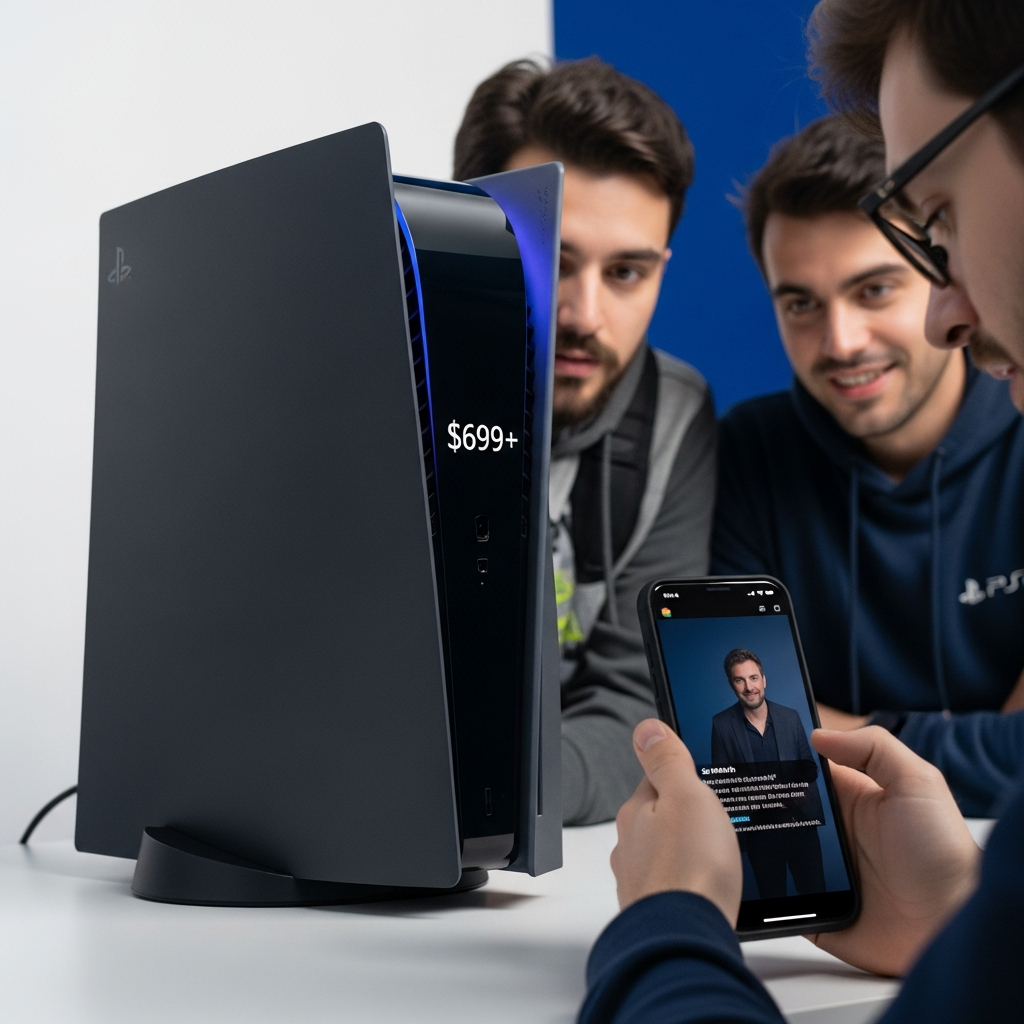
The future of gaming consoles is always a hot topic, especially when it comes to the highly anticipated PlayStation 6. Recent findings suggest a significant shift in consumer expectations for next-generation hardware pricing. A new poll conducted by Digital Foundry has revealed that a surprising number of dedicated PlayStation enthusiasts are willing to pay a premium price for the PS6, with a substantial portion ready to shell out $699 or even more. This readiness for a higher price point signals evolving market dynamics and gamer priorities.
Unpacking Key PS6 Price Poll Results
Digital Foundry, renowned for its technical analysis, recently gauged consumer sentiment on PS6 pricing through extensive polling. Their primary YouTube poll, drawing over 50,000 votes, unveiled fascinating insights. A considerable 41 percent of Digital Foundry viewers indicated they would pay $699, $799, or even more for a PlayStation 6 console. This figure is notably higher than the PlayStation 5 Disc Edition’s launch price of $499 in 2020, representing a potential $200-$300 increase from previous generations.
Despite this strong willingness for higher prices, the most common maximum price category for YouTube respondents was $599, attracting 34 percent of the vote. A smaller segment, 25 percent, stated they would only pay $499. Considering the current PS5 Disc Edition often retails around $549 due to inflation and rising component costs, a $499 PS6 would indeed be an exceptional bargain for next-gen performance.
Further reinforcing this trend, a separate poll targeting Digital Foundry’s website readers and Patreon supporters (with over 1,000 votes) showed even greater enthusiasm for premium pricing. A majority of 51 percent in this more dedicated demographic selected the $699 or $799+ options. This suggests that core enthusiasts, often early adopters, are prepared for a significant investment to access cutting-edge gaming technology.
Why Next-Gen Consoles Face Rising Costs
The observed consumer willingness to pay higher prices aligns closely with industry manufacturing estimates. Figures from respected leakers like Moore’s Law Is Dead and Kepler_L2 suggest that the PlayStation 6 could cost Sony approximately $750 to $760 per unit to manufacture. This Bill of Materials (BOM) estimate remains high even with rumored design optimizations aimed at minimizing chassis, cooling, and shipping expenses.
Sony faces a considerable challenge in pricing the PS6. The traditional console model often involves an initial hardware loss, recouped through game sales and subscription services. However, this model is under strain. The PlayStation 5 era saw less drastic manufacturing cost reductions than previous generations. Global inflation and increased memory and storage costs, partly driven by the burgeoning AI infrastructure, further complicate the landscape. This economic pressure challenges the long-standing reliance on component cost deflation.
While an enthusiast audience might be open to higher price tags, there’s a perceived “psychological ceiling” for an affordable gaming machine, which Digital Foundry estimates around $599 for the broader market. This creates a delicate balancing act for Sony: delivering a powerful, next-gen console while attempting to hit a palatable price point for mainstream adoption.
The PS6’s Potential: Performance, Features, and Value
A recurring theme in over 1,000 comments on the YouTube poll was that the acceptable price for the PS6 hinges heavily on its ultimate capabilities and feature set. Gamers are asking crucial questions:
Will it offer a significant performance leap over PS5 and PS5 Pro?
Will it support extensive backwards compatibility?
Will it include an optical disc drive, or will it be digital-only?
Could it launch alongside a new PlayStation handheld device?
- Will it offer exclusive launch titles, or follow a cross-gen period like the current generation?
- www.digitalfoundry.net
- www.digitalfoundry.net
- www.digitalfoundry.net
- www.digitalfoundry.net
- www.digitalfoundry.net
Industry speculation points to the PS6 potentially featuring a Zen 6 CPU and RDNA 5 graphics architecture, emphasizing a “best bang for the buck” strategy. This approach focuses on efficiency improvements and heavy reliance on machine learning (ML) features to enhance performance, similar to the PSSR (PlayStation Super Resolution) seen with the PS5 Pro. A clear generational improvement, moving beyond iterative upgrades, is crucial, especially given the PS5’s already robust hardware.
A Dual Strategy? The Rumored PlayStation Handheld
An intriguing factor in Sony’s future strategy is the persistent rumor of a new PlayStation handheld device. Leaked specifications suggest this handheld could offer performance exceeding an Xbox Series S, boast superior ray tracing and machine learning capabilities, and feature docking functionality similar to the Nintendo Switch 2. It is expected to natively play PS4 games, adapt PS5 titles (perhaps in a low-power mode), and support next-gen games developed in tandem with the PS6.
While likely more expensive than a Switch 2, this handheld is anticipated to be more affordable than the PS6 itself. This potential dual-release could redefine the “generational leap.” The PS6 would cater to those desiring a state-of-the-art, premium upgrade, while the handheld offers a more “sideways step” – running current games with fewer compromises in a hybrid format. Such a strategy might allow the PS5 to remain relevant while positioning the PS6 as a truly premium, high-performance console.
What Influences Gamer Willingness to Pay?
The feedback from Digital Foundry’s polls clearly shows that price is not a standalone factor. Gamers are performing a complex value calculus based on anticipated features and performance. Many expressed that their acceptable price point could easily shift as more concrete information emerges through official announcements, new rumors, and comprehensive hardware reviews. Until then, the discussion remains rich with speculation and individual “pet theories” about the ideal balance of cost and capabilities.
Ultimately, Sony’s next console pricing decision is not just about a magic number. It’s about understanding the inexorable rise of hardware costs, navigating a dynamic PlayStation ecosystem, and precisely calibrating the sensitive psychology of its audience around value and affordability.
Frequently Asked Questions
How much are gamers willing to pay for the PlayStation 6, according to recent polls?
Recent polls conducted by Digital Foundry reveal a strong willingness among dedicated gamers to pay a premium for the PlayStation 6. A significant 41 percent of YouTube viewers stated they would pay $699 or more, while an even higher 51 percent of Digital Foundry website and Patreon supporters indicated the same. The most popular price ceiling for YouTube respondents, however, was $599.
What are the estimated manufacturing costs for the PS6, and how do they impact retail pricing?
Industry estimates from sources like Moore’s Law Is Dead and Kepler_L2 suggest the PlayStation 6 could have a Bill of Materials (BOM) cost of approximately $750 to $760 per unit. Such high manufacturing costs put pressure on Sony to price the console well above $700 to ensure profitability, especially with rising component prices due to inflation and increased demand for memory from AI infrastructure.
What key features and market factors will determine the PS6’s final launch price?
The PS6’s final price will largely depend on its performance capabilities (e.g., significant leap over PS5 Pro), feature set (backwards compatibility, optical drive, machine learning integration), and Sony’s broader market strategy, which may include a rumored companion handheld device. External factors like global inflation, component costs, and the desire to maintain a “psychological ceiling” for mainstream affordability will also play crucial roles in Sony’s decision.
Conclusion
The latest polls from Digital Foundry offer a compelling glimpse into the evolving expectations for next-generation console pricing. While definitive answers regarding the PlayStation 6’s cost, features, or release date are still years away, it’s clear that a significant portion of the PlayStation audience is prepared for a higher investment. This readiness, coupled with rising manufacturing costs and Sony’s complex strategic considerations, paints a picture of a premium future for the PS6. As more information emerges, the intricate dance between desired innovation, production realities, and consumer willingness will shape the next era of PlayStation gaming.