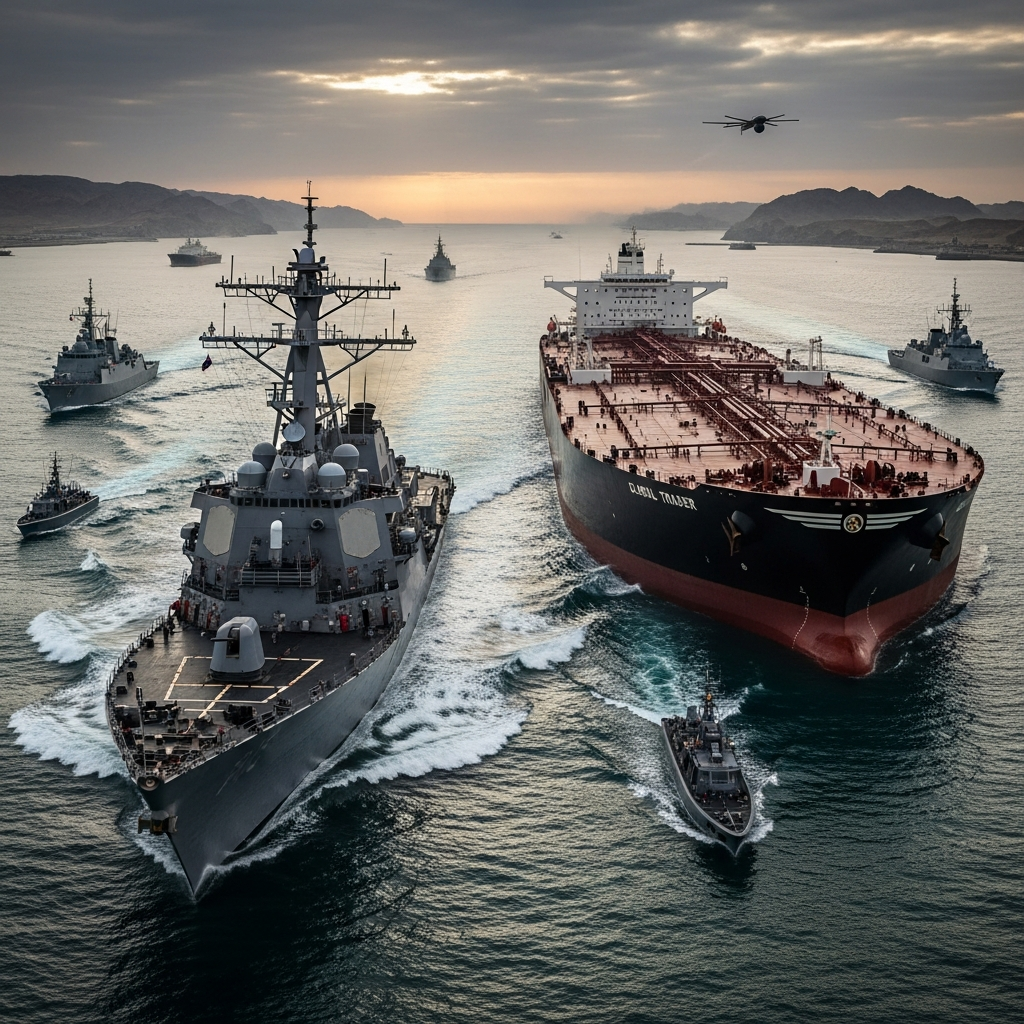
The Strait of Hormuz, a critical global chokepoint, finds itself at the epicenter of a dangerous geopolitical standoff. Following a fragile two-week ceasefire between the United States and Iran in early April 2026, the vital waterway, responsible for transporting a significant portion of the world’s energy and goods, remains heavily restricted. This article delves into the precarious situation, analyzing the economic ramifications, military considerations, diplomatic efforts, and regional dynamics shaping the future of global maritime trade and Middle East stability.
A Precarious Pause: The Ceasefire’s Unsettled Terms
A momentary truce between the U.S. and Iran, brokered by Pakistan, brought a “collective sigh of relief” across the Gulf region in early April 2026. This agreement, reached just hours before a U.S.-imposed deadline for Iran to fully reopen the Strait of Hormuz, temporarily halted escalating violence and inflammatory rhetoric. However, experts like Raphael BenLevi of the Misgav Institute for National Security and Zionist Strategy caution that this is merely a pause, not a resolution. Core issues—Iran’s nuclear program, the future of the Strait of Hormuz, and Israel’s ongoing campaign in Lebanon—remain contentious and unsettled.
Hostilities didn’t cease immediately after the truce announcement. For example, Israel intensified operations against Hezbollah in Lebanon, an action not explicitly covered by the ceasefire from their perspective. This created a “two-week window” for Israel to act aggressively, preempting future diplomatic pressure. Iran, in response, cancelled previously approved oil tanker transits through the Strait, signaling its continued assertive posture. Ship traffic plummeted over 90 percent, transforming the strait from a bustling artery to a mere trickle.
Iran’s Unwavering Grip on the Strait
Iran has maintained its “chokehold” on the Strait of Hormuz, deploying a strategy described as “management of the Straits of Hormuz into a new phase.” Despite international protests, Tehran has demanded tolls for safe passage, often in yuan or cryptocurrency. This “Tehran toll booth” arrangement, as described by some analysts, underscores Iran’s leverage and willingness to exploit its geographic advantage. The International Maritime Organization (IMO) has clarified that no international provisions exist for imposing such tolls on international straits.
Before the ceasefire, Iran never fully closed the strait, allowing some of its own oil exports and permitting “neutral” ships to transit under negotiation, sometimes using its territorial waters or even an Omani coastal route. A map published by Iran indicated alternative shipping routes to avoid naval mines, further demonstrating its asserted control. Concerns deepened when President Donald Trump even suggested a “joint venture” for tolls, though the White House later clarified this idea was superseded by calls for full reopening.
The Global Economic Fallout of a Blocked Lifeline
The Strait of Hormuz is more than a shipping lane; it is an economic aorta for the global economy. Approximately one-quarter of the world’s seaborne oil trade and one-fifth of its natural gas typically pass through this narrow passage each year. Beyond energy, it facilitates the movement of one-third of global fertilizer and critical industrial materials like sulfur and helium (essential for microchip production). A typical year sees nearly 40,000 cargo ships traverse the strait.
The near-complete obstruction has created severe economic ramifications worldwide. Physical oil prices for immediate delivery have surged to record levels, causing a significant jump in U.S. gas prices and a 3.3% rise in consumer prices in March. Shipping costs have spiraled, and the International Rescue Committee (IRC) highlights worsening food security, particularly in the region, as fertilizer and other essential imports are stalled. Manufacturing faces raw material scarcity, and parts of Asia, highly dependent on Gulf energy, are scrambling for alternative supplies. Deloitte predicts high oil and fuel prices will persist throughout the year.
Military Chessboard: Limited Options for Forceful Reopening
Both the U.S. and Israel have considered military options to loosen Iran’s chokehold, but these come with significant risks and complexities. Before the ceasefire, air and naval attacks failed to force Iran to reopen Hormuz. The U.S. has moved personnel and amphibious assault assets into the region, with talks of deploying another 10,000 troops. Potential actions range from targeted raids on Iranian capabilities to occupying islands like Larak or Kharg, intending to hold them “hostage” to compel concessions.
However, experts note that even if coastal defenses are neutralized, Iran could continue to menace the Strait with missiles and attack drones launched from inland strongholds, mimicking the tactics of its Houthi allies in the Red Sea. Furthermore, a high-casualty strike on occupying U.S. forces could trigger major political costs for the Trump administration, potentially leading to escalation or withdrawal. Historical comparisons, like the 1980s “tanker war,” show U.S. naval escorts were strategically inconsequential, requiring repeated engagements. Today’s smaller U.S. navy and Iran’s advanced weaponry, like Shahed drones, make such an operation even more challenging and costly.
Lessons from Other Chokepoints
Efforts to forcibly reopen or close maritime chokepoints historically favor those without large navies. The Houthi attacks on Red Sea shipping, despite European Union’s Operation Aspides and U.S.-led operations, saw traffic drop by 60%. Similarly, Russia’s attempt to strangle Ukraine’s seaborne exports in the Black Sea backfired, with its own warships forced out. These cases underscore that reducing or stopping shipping is often easier than ensuring its resumption. Market psychology, insurance risks, and seafarer refusal rights mean even a few attacks can effectively block a major sea lane.
Diplomatic Tightrope: Islamabad Talks and Regional Demands
The current diplomatic efforts revolve around high-level peace talks in Islamabad, Pakistan, involving U.S. Vice President JD Vance and Iranian Parliament Speaker Mohammad Bagher Qalibaf. Pakistan, acting as a crucial mediator, characterizes this as a “make-or-break” moment for regional peace. However, fundamental disagreements persist. Iran’s Qalibaf has set preconditions, including a ceasefire in Lebanon and the release of blocked Iranian assets, before substantive negotiations can begin. Iranian officials express distrust of the U.S. and affirm their non-negotiable right to enrich uranium.
Many actors have proposed solutions. Bahrain sponsored a UN Security Council resolution, backed by Gulf states, advocating “all necessary means” to forcibly reopen the waterway, but this was vetoed by Russia and China. Five of the six Gulf Cooperation Council (GCC) states explicitly stressed that a complete and safe reopening of the Strait, in accordance with international law, must be central to any permanent settlement. Hesham Alghannam, a Saudi scholar, voiced fears that the U.S., desperate for an exit, might prioritize “quick political victory” over Gulf realities, potentially tolerating Iranian influence in the Strait.
International Rejections of “Tehran Tolls”
While some countries might temporarily accept Iran’s “toll booth” to keep their economies afloat, most nations reject the idea of permanent fees. Singapore, a steward of another vital strait, publicly rejected these bilateral arrangements, citing violations of freedom of navigation principles. The UN Secretary-General António Guterres has mobilized a two-part response, appointing a personal envoy and establishing a “Hormuz Task Force” to coordinate safe transit for humanitarian aid and essential imports, notably excluding energy exports and taking no explicit stance on Iran’s alternative corridor. This approach, however, may not satisfy Gulf Arab states.
The Path Forward: Uncertainties and Hard Realities
The future of the Strait of Hormuz remains highly uncertain. Even if the Islamabad talks avoid collapse, the U.S. and Iran remain far apart on their core demands. Iran views control of the strait as crucial leverage, a deterrent, and a potential revenue source for post-war reconstruction. Its proposed “$1 per standard barrel charge in cryptocurrency” for laden oil tankers highlights its intent to monetize this control, an idea fiercely opposed by most world capitals.
A narrow deal that sees Iran open the Strait permanently in exchange for an end to the war seems unlikely without substantial sanctions relief, which the U.S. is hesitant to offer without addressing other long-standing issues like Iran’s nuclear program and support for regional proxies. The U.S. faces a dilemma: its military options are costly and uncertain, while its diplomatic leverage is constrained by Iran’s asymmetric capabilities and its own domestic political divisions. The world watches anxiously as this “make-or-break” moment unfolds, hoping for a resolution that secures global trade without igniting further conflict.
Frequently Asked Questions
What is the current status of the Strait of Hormuz after the ceasefire?
Following the fragile U.S.-Iran ceasefire announced in early April 2026, the Strait of Hormuz remains under significant restriction. Ship traffic is down over 90%, with Iran maintaining a “chokehold” and demanding tolls for passage through its territorial waters. While humanitarian and some “neutral” ships have been allowed transit, major commercial and energy exports are severely curtailed, causing immense global economic disruption and spiking prices for oil, gas, and other vital commodities.
Which countries are mediating talks between the US and Iran regarding the Strait?
Pakistan has emerged as a crucial mediator, facilitating high-level peace talks in Islamabad in April 2026, involving U.S. Vice President JD Vance and Iranian Parliament Speaker Mohammad Bagher Qalibaf. Other countries, including Oman, Egypt, Türkiye, Qatar, and China, have also played roles as intermediaries or by offering frameworks for de-escalation and negotiation, reflecting a broader international effort to stabilize the region and reopen the vital waterway.
What are the economic implications for global trade if the Strait of Hormuz remains restricted?
If restrictions on the Strait of Hormuz persist, global trade faces severe economic consequences. Physical oil and natural gas prices will remain at record highs, leading to increased transport costs and higher consumer prices worldwide. Industries reliant on raw materials like sulfur and helium, as well as agriculture dependent on fertilizer, will face critical shortages and price spikes. This ongoing disruption could trigger widespread economic crises, particularly impacting energy-dependent Asian economies and exacerbating humanitarian challenges globally.